Did you know about 30% of people with depression don’t get better with standard treatments? This fact emphasizes the need to look at options like monoamine oxidase inhibitors (MAOIs). Discovered in the 1950s, MAOIs have been key in treating tough cases of depression.
Even with new treatments available, MAOIs are still used because they work differently. They help adjust neurotransmitter levels in the brain. Knowing how MAOIs work helps patients and doctors choose the best care for depression.
Key Takeaways
- 30% of individuals with depression may not respond to traditional antidepressants.
- Monoamine oxidase inhibitors were first introduced in the 1950s and continue to be prescribed.
- MAOIs can effectively treat cases of depression resistant to other therapies.
- Understanding the mechanisms of MAOIs is crucial for patient adherence to treatment.
- Monitoring and managing potential side effects associated with MAOIs is essential.
- Dietary restrictions are critical to prevent severe interactions while on MAOIs.
Introduction to MAOIs
Monoamine oxidase inhibitors (MAOIs) are a first-generation class of antidepressants. They were introduced in the 1950s. Back then, they were a vital treatment option for depression. Today, their popularity has decreased because of newer, preferred treatments.
Isocarboxazid (Marplan), phenelzine (Nardil), and tranylcypromine (Parnate) are FDA-approved MAOIs. They usually work fully after three to six weeks. Selegiline is a newer option. It comes as a patch and mainly targets monoamine oxidase B (MAO-B), leading to fewer side effects.
MAOIs are effective but can have more side effects than other treatments. This makes them a last choice for many with depression. The FDA warns of possible increased suicide risks in young people using antidepressants, including MAOIs. It’s crucial to watch for these risks during treatment.
In 1999, a study found only 2% of psychiatrists often prescribed MAOIs. They worried about food restrictions and drug interactions. Effective doses of MAOIs vary. For example, isocarboxazid and tranylcypromine are usually prescribed at 40-60 mg/day. Phenelzine is typically at 60-90 mg/day.
Understanding Monoamine Oxidase Inhibitors
Monoamine oxidase inhibitors (MAOIs) are a key type of antidepressant used for many years. They are especially good for atypical and hard-to-treat depression. MAOIs stop the monoamine oxidase enzyme from working. This increases neurotransmitters like serotonin, dopamine, and norepinephrine, improving mood and emotional well-being.
MAOIs can work faster for some people than other antidepressants. However, they require careful management because of food and drug interactions. Foods with high tyramine levels must be avoided to prevent severe high blood pressure. Patients need to regularly check in with their doctors to keep safe.
Examples of MAOIs include Phenelzine, Selegiline, Tranylcypromine, and Isocarboxazid. They are all approved by the FDA for bipolar depression. Side effects can include sleepiness, dizziness, and changes in blood pressure. There’s also a risk of serotonin syndrome, particularly if MAOIs are taken with other serotonin-boosting drugs. According to the pharmacokinetics of MAOIs, they are effective when used correctly, an important tool against depression.
| MAOI | Brand Name | Primary Use |
|---|---|---|
| Phenelzine | Nardil | Atypical Depression |
| Selegiline | Ensam | Bipolar Depression |
| Tranylcypromine | Parnate | Major Depressive Disorder |
| Isocarboxazid | Marplan | Depression |
MAOIs help manage mood disorders by changing neurotransmitter levels. Both patients and doctors must work together. They need to balance the benefits and risks for the best mental health outcome.
How MAOIs Work and Their Role in Treating Depression
Monoamine oxidase inhibitors, or MAOIs, are a special kind of antidepressant. They are effective against depression, panic disorders, and social anxiety. Their unique antidepressant mechanisms work by influencing brain neurotransmitters, important for mood management. Knowing how MAOIs function helps us understand their value in treating depression.
Mechanism of Action
MAOIs help by stopping a specific enzyme in your brain. This enzyme usually breaks down neurotransmitters like serotonin and dopamine. When MAOIs block this enzyme, more of these mood-enhancing chemicals stay in your brain. This makes many people feel better, especially if other treatments haven’t worked.
Learning about MAOIs shows us their critical role in fighting depression.
Neurotransmitter Regulation
Managing neurotransmitters well is key to staying emotionally balanced. MAOIs increase serotonin, norepinephrine, and dopamine levels. This helps improve mood and well-being. Even though MAOIs can have some dietary limits and risks, like hypertensive crises, they are still vital for those who need them.
| Neurotransmitter | Function | Effect of MAOIs |
|---|---|---|
| Serotonin | Regulates mood, anxiety, and happiness | Increased availability enhances mood stability |
| Norepinephrine | Affects attention and responding actions | Heightened levels can improve focus and reduce fatigue |
| Dopamine | Influences reward and pleasure centers | Increased levels can lead to feelings of pleasure and motivation |
In summary, knowing how MAOIs affect antidepressant mechanisms and neurotransmitter balance is crucial. It shows us the significant part they play in treating depression effectively.
MAOIs Compared to Other Antidepressants
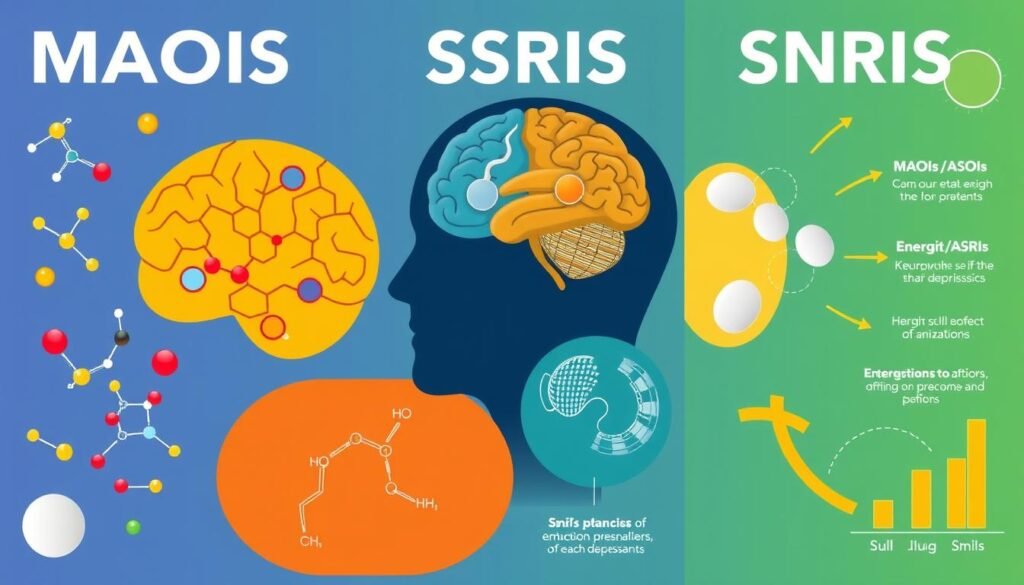
Knowing the differences between MAOIs, SSRIs, and SNRIs is key when picking a treatment for depression. Every antidepressant type works in its own way and has different side effects. This offers various choices for those facing mood challenges. Even if MAOIs are not as common today, they are crucial for cases where other treatments don’t work.
Differences from SSRIs and SNRIs
MAOIs stop the monoamine oxidase enzyme, raising norepinephrine, serotonin, and dopamine levels in the brain. This makes MAOIs a powerful choice for improving mood and easing panic. Unlike MAOIs, SSRIs like Celexa, Lexapro, and Prozac focus on stopping serotonin from being taken back into brain cells. This usually leads to fewer side effects, making SSRIs the go-to for many patients.
SNRIs, such as Cymbalta and Effexor, boost both serotonin and norepinephrine. They are popular because they effectively fight depression and anxiety. Yet, MAOIs are still important for those who don’t find relief with common treatments.
Choosing between these drugs often depends on how well a patient can handle side effects and their past treatment experiences. SSRIs are widely used because they generally cause fewer problems. However, MAOIs might be the answer for those with hard-to-treat depression. Knowing the key differences helps people find the best option for improving their depression treatment efficacy.
| Antidepressant Class | Mechanism of Action | Common Side Effects | Time to Effectiveness |
|---|---|---|---|
| MAOIs | Inhibit monoamine oxidase, increase norepinephrine, serotonin, and dopamine | Nausea, dry mouth, drowsiness, headache, insomnia | 1-6 weeks (avg. 2-4 weeks) |
| SSRIs | Inhibit serotonin reuptake | Nausea, diarrhea, drowsiness, insomnia, headache | 1-4 weeks |
| SNRIs | Inhibit reuptake of norepinephrine and serotonin | Dizziness, nausea, headache | 1-4 weeks |
MAOIs Approved for Depression Treatment
The FDA has approved several monoamine oxidase inhibitors (MAOIs) for treating major depressive disorder. These medications are especially helpful for those who haven’t responded well to other treatments. Knowing about MAOIs can help you find the most effective treatment.
List of FDA-Approved MAOIs
The following table shows the MAOIs approved by the FDA. You’ll see their brand names, what they’re used for, and how they’re taken:
| MAOI | Brand Name | Uses | Administration |
|---|---|---|---|
| Isocarboxazid | Marplan | Major depressive disorder, treatment-resistant depression | Oral tablet form |
| Phenelzine | Nardil | Major depressive disorder, non-depressive anxiety disorders | Oral tablet form |
| Selegiline | Emsam | Major depressive disorder | Transdermal patch (available in various dosages) |
| Tranylcypromine | Parnate | Major depressive disorder | Oral tablet form |
Each FDA-approved MAOI has a key role in treating depression. They are selected based on the patient’s specific needs and previous treatments. It’s important to know about the diet limits and potential side effects to use them safely.
Benefits of MAOIs
MAOIs are great for treating depression, especially tough cases. Medications like phenelzine and tranylcypromine work well for people with atypical depression. They help those who haven’t had success with other treatments.
Studies show MAOIs can work faster to reduce severe depressive symptoms. For instance, a patient improved significantly in three weeks with phenelzine, after 30 years of stability. This fast action shows their strength in treating serious mental health issues.
MAOIs are effective because of how they work. They stop the monoamine oxidase enzyme, which increases levels of serotonin, norepinephrine, and dopamine. This improves mood regulation, making MAOIs good for different mood disorders.

Even with their benefits, MAOIs are usually a third choice. They have side effects and require diet changes. With proper education and monitoring, patients can safely enjoy MAOIs’ benefits, avoiding risks like hypertensive crises from certain foods.
Side Effects and Risks Associated with MAOIs
It’s key to know the side effects and risks if you’re thinking about MAOIs for depression. They work well for some types of depression. But, they come with risks that need careful handling.
Common Side Effects
MAOIs’ side effects can range from mild to severe. Some key ones you might face are:
- Dry mouth
- Nausea
- Insomnia
- Dizziness
- Blurred vision
Keep an eye on these symptoms. They can impact how you feel every day and if you stick with the medication.
Serotonin Syndrome Risk
MAOIs might cause too much serotonin, leading to serotonin syndrome. This is serious and can happen if MAOIs are mixed with other serotonin-affecting drugs. Watch out for signs like:
- Confusion
- Rapid heart rate
- Agitation
- Extreme muscle rigidity
- High fever
Knowing these signs can help you get help fast, which is critical.
Dietary Restrictions
If you’re on MAOIs, diet matters a lot. Certain foods, especially those high in tyramine, are risky. They can cause your blood pressure to spike dangerously. So, it’s important to know what to avoid. This helps prevent serious problems like hypertensive crises.
| Food to Avoid | Potential Consequences |
|---|---|
| Aged cheeses | Hypertensive crisis |
| Cured meats | Increased blood pressure |
| Fermented foods | Severe headaches |
| Some alcohols | Dizziness and elevated BP |
Patient Compliance Strategies with MAOIs
Ensuring patient compliance strategies work well is key in MAOI treatment. Patients often find it tough because monoamine oxidase inhibitors are unique. This means they need personalized support and learning. Knowing what foods to avoid is a big part of this. Foods that have tyramine are off-limits to avoid severe high blood pressure crises. Teaching patients about this is critical to lower risks and better follow-through.
Patients should know the possible side effects of MAOIs. These can include feeling dizzy, having a dry mouth, and stomach issues. Being open about these effects helps patients be more understanding and patient. Talking often with doctors is crucial. It helps make sure any side effects are reported quickly. This way, any problems can be dealt with swiftly.
Having regular talks with doctors is key to managing MAOI treatment well. These check-ins help discuss how the medication is working and any worries. This helps build a strong bond between the patient and the provider. It means higher chances of sticking to the treatment and a supportive space for healing.

Using these methods leads to better results in fighting major depressive disorder (MDD). MDD often comes back, so strong patient compliance strategies are a must. They make sure patients get the most out of their MAOI treatment. Being proactive is critical to handle the treatment’s challenges. This improves patient health and how well the treatment works.
Monitoring and Management of MAOI Treatment
When treating depression with MAOIs, it’s crucial to watch over patients closely. This ensures their safety and the success of the treatment. Doctors need to keep an eye on their patients. This helps catch problems early. They can then change the treatment if needed. They also teach patients about how food and other drugs can react with their medication.
Therapeutic Drug Monitoring
Checking on drugs’ effects is key when using MAOIs. Things like blood pressure must be checked often. This helps spot any bad reactions quickly. Since MAOIs can badly mix with some foods and drugs, a careful plan is needed. Proper tracking and analysis let doctors adjust treatment wisely.
- Regular blood pressure checks: Essential for avoiding hypertensive crises.
- Medication reviews: Important for identifying potential drug interactions.
- Education on dietary restrictions: Necessary to prevent complications associated with tyramine-rich foods.
Patients must know about their treatment choices. This includes other paths they might take if needed. For more on treating depression safely, look at depression treatment options. This guide covers many ways to manage depression.
Conclusion
MAOIs play a key role in treating tough depression cases. They work well where other treatments fail. Phenelzine, isocarboxazid, and tranylcypromine have shown strong effectiveness. For example, phenelzine had a 29.5% edge over a placebo, proving it helps defeat depression.
Using MAOIs safely requires knowing about their side effects and diet limits. This means patients must work closely with their doctors. They’ll need a plan that fits their unique needs. This approach helps manage therapy well.
For those facing hard-to-treat depression, learning about MAOIs can change lives. More information can be found at this detailed article. Knowing more and talking to doctors is crucial for anyone thinking about MAOIs.