Between 30% to 40% of people with dementia also face depression. This is a major public health issue. Depression mixed with dementia can worsen cognitive problems. It affects how well people with Alzheimer’s disease can live their lives. Managing mental health is key.
This guide explores how depression and dementia are connected. It looks at their signs, reasons, treatments, and ways to cope. Knowing about these can help sufferers and caregivers. It can improve their emotional health and how they feel overall. To get tips on taking care of your mental health, including how to look after yourself, click on this resource.
Key Takeaways
- Depression has a big impact on those with dementia, showing up early on.
- Signs of depression include losing interest, feeling down, and trouble sleeping.
- If you’ve had depression before, you might be more likely to get it with dementia.
- Treatment can be through medicine, therapy, and helping yourself.
- Being social and doing things you enjoy can make a big difference.
Introduction to Depression and Dementia
It’s key to learn about depression and dementia since older people often face these issues. Depression makes you feel persistently sad and lose interest in things you once enjoyed. On the other hand, dementia leads to a decline in thinking, memory, and the ability to do everyday tasks.
The rate of depression in older adults with dementia is quite high. This highlights the importance of understanding both conditions.
Depressive symptoms are more common in people with dementia than those without. Up to 30% of individuals with vascular dementia or Alzheimer’s disease may experience depression. This number is even higher in conditions like Parkinson’s and Huntington’s diseases. Spotting depression early can be a clue that dementia might develop as well.
Taking care of mental health in older adults is super important. Activities that make them happy and engage their mind help a lot. Family and caregivers play a big role in making life better for them. Yet, drugs often used to treat depression may not work as well in the elderly.
By understanding how depression and dementia are linked, we can better care for those affected. Treating depression is critical. It makes people feel better emotionally and might even reduce the risk of dementia. The connection between our thoughts, feelings, and mental health cannot be overstated. For more on how thoughts and emotions connect to depression, visit this link.
The Intricate Connection Between Depression and Dementia
Depression and dementia are closely linked, affecting how people live. About 20-30% of those with dementia feel depressed. In cases of vascular dementia, this number can be as high as 24.7%. With dementia, people might face sadness due to their cognitive struggles. Depression might also come from the stress of handling these mental changes.
Mood disorders and cognitive decline affect each other. 26% of people with mild cognitive impairment may face depression. When our brain function drops, our mood often follows. This situation can worsen both our emotional and mental health.
Changes in the brain due to dementia can make depression worse. If someone is diagnosed with depression, their dementia risk rises by 10-20% within six months. This fact shows how crucial it is to notice and treat these signs early.

We must act early in treating depression among those with dementia. Neglecting mood disorders can badly harm their mental abilities. An approach that cares for both mental health and cognitive skills is vital.
Symptoms of Depression in Dementia
It’s tricky to spot depression in those with dementia. They share many symptoms. Spotting both emotional and physical signs is key to caring for people with Alzheimer’s and other conditions.
Common Emotional and Physical Symptoms
Depression shows up as emotional and physical symptoms. These can harm a person’s health. Emotional problems often felt include:
- Ongoing sadness
- Feelings of worthlessness
- Social withdrawal
And physically, people might face:
- Sleep disturbances
- Fatigue
- Changes in appetite
About 40% of Alzheimer’s patients may get really sad. This fact points to the need for careful watching. Physical symptoms also hurt their well-being a lot.
Variability of Symptoms in Different Stages
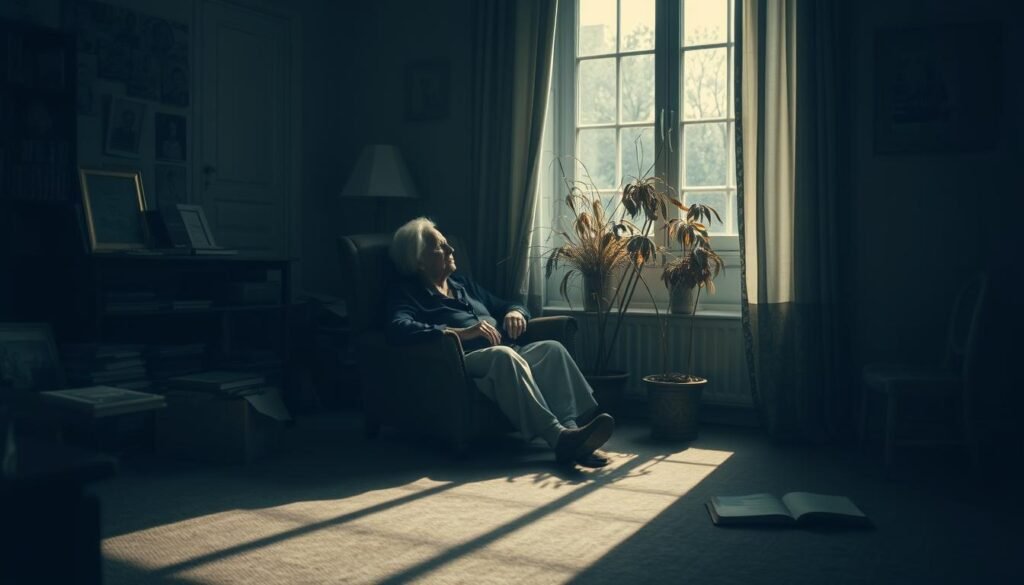
How depression shows depends on the dementia stage. Early on, people can express their sadness. But later, they might not say how they feel. They might become irritable or pull back instead.
Forgetting things muddles spotting depression. Caregivers find it hard to tell if it’s sadness or just memory loss. This is why doctors’ full checks are vital. They make sure people get the right help and kindness.
| Symptoms | Emotional Symptoms | Physical Symptoms |
|---|---|---|
| Early Stage Dementia | Articulated sadness and feelings of worthlessness | Sleep disturbances and fatigue |
| Middle Stage Dementia | Irritability and social withdrawal without clear expression | Changes in appetite and fluctuating energy levels |
| Late Stage Dementia | Behavior changes indicating distress, often non-verbal | Severe physical symptoms including increased fatigue |
Understanding the Causes of Depression in Dementia
Depression in people with dementia is complex. It comes from brain changes and the world around them. These challenges significantly impact their well-being. We’ll explore both biological and social reasons for increased depression risk.
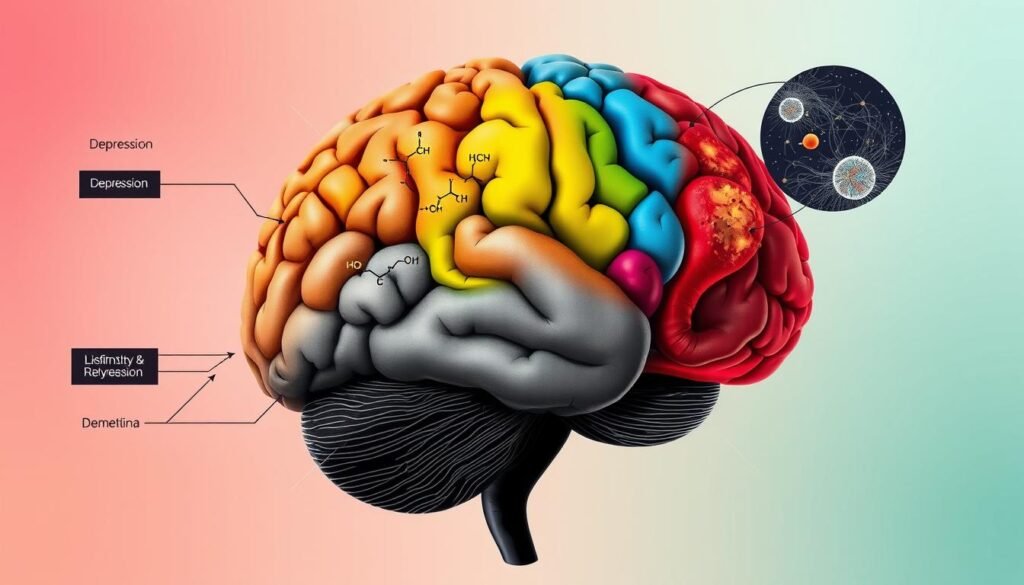
Neurological Changes and Brain Function
Brain function changes a lot in dementia. This can hurt how emotions are managed, leading to mood issues. Studies show that those with a history of depression are likelier to get dementia.
This shows how important it is to understand the brain’s role in managing feelings. Damage to areas that control emotions can cause sadness and loss of hope. This makes dementia even harder to deal with.
Social Isolation and Lack of Support
Feeling alone is common in dementia and can make depression worse. When people don’t have friends or engaging activities, they feel more isolated. Caregivers help lessen this loneliness.
They do this by visiting and keeping the person active socially. Without this support, the risk of depression grows. This shows how crucial social ties are for mental health.
| Factor | Impact on Depression |
|---|---|
| Neurological Changes | Affects areas of the brain managing emotion and behavior, leading to mood disorders. |
| Social Isolation | Increases feelings of loneliness, contributing to the severity of depressive symptoms. |
| Lack of Support | Reduces the likelihood of meaningful interactions, worsening mental health. |
| Caregiver Involvement | Enhances emotional well-being through engagement and social interaction. |
For more insights on depression and dementia, check out more research here.
Diagnosing Depression in Individuals with Dementia
It’s tricky to spot depression in people with dementia because the symptoms can overlap. Mental health experts need to do careful assessments. They look at medical histories and do both physical and mental checks. They also talk to family members and caregivers to get the full picture.
When figuring out if someone with cognitive issues has depression, special scales are used. These scales give a clear way to see depression in those with dementia. It’s noted that most people with Alzheimer’s will show signs of depression at some point.
Getting the diagnosis right early is crucial. It helps doctors choose the best way to help improve the patient’s life. Being careful and thorough is key in spotting depression in dementia patients.
| Type of Evaluation | Description |
|---|---|
| Medical History Review | An assessment of past medical conditions and treatments. |
| Physical Examination | A complete check-up to rule out other health issues. |
| Mental Assessment | Standardized tests to evaluate cognitive and emotional status. |
| Family and Caregiver Interviews | Gathering insight about changes in behavior and emotional well-being. |
Mental health experts use these approaches to better care for people with dementia and depression. They aim to catch problems early and choose the right treatment. This helps patients greatly.
SPECT scans offer a new way to tell depression and dementia apart. This method shows different brain activity patterns. For deep details, visit here.
Treatment Options for Depression and Dementia
Treatment for depression in dementia includes both medical and non-medical approaches. It’s important to tailor strategies to meet individual needs and symptoms. This holistic approach can greatly improve life quality for those affected.
Pharmacological Approaches: Antidepressants and Their Efficacy
Antidepressants are key in treating depression in dementia patients. Doctors often suggest Selective Serotonin Reuptake Inhibitors (SSRIs) first. They work well for most older people. But, it’s crucial to watch out for how these meds mix with others already being taken. Other antidepressants like tricyclic antidepressants (TCAs) are also effective. Medications such as rivastigmine can help with depression in those with dementia. Lastly, anticonvulsants and memantine show positive results in reducing depressive symptoms.
Non-Pharmacological Strategies
Care doesn’t stop with medication. Activities that stimulate the brain, therapy sessions, and fun activities are essential. These can help reduce depression without relying on drugs. Methods might include:
- Emotion-oriented therapies
- Brief psychotherapies
- Sensory stimulation therapies
- Occupational therapy
- Exercise combined with social interaction
- Reminiscence therapy
Studies show non-drug treatments often outperform medications in managing depression in dementia. Building social networks and having a routine can keep spirits high. This not only enhances emotional health but also eases the load on caregivers.
Coping Strategies for Caregivers
Caregivers are crucial in the lives of those with depression and dementia. They can boost their own and their care recipients’ well-being with the right strategies. Good communication and a supportive environment make caregiving better and less stressful.
Encouraging Communication and Engagement
Promoting communication helps everyone express their feelings and worries. Meaningful chats and activities keep social ties strong, which fights loneliness. To better engage, caregivers can:
- Ask open-ended questions to encourage talking.
- Include them in daily tasks which gives a sense of belonging.
- Support hobbies or interests they love.
- Use visual aids to help communicate.
Creating a Supportive Environment
Crafting a supportive environment boosts mental health and life quality for caregivers and recipients. Small changes at home can make a big emotional difference. For a nurturing space, consider:
- Improving lighting and minimizing clutter for calm.
- Creating comforting routines for stability.
- Letting participation in tasks to preserve dignity.
- Accessing resources like the National Institute on Aging for support.
Focusing on caregiver support and using these strategies betters caregivers’ mental health while aiding those with dementia and depression. Paying regular attention to mental well-being and relationships can lessen stress and enhance caregiving.
| Signs of Caregiver Stress | Potential Coping Strategies |
|---|---|
| Feeling burdened or anxious | Seeking help from family and friends |
| Tiredness or sleeping issues | Prioritizing personal health and rest |
| Loss of interest in activities | Making time for enjoyable activities |
| Feeling irritable or angry | Practicing stress management techniques (e.g., meditation or yoga) |
| Frequent health problems | Consulting with healthcare professionals |
Support Resources for Depression and Dementia
Dealing with depression and dementia can be really tough. But there are many support resources out there to help. Organizations like the National Institute of Mental Health and local community groups offer support. You can also call the Alzheimer’s Association’s 24/7 Helpline (800.272.3900) for information and emotional aid. They make understanding mental health easier and offer advice on how to cope better.
Organizations and Help Lines
There are organizations focused on helping those facing depression and dementia. The Alzheimer’s Association provides education and helps people connect with local support groups. These groups are a safe space to share and learn from others, which helps lessen loneliness. Plus, websites like ALZConnected® offer a way to meet others in similar situations online.
Support Groups and Therapy Options
Joining support groups benefits caregivers and those with dementia. It’s a place to share stories, get emotional support, and find helpful tips. It can make the stress of caregiving more manageable. Therapy, including individual sessions or talking groups, can greatly help mental health. Talking therapies, for instance, are great at lowering anxiety and depression in early dementia stages, showing how crucial support is for mental well-being.