Did you know that since the 1970s, over 40 studies have looked into SAMe for depression? This fact highlights the interest in natural depression treatments. People are searching for effective natural options or additions to usual antidepressants. Many find hope in herbal supplements for better mood.
SAMe and other natural remedies might help reduce depressive symptoms. They can also be used for liver disease and osteoarthritis. We will explore different supplements and their effects on emotions. These options should be part of a full plan to manage mental health, guided by healthcare professionals.
Key Takeaways
- Over 40 studies have been conducted on SAMe’s efficacy for depression.
- SAMe has potential benefits for both emotional well-being and physical health issues.
- Natural remedies for depression are increasingly popular among individuals seeking alternatives.
- Professional guidance is crucial when considering supplements like SAMe.
- Herbal supplements should complement existing treatment plans rather than replace them.
Understanding Depression
Depression is widespread, affecting millions in America. Every year, more than 17 million adults confront depression, showing why knowing about it is key. Among its various forms, Major depressive disorder (MDD) is the most severe. It’s seen as a top global health issue. Other types like persistent depressive disorder also play a part in this broad condition.
Signs of depression include sadness, irritability, and fatigue. Appetite changes also signal it. These symptoms’ severity and how long they last tell doctors which depression type it might be. Sadly, 40–50% of patients don’t get better with the first treatment, stressing a deep approach to mental health.
For better treatment, people have options like nutraceuticals. Supplements such as SAMe and omega-3 fatty acids can help, especially with usual antidepressants. Still, it’s crucial to get advice from professionals to mix supplements and lifestyle changes right.
Ignoring depression is risky. Knowing the early signs matters a lot. Getting help from a mental health expert can lead to specific care, boosting well-being and life quality.
What Are Herbal Supplements?
Herbal supplements are natural products from plants. They add to a person’s diet with health benefits. Unlike drugs, these natural remedies offer a different way to support health. They help bodily functions in a holistic way. This interest is part of a move towards natural health options. People are looking for less invasive health solutions.
The effectiveness of herbal supplements can vary. This leads to different qualities on the market. As consumers try dietary supplements for well-being, they should stay informed. Knowing about the ingredients and how they work together is vital. It is also smart to talk to a healthcare worker before trying new supplements. This helps to make sure they are a good fit.
The Food and Drug Administration (FDA) does not watch over herbal supplements like drugs. This can cause mismatch between labels and actual contents. This difference can affect how well and safely the products work. Research, like reading this guide, helps people know the pros and cons of self-medicating.
Herbal supplements can be a good addition to health routines. But it’s important to know about them and use them carefully. Making an informed choice is key to using them safely.
SAM-e and Other Herbal Supplements for Depression
SAM-e, or S-Adenosyl Methionine, is known for possibly easing depression signs. Studies show some good outcomes, but they often have flaws. One study found SAM-e to be as good as some anti-inflammatory drugs for pain without many side effects.
The usual side effects of SAM-e are minor. They include stomach troubles, slight sleep issues, dizziness, and sweating. It’s important to know it might not mix well with some medicines. It can increase serotonin, which might be risky with certain drugs, leading to serotonin syndrome.
People with certain health issues must be cautious with SAM-e. Those with bipolar disorder could have more anxiety or manic moments. It might also lower how well levodopa works for Parkinson’s disease. Anyone with a weak immune system should get advice before starting SAM-e.
Addressing depression is critical, as it affects many adults in the U.S. There are different types, like major depression and persistent depressive disorder. SAM-e, along with other herbal supplements, may help with depression. Certain vitamins and herbs might help control symptoms and improve how we handle stress.
For SAM-e and similar supplements, the best dose ranges from 1 to 4 capsules or tablets a day. Prices can range widely, from cheap to more expensive options. The next sections will explore more about herbal supplements that pair well with SAM-e, their effects, and benefits.
St. John’s Wort: Benefits and Cautions
St. John’s Wort is popular among those seeking herbal depression treatments. Many people use this remedy, especially for mild to moderate depression symptoms. Some research shows it might work as well as prescription drugs for some folks, offering an alternative.
Studies suggest 300 milligrams, taken three times daily, can be beneficial. This dosage has helped with symptoms of somatic symptom disorder, marked by anxiety over physical health. Additionally, it’s been useful in easing menopausal symptoms, particularly when paired with black cohosh.
But, it’s crucial to use St. John’s Wort with caution. According to the National Institutes of Health, it can interfere with certain medications. This includes birth control and heart disease treatments. Such interactions might lead to decreased drug effectiveness or worse side effects. So, talking to healthcare providers before mixing it with other medicines is vital.
Common side effects are nausea, anxiety, a fast heartbeat, and skin rashes. While it’s generally safe for short use, up to 12 weeks, monitoring for adverse reactions is important. Knowing about its possible drug interactions and side effects helps users make wise decisions about using St. John’s Wort.
| Aspect | Details |
|---|---|
| Effectiveness | Comparable to some prescription antidepressants for mild to moderate depression. |
| Common Dosage | 300 mg, three times a day as a standardized extract. |
| Potential Benefits | May assist with menopausal symptoms and somatic symptom disorder. |
| Common Side Effects | Nausea, vomiting, anxiety, insomnia, rapid heartbeat, and skin sensitivities. |
| Antidepressant Interactions | Risk of reduced effectiveness or increased side effects when used with other antidepressants. |
Knowing both the good and the bad about St. John’s Wort helps with informed choices. Always seek expert advice to ensure it’s safe and effective for mental health management.
Omega-3 Fatty Acids: The Role They Play
Omega-3 fatty acids are found in fish and nuts and are linked to depression treatment. Studies show they can impact mental health positively. The World Health Organization reports that 5% of adults worldwide suffer from clinical depression, showing the need for effective treatments.
Research has found that omega-3 fatty acids can help reduce symptoms of depression. A meta-analysis saw improvements in depression symptoms with a significant difference. This makes them a potential natural mood booster for those with depression.
Studies also indicate that omega-3s could make antidepressants more effective. When people took omega-3 supplements with their medication, they showed better results. This combination treatment could offer new hope and deserves more study.
Eating right plays a big part in mental health and fighting depression. Diets with little omega-3s can increase depression risk, especially in vegetarians and vegans. Supplementing with omega-3s has shown real benefits, suggesting it may play a key role in mental health. For more details, consider reading this study on omega-3s and mental health.
| Study Aspect | Details |
|---|---|
| Meta-Analysis Participants | 2160 |
| Significant Effect Studies | 12 out of 26 |
| Combined EPA and DHA Dosage | 1-2 g/d |
| Mean Age of Participants | 37.3 years |
| Percentage of Moderate Depression Cases | 52.7% |
| Recommended Fish Servings | 2-3 servings per week (4 ounces per serving) |
Saffron: A Potential Mood Booster
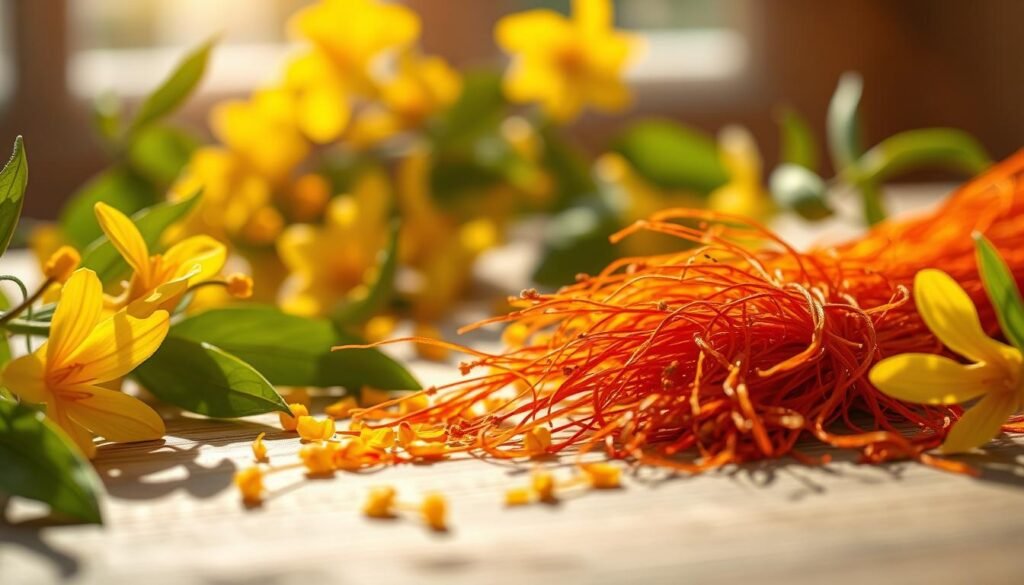
Saffron comes from the Crocus sativus L. flower. It’s not only a cooking spice but also may fight depression. It has many active elements that might lift your mood. Studies show it can improve depression symptoms by boosting brain serotonin.
Clinical trials found saffron effective for mild-to-moderate depression. It can be as good as some prescription drugs like fluoxetine. A study found that participants felt better after taking 30 mg of saffron daily for eight weeks. This shows its potential to enhance mood and mental health.
But, more research is needed to fully understand how saffron works. We need more info on the right dosages and its possible side effects. Since the FDA does not regulate herbal mood boosters, buying from trusted sources is key.
Before adding saffron to your health routine, think carefully, especially if you’re taking other meds. Talking to a doctor can help ensure it’s safe for you. This can help you get the most out of saffron’s mood-boosting properties.
| Study Participants | Dosage | Duration | Outcome |
|---|---|---|---|
| 56 individuals, aged 18-54 | 30 mg standardized saffron extract | 8 weeks | Reduced depression scores and improved social relationships |
Rhodiola: A Natural Stress Reliever
Rhodiola is known for fighting stress and depression. It works well with the HPA axis, which helps us handle stress. Studies show it can make you feel better and lower depression symptoms.
Many studies have shown Rhodiola’s benefits. Research in 2004 found it can protect against damage from oxidation. A study in 2008 showed it helps muscles use sugar better, which is good for health. Clinical trials also found it boosts brain function, cuts down on tiredness, and improves mental health.
When using Rhodiola, it’s key to pick a product with at least 3.0% rosavins and 1.0% salidroside. These elements are crucial for its healing effects. Always talk to your doctor about using it, especially if you’re on other meds.
Rhodiola rosea is approved in Europe as a stress reliever.
Rhodiola is a strong tool against stress and depression. It supports our mental health in various ways. More studies will show even more benefits. For further info on Rhodiola, click here.
| Study Year | Findings |
|---|---|
| 2004 | Protective effects against oxidative damage |
| 2008 | Stimulated glucose uptake in skeletal muscle |
| 2010 | Chronic supplementation improved cognitive function |
| 2011 | Systematic review of clinical efficacy |
| 2013 | Benefits for athletes in performance enhancement |
Folate: Essential for Mental Health
Folate, a key B-vitamin, is crucial for mental health. Studies link folate deficiencies to a higher chance of depression. About one-third of people with depression might have low folate levels. This shortage can block the making of brain chemicals like serotonin and dopamine, which help control mood.
Also, people with depression and low folate levels might not react well to standard antidepressants and lithium. This shows the need to check for vitamin shortages, like folate, when dealing with mental health. Folate can come from foods like leafy greens, fatty fish, and fortified cereals for better brain function.
If you’re low in folate or showing signs, mental health supplements with this vitamin can help improve your well-being. It’s smart to talk to healthcare providers for advice. This is especially true for those with the MTHFR variant, who might need more folate for mental health support.
Having enough folate is key for mental health. It’s vital to avoid vitamin shortages that can hurt mood and brain performance.
| Folate Sources | Approximate Folate Content (per 100g) |
|---|---|
| Dark Leafy Greens (e.g., Spinach) | 194 mcg |
| Legumes (e.g., Lentils) | 181 mcg |
| Asparagus | 149 mcg |
| Fortified Cereals | 40-400 mcg |
| Brussels Sprouts | 61 mcg |
| Avocado | 81 mcg |
Chamomile: Calm in a Cup
Chamomile is one of the most loved herbal remedies worldwide. Every day, people drink over one million cups of chamomile tea. It’s known for reducing stress and may help with anxiety and depression. Through history, many have treasured chamomile for its soothing effect.
Studies show that chamomile’s essential oils, including α-bisabolol and chamazulene, have anti-inflammatory effects. This makes chamomile a good choice for various health issues. It could ease some symptoms of anxiety and depression, offering a natural remedy.
Chamomile is not just for tea; it’s also used in aromatherapy and beauty products. Besides relaxation, early research hints it might fight cancer, thanks to apigenin. Chamomile has a long history and many uses, intriguing those interested in wellness.
Yet, chamomile isn’t risk-free. Some might have allergic reactions, feel sleepy, or have stomach problems. It can thin the blood slightly, which is a concern for people on certain medicines. Pregnant or nursing mothers, and others, should be cautious with chamomile.
| Aspect | Details |
|---|---|
| Common Uses | Tea, aromatherapy, cosmetics |
| Key Components | α-bisabolol, chamazulene, apigenin |
| Doses | 250-1,100 mg capsules |
| Potential Side Effects | Allergic reactions, drowsiness |
| Risks | Blood-thinning effects, medication interactions |
| Special Precautions | Avoid during pregnancy, nursing, asthma, or pre-surgery |
Adding chamomile to a holistic approach might help those with mood disorders. As research grows, chamomile’s role in herbal remedies could become even more important.
Potential Risks and Interactions
When thinking about herbal supplements like SAM-e, knowing the potential risks and herbal interactions is key. The FDA hasn’t reviewed SAM-e for any health use. This fact raises concerns about its safety. Though SAM-e can help with mental health, liver, and bone issues, not everyone can safely use it.
People with bipolar disorder, depression, liver disease, or Parkinson’s need to be extra careful. SAM-e could badly interact with some drugs. These include MAOIs, antacids, lithium, and medications for depression or Parkinson’s disease.
Some supplement side effects are allergic reactions, diarrhea, dry mouth, headache, and nausea. To avoid problems, read labels carefully, follow the instructions, and choose products certified by USP. This certification means the product meets certain standards. Supplements like SAM-e aren’t as strictly regulated as medications, leading to purity and strength differences.
It’s important to tell your doctor about any side effects right away. Keep SAM-e in a safe place away from kids and pets. Store it in a dry spot at room temperature to keep it good.
| Condition | Precaution | Recommended Action |
|---|---|---|
| Bipolar Disorder | Caution advised due to potential for hypomania or mania | Consult a healthcare provider |
| Liver Disease | May impact liver functions | Avoid without professional guidance |
| Parkinson’s Disease | Possible interactions with Parkinson’s medications | Discuss with a physician |
| Depression | Interaction risks with antidepressants | Close monitoring recommended |
Conclusion
The rise in depression rates, especially after COVID-19, puts a spotlight on natural treatments. While ingredients like SAM-e and herbs help, they can’t replace standard care. It’s vital for people to work with healthcare providers on mental health, especially if they have major depression.
Studies show SAM-e might work well on its own or with other treatments for depression. But results can differ from person to person. Adding things like exercise and mindfulness to your routine can also make a big difference. For more on natural ways to fight depression, check out this detailed resource.
Fighting depression needs a strategy that hits it from all angles. Herbal supplements are part of this, but they work best when combined with professional advice and lifestyle changes. This whole plan should be regularly checked to make sure it’s working.