Did you know Transcranial Magnetic Stimulation (TMS) is approved by the FDA? It’s for treating major depression in patients who haven’t found help with other treatments. This advanced, safe treatment brings hope to many who struggle with mental health issues. Today, about 21 million adults in the U.S. face at least one major depressive episode.
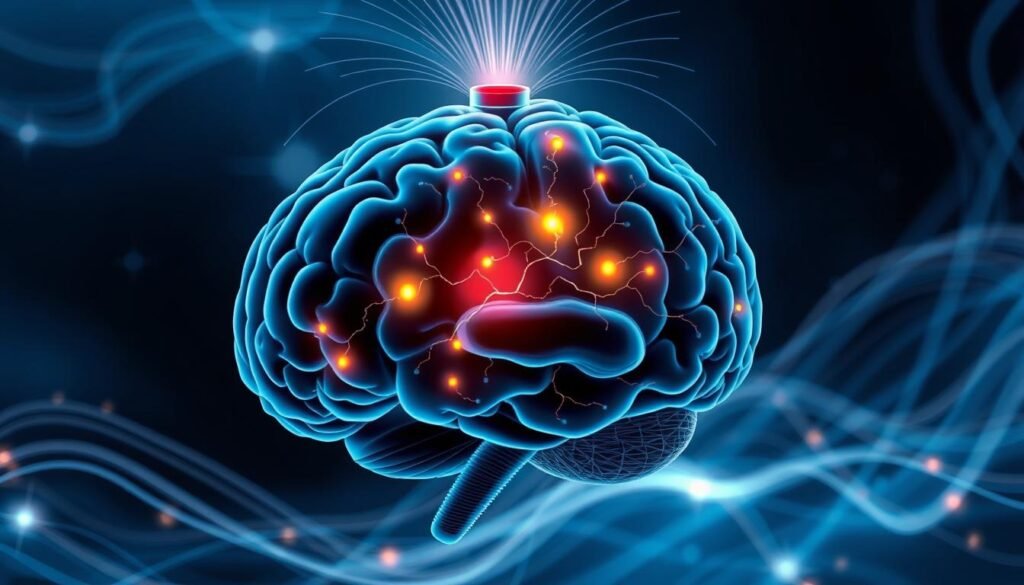
TMS uses magnetic fields to activate nerve cells in the brain. This boosts neurological function. It represents a groundbreaking move in mental health care.
TMS isn’t just for major depression. It’s also used for obsessive-compulsive disorder (OCD) and helping people quit smoking. Research is looking into more uses for TMS, like for migraines. This shows TMS’s versatility and effectiveness in mental health treatment.
Its non-invasive nature makes it more appealing. More people are choosing it over traditional medication and therapy. It’s becoming a popular alternative.
Key Takeaways
- Transcranial Magnetic Stimulation is FDA-approved for major depression and OCD.
- TMS is a non-invasive therapy that stimulates brain activity through magnetic fields.
- The treatment typically involves 30 sessions over six weeks for optimal effectiveness.
- Common side effects may include scalp discomfort and headaches.
- Ongoing research into TMS aims to expand its potential uses in mental health care.
What is Transcranial Magnetic Stimulation (TMS)?
Transcranial Magnetic Stimulation (TMS) is a cutting-edge method that boosts mental health through brain stimulation. It uses magnetic pulses to energize brain cells in specific regions. As a non-invasive procedure, it doesn’t require surgery. TMS is gaining popularity as a choice for those who haven’t benefited enough from usual treatments like medication or therapy.
The definition of TMS includes its FDA approval for treating certain conditions. These include major depression, obsessive-compulsive disorder, and migraines. Studies show TMS can be doubly effective compared to standard depression treatments, especially if they haven’t worked before.
Stats show about a third to half of patients see their symptoms fully go away after TMS. Treatments are daily and last 4 to 6 weeks. People often start feeling better after 10 to 15 sessions. These improvements can last 6 to 9 months.
If symptoms come back, maintenance sessions might be needed. This helps the TMS benefits last longer. For those who don’t see results with TMS, there are other options. They might try electroconvulsive therapy (ECT) or esketamine nasal spray.
| Treatment Aspect | Details |
|---|---|
| FDA Approval | Yes, for major depression, OCD, and migraines |
| Treatment Effectiveness | Twice as effective as traditional methods |
| Symptom-Free Rate | One-third to one-half of patients |
| Typical Course Duration | 4 to 6 weeks |
| Noticeable Improvement Timeline | After 10 to 15 sessions |
| Post-Treatment Relief Duration | 6 to 9 months |
How Does TMS Work?
Transcranial Magnetic Stimulation (TMS) uses the mechanism of TMS for repetitive magnetic pulses. An electromagnetic coil is put on the scalp. It creates small electric currents that change neuron activity in certain brain parts. These areas often don’t work well in people with depression.
TMS is similar to other neuromodulation techniques in clinics. Each pulse can change how the brain works, making a “virtual lesion.” This can block visual perception if a pulse hits the occipital cortex right after a stimulus.
Cognitive science uses TMS to study and affect perception and movement. The electrical pulse in the brain is very short, lasting about 200 μs. The stimulated area depends on the coil’s shape and the brain’s electrical properties underneath. Since the magnetic field weakens with distance, placing the coil accurately is crucial.
For best results, the coil must be correctly positioned over neuron pathways. TMS is particularly effective for hard-to-treat depression, as large studies show. People usually undergo 30 to 36 sessions over a few weeks.
Though some may get mild headaches or facial twitching, TMS is a hopeful option. It’s especially good for those not helped by other treatments.
Benefits of TMS for Mental Health
Transcranial Magnetic Stimulation (TMS) has amazing benefits for those dealing with mental health problems. This is especially true for those facing depression. Research shows TMS therapy greatly reduces symptoms of depression.
For people with depression that’s hard to treat, TMS can work much better than usual treatments. It can be double as effective.
Effective Treatment for Depression
About 50% to 60% of people who get TMS feel better. Around 37% don’t have any symptoms after finishing their treatment. One young adult felt much better after just seven TMS sessions. This shows how TMS can quickly help with mood.
These facts make TMS a strong option for Depression Treatment. It suggests people should think about it when looking for help.
Non-invasive Approach
TMS therapy does not involve surgery or need for being put to sleep. This makes it safer for people. The side effects are usually minor, like headaches or scalp feeling strange. These issues go away fast after treatment.
This allows for a more comfortable treatment experience. That’s why TMS is considered a top choice for treating mental health issues.
For more details on TMS therapy benefits, check out this information on TMS benefits. It is full of studies and proofs of how effective it is.
| Study/Case | Findings |
|---|---|
| The Efficacy of TMS for Major Depression | Significantly reduces depressive symptoms |
| Clinical Validation of Deep TMS Treatments | Alleviates PTSD symptoms |
| Case Study of a 21-Year-Old Male | Remission from depression after seven sessions |
| Systematic Review on Anxiety Disorders | Potential for anxiety relief through TMS |
| 2019 Review in Medical News Today | Practical approach for GAD and PTSD |
Who Can Benefit from TMS?
Transcranial Magnetic Stimulation (TMS) is a hopeful choice for folks battling continuous mental health problems. It’s mainly for adults who have Treatment-Resistant Depression. Although it’s not designed for anxiety, many say they feel less anxious during TMS sessions.
Adults with Treatment-Resistant Depression
For adults who haven’t found relief from depression through usual treatments, TMS offers new hope. This method targets those unhelped by traditional remedies like antidepressants. About two-thirds of TMS users see a big decrease in depression symptoms, offering a vital option for those who’ve not succeeded with standard methods.
Potential for Anxiety Relief
TMS isn’t officially approved for anxiety yet, but many report feeling less anxious with it. Their moods improve, showing TMS might help with mixed mental health issues. These personal stories add valuable insight for those pondering TMS.
| Patient Category | Percentage | Description |
|---|---|---|
| Treatment-Resistant Depression | Approximately 20% | Adults who have not responded to traditional treatment options. |
| Patients Reporting Anxiety Symptoms | Variable | Group benefiting from reported mood improvements during TMS. |
| Individuals Using Telehealth Services | 30% | Patients leveraging flexibility in receiving TMS treatment. |
| Success Rates for TMS | 70% | Patients who experience lasting benefits after treatment. |
How to Prepare for TMS Treatment
Getting ready for TMS requires a few key steps. First, a complete Medical Evaluation helps check if a person can undergo treatment. This step involves a full physical check-up and a talk about the patient’s mental health past.
Talking about current meds, any allergies, and past seizures or brain issues during the evaluation is crucial. This ensures patients are Treatment Ready and lowers safety concerns.
Prep work for TMS is usually simple, adding to its appeal. Treatment sessions go for 30 to 45 minutes. They can happen a few times weekly for around four months. This works well for people with full schedules.
Before starting TMS, it’s important to know about possible mild side effects. These can include headaches or feeling sore at the scalp site. But, these issues don’t last long. Also, many find it useful that TMS centers are often close by. This makes getting treatment both accessible and convenient for a lot of people in the US.

The TMS Treatment Process
The TMS Treatment Process includes several important steps. These steps make sure the therapy works well for each person. We’ll cover what happens in a session to ease any worries. Every part, from getting ready to brain mapping, is vital for the best results for patients.
What Happens During a TMS Session?
Patients sit in a reclined chair during the session. They wear ear protection to block out device noise. A healthcare provider uses a coil to send magnetic pulses. These target the brain areas linked to mood. Sessions last from 20 to 40 minutes. Patients can go about their day right after.
Mapping and Stimulation Parameters
Brain mapping starts off the TMS Treatment Process. It’s key for therapy success. During this, the provider finds where to place the coil on the head. This makes sure the therapy matches the person’s brain. The provider then sets the magnetic energy levels. Getting this right helps in achieving good results.
Possible Side Effects and Risks of TMS
Transcranial Magnetic Stimulation (TMS) is mostly safe. Yet, some people might face side effects. Knowing about TMS Side Effects and Treatment Risks is key for making choices. Especially for those thinking about this new therapy.
Common Side Effects
Side effects that often come up from TMS include:
- Headache – affects 6.9% of older adults with late-life depression
- Discomfort at the stimulation site – 2.7% of older adults report this
- Temporary facial twitching – this is rare but can happen
These issues are usually brief. They tend to go away soon after treatment. For more details, you can look into TMS Safety based on what patients have said.
Uncommon but Serious Side Effects
In rare cases, TMS can cause serious problems. Studies show less than 1% of patients might face:
- Seizures
- Induction of hypomania
- Hearing changes
- Burns from the coil
Doctors need to check who can safely get TMS. They must watch over patients during treatment. In a major study with about 300 patients, there were no seizures, deaths, or suicides, showing TMS is safe.
| Side Effect | Percentage of Older Adults |
|---|---|
| Headache | 6.9% |
| Discomfort at Stimulation Site | 2.7% |
| Serious Adverse Events | < 1% |
| Cognitive Effects | None reported |
Even with the TMS Side Effects, most patients get better. 85% see their depression symptoms improve after getting TMS. With the right safety steps, TMS is a good choice for those looking for effective mental health care.
Duration and Frequency of TMS Treatments
TMS therapy needs a well-planned schedule to work best. Usually, the therapy takes five sessions each week. These go on for four to six weeks. Most people will need about 30 sessions for the best effect.
The sessions last 20 to 50 minutes, with short breaks for comfort. This helps everyone stay at ease during the treatment.
Treatments happen every day to keep the therapy consistent. Studies show TMS can reduce depression symptoms for a long time after the final session. A psychiatrist will watch how the treatment goes and make changes if needed to the TMS Treatment Duration.
Some new TMS methods offer quicker treatments. This is good for those who need fast relief. It helps to know how the treatment plan works to get ready for it.
Responses to therapy differ from person to person. While some may need 30 sessions, others might see improvements quicker. This shows why treatments must be tailored to each person’s needs.
This structured approach makes TMS a strong tool against mental health issues.
If you’re looking into more treatments, CBT might be of interest. You can click here to learn about CBT’s benefits.
Conclusion
Transcranial Magnetic Stimulation (TMS) is showing great promise for people dealing with tough mental health issues. It’s especially helpful for those with depression that doesn’t respond to usual treatments. It’s safe and non-invasive, which makes it a leading choice for brain therapy. The FDA has even approved TMS, showing it’s a solid option for challenging cases.
Studies show TMS really helps improve mental well-being, significantly lowering depression levels. The treatment doesn’t need any anesthesia and is given daily, making patients more comfortable. This is especially important for people who haven’t had success with other treatments.
As more research is done, the benefits of TMS become even clearer, showing it can really change lives. For those interested in learning more, there’s plenty of research out there. An example is an article from BMC Psychiatry which talks about how TMS can help with stubborn depression. You can find out more here.