Tricyclic antidepressants (TCAs) have been around since 1959. They were some of the first depression treatments approved by the U.S. FDA. While newer drugs like SSRIs have become more popular, TCAs still help many people. This guide explains how TCAs work, what they’re used for, their side effects, and other treatments.
Key Takeaways
- Tricyclic antidepressants work by increasing serotonin and norepinephrine levels in the brain.
- They are FDA-approved for multiple conditions, beyond just major depressive disorder.
- Common side effects include drowsiness, weight gain, and dry mouth.
- Finding the right TCA often involves a trial-and-error process tailored to the individual.
- These medications may present safety concerns and require close monitoring.
Introduction to Tricyclic Antidepressants
Tricyclic antidepressants (TCAs) started reshaping mental health care in the 1950s. They were seen as a big leap forward, helping many with major depressive disorder (MDD). Even though SSRIs are more popular now due to fewer side effects, TCAs are still useful for some patients.
It’s crucial to understand how TCAs impact mental health. They boost mood by blocking the reabsorption of key neurotransmitters like serotonin and norepinephrine. While they have more side effects and a higher overdose risk than newer drugs, they work well when other treatments fail.
Doctors often prescribe TCAs like amitriptyline, desipramine, and nortriptyline for various conditions. They’re mainly used for mood disorders but also for anxiety, personality disorders, and some neurological conditions. Patients usually see improvements in six to eight weeks, marking TCAs as a significant tool in mental health care.
What Are Tricyclic Antidepressants?
Tricyclic antidepressants, or TCAs, are an early type of antidepressant. They were made for major depression and other mood problems. These meds came out in the 1950s, becoming popular later. Notable TCAs include amitriptyline, imipramine, and nortriptyline. In simple terms, TCA definition covers drugs that boost certain brain signals by stopping their breakdown.
TCAs work well for depression, but newer meds like SSRIs and SNRIs are often used now. A 2024 review showed TCAs can be slightly better than a placebo for depression. However, they have more serious side effects.
TCAs also help with chronic pain, like fibromyalgia and nerve pain, showing their range of use. But, they’re not for everyone. Side effects can include dry mouth and sleepiness, so careful monitoring is needed.

If other treatments don’t work, doctors might try TCAs, but they’re careful because of the risks. Each person reacts differently, so treatment is highly personal. For more on TCAs, including their risks, check out this Healthline article.
| Medication | Common Use | Notable Side Effects |
|---|---|---|
| Amitriptyline | Depression, chronic pain | Dry mouth, weight gain, sedation |
| Imipramine | Major depressive disorder | Constipation, dizziness, blurred vision |
| Nortriptyline | Depression, migraines | Fatigue, low blood pressure, drowsiness |
How Do Tricyclic Antidepressants Work?
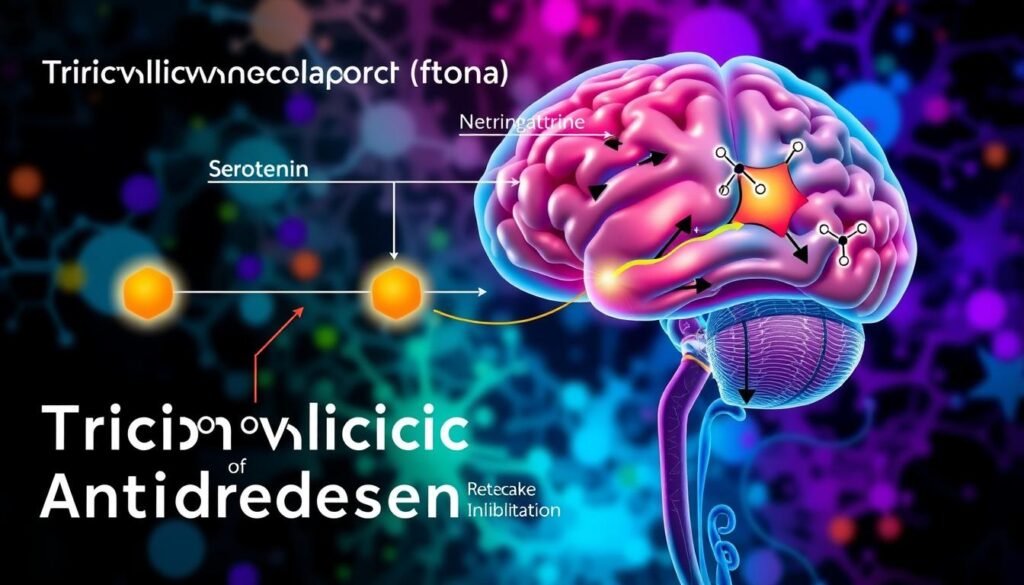
Tricyclic antidepressants work by stopping the reuptake of key neurotransmitters. These include serotonin and norepinephrine. This block boosts the levels of these important chemicals in the brain.
With more serotonin and norepinephrine, people often feel better. Their mood improves, and depression symptoms can decrease. This is crucial for those with mood disorders.
These drugs don’t only raise serotonin levels but also norepinephrine. This helps with a wider range of symptoms. By increasing these neurotransmitters, a person’s well-being can improve. It also helps balance chemicals in the body.
But, it’s key to know that these drugs can have other effects too. They can cause side effects because they affect more than just mood. So, while they help, they might also bring unwanted symptoms.
| Neurotransmitter | Function | Effect of TCA Inhibition |
|---|---|---|
| Serotonin | Regulates mood, anxiety, and happiness | Increased availability may improve mood and reduce depression |
| Norepinephrine | Influences alertness, energy, and focus | Enhanced levels may lead to better concentration and reduced fatigue |
Using tricyclic antidepressants changes neurotransmitter levels, helping with psychiatric care. Many people get better with them. Still, it’s vital to know about the possible side effects. Always check with health professionals for advice. Knowing how these meds work is important for mental health care choices.
Approved Uses of Tricyclic Antidepressants
Tricyclic antidepressants (TCAs) are approved by the FDA mainly for major depressive disorder (MDD). First used in the late 1950s, these drugs have a rich history. Apart from treating depression, they are now used for more health issues.
TCAs are effective against anxiety disorders. For instance, clomipramine helps people with obsessive-compulsive disorder (OCD). They are often used when other treatments, like SSRIs, don’t work well enough.

Studies show TCAs are good at managing chronic pain. An amazing 89% of studies confirm they help with nerve pain. With just needing to treat 3.6 people for one to benefit, TCAs are a strong choice for this issue.
TCAs also make a difference for those with fibromyalgia. They reduce pain and help people sleep better. A study found that amitriptyline significantly improves lives, needing to treat only 4.9 people for one to see benefits.
TCAs are multifunctional, helping with back pain, stomach issues, and pelvic pain. They give doctors many options for treating complex health problems. For more info on TCAs, check out this page about their wide range of uses.
Even with their benefits, it’s important to use TCAs carefully because of possible side effects. Doctors and patients should keep in touch to make sure the treatment is working right.
Side Effects of Tricyclic Antidepressants
Tricyclic antidepressants (TCAs) work well for many people. It’s key to know the side effects though. Understanding both the common and serious side effects helps patients decide on their treatment. Talking with doctors often, especially in the first weeks, helps keep things safe.
Common Side Effects
Some common side effects of TCAs include:
- Dry mouth
- Dizziness
- Excessive sweating
- Heart rhythm problems
- Constipation
- Weight gain
The type and amount of TCA can affect these side effects. It’s important to see your doctor regularly to manage them.
Less Common Side Effects
Some people might face less common, but serious, side effects, like:
- Cardiac arrhythmias
- Seizures
- Increased suicidal thoughts, especially in younger people
Patients need to watch closely for any new symptoms or mood changes. It’s important to tell doctors about any unusual feelings.
Serious Risks and Considerations
Using TCAs safely means knowing the big risks. Overdosing is dangerous because it can harm the heart. People with heart issues or seizure history need careful monitoring.
Combining TCAs with other drugs can cause serotonin syndrome. Symptoms like confusion and irregular heartbeat need quick treatment. Learning about these risks early makes treatment safer. Always talk openly with your doctors. Understanding these potential side effects early helps manage them better.
Dosage and Therapeutic Monitoring
Doctors usually start patients on a small dose of tricyclic antidepressants. The dose may slowly go up. This helps reduce side effects and find the right dose for the best effect. Adjusting the dosage is key in managing the medication.
To ensure the medication works well and safely, monitoring is vital. Regular blood tests check the drug amount in the blood. This helps doctors adjust the treatment plan to improve patient outcomes.
Figuring out the right dose can take a few weeks. During this time, doctors check how the patient is doing and adjust the dose as needed. This process is important to make the treatment as effective as possible. It also helps manage the risks of these antidepressants, especially their effect on the heart.
People react differently to antidepressant drugs. The reaction can vary a lot. That’s why it’s critical to closely monitor patients taking tricyclic antidepressants. This avoids bad side effects and ensures the treatment works.
| Aspect | Details |
|---|---|
| Global Prevalence of Depression | 3.76% across all age groups and sexes |
| Response Rates for Antidepressant Treatment | Estimated at 50–60% |
| Treatment Adherence | Ranges between 40% and 90% |
| Pharmacokinetic Variability | Variations of more than 20-fold between individuals |
| Recommendations for TDM in TCAs | Due to cardiotoxic potential |
Drug Interactions and Contraindications
Tricyclic antidepressants (TCAs) help with mood disorders and more. Knowing the drug interactions and contraindications is key for safety.
Some people should think twice before taking TCAs. Problems like glaucoma, heart disease, or seizures mean more risk. Patients need to share their health history and current meds with doctors.
TCAs can react badly with certain substances. Mixing them with monoamine oxidase inhibitors can be dangerous, causing very high fever and convulsions. Things like epinephrine and alcohol increase blood pressure and can mess with heart rhythm.
Here’s a table showing some TCAs and what you shouldn’t mix them with:
| Medication | Common Drug Interactions | Safety Risks |
|---|---|---|
| Amitriptyline | Monoamine oxidase inhibitors, alcohol | Increased drowsiness, risk of overdose |
| Clomipramine | SSRIs, cimetidine | Serotonin syndrome, seizures |
| Doxepin | Alcohol, antihistamines | Increased sedation, respiratory depression |
| Imipramine | Anticholinergics, clonidine | Urinary retention, heightened heart rate |
| Nortriptyline | Quinidine, barbiturates | Arrhythmias, withdrawal symptoms |
It’s crucial to understand TCAs’ drug interactions and contraindications. This knowledge helps patients and doctors make safe choices. It leads to the best results with these powerful drugs.
Alternative Treatment Options for Depression
When people feel depressed, finding the right treatment is vital. Tricyclic antidepressants help, but many seek alternative treatments. About two-thirds don’t get better with their first antidepressant. This shows we need many ways to fight this complex issue.
SSRIs and SNRIs are two other medication types that might work well. They usually have fewer side effects than older antidepressants. Psychotherapy, especially cognitive behavioral therapy (CBT), is another key tool. It works best when used with medication. CBT typically involves 6 to 8 sessions over a few months, focusing on the individual’s needs.
Interpersonal therapy (IPT) focuses on fixing issues in relationships and improving communication. It can be as helpful as SSRIs or CBT. Another helpful approach is regular exercise. It can be more effective for mild depression than drugs. Exercise improves mood and self-esteem by being part of daily life.
For hard-to-treat depression, drugs like aripiprazole (Abilify) and esketamine nasal spray (Spravato) might help. They are approved by the FDA for certain cases. These options add to the tools we have to fight depression. Talking with healthcare providers is key to finding the right approach.
Looking into alternative treatments and combining different methods can lead to better depression management. By looking at all choices, people can customize their treatment. This makes their journey toward mental health more personal and effective.
Conclusion
Tricyclic antidepressants (TCAs) are still important for treating depression and other mood disorders, even though newer drugs get more attention. Studies show that TCAs can really help improve depression symptoms better than a placebo. But, it’s important to know they can have serious side effects.
Doctors and patients must think hard about the long-term effects of TCAs because we don’t understand them well yet. Even though they’re often recommended for certain kinds of depression, talking with healthcare providers is key. This helps tailor treatment to what each person really needs.
Managing mental health is a team effort between patients and doctors. Knowing all about TCAs—the good and the bad—helps people with depression make smart choices for their health journey.