Could depression’s roots lie deep within our biology, not just our thoughts or experiences? This idea leads us to explore biological factors in depression. We delve into genetics, neurochemistry, and how our environment affects us. It’s vital to understand this, as research indicates that over 10% of U.S. citizens will face major depressive disorder in their lifetime. Having a family member with depression doubles or triples your own risk.
This piece brings together recent study findings. It shows how neurotransmitter variations, hormonal imbalances, and brain structure can affect mood disorders. With genetics and depression closely linked—with a heritability estimate of 40-50%—it’s crucial to grasp these aspects. Also, there’s a strong connection between chronic illnesses, stress from our surroundings, and depression. To learn more about these biological elements, check the detailed research at biology of depression.
Key Takeaways
- At least 10% of people in the U.S. will experience major depressive disorder during their lifetime.
- Heritability estimates for major depression range from 40-50%, indicating a significant genetic component.
- Women are diagnosed with major depression at twice the rate of men.
- Having a parent or sibling with major depression significantly raises your risk.
- Environmental factors can account for about 60% of the depression risk.
- Chronic illnesses and substance misuse often coincide with major depression.
- Understanding biological factors can lead to better depression treatments.
Understanding Depression: An Overview
Depression is a common mood disorder affecting many people around the world. It’s a mental health condition marked by ongoing sadness, a lack of interest in things, and feeling very tired. Understanding depression in detail is crucial for those affected and the wider community.
Defining Depression
Depression has many symptoms, both emotional and physical. It harms how a person functions daily. People with depression feel emotional pain and may have physical symptoms, making it hard to recognize and treat. Common symptoms are:
- Persistent sadness or low mood
- Anhedonia, or loss of pleasure in once-enjoyable activities
- Fatigue and lack of energy
- Difficulty concentrating or making decisions
Knowing more about depression helps people seek the right help. This reduces its impact on society.
Prevalence and Impact on Society
About 5% of adults globally struggle with depression. In the U.S., almost 16 million adults have it each year. It’s essential to tackle mental health to handle this significant issue. Age, gender, and social status can affect who gets depressed.
Research shows nearly one out of six will have a major depressive episode in their life. Depression’s effects are vast, from hurting relationships to lowering work output, and raising healthcare costs. Yet, treatments like antidepressants help 56-60% of those treated, offering hope against depression.
| Statistic | Value |
|---|---|
| Estimated prevalence among adults | 5% |
| Adults suffering annually in the U.S. | 16 million |
| Lifetime risk of a major depressive episode | 1 in 6 |
| Response rate to antidepressants | 56-60% |
Biological Factors in Depression
Understanding depression’s biological aspects shows how genetics and family history play a big role. Lots of research has found a solid connection between genetics, depression, and personal risk, especially when depression runs in the family. If you have relatives who’ve been depressed, you’re much more likely to experience it too, pointing to a strong genetic link.
Genetic Influences and Family History
The relationship between having family members with depression and one’s own mental health is deep. Research has revealed that having such a family history makes you two to three times more prone to depression. This fact underscores the powerful role of genetic influences in depression. Our family can give us not just our genes but also behaviors and environments that might worsen depression.
Heritability Estimates of Depression
Depression’s heritability is thought to be about 40% to 50%. This data points to a notable genetic factor in the illness, especially in its severe forms. Studies on twins and adopted individuals show the complex dance between our genetics and our life experiences. Together, they weave a unique risk pattern for depression, differing from person to person.
| Factor | Impact on Depression |
|---|---|
| Family History of Depression | Increases likelihood of developing depression by 2-3 times |
| Heritability of Depression | Estimated at 40%-50% |
| Twin Studies | Demonstrate genetic and environmental interaction in depression |
The Role of Neurotransmitters in Mood Regulation
Neurotransmitters play a big role in mood regulation during depression. Research points out several key neurotransmitters. They are imbalanced and lead to depression symptoms. This part will look at how these neurotransmitters impact emotions and why it’s key to understand them.
Key Neurotransmitters Affected by Depression
Dopamine and norepinephrine are very important for our mental health. Dopamine helps with joy and motivation. Norepinephrine deals with how we respond to stress. Studies show that not having enough norepinephrine might cause depression. Joseph J. Schildkraut came up with a theory about this, linking depression to low norepinephrine in the brain.
The serotonin theory is also pretty known nowadays. It says that lacking serotonin can mess up our mood, leading to depression. Arthur J. Prange, Jr. and Alec Coppen think low serotonin affects norepinephrine, making mood problems worse. SSRIs, which increase serotonin in the brain, are often used to treat depression.
The Serotonin Hypothesis
The serotonin idea is still big in research on mood problems. A recent survey showed 85% think low serotonin is a likely cause of depression. But in 2023, a study in *Molecular Psychiatry* found little proof of a direct link between serotonin and depression. It did show that traumatic events play a big role in causing depression.
About 20% of women and 12% of men will face clinical depression in their lives. This shows how critical neurotransmitter levels are in depression. Most people, about 70-80%, see big improvements with therapy or SSRIs. Even better, treatments like electroconvulsive therapy (ECT) can make 50-85% of severe cases much better.
| Neurotransmitter | Function | Role in Depression |
|---|---|---|
| Dopamine | Regulates pleasure and motivation | Low levels linked to apathy and loss of interest |
| Norepinephrine | Involved in stress response | Low levels connected to depressive symptoms |
| Serotonin | Controls mood and emotional regulation | Low levels associated with mood disorders |
Hormonal Imbalances and Depression
Hormonal changes can greatly affect mental health, especially in women at different life stages. Shifts in hormones like estrogen and progesterone during puberty, pregnancy, and menopause may increase depression risks. It’s important to understand hormonal imbalances in depression to effectively tackle these mental health challenges.
The Impact of Hormonal Changes Throughout Life
Hormones have a big role in mood regulation throughout life. Studies show that hormonal birth control might lead to depression, depending on the progesterone types used. This underlines the link between hormonal changes and mental health in assessing mood issues.
In perimenopause, falling estrogen and progesterone levels can cause mood swings. These may result in increased sadness and anxiety. Also, low testosterone in men can cause symptoms like fatigue and lack of drive. This connects their hormonal state directly to mental health.
Connections to Women’s Mental Health: Pregnancy and Menopause
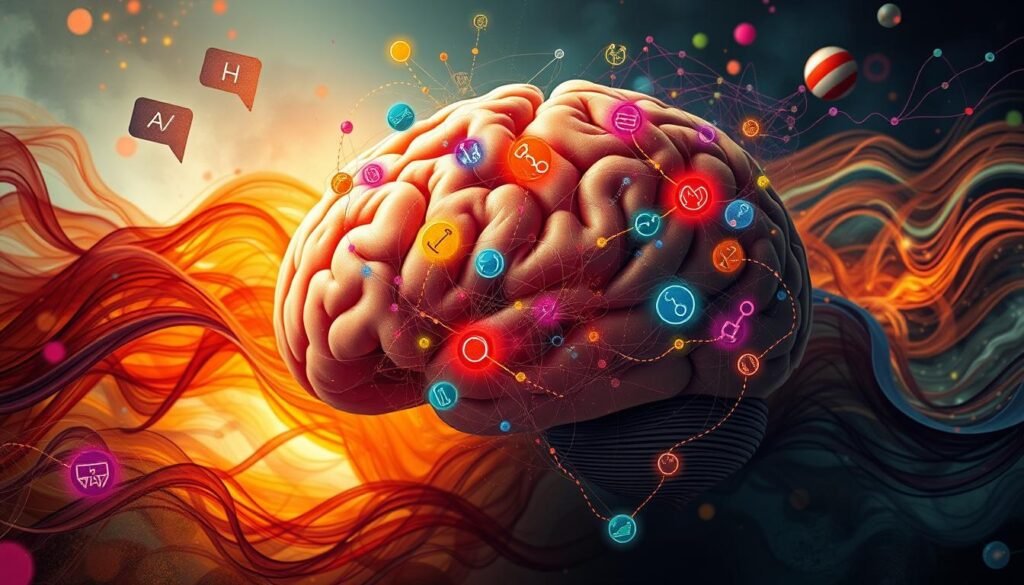
Women’s mental health issues, such as postpartum depression, are closely tied to hormonal shifts. Changes in allopregnanolone levels after giving birth can affect the brain’s GABA receptors. Menopause is another crucial time, with rising follicle-stimulating hormone levels linked to higher depression risks. Studies show women are more likely to face major depressive disorder (MDD) than men, highlighting the need for gender-specific treatment approaches.
| Life Stage | Hormonal Changes | Impact on Mental Health |
|---|---|---|
| Puberty | Estrogen and progesterone fluctuations | Increased vulnerability to depression |
| Pregnancy | Rising hormone levels | Postpartum depression risks |
| Menopause | Declining estrogen and progesterone | Increased depressive symptoms |
| Men | Low testosterone levels | Mood alterations and fatigue |
It’s crucial to address hormonal changes to improve depression treatment outcomes. Knowing how hormonal fluctuations affect mental health can lead to more effective management strategies.
Brain Structure and Function in Depression
Understanding how the brain structure and function relate sheds light on depression. Key areas responsible for mood regulation include the prefrontal cortex, amygdala, and hippocampus. These parts play vital roles in managing our emotions and reactions. Research using neuroimaging has shown changes in these areas among people with depression. This suggests a complex relationship between different brain networks in managing mood.
Areas of the Brain Linked to Mood and Emotion
Studies show the amygdala reacts strongly to sad images in people with depression. This reaction is linked with trouble managing emotions, showing its importance in mood disorders. On the other hand, the nucleus accumbens shows less activity, indicating a struggle to feel pleasure. Changes in the prefrontal cortex, which helps us think and control emotions, are also common. These changes further prove that depression has a biological basis.
Neuroimaging Studies and Findings
Neuroimaging is key to linking brain activity with depression. Using MRI scans, researchers have found that people with depression process negative emotions and pleasures differently. This ties back to a specific study on neuroimaging and depression, pointing out the importance of precise interventions. Modern neuroimaging highlights the direct connection between certain brain changes and mood management.
Inflammatory Processes and Depression
Inflammation is closely linked to mood disorders. It plays a key role in how our brains work and our feelings. When people have high levels of inflammation, they’re more likely to feel depressed. This shows how closely our body’s inflammation and emotions are connected.
The Role of Inflammation in Mood Disorders
Inflammation affects how we feel. Tiny proteins called pro-inflammatory cytokines are released when we’re sick. They make us feel similar to when we’re depressed. People prone to depression often have more inflammation. This suggests stress and inflammation are related. Chronic inflammation can make us feel tired, anxious, and low, just like in depression.
Research Linking Inflammatory Markers and Depression
Studies have found a link between inflammation and depression. Being around a lot of inflammation can make people act as if they’re sick or depressed. Long-term inflammation can make people withdraw or be on high alert, symptoms of depression. Brain immune cells, called microglia, show us how brain inflammation is important in mental health. This makes scientists interested in inflammation’s role in mood disorders.
Oxidative Stress and Its Contribution
Oxidative stress affects mental health and mood disorders like depression. It happens when there’s more free radicals than antioxidants in our body. This imbalance leads to damage in our cells. When it comes to depression, such imbalance makes symptoms worse and affects mental well-being.
Understanding Oxidative Stress and Mental Health
Studies show that people with major depressive disorder (MDD) often have high markers of oxidative stress and inflammation. High levels of reactive oxygen species (ROS) can harm the body in several ways. This may start or worsen mood disorders. Damage to fats, proteins, and DNA in the brain hurts neuron function.
The brain’s cells are especially at risk due to their high energy use and low antioxidant defenses. This makes it critical to address oxidative stress when treating depression.
Antioxidants and Their Potential Effects on Depression
Antioxidants are key in fighting oxidative stress and keeping the mind healthy. Important antioxidants, such as vitamins C and E, can help balance ROS and antioxidants. Research suggests antidepressants might also act as antioxidants. This could add to how well they work against depression.
Boosting antioxidants could be a new way to reduce oxidative harm. It might help people with mood disorders feel better.
Circadian Rhythms and Depression
The link between our body clocks and depression is more and more clear. When these natural schedules get upset, it can really shake up how we sleep and feel, leading to mental health problems. Things like staying up late and too much artificial light at night can make depression worse. With around 20 million Americans battling depression each year, it’s crucial to get how sleep and mood work together.
The Role of Sleep Patterns in Mood Disorders
Research shows how vital our sleep cycles are when dealing with mood problems. People with major depression often sleep and wake up later, which is a key sign of their struggle. Using modern tech to track movement and rest, studies have found it’s not just about how well or how much you move. But when you do these things matters even more. Sleeping well at the right time can make a big difference for our mental well-being.
Disruptions in Circadian Rhythms and Their Consequences
Sleep troubles have a big impact. A whopping 80% of folks in modern cities face too much artificial light at night, messing up their internal clocks. For those working nights, not sleeping right and feeling super tired during the day are common issues. This constant out-of-sync feeling can make you irritable and anxious, just like in some animal research. This highlights how crucial it is to fix these clock disruptions when treating depression. Looking into treatments like chronotherapy or light therapy could help ease the troubles caused by these issues. To dive deeper into this topic, check out this article.

Epigenetics: The Link Between Environment and Biology
The link between epigenetics and depression shows how the environment can shape our biology. Studies have found that environmental changes can turn genes on or off. This can greatly affect our mental health, especially when it comes to depression.
Epigenetics involves changes in how your genes work. External factors can cause these changes. They can lead to big shifts in gene activity, which might influence depression risks.
How Environmental Factors Influence Genetic Expression
Things like stress or trauma can cause epigenetic changes. These changes may make someone more likely to face mood disorders. It shows how our experiences, especially the hard ones early on, can affect our mental health.
It’s important to understand how these changes happen. This knowledge helps in tackling mental health issues linked to epigenetics and depression.
Research on Epigenetic Changes in Depression
Researchers have identified genes that play a role in depression. These include SLC6A4 and COMT. These findings reveal that our genetic makeup can be influenced by the environment.
One main process in epigenetics is DNA methylation, which usually keeps gene activity stable. However, stress can disrupt this process. This highlights the complex way that genes and environment interact, impacting our mental health.
Conclusion
Learning about depression’s complexity is key. This includes looking at the big role biological factors play in it. Things like neurotransmitter imbalances, hormonal changes, and genes are big players. These elements closely interact, showing depression comes from many causes.
The next steps in depression research will aim to improve how we treat it. This will involve looking at both biology and how we live. For example, we’ll study the impact of depression in later life, which can raise dementia risk. This highlights the need for treating depression in ways that look at the whole picture, especially for older people.
Also, we’re finding out how our genes can change based on what happens in our lives. Understanding this can help doctors come up with better ways to help people. For more on how changes in neurotransmitters can affect depression, check out this link. Knowing all aspects of biological factors is crucial for fighting depression more effectively.