Did you know recovering from one hour of lost sleep takes a surprising four nights? This fact shows how vital good rest is every day. Adults need between 7 and 9 hours of sleep each night. Knowing about sleep hygiene is key to improve our mental health. Sleep doesn’t just stop us from feeling tired. It plays a big role in controlling our moods and handling stress.
Today, poor sleep can lead to serious mental health problems. It’s important to see how good sleep habits can make lives better. By understanding sleep hygiene, readers can boost their sleep quality. This, in turn, helps improve their mental health.
Key Takeaways
- Quality sleep directly influences mood and mental health.
- Four nights are needed to recover from just one hour of sleep loss.
- Maintaining a regular sleep schedule promotes better sleep quality.
- Poor sleep hygiene can escalate symptoms of anxiety and depression.
- Consulting with a mental health professional can enhance sleep practices.
- Awareness of dietary choices is essential for optimal sleep quality.
Understanding Sleep Hygiene
Understanding sleep hygiene is key to better sleep and mental health. It involves certain practices and habits that help you sleep well each night. It’s not just about how long you sleep, but also how well you sleep.
Poor sleep hygiene can cause daytime tiredness, trouble falling asleep, and waking up often during the night. Keeping good sleep habits helps with these issues, which supports mental health. Lack of sleep can also increase stress hormones, leading to irritability and frustration. Not sleeping enough can make anxiety and depression worse, making daily stresses harder to handle.
Many people have trouble sleeping. A study involving over 22,000 adults from 13 countries found that one in three had insomnia symptoms. This highlights the importance of good sleep hygiene. An important step is to have a bedtime routine that helps you relax and prepare for sleep.
The American Academy of Sleep Medicine recommends at least 7 hours of sleep for adults. While adults need 7-9 hours, teenagers should get 8-10 hours for their health and well-being. Sleeping well improves thinking, focus, and decision-making. This helps with productivity and emotional strength.
| Age Group | Recommended Sleep Duration |
|---|---|
| Adults | 7-9 hours |
| Teens | 8-10 hours |
| Older Adults | 7-8 hours |
Good sleep hygiene includes keeping a regular schedule, having a relaxing bedtime routine, and making your bedroom comfortable for sleep. Healthy sleep habits can greatly improve mental health and quality of life.
The Importance of Sleep for Mental Health
Sleep is crucial for our mental health. It does more than just help us rest. Getting enough sleep is key to staying emotionally stable and thinking clearly. When we don’t sleep well, our brain chemistry changes. This can lead to mental health problems like depression and anxiety.
About 33% of people around the world have insomnia. In the U.S., a third of adults don’t get enough sleep, says the CDC. This lack of sleep harms our daily lives. It also links to heart disease and diabetes. Sleep problems and mental health issues often make each other worse. They create a cycle that’s hard to break.
People with insomnia are twice as likely to get depressed. Anxiety and sleep issues are also closely connected. Up to 90% of those with PTSD have trouble sleeping. This shows we need to find better ways to help people sleep better.
Different mental health problems affect sleep in various ways. People with ADHD often find it hard to fall asleep. This makes their days tougher. Those with bipolar disorder also face sleep challenges. This impacts their quality of life and treatment.
Treatments like cognitive-behavioral therapy for insomnia help a lot. They can reduce symptoms of depression, anxiety, and nightmares. This shows how important good sleep is for our mental well-being. It’s a big part of taking care of our mental health.
| Condition | Sleep Impact | Prevalence of Sleep Issues |
|---|---|---|
| Depression | Insomnia or hypersomnia | 75% |
| PTSD | Sleep disturbances | 80-90% |
| ADHD | Difficulty falling asleep | 25-55% |
| Bipolar Disorder | Varied sleep patterns | Common |
| Anxiety Disorders | Hyperarousal leading to insomnia | Common |
There’s a strong link between sleep and mental health. Good sleep habits are essential for mental and cognitive well-being. Creating a good sleep routine is key. It’s the foundation for better mental health.
Signs of Poor Sleep Hygiene
Knowing the signs of poor sleep hygiene can really change how you sleep. Signs like always feeling irritable, finding it hard to focus, and feeling very sleepy during the day are common. Not being able to sleep well and having an unpredictable sleep schedule are clues too.
Relying on things to help you sleep can show deeper problems. This need can mean you’re not sleeping enough, affecting how you think and handle emotions. Not getting enough sleep can make everyday life harder and lead to more issues.
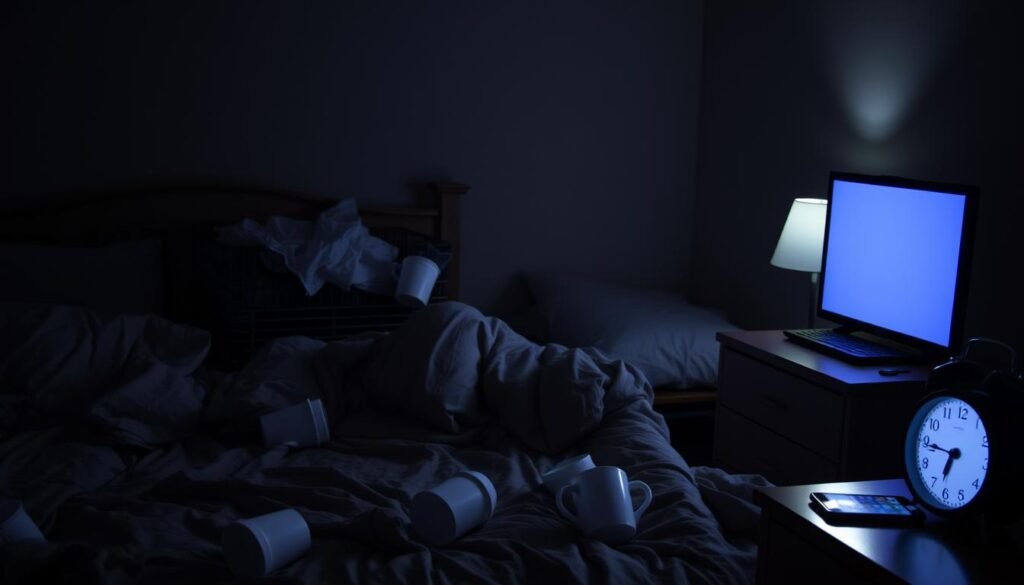
It’s important for people who want to feel better mentally to recognize these signs. Knowing what they mean can help them tackle their sleep problems head-on.
| Signs of Poor Sleep Hygiene | Associated Sleep Deprivation Effects |
|---|---|
| Irritability | Increased stress levels |
| Trouble concentrating | Impaired cognitive function |
| Excessive daytime sleepiness | Lower productivity |
| Inconsistent sleep patterns | Disruption in emotional stability |
| Reliance on sleep aids | Potential addiction or reliance issues |
| Difficulty falling asleep | Heightened anxiety levels |
Dealing with these signs early can lead to better sleep habits. This, in turn, can improve your overall health.
Factors Impacting Sleep Quality
Many things can affect how well you sleep. What you eat is really important. For example, certain foods and drinks can make it hard to sleep well. Things like caffeine should not be had before bed. Understanding how food impacts sleep can help you make better choices.
Where you sleep matters a lot too. The temperature, how much light there is, and noise can all make a difference. To sleep better, try using blackout curtains and keeping the room at a comfy temperature. Also, try to keep it as quiet as possible. This can help you sleep more soundly.
Feeling lonely or stressed can also mess with your sleep. This is especially true for older people. Stress can make it hard to sleep well and affect your sleep’s quality. The link between sleep problems and mental health issues like depression shows why it’s key to tackle these issues.
Good sleep habits are really important. Try to go to bed at the same time every night and cut back on screen time before bed. Scientists, like those at the University of Chicago, have found that getting enough good sleep is crucial for memory and staying healthy. By understanding what affects your sleep, you can make changes to sleep better and improve your health.
| Factor | Impact on Sleep Quality |
|---|---|
| Nutrition | Poor dietary habits can lead to sleep disturbances. |
| Sleep Environment | Temperature, light, and noise levels directly affect sleep quality. |
| Emotional State | Anxiety and stress levels can disrupt sleep patterns. |
| Physical Activity | Regular exercise can improve sleep quality. |
The Impact of Sleep Hygiene on Mental Well-Being
Understanding the link between sleep hygiene and mental well-being is important. Good sleep can boost your mood and brainpower. But, poor sleep habits can harm your mental health. Sleep and mental health are closely tied, but many don’t realize this connection.
Connection Between Sleep and Mental Disorders
Many people with mental health problems also struggle with sleep. Over 300 million worldwide have depression, and about 75% of them can’t sleep well. In the U.S., 20% of adults and 25% of teenagers face anxiety issues. Sleep problems and mental disorders often feed into each other. Bad sleep can make anxiety worse, and high anxiety can ruin sleep, making a harmful loop.
Physical Effects of Sleep Deprivation
Sleep loss doesn’t just affect your mind; it hits your body too. It can make you irritable, moody, and less in control of your emotions. People not getting enough sleep may have trouble remembering things, paying attention, and making decisions. This can make mental health issues like bipolar disorder and schizophrenia even harder to handle. The impact of sleep loss highlights why good sleep habits are so vital.
Creating an Ideal Sleep Environment
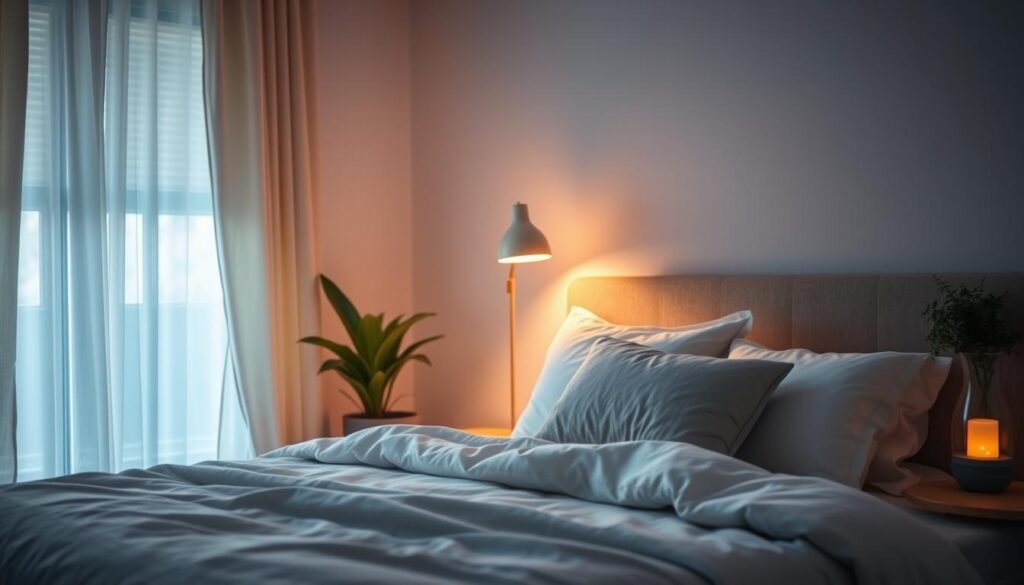
Creating the right sleeping ambiance is key to better sleep. Comfortable mattresses and pillows make a big difference. They help you fall asleep faster and stay asleep longer.
Keeping your bedroom perfect means controlling a few things. It should be cool, between 60-67 degrees, for best sleep. Block out light with blackout curtains. And, if noise bothers you, try white noise machines or apps.
Adding relaxing scents like lavender can help, too. A calming atmosphere isn’t just about the room but also about readying your mind. Activities like reading or deep breathing before bed help you switch off for the night.
The table below shows some top tips for a great sleep space:
| Factor | Recommended Action |
|---|---|
| Temperature | Keep the room cool (60-67°F) |
| Light | Use blackout curtains to block outside light |
| Noise | Utilize white noise machines or sound apps |
| Bedding | Select comfortable mattresses and pillows |
| Scent | Introduce calming scents like lavender |
| Routine | Incorporate calming activities before bedtime |
By using these strategies, you can really up your sleep game. They lead to better sleep hygiene and a healthier routine. This makes for a restorative night’s sleep that boosts your mental and physical health.
Healthy Sleep Habits for Better Sleep
Getting better sleep starts with healthy habits. A steady sleep routine and managing stress are key. They help improve how well you sleep. Keeping the same sleep schedule makes falling asleep and waking up easier. Try calming activities like reading or stretching before bed. This makes it easier to fall asleep.
Establishing a Sleep Routine
Set a specific time to go to bed and wake up, even on weekends. Doing so helps your body’s sleep-wake cycle. An effective sleep routine includes:
- Going to bed and waking up at the same time each day.
- Having a relaxing pre-sleep ritual, like a warm bath or meditation.
- Avoiding exciting activities and screens at least an hour before bedtime.
Managing Stress for Improved Sleep
Stress management is crucial for good sleep, especially if you often find it hard to relax. High stress can make it tough to get good sleep. Using mindfulness and relaxation methods can lower stress levels.
Here’s how to manage stress better:
- Do deep breathing exercises or yoga to relax.
- Exercise daily to help fight stress.
- Write in a journal to help clear your mind.
Mindfulness and Relaxation Techniques
Mindfulness and relaxation techniques are key for better sleep. Being mindful means focusing on the now without worry about what comes next. This reduces the stress you feel before bed, helping you find peace. Techniques like deep breathing and relaxing muscles step by step are good for calming down at night.
To make mindfulness work better, certain ideas help. The Beginner’s Mind suggests not letting past sleep problems affect your current outlook. Non-striving means letting sleep happen without forcing it. Letting go is about not seeing sleep as an issue, and non-judging means not thinking badly about being awake sometimes.
The acceptance idea is realizing we can’t control sleep. Believing our bodies know how to balance sleep is key. Patience reminds us that improving sleep is a process. Being thankful for the good in life can lessen sleep-related stress.
Experts advise mindfulness meditation for 20-30 minutes six days a week or just 10 minutes daily. This can greatly enhance how well you sleep. Techniques like breathing with your diaphragm, the 4-7-8 method, and yoga nidra set the stage for rest. Relaxing your muscles bit by bit is also crucial for sleep quality.
Regular practice of these relaxation methods brings better results than using them now and then. An ideal sleep space is quiet, dark, and cool. This makes relaxation techniques more effective.
| Technique | Description | Benefits |
|---|---|---|
| Mindfulness Meditation | Focused attention on the present moment without judgment. | Reduces anxiety, improves relaxation, enhances sleep quality. |
| Diaphragmatic Breathing | Breathing deeply to engage the diaphragm. | Increases relaxation, reduces stress, improves breathing efficiency. |
| 4-7-8 Breathing | Inhale for 4 seconds, hold for 7 seconds, exhale for 8 seconds. | Promotes relaxation, aids in falling asleep. |
| Yoga Nidra | A restorative practice that combines meditation and relaxation. | Induces calmness, reduces insomnia symptoms. |
| Progressive Muscle Relaxation | Tensing and relaxing muscle groups to release tension. | Enhances relaxation, prepares the body for sleep. |
Conclusion
It’s very important to understand how good sleep habits affect our mental health. About 75 percent of people in the US have trouble sleeping, and this can lead to feeling depressed. Good sleep helps us stay in a good mood and think clearly. So, by sleeping well, we can lower the chance of having sleep problems that might suggest we have a mental health issue.
Also, the data shows a strong link between how well we sleep and our mental health. For example, if you have insomnia, you’re much more likely to feel really depressed or anxious. This fact shows how crucial good sleep is for keeping our minds strong and our emotions in check.
Putting sleep first not only helps with mental health but also makes life better overall. By sticking to a bedtime routine and being aware of what affects our sleep, we can create a good sleeping environment. This leads to a healthier mind and a happier life.