About 75% of people feel less stressed after doing art. This fact shows how much hobbies and interests can help our minds. In our busy lives, making time for fun activities is crucial for a good balance.
Hobbies can really reduce stress and make us feel happier. Research points out that people who regularly enjoy activities like painting or sports are mentally healthier. Hobbies give us a break, make us happier, connect us with others, and help keep us fit.
Key Takeaways
- Engaging in hobbies can lower cortisol levels, reducing stress.
- Creative activities contribute to improved mental well-being and mood enhancement.
- Regular participation in physical hobbies can diminish symptoms of anxiety and depression.
- Spending time in nature for just 10 minutes can positively impact mood and focus.
- Integrating leisure activities into daily routines promotes a healthy work-life balance.
Introduction to Mental Wellness and Hobbies
Mental wellness is about feeling good and managing life’s challenges. It means knowing your abilities and dealing with stress well. The idea of mental wellness shows how mental health helps us grow. Hobbies are important for mental health. They bring happiness and help deal with stress, improving our mental health.
Research gives us some important numbers. Two thirds of Americans might start to struggle with their memory by age 70. In 2023, the U.S. Surgeon General called loneliness a big problem, especially for those over 55. They are the loneliest. Hobbies can combat this. They can make people feel less sad and more content. Studies show engaging in art lowers stress hormones in 75% of people.
Creative hobbies do more than make us feel good in the moment. They have long-term benefits. For example, in New Zealand, they found that creative activities make people happier over time. Adults playing team sports are less depressed and anxious. Physical hobbies help too. They can lower stress, blood pressure, and heart rates.
Even 10 minutes spent outside can boost your mood and sharpen focus. It’s a great idea to spend a few hours every week on hobbies you enjoy. This can greatly help your mental well-being. It’s a key to feeling better and enjoying life more.
The Importance of Engaging in Leisure Activities
Leisure activities are key to a healthy lifestyle. They offer breaks from daily stress, helping you find peace. Hobbies improve your mood, lower stress, and boost your well-being.
Adding fun and health-focused hobbies like yoga, dancing, or painting to daily life is great. They encourage physical activity, helping to ward off diseases. Even 20 minutes of active hobbies a week can boost both physical and mental health. Activities that make you think also improve memory and brain function.
Leisure activities are doubly good. They relax you and improve mental health. Hobbies give a positive way to escape stress and find happiness. Enjoying hobbies with others also helps make friends, boosting self-esteem and providing stress support.
So, having leisure time is crucial for a balanced life. It fights anxiety and loneliness. And it makes life fuller through connections and happiness.
| Hobby Type | Benefits |
|---|---|
| Physical Activities (Yoga, Dancing) | Improves flexibility, boosts mood, reduces chronic illness risk |
| Mental Stimulation (Puzzles, Games) | Enhances memory, reduces cognitive decline, relieves stress |
| Creative Hobbies (Painting, Knitting) | Fosters relaxation, promotes social connections, enhances joy |
| Social Hobbies (Card Games, Scrapbooking) | Improves self-esteem, reduces anxiety, fosters friendships |
The Benefits of Hobbies and Interests for Mental Wellness
Exploring different hobbies and interests is good for your mental health. These activities make you feel positive and strong. They also make you happier. Spending time doing things you enjoy has big benefits for your mind.
Boosting Mood and Optimism
Many studies show creative activities make people happier and more optimistic. A survey by the Australian Psychological Society found hobbies help manage stress. Just two hours a week doing something creative can make you feel more positive. Young people especially feel better when they do things they enjoy.
Diminishing Stress and Anxiety Levels
Hobbies help a lot with stress relief. Gardening for 30 minutes every day can cut stress by up to 15%. Playing team sports also lowers the chance of feeling anxious or depressed. Yoga is great too, cutting anxiety and depression symptoms by half. Dancing and outdoor sports improve your heart health and mood. These activities show how hobbies are key to feeling emotionally strong.
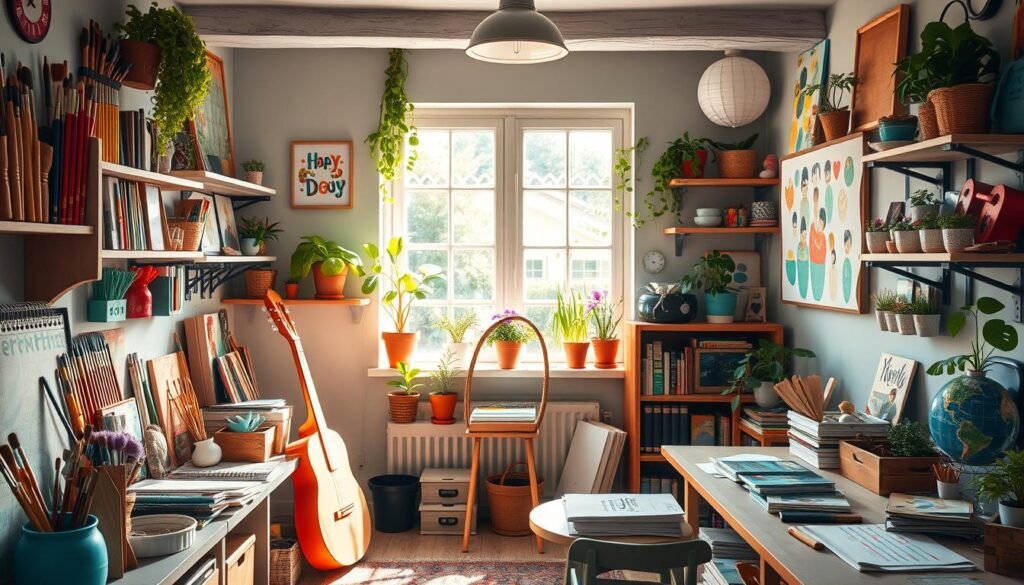
Rediscovering Joy Through Personal Interests
Revisiting childhood hobbies can add excitement to our daily lives. Activities like playing an instrument or getting back into sports can be a fun escape. They bring happiness, a sense of achievement, and help us feel in control.
Studies show that fun hobbies can make us feel happier and more hopeful. Finding joy in hobbies is key to our mental health. It helps us be creative and feel refreshed, making our lives more fulfilling.
Hobbies also help us connect with people who like the same things. This creates a community feeling, which is great for our emotional health. Doing things we love helps us learn about ourselves. This leads to better self-esteem and understanding of what makes us happy.
Keeping up with hobbies regularly is important. Spending just ten minutes a day on a hobby can make a big difference. Trying different activities until we find the right one can lead to lasting happiness.
| Hobby Type | Benefits for Mental Wellness | Recommended Time |
|---|---|---|
| Music | Enhanced mood and relaxation | 10-30 min daily |
| Sports | Increased physical health and stress reduction | 30-60 min several times a week |
| Arts and Crafts | Boosts creativity and mindfulness | 15-45 min a few times a week |
| Gardening | Reduces anxiety and enhances focus | 30 min a day |
| Reading | Promotes relaxation and mental engagement | 20-60 min daily |
Hobbies are not just fun. They play a big role in keeping our minds healthy. Rediscovering hobbies can change everyday life for the better. This leads to a happier, well-balanced life.
Using Hobbies to Tackle Stress
Engaging in hobbies is a great way to handle stress. By doing things you enjoy, like gardening, painting, or sports, you can feel recharged. This improves your mental health. The American Psychological Association found hobbies prevent burnout and boredom, which can lead to depression.
Hobbies such as running or workout classes boost both physical and emotional health. Studies show they help lower blood pressure, reduce stress, and improve sleep. Team sports and dance provide both exercise and social time. This can reduce feelings of loneliness that often lead to depression.
Journaling can help manage anxiety, and painting can be a way to relax and find fulfillment. Taking time for hobbies offers a break from daily stress. This helps fight anxiety and depression with an active approach.
| Hobby | Benefits | Stress Relief Techniques |
|---|---|---|
| Running | Boosts serotonin levels; improves mental health | Physical exercise; enhances mood |
| Gardening | Positive impact on mental health; relaxation | Mindful engagement with nature |
| Painting | Creative expression; sense of accomplishment | Calming effect; allows for self-exploration |
| Reading | Transports mind; reduces stress | Escapism; mental engagement |
| Fishing | Relaxation; sense of fulfillment | Mindful connection with the environment |
Adding hobbies to our daily lives builds emotional strength, improves how we feel about ourselves, and helps us connect with others. Hobbies aren’t just fun. They are key to keeping our minds healthy and increasing happiness in our lives.
Building Connections Through Shared Interests
Hobbies are great for making friends through shared interests. This connection is key for feeling part of a community. By taking part in hobbies, people get to meet others who like the same things. This creates a space where friendships can grow and well-being increases.
Creating Community and a Sense of Belonging
Joining groups, like book clubs or sports teams, is a great way to connect. Surveys show that 72% of people felt hobbies helped their mental health during the pandemic. By sharing interests, individuals build stronger social networks. This leads to a more fulfilling life.
Friendships and Emotional Support
These friendships offer lots of emotional support and boost well-being. Doing activities together deepens these bonds. The value of these social ties is huge. They improve mental health and inspire people to follow their passions together. Participating in these activities also reduces loneliness, helping individuals to flourish in life. For tips on taking care of yourself, check out this resource.
Mindfulness and the Present Moment
In today’s world, it’s easy to lose touch with the here and now. Mindfulness helps us fight off stress by keeping us rooted in the present. It enables us to be mentally and emotionally strong, bettering our overall well-being.
Engaging in Mindfulness Activities
Mindfulness activities help us connect deeply with our inner thoughts and feelings. Practices like meditating, deep breathing, or focusing hobbies can clear our minds. They teach us to cherish the moment and balance our worries about past and future.
Promoting a State of Flow
Flow happens when we’re fully absorbed in something we enjoy and find challenging. Activities like gardening, knitting, or playing music can lead to mindfulness. They keep distractions at bay, sharpen our minds, and help us manage stress. Being mindful while in flow makes us emotionally stable and mentally healthy.
| Mindfulness Activities | Benefits for Mental Wellness |
|---|---|
| Meditation | Reduces anxiety and enhances focus |
| Yoga | Improves emotional regulation and reduces stress |
| Gardening | Encourages a sense of peace and connection with nature |
| Art and Craft | Promotes creativity and relaxation |
| Playing Music | Enhances mood and provides emotional expression |
Cognitive Stimulation and Brain Exercise
Getting into hobbies is a great way to stimulate your brain and stay sharp. These activities boost mental agility. They need us to think critically, be creative, and solve problems. This helps keep our minds in top shape.
Enhancing Mental Agility
Research shows that mixing up our activities can wake up the hippocampus. That’s the brain’s key area for memory and thinking skills. Word puzzles and jigsaws are fun ways to make our brains work harder. They’re not just amusing; they’re vital for learning new skills for mental health.
People who mix up their routines tend to keep their minds sharp, even as they age. This can be especially helpful for seniors.
Adopting New Skills through Hobbies
Starting new hobbies like gardening, painting, or picking up a new language can sharpen your focus. These pastimes help with memory and keeping the mind fit. Crafts have been linked to a lower risk of brain decline.
Doing things with others in your community can also keep your mind strong. It helps fight off problems like dementia in later years.
Adding fun brain exercise activities to your everyday routine can make a big difference. Playing an instrument or dancing brings happiness and keeps the mind young. These hobbies create a space where learning for mental health is easy and natural.
Personal Growth and Self-Discovery
Hobbies open doors to personal growth and better self-awareness. They let us explore interests that can change us deeply. Discovering new sides to our personality boosts self-esteem and happiness.
When we face challenges in our hobbies, we grow stronger and more confident. Mastering a new instrument or art skill proves our abilities. This confidence spills over into other parts of life, improving our mental health through personal interests.
Engaging in intriguing activities regularly helps us tackle life proactively. It helps identify what stresses us out. By exploring hobbies, we understand our likes and drives better. We learn ways to handle stress and control our emotions.
Think of this image as a symbol of the growth we experience by pursuing hobbies.

Finding Work-Life Balance through Hobbies
Finding balance in today’s busy world is tough. Work often takes over our personal time. Leisure time benefits come from making hobbies a priority. Hobbies help us take a break from work stress.
Hobbies are a great way to relieve stress. They let us escape work worries. Activities like cooking or painting add joy to our lives. Puzzles or chess boost our brains and give us a mental pause. This refreshes us for better focus at work.
Hobbies also help us connect with others. Joining a team or club builds friendships. It makes us feel less alone. These connections boost our confidence. They make us feel we belong. Hobbies help us keep learning and growing.
Fun fact: hobbies actually make us more productive. Taking breaks to do something fun refreshed our motivation. Yoga or meditation can improve our focus and decisions. This helps balance work and fun.
Studies show hobbies are good for us. People with hobbies are healthier and happier. Students with after-school activities are less stressed. This shows how important hobbies are for our well-being.
Conclusion
Hobbies and personal interests are key to better mental health. Studies show they do more than bring joy. They cut stress, boost social ties, and help us grow.
By making time for fun activities, we really help our mental health. This leads to a happier, fuller life.
Fun activities can lower depression and anxiety. They create mindfulness and a strong sense of purpose. Hobbies protect us from stress’s harm, making us more emotionally stable and satisfied.
Enjoying hobbies makes us happier and teaches self-care. This helps us live a more balanced, exciting life.
It’s important to make hobbies a key part of mental health care. When more people enjoy their leisure time, our communities become stronger. We build connections that support our mental and emotional health.