What if the secret to understanding depression was in our brain’s activity? Every year, millions in the U.S. struggle with anxiety and depression. Brain scans are now giving us a close look at the brain’s role in these issues. They help us see how our brains work differently when we’re depressed.
More people are now getting personalized plans from places like the J. Flowers Health Institute. Because of this, the use of brain imaging is becoming more important. Researchers are unveiling the brain areas linked to anxiety and depression. This means treatments can be designed just for you.
Explore more about how machinelearning can enhance depression treatment strategies
Key Takeaways
- Brain scans are key in understanding depression’s root in the brain.
- Imaging techniques reveal the parts of the brain that handle emotions.
- fMRI scans are at the forefront of studying depression-related brain activity.
- Custom treatment plans are improving patient outcomes, thanks to these advances.
- Detecting hormone imbalances and brain structure is crucial for diagnosing depression.
The Role of Brain Scans in Mental Health Evaluation
Brain scans are crucial in assessing mental health. They give us clear data that helps beyond just talking to patients. These scans show changes in the brain linked to various conditions, like depression.
SPECT imaging is a key tool in this area. It has solid proof backing its use for many mental health issues. You can find SPECT scanners in major hospitals around the world.
When it comes to cost, SPECT imaging is more affordable than others. A SPECT scan costs about $1,100, while a PET scan might be over $3,800. SPECT is also safe, with radiation levels considered low risk.
Adding techniques like SPECT can help doctors understand and diagnose mental illnesses better. Innovations in imaging are helping predict how well treatments will work. This leads to treatments tailored to each person, which could improve health outcomes a lot.
To learn more about how brain scans help in mental health care, check out this resource.
Understanding Different Neuroimaging Techniques
Neuroimaging techniques are important for diagnosing mood disorders, like depression. They provide unique insights into the brain. This helps doctors create better treatment plans.
One key method is functional magnetic resonance imaging (fMRI). It measures brain activity by checking blood flow and oxygen levels. This is crucial to see how the brain acts in depressive episodes.
Positron Emission Tomography (PET) is another vital technique. It watches the brain’s metabolic processes. PET uses glucose tracers to look at conditions like Alzheimer’s and depression. The details from PET scans help doctors make treatment choices.
fMRI and PET scans are well-known. But, methods like Electroencephalography (EEG) and Diffusion Tensor Imaging (DTI) also help understand depression. EEG finds electrical activity in the brain related to anxiety and depression. Meanwhile, DTI traces the brain’s white matter to see changes linked to mood disorders.
For an easy comparison of neuroimaging methods, here’s a table:
| Technique | Primary Focus | Use in Diagnosis |
|---|---|---|
| fMRI | Brain activity (blood flow) | Understanding neural responses to stimuli |
| PET | Metabolic processes (glucose consumption) | Assessing metabolic issues linked to depression |
| EEG | Electrical activity | Evaluating conditions like anxiety and sleep disruption |
| DTI | White matter connectivity | Mapping structural integrity of brain pathways |
These neuroimaging techniques help researchers collect vital data on depression. As technology improves, the future for brain scans in treating depression is bright. This could lead to new ways to find biomarkers and create personalized treatments.
Functional MRI: A Window into Brain Activity
Functional MRI (fMRI) stands out in neuroimaging, especially for studying brain activity linked to mental health disorders like depression. It looks at how blood flow changes, showing which brain areas are active during different tasks or feelings. This way, fMRI gives clues about brain functions tied to mental health problems.
How fMRI Reveals Neural Correlates
One big plus of fMRI is it’s safe and doesn’t use radiation. It’s very detailed, showing researchers how the brain works with good clarity. By using special analysis methods, scientists find how brain activity changes in mental illnesses. For example, they’ve noticed different activity in important parts, like the anterior cingulate cortex and amygdala, in depressed people.
Benefits of Using fMRI in Depression Studies
fMRI has really helped in understanding how treatments affect brain function in mental health. It lets scientists see how depressed people’s brains work differently than healthy ones. With better tools to analyze the data, fMRI studies are more likely to be trusted by others. This helps in creating treatments that are more personalized. Knowing how the brain controls emotions can help in treating depression symptoms. You can learn more about how depression changes the brain here.
PET Scans in Depression Diagnosis
PET scans are crucial for understanding and diagnosing depression. They allow us to see brain activity by studying glucose metabolism. This is key to knowing how the brain uses energy. By looking at glucose use, doctors get a better view of the brain processes related to mood disorders.
Analyzing Brain Activity Through Glucose Metabolism
In people with depression, PET scans show changes in certain brain chemicals. These include serotonin, dopamine, GABA, and glutamate. Changes in these chemicals are linked to depression. Often, depressed patients show lower brain activity in areas that manage emotions. A regular PET scan is safe, giving off a small amount of radiation.
Impact of PET Scan Results on Treatment Decisions
PET scan results greatly influence treatment plans for depression. They help doctors customize treatment by understanding the brain’s metabolic patterns. Knowing specific issues with neurotransmitters helps pick the right medicine, like SSRIs. PET scans are good at checking how well antidepressants work. They also predict how patients might react to treatments.
Using PET scans more in evaluations could lead to better, personalized treatments. This could improve how well treatments work for depression. Sleep problems might hint at depression too, showing the importance of thorough checks.
Diffusion Tensor Imaging: Mapping Brain Connectivity
Diffusion tensor imaging (DTI) is a key tool in studying the brain. It helps us understand how different parts of the brain connect. By looking at white matter tracts, DTI shows us how brain regions talk to each other. This is crucial for learning about major depressive disorder (MDD).
A study with 86 people showed important differences in brain connectivity. It involved 45 MDD patients and 41 healthy people. Patients with MDD for a shorter time had different connectivity in certain brain areas than those sick longer. This shows DTI’s importance in studying brain networks related to mood disorders.
The study also discovered that MDD patients had stronger brain networks than healthy people. It found links between brain areas and how long someone has been ill. This means DTI could reveal important facts about MDD’s biology. Researchers looked at 246 brain regions and saw how depression affects them differently.
DTI looks at many aspects of brain structure. It helps us see changes in how the brain’s networks work. By studying these changes, researchers can learn more about how the brain adapts to MDD. This could lead to better ways to help people recover from this condition.
Brain Scans for Depression: What They Can Reveal
Brain scans shed light on the mental health maze. Through high-tech imaging, scientists are finding depression’s biomarkers. These markers pinpoint brain patterns tied to therapy responses.
Identifying Biomarkers for Depression
The brain’s network activities are key to spotting depression markers. One study showed those with depression have a bigger salience network than healthy folks. This means their brains handle emotions and rewards differently, affecting depression symptoms. Brain scans help doctors make accurate diagnoses and craft specific treatments.
Potential for Personalized Treatment Plans
Brain scan data is unlocking personalized treatment doors. It shows us that people react differently to treatments like psychotherapy or drugs. For example, certain brain changes suggest better results with medication over therapy, and vice versa. Tailoring treatments to the patient’s brain can improve recovery chances.
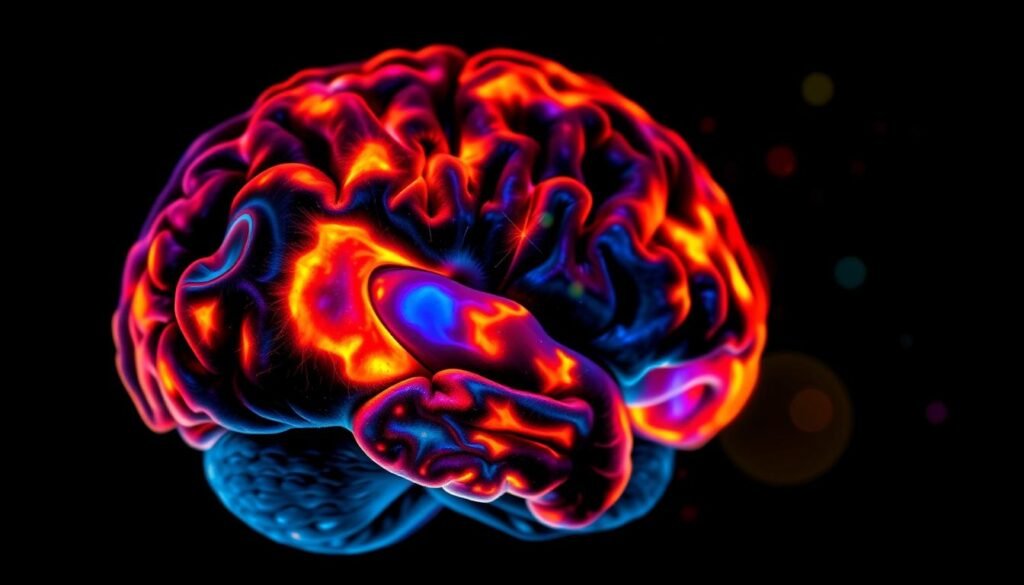
The Effect of Transcranial Magnetic Stimulation (TMS)
Transcranial magnetic stimulation (TMS) is an innovative method for treating depression. It uses magnetic fields to activate nerve cells in the brain that control mood. Studies show that TMS helps by boosting the flow of brain signals. This can offer relief to those who haven’t benefited from traditional treatments.
How TMS Works to Alleviate Depression
In a TMS session, magnetic pulses target brain areas like the left prefrontal cortex. This can improve brain connections and may bring back normal function. About half of the people treated show a positive response, making TMS a strong option for treating major depression. It’s particularly hopeful for those who’ve not responded to other treatments.
Research Findings on TMS and Brain Signal Flow
Research using neuroimaging reveals exciting changes in brain activity after TMS. Activation increases in important mood areas of the brain. Furthermore, TMS stimulates excessive activation in parts of the brain related to better mood. Clinical trials show TMS is much more effective than placebo treatments. This proves it’s a powerful tool in fighting depression.
| Statistic | Value |
|---|---|
| Lifetime prevalence of depression | 10% |
| Response rates to TMS | 50% – 55% |
| Remission rates with TMS | 30% – 35% |
| Typical sessions for TMS treatment | 20 – 30 sessions |
| Remission rates for left prefrontal cortex TMS | 30% – 40% |
| Improvements on Hamilton Depression Rating Scale | Significant |
| Common side effects of TMS | Transient headaches |
| Worldwide depression sufferers | More than 264 million |
TMS combines beneficial outcomes and minor side effects, making it a key option for redefining depression treatment. For more details on TMS, check out this comprehensive guide.
Advancements in Mood Disorder Research
In recent years, we’ve made a lot of progress in studying mood disorders, with a big focus on depression. More than 43,000 papers have been published globally in the last ten years. The U.S. is at the forefront of this research, showing strong dedication. China is also making significant efforts in this important field.
The world of mood disorder research is growing. It now includes new ways to treat these conditions. A huge number of clinical trials, over 6,500, are exploring these new methods, mainly in the U.S. This is important because the treatments we often use don’t work for everyone.
New imaging technology is helping us understand the brain’s role in mood disorders better. For instance, functional MRI and diffusion tensor imaging let us see how the brain connects differently in these conditions. This could lead to treatments that are more specifically designed for each person’s needs.
Here are some key stats that show how much we’ve learned about mood disorders:
| Metric | Data |
|---|---|
| Papers Published (2009-2019) | 43,863 |
| Patent Applications (2009-2019) | 16,228 (USA leading) |
| Registered Clinical Trials | 6,516 |
| New Antidepressants Under Development | 828 |
| Active and Effective Antidepressant Candidates | 292 |
Research continues to evolve, and it’s making a big difference in our fight against depression. With better imaging and understanding, we’re closer to improving how we treat mood disorders worldwide.
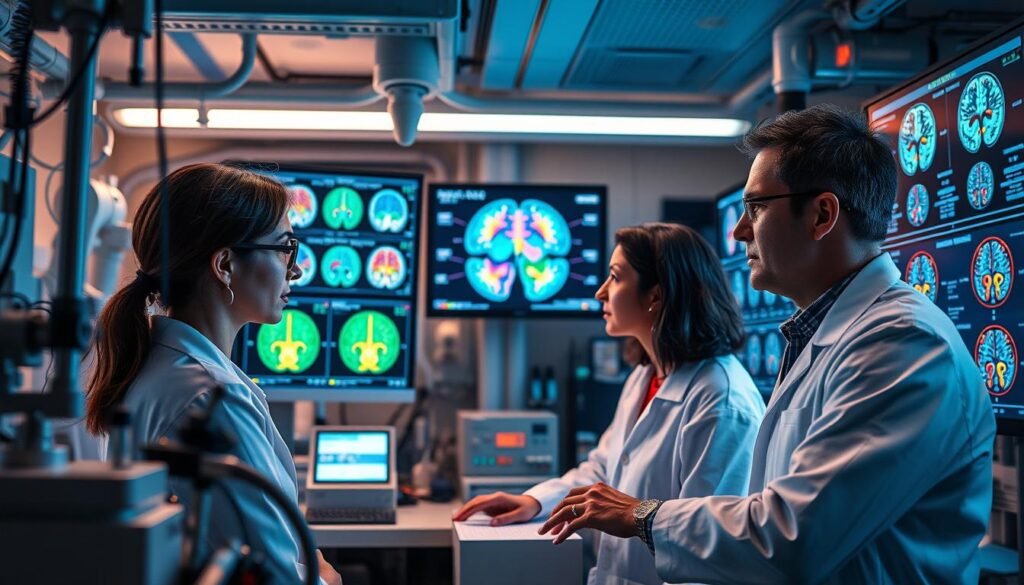
Challenges in Using Imaging Diagnostics for Depression
Imaging diagnostics provide deep insights into the brain’s function and structure. But using them for diagnosing depression is tricky. Each individual’s brain is unique in form and function, making standard diagnostic criteria hard to set using brain scans.
The complexity of depression adds to the challenge. The DSM-IV-TR allows for a diagnosis of major depressive disorder across a range of symptoms. This variation raises questions about the reliability of the diagnostic categories in use. Even with improvements, matching these categories to real psychiatric conditions is hard.
Financial issues also make advanced imaging techniques hard to access in clinics. The high costs of neuroimaging limit its use, keeping many doctors from using it regularly for depression assessment. Yet, some psychiatrists manage to offer diagnostic neuroimaging, like SPECT, within these limitations.
Additionally, imaging study results show biological changes in depression but aren’t specific or sensitive enough for clear diagnosis. The findings from neuroimaging tend to be minor. This underscores the need for more research to find biomarkers that could improve imaging diagnostics’ effectiveness in depression.
| Challenge | Description |
|---|---|
| Variability of Brain Structures | Diverse brain anatomy complicates standardization in imaging diagnostics. |
| Complexity of Depression | Diagnosis criteria allow for variability in symptom presentation. |
| Financial Constraints | High costs limit the accessibility of advanced imaging in clinical practice. |
| Lack of Specificity | Imaging findings often lack the required specificity for accurate diagnosis. |
Conclusion
Brain scans for depression have opened new paths in understanding and managing Major Depressive Disorder (MDD). These advancements show important changes in the brain that help with diagnosis and treatment planning. MRI, in particular, has been crucial in exploring the complexities of MDD for the last thirty years.
Studies with nearly 9,000 people reveal that MRI results could soon help doctors customize treatments. This moves us toward using neuroimaging for personalized medicine in managing mood disorders. Early detection of changes in brain circuits could lead to better treatment results, improving patient care.
Further research is needed to fully understand how brain structure connects to MDD. The predictive capabilities of brain scans will improve mental health evaluations. This progress promises more tailored treatments, creating therapies that match each person’s unique brain patterns.