About 5% of the United States population struggles with Seasonal Affective Disorder (SAD). This condition is more common during fall and winter. Shorter days and less sunlight can make many feel sad or moody. Luckily, light bulbs designed for seasonal depression and light therapy can really help. These lights are bright like a sunny day. They lift the gloom of seasonal depression. Let’s dive into how light therapy helps with SAD and what options are out there.
Key Takeaways
- Seasonal Affective Disorder affects approximately 5% of the U.S. population.
- Light therapy is a recognized first-line treatment for SAD.
- Light therapy lamps typically deliver 10,000 lux of light, comparable to a sunny day.
- Regular use of light therapy can significantly improve mood and energy levels.
- Choosing the right seasonal depression light bulbs can enhance treatment effectiveness.
- Combining light therapy with other treatments may yield the best results.
Understanding Seasonal Depression and Its Symptoms
Seasonal Affective Disorder, known as SAD, is a type of depression seen in fall and winter. It impacts millions in the United States, causing symptoms that affect daily life and happiness.
What is Seasonal Affective Disorder (SAD)?
Seasonal Affective Disorder happens at certain times of the year, especially when days are shorter. About 11 million Americans face SAD, and 25 million have milder symptoms, known as winter blues. Women and those living far from the equator suffer more because winter days are shorter there.
Common Symptoms of Seasonal Depression
People with SAD may experience symptoms like:
- Fatigue and constant sadness
- A higher need for sleep
- Appetite changes, craving more carbs
- Pulling away from friends and less energy
- Struggles to focus and hopelessness
Though SAD is often linked to winter, a summer version exists too. It can cause insomnia and weight loss. This shows the importance of customized treatment plans. Getting help early is key to prevent worsening symptoms and to improve mental health.
By knowing and acknowledging SAD symptoms, we can create supportive spaces. This helps in getting help in time and managing this seasonal issue effectively.
The Importance of Light in Mood Regulation
Understanding how light affects mood is key to tackling seasonal depression. Research shows light therapy boosts mood-regulating brain chemicals, like serotonin. This explains why more light can really help those with seasonal affective disorder (SAD) feel better.
The Science Behind Light and Mood
Light therapy is a go-to for SAD because bright light can spark brain activity that stabilizes mood. People undergoing light therapy often feel better, especially after 40 minutes. This time frame works better than just 20 minutes. These consistent results prove light therapy’s power in boosting mood.
How Lack of Sunlight Affects Circadian Rhythm
Too little sunlight messes with our circadian rhythm, causing sleep problems. This can make depression worse. The recurring nature of SAD makes this especially tough during the darker months. Light therapy can help fix our circadian rhythm. This means better sleep and mood.
| Exposure Duration | Mood Improvement (p-value) | Depression Score Change |
|---|---|---|
| 20 minutes | Significant (p | Lower depression scores |
| 40 minutes | Greater improvement (p | Maximum improvement achieved |
| 60 minutes | No additional benefit (p = .068) | Similar to 40 minutes |
Benefits of Seasonal Depression Light Bulbs
Seasonal depression light bulbs help those with Seasonal Affective Disorder (SAD). They mimic natural sunlight, boosting mood and easing depression symptoms. This light therapy is an effective way to improve emotional health.
How Light Therapy Works for SAD
These light bulbs can greatly enhance mood for individuals. They simulate sunlight, which affects the brain’s chemicals, regulating melatonin and serotonin. This helps manage mood disorders. With daily 30-minute sessions using a 10,000 lux light box, improvements are often seen in two weeks.
Improving Vitamin D Levels
Although these bulbs improve mood, they don’t up Vitamin D levels. For Vitamin D, sunlight or dietary supplements are needed. Optimal Vitamin D levels are crucial for mood stability and fighting seasonal depression.
Choosing the Right Light Therapy Lamp
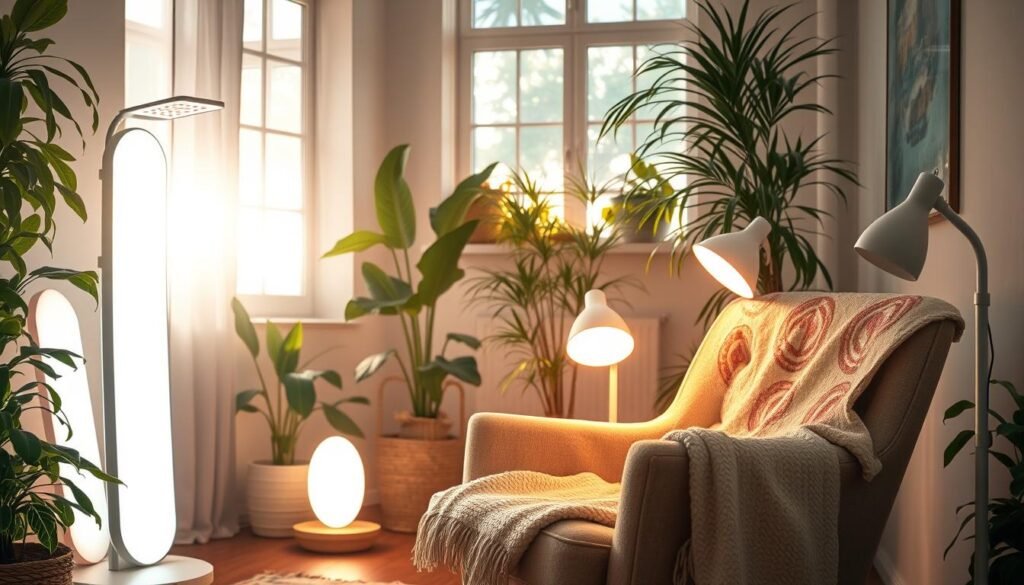
Finding the right light therapy lamp is key for those looking to ease seasonal affective disorder (SAD) symptoms. There are many models available, but it’s important to know what to look for. A lamp with an intensity of 10,000 lux is best, as it offers benefits without harmful UV rays. For good choices, check out expert recommendations.
Key Features to Look For
Shopping for light therapy lamps involves looking at several important features:
- Brightness: Aim for lamps offering at least 10,000 lux of light.
- UV Protection: The lamp should block most or all UV light.
- Size and Portability: Decide if you need a lamp that stays put or one you can move.
- Eye Safety: Choose models that keep your eyes safe from too much brightness.
- Ease of Use: Pick lamps that are easy to use in your daily life.
Recommended Light Intensity and Exposure
The success of SAD light therapy lies in using it daily. Most experts suggest 20 to 30 minutes each morning. Stay 16 to 24 inches from the lamp for the best effect. Following these steps can improve mood and energy, helping fight SAD in darker months. Sticking to this routine maximizes the benefits of light therapy for seasonal depression.

Types of Light Therapy Lamps Available
Looking into different light therapy lamps helps find good ways to fight seasonal depression. Knowing the unique qualities of each type helps people pick the right one for their needs.
Full Spectrum Lighting Options
Full spectrum lighting mimics natural sunlight. This helps improve mood and energy. They’re great for battling Seasonal Affective Disorder (SAD) because they provide the needed 10,000 lux of light.
Here are some top full spectrum lights:
- Verilux HappyLight Light Therapy Lamp – Provides 10,000 lux exposure.
- Carex Sunlite Bright Light Therapy Lamp – Priced at $68, offering 10,000 lux.
- Lavish Home Floor Lamp – Delivers an impressive 10,000 lux.
- Northern Light Technologies Boxelite – Offers intense light at 10,000 lux.
- Erligpowht Light Therapy Lamp – Also provides 10,000 lux of therapeutic light.
Portable vs. Stationary Light Boxes
Choosing a light therapy lamp involves thinking about how easy it is to move, its brightness, and if it fits your life. Portable light boxes suit travelers or those with small spaces well. Stationary lamps are great as fixed features at home. Here are the differences:
| Feature | Portable Light Boxes | Stationary Light Lamps |
|---|---|---|
| Size | Compact and lightweight | Larger and sturdier |
| Light Intensity | Minimum 10,000 lux | Designed for prolonged use at 10,000 lux |
| Pricing | Ranges from $30 to $100 | Ranges from $60 to $200 |
| Best Use | On-the-go or travel use | Home stationary treatment |
The decision between portable and stationary lamps depends on your lifestyle and needs. Both types help those suffering from seasonal depression find relief.
How to Effectively Use Light Therapy Lamps
To get the most out of light therapy for Seasonal Affective Disorder (SAD), it’s important to use it correctly. Knowing when and how close to be to your light therapy lamp can make a big difference. Also, using more than one treatment can help a lot of people feel better.
Recommended Usage Time and Distance
For good results with light therapy lamps, you need to follow some rules. If your lamp is 10,000 lux, use it for about 30 minutes every day, mainly in the morning. With a 5,000 lux lamp, aim for 45 to 60 minutes. And for 2,500 lux lamps, 1 to 2 hours is needed. Stay about two to three feet away from the lamp for the best effect. Usually, people start feeling better after a few days. Major improvements often show up by the two-week point.
Combining with Other Treatments for Best Results
Combining other treatments with light therapy can make it even more effective for some. This might mean adding medications or cognitive behavioral therapy if light therapy alone isn’t enough. Having a personalized plan that includes light therapy and other methods can be a great way to deal with SAD symptoms. If you have bipolar disorder, it’s important to talk to a doctor before starting light therapy to make sure it fits your health needs.
| Lux Level | Recommended Exposure Time | Distance from Lamp |
|---|---|---|
| 10,000 lux | 30 minutes | 2-3 feet |
| 5,000 lux | 45-60 minutes | 2-3 feet |
| 2,500 lux | 1-2 hours | 2-3 feet |
Seasonal Depression Light Bulbs: A Cost-Effective Solution
Many people find relief from seasonal affective disorder (SAD) with seasonal depression bulbs. They are less costly than typical treatments like therapy or medication. Using light therapy can greatly lift one’s mood and overall well-being. It offers an easy choice for those wanting to try light therapy at home.
Cost Comparison with Other Treatments
About 5% of people in the U.S. suffer from SAD, making effective treatments a need. Therapy and medications can be expensive, often needing many sessions or prescriptions. Light therapy, however, is more affordable. For instance, the Carex Day-Light Classic Plus light box costs about $120.
This device shines bright at 10,000 lux, helping users over time without the repeated fees of seeing medical experts.
Availability of Home Use Options
It’s easy to find light therapy products for use at home. Take the NorbSMILE A19 bulb—it’s only $19.95. It shines with over 800 lumens and lasts up to six years with regular use. Its yearly cost is just $1.76 if used four hours each day. These low-cost bulbs let anyone add light therapy to their day without the hassle of other treatments.
At-home light therapy can better your life in the darker months, all while saving money. As more people learn about it, light therapy becomes a popular choice to fight SAD. For more details on how light therapy helps with SAD symptoms, visit this resource.
User Experiences: Success Stories with Light Therapy
Many people have shared their positive experiences with light therapy. They’ve seen big changes in their mood and overall health. These stories show that light therapy can really help. This is especially true for those dealing with seasonal depression.
Real Testimonials on Mood Improvement
At Northwestern University, students have seen the benefits of white light therapy. They use it not just for seasonal depression but also to feel better and do more. Hilary De Vries, who works there, says students feel better after using light therapy regularly.
Eloise Brotzman, a student, found relief from her winter sadness with a HappyLight therapy lamp. She said it helped reduce her depression when it was dark outside. This matches studies saying light therapy and medicine together work better than just one.
Long-term Benefits of Regular Use
Using light therapy often leads to lasting improvements. People usually see changes after one or two weeks. They use it every day for 20 to 30 minutes in the morning. This helps match their body’s natural clock, making the therapy more effective.
Light therapy’s benefits keep growing. It often goes well with exercising and eating right. This creates a good cycle of feeling better.
| User | Experience | Mood Improvement |
|---|---|---|
| Eloise Brotzman | Utilized HappyLight therapy lamp | Significant relief from winter blues |
| Fitness Program Participant | Engaged in daily light therapy sessions | Enhanced feelings of wellbeing |
| Northwestern University Student | Used white light therapy for productivity | Improved sleep quality and energy |
Tips for Creating a Bright and Inviting Space
Making your living space brighter can make you feel better. It’s important to use both natural and artificial light well. This mix can make your home more welcoming and cheerful.
Lighting Arrangement for Maximum Effect
Learning to use light the right way is key. Begin by arranging rooms to get the most sunlight during daytime. Keep your curtains and blinds open to let the sunshine in.
In the evening, quickly replace any dead bulbs and choose warm light bulbs for a cozy feel.
- Place light therapy lamps where you hang out the most, like reading areas or desks.
- Adjust the brightness to suit your activity, whether you’re chilling or focusing.
- Add LED desk lamps to your workspace to help stay productive when it’s dark outside.
Combining Natural and Artificial Light Sources
Mixing natural and artificial light can really boost a room’s vibe. Start with sunlight in the morning, and if needed, use a lightbox. This helps keep you feeling good and fights off seasonal blues. Try to get some sun when it’s chilly to stay mentally healthy.
“Engaging in high-intensity aerobic exercise early in the morning has been shown to be beneficial.”
Try a sunrise alarm clock to wake up with light, like the sun’s doing it. Combine this with a breakfast full of protein for a great start. Adding bright decorations and plants that love light can also make your space lively.
| Lighting Type | Best Use | Benefits |
|---|---|---|
| Natural Light | Daytime exposure | Regulates circadian rhythm |
| Light Therapy Lamps | Morning to 8 p.m. | Combats sadness in winter |
| Warm Lightbulbs | Evening ambiance | Promotes coziness |
| Cool Lightbulbs | Daytime productivity | Enhances alertness |
By using these ideas, you can make your home bright and support your mental health in winter. To learn more about how lighting affects mood, check out this article here. Tackling clutter and adding sweet scents can also make being indoors lovely. Find out how your space impacts your feelings here.
Conclusion
Throughout this article, we’ve seen how seasonal depression light bulbs can help those with Seasonal Affective Disorder (SAD). When the darker months bring depressive symptoms, light therapy shines as a hopeful solution. Many people using these therapy lamps see big improvements, not just short-term relief but a lasting boost in mood.
For those battling SAD, it’s crucial to find the right approach. Light therapy is very promising, but combining it with therapies like cognitive behavioural therapy or medication can help even more. This combined method increases the chances of beating depression. For extra support, resources like professional mental health assistance are there to help.
Light therapy doesn’t just make daily life better; it helps create a healing space in winter. Starting the journey to better mental health can be as simple as taking small, impactful steps. It shows how important it is to care for oneself and to look for the light during dark times.