In 2016, 6.7 percent of U.S. adults experienced a major depressive episode. This shows a pressing need for effective solutions. While many people use antidepressants and therapy, some prefer natural relief. Vitamins and supplements, especially folate, have shown promise as potential mental health vitamins.
Vitamins, like folate, can play a key role in fighting depression. Studies suggest that those with low folate levels often struggle more with depressive symptoms. They might also not do as well with standard treatments. By learning more about folate and other vitamins, we see how crucial they are for mental health.
You can find out how vitamins impact mental health and discover supplements that support depression. Just visit this comprehensive article to learn more.
Key Takeaways
- 6.7 percent of adults faced a major depressive episode in 2016.
- Folate deficiency may link to a higher rate of depression.
- Natural supplements like vitamins can be complementary to conventional treatment.
- Understanding the types of folate can enhance treatment approaches.
- Healthcare professionals should oversee the incorporation of supplements.
- More research is necessary to establish the efficacy of various supplements.
Understanding Depression: A Complex Condition
Depression is a big issue in mental health, affecting many people from all walks of life. It’s caused by a mix of biological, psychological, and social factors. People with depression may feel very sad or irritated. They might also find daily activities very hard to do.
Understanding depression means looking at what causes it. Some find that usual treatments like medicine or therapy don’t help them. In fact, studies show that only 46% of patients get better with these treatments. This shows we need more ways to help people with mental health problems.
When talking about depression, it’s important to consider the whole person. This means looking at how what we eat and our social life affects our mood. Nutrients like vitamins B1, B6, B12, and folate are vital. Magnesium and zinc also play a big role in how we feel.
It’s key to understand how not getting enough vitamins and minerals can lead to problems. Bad habits like drinking too much alcohol, eating lots of sugar, and smoking can lower these nutrients. Knowing this can help people make better choices for their mental health.
| Nutrient | Role in Mental Health | Sources |
|---|---|---|
| Vitamin B1 | Supports energy levels, may reduce irritability and depressive symptoms | Fruits, vegetables, dairy, meats |
| Vitamin B6 | Essential for serotonin, melatonin, and dopamine synthesis | Meat, fish, fruits |
| Vitamin B12 | Prevents neurological issues and anemia, influences mood | Fish, poultry, eggs, low-fat milk |
| Folate (Vitamin B9) | Essential for DNA synthesis, potentially reduces depressive symptoms | Vegetables, beans, nuts |
| Magnesium | May affect mood stability; deficiency linked to personality changes | Nuts, whole grains, leafy greens |
| Zinc | Plays a role in mood regulation and cognitive function | Meat, seafood, beans |
Exploring the Role of Vitamins in Mental Health
Vitamins are super important for our mental health. B vitamins, for example, are key for a healthy brain and mood. If we don’t get enough of certain nutrients, we might feel more depressed. This is why getting the right vitamins is crucial for feeling good.
Recently, research has been looking at how certain vitamins affect our mental health. People with depression often lack vitamins B6, B12, and folate. So, vitamins might be a way to help with mood disorders.
About 28 million people worldwide deal with depression. This shows how urgent it is to find effective ways to help. Bad eating habits can make mental health worse. This highlights the importance of having vitamins in our diet.
Vitamins B, C, and D are super important for staying mentally stable. They help make neurotransmitters, which affect our mood. Low levels of these vitamins have been linked to more depression. So, eating more foods with these vitamins or taking supplements could help keep our minds healthy.
Figuring out the vitamin’s role is key to better mental health. As more research comes out, it’s getting clearer how these nutrients could be part of treating depression.
| Vitamin | Role in Mental Health | Sources |
|---|---|---|
| B6 | Involved in neurotransmitter production | Fish, poultry, potatoes, chickpeas |
| B12 | Supports nerve function and mood regulation | Meat, dairy, eggs, fortified cereals |
| Folate | Helps in DNA synthesis and brain function | Leafy greens, legumes, nuts, seeds |
| D | Regulates mood, may prevent depression | Sunlight, fortified foods, fatty fish |
Vitamin That Helps With Depression: The Science Behind Folate
Folate, also known as vitamin B9, is key for our body. It helps make neurotransmitters like serotonin and dopamine. These chemicals are crucial for mood regulation. Many people with depression lack enough folate. Studies show about one-third of depression patients have this issue.
What is Folate and its Importance?
Folate is a vitamin that dissolves in water and can’t be stored by our body. We need to get it from food or pills. It’s important for making DNA and RNA and for making red blood cells. Having enough folate can make us healthier and help fight depression. It does this by supporting our brain and keeping neurotransmitter levels right.
The Link Between Folate and Depression Symptoms
Studies link low folate to depression. People with depression often have low levels of this vitamin. This can make their mood worse. Adding folate to antidepressants can make them work better. Taking 0.8 mg of folic acid daily helps reduce homocysteine, which is good for mood.
A special folate form, L-methylfolate, helps with major depression, especially if other treatments don’t work. Doctors often suggest more folate for those with depression. This is true for people with certain gene types that affect how they process vitamins.
Folate pills are not expensive and help tackle depression symptoms. But, mixing folate with vitamin B12 needs caution. Folate can hide signs of not having enough vitamin B12. This shows why it’s important to have a balanced diet when managing depression.
The Differences Between Folate, Folic Acid, and Methylfolate
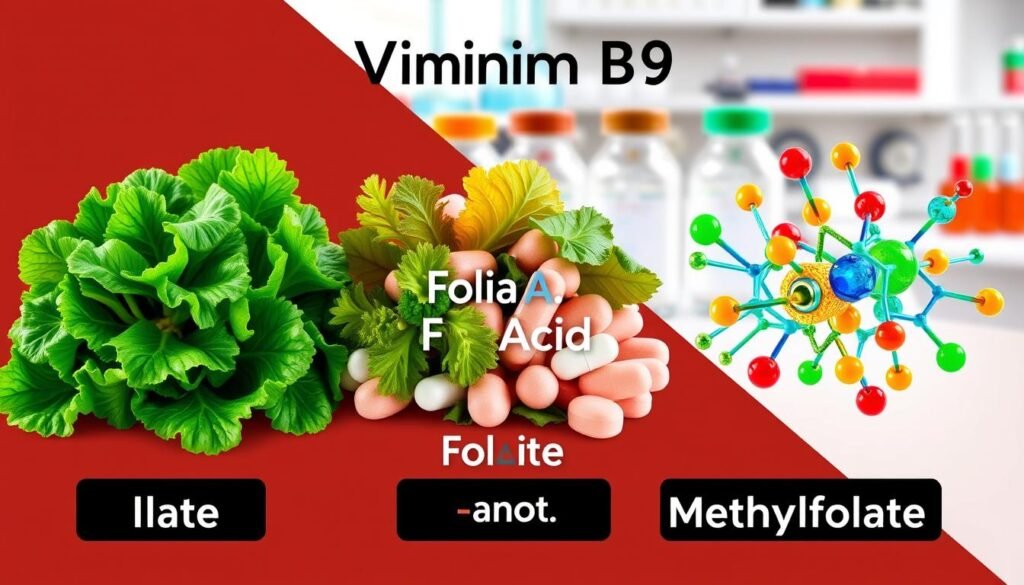
Folate, folic acid, and methylfolate are all forms of vitamin B9. They are vital for our health, especially for our minds. Knowing the differences helps us choose what’s best for our health.
Folate is vitamin B9 found naturally in food. You can find it in leafy greens, beans, and oranges. It’s key for making DNA, growing cells, and keeping our brain healthy.
Folic Acid is folate made in labs. It’s added to vitamins and food like cereal. Some people’s bodies have a hard time changing it into a form they can use. This is due to their genes.
Methylfolate is a form of folate our bodies can use right away. It’s crucial for making chemicals in our brain that affect our mood. It’s great for people who have trouble getting enough folate. It can also help those with serious depression feel better.
| Vitamin Form | Source | Bioavailability | Usage in Treatment |
|---|---|---|---|
| Folate | Natural foods | High | General health |
| Folic Acid | Synthetic supplements | Moderate | Fortification and supplementation |
| Methylfolate | Active supplement form | Very high | Treatment for depression, effective for certain genetic variants |
Understanding the differences between these forms is crucial. Especially for those who need a special kind of folate, like methylfolate. It’s often used in treatments for people who can’t process folate well or have certain gene differences.
How Methylfolate Supports Treatment for Depression
Methylfolate is key in treating depression. It’s known as 5-MTHF or L-methylfolate. This version of folate gets into the brain well. Many people have trouble changing food folate into this active form. L-methylfolate helps make depression treatment better for them.
What is 5-MTHF?
L-methylfolate, or 5-MTHF, is the easiest form of folate for the body to use. It helps control brain chemicals important for mood, like serotonin and dopamine. Studies show it helps those with depression, especially people with certain genes.
Benefits of L-Methylfolate Over Traditional Folate Forms
L-methylfolate supplements have several upsides over regular folate. Here’s a quick look:
| Aspect | Traditional Folate | L-Methylfolate |
|---|---|---|
| Conversion Requirement | Requires conversion in the body | No conversion needed |
| Effectiveness in Some Patients | May be less effective, especially in MTHFR variants | More impactful in this population |
| Dosage | Recommended daily intake approx. 400 mcg | Effective dosages in studies range from 5,000 mcg to 15,000 mcg |
| Clinical Evidence | Mixed results in studies | Significant improvements seen in clinical trials |
A 2012 study found that 15,000 mcg of L-methylfolate daily, with SSRI drugs, helped relieve depression. About 68% of patients felt better. This shows L-methylfolate could really help, especially when other treatments don’t work well.
Other Vitamins for Mental Health: B6 and B12
Vitamins B6 and B12 are key for mental health. They help keep the brain healthy and ward off mood problems. Learning about them can help you choose what to eat for better mental health.
Vitamin B6: Supporting Neurotransmitter Production
Vitamin B6 is vital for making neurotransmitters. These chemicals let neurons talk to each other. Serotonin, dopamine, and norepinephrine are important for mood and happiness. Without enough B6, you might feel irritable or depressed.
Vitamin B12: Preventing Deficiencies and Mood Disorders
Vitamin B12 stops deficiencies that could harm your mind and mood. Older people often don’t get enough B12. This can lead to depression and other mood problems. Low B12 can cause tiredness, memory issues, and irritability.
Studies show that eating more B12 can reduce depression risk. Adults over 50 with low B12 are more likely to feel depressed. About one in eight older adults doesn’t have enough B12. Taking 100 to 2000 mcg of B12 can help fight depression symptoms.
Eating foods with B6 and B12, or taking supplements, can support your brain chemicals. This helps improve your mood.

| Vitamin | Role in Mental Health | Sources | Recommended Dosage |
|---|---|---|---|
| Vitamin B6 | Supports neurotransmitter production for mood regulation | Poultry, fish, potatoes, chickpeas, bananas | 1.3-2.0 mg/day |
| Vitamin B12 | Prevents deficiencies linked with cognitive decline and mood disorders | Meat, fish, dairy products, fortified cereals | 2.4 mcg/day, may vary for older adults |
Benefits of Other Natural Supplements for Depression
Many natural supplements can help with depression. St. John’s Wort and omega-3 fatty acids are notable for their potential and research support.
St. John’s Wort: Potential Benefits and Risks
St. John’s Wort is used to treat mild to moderate depression. Studies show it can be as effective as low doses of some antidepressants. It mainly affects serotonin levels in the brain.
But it’s important to be careful. It can affect how well certain medications work, like antidepressants and birth control.
Omega-3 Fatty Acids: Connection with Mental Health
Omega-3 fatty acids are in fish oils and are good for the brain and mood. There’s a link between not having enough omega-3 and more depression symptoms.
Taking extra omega-3 fatty acids can reduce depression symptoms. High doses are often more effective. Products like Nordic Naturals EPA Xtra are recommended for their optimal dosage.
Incorporating Folate and Other Vitamins into Your Diet
Eating folate and other key vitamins every day is crucial for mental health. They boost mood and help with depression. Folate from food is best, but supplements are good too if you don’t eat enough of these foods.
Food Sources Rich in Folate
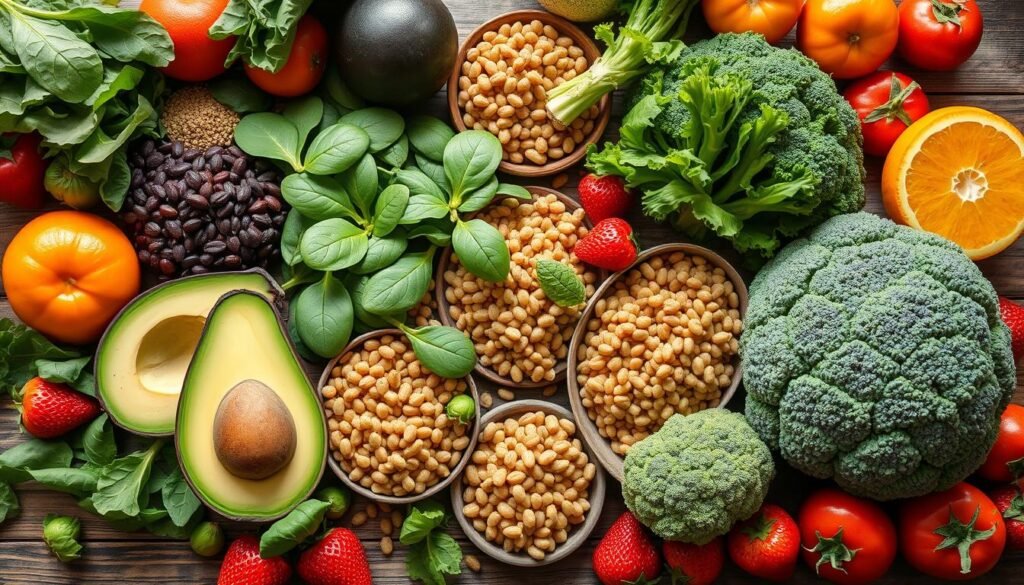
To increase your folate, eat a variety of foods rich in it. Such as:
- Dark leafy greens like spinach and kale
- Legumes, including beans and lentils
- Fortified cereals that contain added nutrients
- Asparagus and Brussels sprouts
- Fruits such as bananas and oranges
These foods not only give you more folate but also help you eat well. For extra tips, check natural antidepressants to lift your mood.
Supplements: Dosage and Safety Considerations
If you’re thinking about vitamin supplements, it’s key to know the right amount and risks. Even though B vitamins help with certain health issues, too much can harm. For example:
| Vitamin | Recommended Daily Allowance | Potential Risks of High Dosage |
|---|---|---|
| Vitamin B6 | 1.3-2.0 mg | Nerve damage if taken excessively |
| Vitamin C | 75-90 mg | Diarrhea and stomach upset in high amounts |
| Vitamin A | 700-900 mcg | Liver damage if overconsumed |
| Vitamin D | 600-800 IU | Kidney damage with excessive intake |
Always follow experts’ advice when adjusting your diet or taking supplements. This ensures the health benefits outweigh the risks.
Consulting with Healthcare Professionals
It’s important to talk to healthcare providers before starting any vitamins or supplements. They give advice that fits your personal health history and ongoing treatments. If you’re dealing with depression, mental health experts are key in guiding you.
Depression affects people differently, depending on factors like age and gender. Women are often diagnosed more than men. Men might not talk about their feelings as much. Mental health experts create a safe space to talk about these issues.
When thinking about vitamins, you must discuss their safety and how they work. This is key if you have other health issues, like diabetes or heart disease. By talking to your healthcare provider, you can make sure your treatment plan is safe and effective.
Mental health experts might also suggest other therapies like cognitive behavioral therapy (CBT) with vitamins. This combo approach can better meet the needs of those with depression. Working together with your healthcare professionals helps make sure your treatment matches your health goals.
Conclusion
Adding vitamins, like folate, can be a big step in treating depression. Many people feel depressed, and usual treatments don’t always work. This shows why it’s key to look into natural ways to improve mental health.
Folate stands out in fighting depression. It helps make brain signals and keeps the brain healthy. Vitamins B6 and B12 also help stabilize mood and lower depression signs. Knowing how these nutrients affect us can help us choose the right foods.
Before starting any supplement, talking to a doctor is a must. They can recommend the right amount and source of vitamins. Combining good nutrition, expert advice, and lifestyle changes can help manage depression. It leads to a happier life.