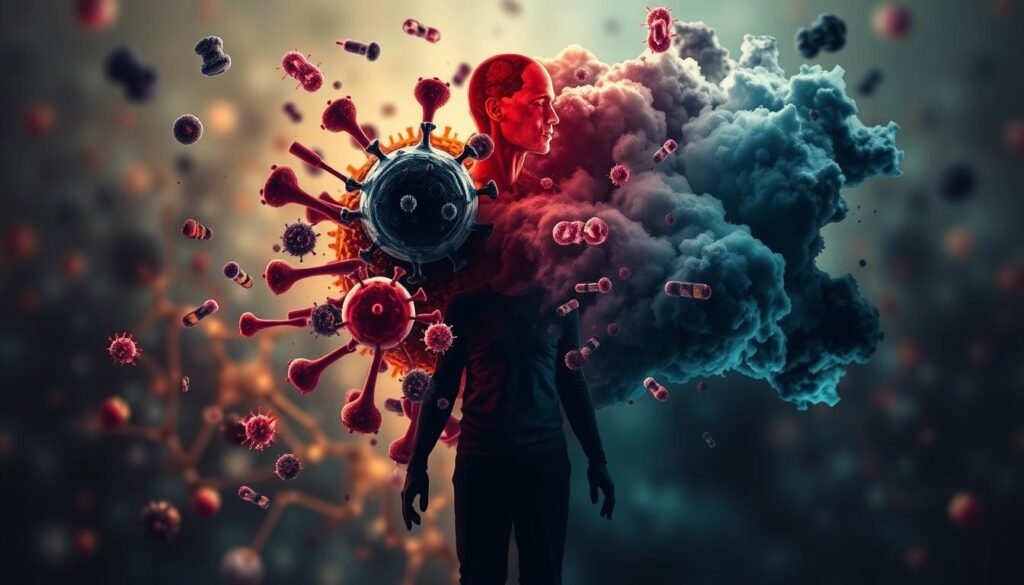
About two out of three people with depression feel more aches and pains. This fact shows how closely the depression immune system links to our health. Depression affects not only our minds and feelings but also our physical health. When people are depressed, their immune system can change. This makes it harder to fight off infections and can lead to chronic diseases.
We must understand this connection to better manage mental health and improve overall health. Some experts think that medicines which reduce inflammation might help treat depression. They could make new kinds of antidepressants. Learn more about this idea and how mental health impacts the immune system by clicking here.
Key Takeaways
- Depression significantly affects the immune system, hindering the body’s ability to fight infections.
- Chronic stress can result in long-term health consequences, including heart disease.
- Exercise has been shown to alleviate mild to moderate depression and boost immune function.
- Women are more likely to exhibit depressive symptoms and related immune function issues compared to men.
- The interplay between mental and physical health is critical in understanding overall well-being.
Understanding Depression and Its Physical Impact
Depression is more than feeling sad; it also affects one’s physical health. Those with depression face difficulties in their everyday lives. This demonstrates depression’s deep impact on the body. It’s crucial to tackle both mental and physical symptoms for better health.
How Depression Affects the Body
The condition changes how brain chemicals work, including serotonin. Serotonin helps control mood and other key functions. People with depression often feel very tired and more sensitive to pain. If not treated, depression can increase the risk of diseases like heart problems.
Physical Symptoms Associated with Depression
- Chronic fatigue that disrupts daily activities
- Increased pain sensitivity that heightens discomfort
- Weight fluctuations due to changes in appetite
- Sleep disturbances leading to tiredness
- Loss of sex drive, affecting personal relationships
- Overall sickness that can stem from prolonged stress
Physical and emotional symptoms often occur together, making both worse. Understanding this can help people and doctors find better treatments. This approach can improve the lives of those dealing with depression.
The Link Between Depression and the Immune System
Depression affects our immune system deeply, altering our overall health. This link shows how weakened immune function makes us more prone to getting sick. Because of depression, the body releases more stress hormones like cortisol. This disrupts how our immune system normally works. Knowing about this connection is key to finding good treatments.
How Depression Can Weaken Immune Function
Studies find that people with depression for a long time have high levels of inflammation markers. Important markers such as interleukin-6 and tumor necrosis factor alpha rise in those with depression. Elevated levels of these markers harm the immune system, making it hard to fight off diseases.
Bidirectional Relationships: Immune System and Mental Health
The link between our immune system and mental health is a two-way street. The condition of our immune system greatly affects our mental state as well. For instance, those with diseases like asthma and diabetes are more likely to be depressed. This shows the strong connection between our physical and mental health. Also, inflammation can make depression worse, leading to a vicious cycle. It’s vital to understand this to develop treatments that care for both the mind and body. To learn more about how depression and the immune system are connected, click here.
| Condition | Immune System Impact | Mental Health Impact |
|---|---|---|
| Major Depression | Increased inflammation and altered immune markers | Higher risk of chronic mental health conditions |
| Chronic Illness (e.g., Diabetes) | Elevated inflammatory cytokines | Increased likelihood of depressive symptoms |
| Stressful Life Events | Heightened stress hormones impair immune function | Trigger or worsen depression |
Role of Proinflammatory Cytokines in Depression
The link between proinflammatory cytokines and depression is complex. It deeply affects mood and mental health. Learning about these proteins helps us understand depression better. It also opens new paths for treating it.
Understanding Cytokines and Their Function
Cytokines are tiny proteins that cells release. They greatly impact the immune system and how the body responds to injury. Proinflammatory cytokines, like IL-6, TNF, and IL-1β, are key in causing inflammation. In people with depression, these cytokines are often higher. This suggests a link between inflammation and mood issues. Changes in how these cytokines work can upset serotonin levels. This may make depressive symptoms worse.
Effects of Inflammation on Mood Disorders
Research shows inflammation does more than just heal injuries. It also plays a big role in controlling mood. High levels of cytokines like IL-6 and TNF can make depression harder to manage. These markers change how the immune system works. This affects the brain and can add to depression symptoms. Long-term, this inflammation can cause diseases related to insulin resistance and damaged blood vessel lining. This makes the link between inflammation and health even more complex.

Stress Response and the Immune System
Understanding how stress and the immune system interact is key to better mental health. Chronic stress raises cortisol levels, affecting both our mind and body. This hormone, cortisol, is vital in managing cortisol depression and other functions. If cortisol stays high, it can lead to health problems, especially with our immune system.
Cortisol’s Role in Depression and Health
Cortisol affects our mood and mental well-being. It matters a lot when we talk about cortisol depression. If we’re always stressed, our body is always on alert. This causes cortisol to keep flowing. Over time, this can mess with our stress hormone system. This issue appears in about half of those with depression. High cortisol can also change our brain and affect our neurotransmitters.
Chronic Stress and Its Consequences on Immunity
Long-term stress takes a toll on our immune system. It lowers lymphocyte levels, making it harder to fight off infections. This weakness raises our chance of getting sick, showing clear immune consequences. Stress is linked to several health issues like lupus and arthritis. Also, heart problems, stomach ulcers, and diabetes are common with ongoing stress.
This table summarizes chronic stress effects on health:
| Health Effect | Details |
|---|---|
| Increased Inflammation | Over time, more cortisol leads to more inflammation. |
| Decreased Lymphocyte Levels | Stress weakens our immune defenses. |
| Mental Health Conditions | It’s connected to anxiety, depression, and more. |
| Cardiovascular Problems | Constant stress can cause heart issues. |
| Sleep Disturbances | Stress-induced sleep issues worsen stress levels. |
| Immune Function Impairment | Stress over time weakens our immune system. |
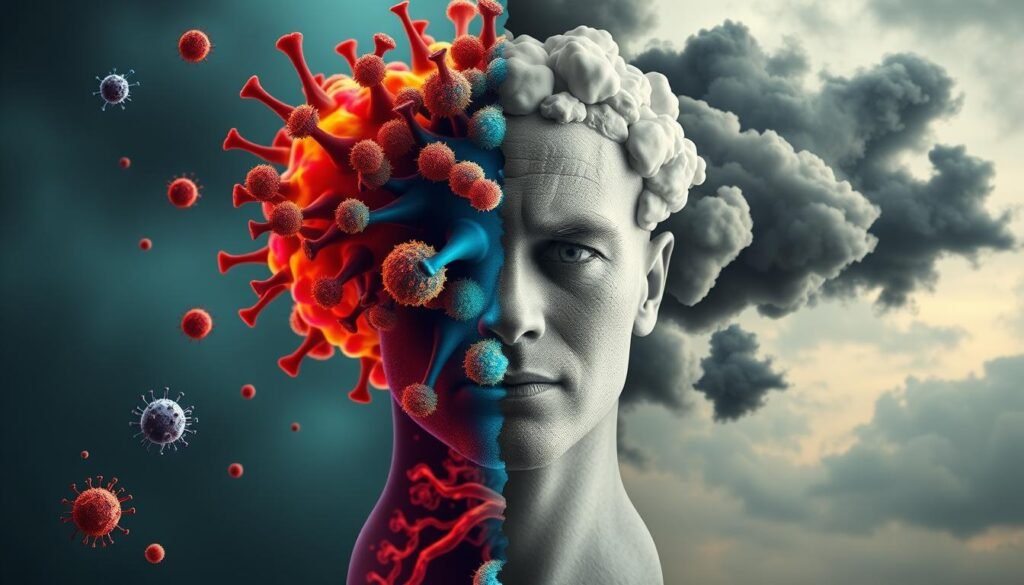
Managing stress well can lower these health risks. Meditation, yoga, and enough sleep help lessen stress and boost our immune system. For adults, getting between seven to nine hours of good sleep nightly can balance stress hormones and keep us healthy.
Mind-Body Connection: How Mental and Physical States Interact
The link between our mind and body is gaining attention through psychoneuroimmunology. This science looks into how our emotions and mental state affect our physical health. Knowing this helps us see the importance of mental health treatment for our overall well-being. Stress or negative feelings can hurt our body, making us more likely to get sick.
The Psychoneuroimmunology Perspective
Psychoneuroimmunology explores how our mind interacts with our nervous and immune systems. Studies show that stress can harm our good gut bacteria and raise harmful inflammation. This can mess with our brain and make us feel more anxious or depressed. Thus, a troubled mind can lead to physical issues, and bodily problems can affect our emotions too. People with ongoing gut issues often feel more stressed or sad. Activities like meditation and yoga can make our mind-body link stronger, leading to a healthier us.
Implications for Treatment Approaches
This connection between mind and body can deeply impact how we treat health issues. Combining mental and physical health care leads to better healing. Treatments might include therapy, medicine, and changes in how we live to boost health. For those dealing with deep sadness, using stress-reducing and mindfulness techniques can lessen the negative effects on body and mind. Understanding the tie between emotional and physical health allows doctors to care for patients more completely.
Impact of Gut Microbiome on Depression and Immunity
The link between our gut health and mental state is fascinating. Studies show our gut health majorly affects how we feel. This means it could help us understand gut microbiome depression better. The microbes in our gut are crucial for both mental health and our immune system.
The Role of Gut Health in Mood Regulation
Recent research points to the importance of a diverse gut microbiota for mental health. Stress-susceptible mice had fewer Lactobacillus johnsonii microbes than those less affected by stress. This finding links gut health closely with our mood.
In humans, no significant difference in microbiota diversity was found between those with and without major depressive disorder. However, less Lactobacillus was linked to higher depression and anxiety in people with MDD. This suggests a strong relationship between gut bacteria and mental health.
Dietary Considerations and Mental Health
What we eat plays a big role in supporting our gut and mental health. An anti-inflammatory diet helps balance the gut microbiome and boosts supportive bacteria like Lactobacillus. Such dietary changes can improve mental health and help fight depression.
Since antidepressants don’t work for everyone, improving gut health through diet offers hope. It could be a useful part of treatment for better mental well-being.
Depression, Lifestyle Factors, and Immune Responses
The link between lifestyle, depression, and well-being is clear. This is seen in how much sleep and exercise matter. They affect both how we feel and our immune health. Getting enough good sleep is key. Not sleeping well can worsen depressive symptoms and hurt our immune system. Studies show that missing REM sleep can increase mood disorder risks. This shows how connected our mental and physical health are.
The Role of Sleep in Mental and Physical Health
Sleep is vital for our minds and bodies. Bad sleep can raise stress and inflammation. This can make depression worse. Long-term stress hurts how our immune cells work. It also increases inflammation, weakening our immune responses. Making good sleep habits a priority is crucial. It can greatly lower the chance of mental health issues.
Exercise and Its Positive Effects on Depression
Exercise does more than keep the body fit. It also greatly helps our mental state. Working out regularly can lower anxiety and depression by 8%-63%. Activities that get the heart pumping boost serotonin. This improves mood and mental strength. People who live actively and make healthy choices face less depression.
Making good lifestyle choices is key for mental and immune health. Focusing on sleep and staying active helps us stay balanced. It makes us stronger against depression and anxiety. By caring for these parts of our lives, we boost our overall health and mental well-being.
Check out natural foods for brain health for more on eating well for mental health.
Depression Immune System: Long-Term Consequences for Health
The relationship between depression and the immune system affects long-term health. Chronic health issues often stem from depression’s lasting impacts. People with depression are more likely to get serious health problems. These include heart disease, diabetes, and autoimmune diseases. Studies find that inflammation markers rise in those with severe depression, leading to these issues.
Chronic Illnesses Associated with Depression
Depression can cause chronic conditions due to inflammation. Those with depression are much more likely to get sick than healthy people. Linked illnesses include heart disease, diabetes, autoimmune diseases, chronic fatigue syndrome, and multiple sclerosis.
- Heart disease
- Diabetes
- Autoimmune diseases
- Chronic fatigue syndrome
- Multiple sclerosis
Chronic depression links to higher levels of pro-inflammatory cytokines. This suggests a connection between mental and physical health. People with chronic depression face not only mental issues but also more inflammation. This can lead to more health problems over time. For more info on depression’s link to the immune system, check out this detailed article.
Importance of Integrating Mental and Physical Health Care
Focusing on both mental and physical health is key in treating depression-linked chronic illnesses. Managing depression effectively improves health outcomes. Treatment should cover both mental and physical aspects. This includes psychotherapy, anti-inflammatory drugs, and lifestyle changes for better care.
Social support is vital in reducing depression and improving physical health. Prioritizing mental wellness with physical health reduces chronic illnesses’ long-term effects. Treatments aim not just for immediate relief but also to prevent health from getting worse. Comprehensive care is essential in health settings.
Conclusion
The link between depression, the immune system, and overall health is complex but critical. Around 17 million Americans suffer from depression each year. This affects their health in many ways, increasing the risk of heart disease, stroke, and autoimmune diseases. We need to look at health as a whole to manage mental and physical well-being effectively.
Stress can trigger depression, starting a cycle of inflammation and health issues. Studies show a strong connection between depression and immune system diseases. This means we must care for both our mental and physical health. Treatments that focus on both mental health and immune function can lead to better health.
For those battling major depressive disorder, especially with signs of immune system issues, finding the right treatment is crucial. As knowledge grows, we aim for therapies that specifically target these problems. This could lead to a significant improvement in life quality.
To learn more about immune dysregulation and depression, check out this important resource.