Did you know nearly a third of veterans show signs of depression? This fact highlights how critical it is to tackle mental health issues in the veteran community. For those who’ve served, making a VA claim for depression is a key step. It helps them get the veterans benefits they urgently need.
To get these benefits, understanding the claims process is vital. Getting compensation for mental health conditions linked to service can greatly improve their life.
On average, it takes about 139.3 days to process disability claims. Sometimes, it may take up to a year. Veterans have multiple ways to file their claims. They can do so online, by mail, or with help from a professional. It’s important to note, initially, you don’t have to provide evidence. But, including medical records and personal accounts later can be very beneficial.
When dealing with depression and PTSD, having the right evidence is crucial. With careful preparation and good records, veterans can successfully gain the benefits they deserve for depression.
Key Takeaways
- Approximately one-third of Veterans experience symptoms of depression.
- Claims for depression-related benefits can take an average of 139.3 days to process.
- Various methods exist for filing a VA claim, improving accessibility.
- Submitting evidence such as medical records is crucial for a strong claim.
- Understanding the VA’s rating criteria is essential for determining compensation levels.
Understanding Depression Among Veterans
Veterans face significant mental health challenges. Studies show nearly one-third of veterans deal with depression symptoms. This highlights the need to address mental health in those who served. It is found that veterans have a 60% higher risk of suicide than non-veterans.
Statistics on Veteran Depression
Many veterans struggle with depression. Around 30% of those who served in Iraq and Afghanistan feel its effects. Nearly 20% from recent conflicts are diagnosed with it. These numbers show we need better mental health care. The VA helps about 1.6 million veterans each year, focusing on depression linked to service.
Common Symptoms and Their Impact
Veterans with depression face tough symptoms. These include:
- Persistent sadness
- Withdrawal from social interactions
- Inability to fulfill daily tasks
Such symptoms make daily life hard for veterans. They struggle to keep up relationships and be productive. Plus, depression often goes hand in hand with PTSD. About half the veterans with PTSD also suffer from depression symptoms.
The VA works hard to help, offering therapy and medication. For more on the VA’s work with depression, check this resource.
| Statistic | Percentage |
|---|---|
| Veterans experiencing depression symptoms | 30% |
| Veterans diagnosed with major depression | 15% |
| Veterans with PTSD experiencing depression | 50% |
| Veterans utilizing VA mental health services | 1.6 million annually |
Eligibility for VA Benefits
To get VA benefits, vets have to meet certain criteria. These are mostly about their service time and health issues. Being on active duty is key. They must also have left the service under honorable conditions. When applying for mental health benefits, the process can seem hard. Yet, knowing what’s required makes it easier to ask for help effectively.
General Eligibility Criteria
Here are the main points for VA benefit eligibility:
- Completion of active duty service
- Honorable discharge status
- Proof of service-related health issues
Veterans applying for help with depression or other illnesses related to service have special paths. This includes those with long-term sickness appearing soon after leaving the service. They might qualify under certain conditions. These cover both physical and mental health problems caused by service, like being around harmful substances.
Specifics for Mental Health Conditions
The VA lists specific mental health issues, such as anxiety, PTSD, and depression, that might qualify for benefits. A vet must link their mental troubles directly to their service time. This is especially true for any trauma they faced while serving. They’ll need:
- Full medical records from mental health pros
- Confirmed diagnosis of depression or similar disorders
- Personal stories showing how service affected their mental health

Getting a detailed diagnosis is key for a successful VA mental health claim. Knowing how eligibility works can guide vets towards the help they need for depression and similar issues. With proper setup and paperwork, the journey to getting help becomes easier.
Gathering Essential Evidence for Your Claim
Collecting the right evidence is key for a VA claim about depression. This includes medical records and documents that show the veteran’s issues and treatment. Having a complete file can greatly help your claim’s success.
Medical Records and Supportive Documentation
Veterans must collect several types of documents for their claim. Necessary ones are military exit papers, health checks at exit, and VA Disability Benefits Questionnaires. VA and private doctor notes are crucial. They provide clear proof needed for evaluation. Adding lay evidence like “buddy statements” from other veterans or loved ones is also important. These statements support the veteran’s mental health struggles post service.
Importance of Personal Statements
Personal statements are very important in collecting evidence for a VA claim. They let the veteran share how depression affects them daily. This adds a strong personal touch to the claim. Stories about how it affects their life and relationships highlight the link between service and depression. Keeping in touch with specialists for current symptom records can strengthen this. Veterans should also get help from VSOs or VA representatives for gathering evidence.

VA Claim for Depression: Steps to File
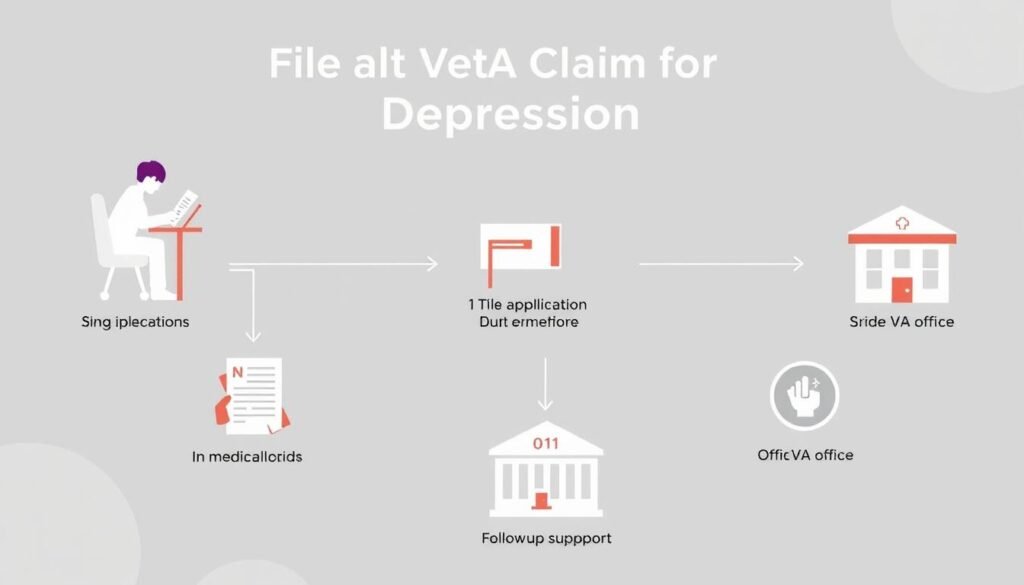
Filing for VA depression benefits means following certain steps carefully. This ensures veterans get the support they need. These steps are crucial for a successful application.
Starting Your Application
Start by completing VA Form 21-526EZ. This is the first step. You have many ways to start your claim. This makes it more convenient. You can apply online, by mail, in person, or fax through the VA’s website. Picking the best way for you is important. It can make the process faster. Consider submitting an Intent to File form too. It can get you benefits dating back to an earlier date.
Different Filing Options
There are many ways to file your claim. It’s important to know each one:
- Pre-discharge Claims: If you’re still on duty but have 90-180 days left, you can file a pre-discharge claim with the BDD program.
- Post-service Claims: This option is for health issues that come up after leaving service. There’s no time limit to file.
- Increased Claims: If an existing disability gets worse, you can ask for a higher rating with new medical proof.
- New Claims: File these to get more benefits for service-connected disabilities.
- Secondary Service-Connected Claims: Use this to claim for new problems related to already recognized conditions.
- Supplemental Claims: These allow you to show new evidence for a claim that was denied before.
Proving a Service Connection for Your Depression
Proving your depression is related to military service starts with a clear diagnosis. Then, document any events in the service that hurt your mental health. Good evidence like medical records and personal stories is key.
The Importance of a Service-Related Stressor
It’s important to identify a stressor that caused your depression. This could be trauma from combat or other upsetting events during service. Provide strong proof that links your depression to these events. Adding personal and witness statements can help show how your military service impacts your mental health.
Linking Your Condition and Military Service
Getting a medical nexus letter is vital. It connects your depression to your time in the service. This letter must come from a healthcare expert who explains how specific events or injuries in service have affected your depression. Include detailed medical evidence. It should back up your diagnosis and show how your symptoms impact your life.
For a better understanding of this process and additional resources, veterans can refer to this article. It offers insights on navigating the challenges associated with proving a service connection, offering helpful tips and guidance.
VA Depression Rating Criteria
The VA’s criteria for depression are key in evaluating mental health in veterans. These criteria make understanding the VA depression rating process easier. They link veterans’ symptoms with the benefits they might get.
Overview of VA Rating Scale
The VA has a rating scale for depression that goes from 0% to 100%. It assesses how depression impacts a veteran’s day-to-day life. Factors like symptom severity and effect on work and life quality are considered.
Specifics of Each Rating Level (0% to 100%)
Knowing the VA depression rating levels is helpful for veterans filing claims. Each percentage level represents different symptoms and affects compensation. Here’s a breakdown of the ratings:
| Rating | Criteria | Compensation (2024) |
|---|---|---|
| 0% | No symptoms or impairment. | $0.00 |
| 10% | Mild symptoms affecting work efficiency, manageable with medication. | $171.23 |
| 30% | Moderate symptoms, showing occasional decreases in work efficiency and difficulty performing tasks. | $524.31 |
| 50% | Considerable symptoms such as impaired judgment and difficulty in relationships. | $1,075.16 |
| 70% | Severe symptoms, including suicidal thoughts, affecting most areas of life. | $1,716.28 |
| 100% | Total impairment with symptoms like delusions, hallucinations, or inappropriate behavior. | $3,737.85 |
Studies show 1 in 3 veterans report depression symptoms, with 1 in 5 having severe forms. With an average VA rating for depression at 70%, it’s crucial for veterans to understand these ratings for seeking compensation and care.
What to Expect After Filing Your Claim
After submitting a claim for depression, veterans enter a review process. This process checks the merit of their submission. Knowing the VA claim process makes the wait clearer and easier to manage.
Claim Review Process Timeline
The average time for a claim review timeline is about 139 days. In this period, the VA looks at all evidence closely. This includes medical records, personal stories, and any extra documents. Veterans should keep up to date with their claim’s status. They can do this by checking updates or talking directly to the VA.
Potential Outcomes and Next Steps
Veterans can see different outcomes for depression claims. They might get:
- Approval: The claim succeeds, leading to a rating. This rating can give monthly tax-free money for service-related depression.
- Denial: The claim fails, often leading to a look over the submitted evidence. This might lead to an appeal.
- Request for Additional Information: The VA might ask for more evidence before deciding. This can change the timeline.
Regardless of the result, it’s vital for veterans to think about their next moves. If they disagree with the outcome, they should look into decision review options. This includes supplemental claims. You can learn more about these claims here.
Overall, being active and well-informed helps increase the chance for a positive outcome of depression claims. It’s crucial to stay patient through the review process. Veterans should be ready for possible next steps after their claim results come in.
Appealing a Denied Claim
When veterans get a denied claim, knowing the appeal options is key. The Appeals Modernization Act changed the VA appeals process. It’s vital for veterans to know their rights and how to get their benefits. They need to show why their claim for service-connected depression is valid at each step.
Understanding the Appeals Process
There are three main paths in the VA appeals process: Board Appeal, Higher-Level Review, and Supplemental Claim. Board Appeal lets veterans ask for a decision from the Board of Veterans’ Appeals. Higher-Level Review lets a more experienced reviewer look at the claim without new evidence. A Supplemental Claim, however, allows for new evidence to support the appeal. Knowing these options helps veterans overcome challenges and get the benefits they deserve.
Types of Appeals Available
Denied veterans must choose the right appeal path for their situation. Each appeal type impacts the result, especially for depression and similar conditions. Understanding the VA appeals process improves a veteran’s success chances. It may also result in a more accurate assessment of their mental health in relation to service. Veterans should be active and informed to secure their rightful benefits.