Did you know about 0.4% of people in the U.S. experience Seasonal Affective Disorder (SAD)? This condition hits women four times more than men. Such stats show we must recognize and tackle seasonal depression early. As we face shorter days and colder weather, research points to vitamin D3 as a key fighter against SAD. This piece dives into how vitamin D affects our mood. It covers the benefits of vitamin D3 and how it can help those facing seasonal blues.
Key Takeaways
- Vitamin D deficiency has been linked to depression and SAD.
- SAD affects approximately one in 20 Americans, predominantly women.
- Supplementation with vitamin D3 may reduce symptoms of SAD.
- Light therapy combined with exercise can be effective against seasonal depression.
- Sun exposure and outdoor activities can boost mood and alleviate depressive symptoms.
- Consulting a healthcare professional is important for proper diagnosis and treatment recommendations.
Understanding Seasonal Affective Disorder (SAD)
Seasonal Affective Disorder (SAD) is a depression type that comes and goes with the seasons. It mainly occurs during fall and winter. Around 5% of U.S. adults suffer from it, feeling very low and sad. The lack of sunlight in winter is a big reason why people feel down.
Seasonal depression stems from body clock disruptions and less serotonin. Not getting enough vitamin D is also a big factor. A lot of people, both kids and adults, might not get enough vitamin D. This can affect their mental health.
Low vitamin D can lead to serious mood issues. You need 30-60 ng/dL of vitamin D to be healthy. Below 20 ng/dL is considered a deficiency. It’s important to watch your vitamin D intake. Especially in winter when we don’t get outside much. To learn how diet affects mood, check out dietary sources that support mental health.
Seasonal affective disorder affects more than just your mood. It changes your quality of life. But things get better when the seasons change. Knowing about SAD and how to deal with it is important. Talking to healthcare providers can help you manage SAD.
For those interested in how vitamins can help, there’s helpful info out there. Like understanding how vitamin D relates to seasonal depression. A good resource is this informative article.
What Causes Seasonal Depression?
The exact reasons behind seasonal depression, or Seasonal Affective Disorder (SAD), are not fully known. Studies show a strong link to not getting enough sunlight in winter. This lack of light can mess up our internal clock or circadian rhythms. Because of this, our body might make less serotonin, a brain chemical that affects our mood.
Not having enough Vitamin D is also key, especially when there’s less sunshine in colder months. People far from the equator or those with illnesses like liver or kidney disease are at risk. Those with darker skin might also face this issue. Vitamin D deficiency symptoms are similar to depression. They include mood swings, feeling very tired, and forgetting things.
Shorter days in winter make our bodies produce more melatonin. This can make us feel more tired and sad. For people with SAD, keeping Vitamin D levels up is vital for feeling better. Solutions include more sunlight, eating fortified foods, and taking vitamin supplements. Treatments are available to help.
Symptoms of Seasonal Affective Disorder
Seasonal Affective Disorder (SAD) includes symptoms like those seen in major depression. Individuals with symptoms of SAD often feel very sad, lack energy, and get irritable easily. Concentrating becomes hard, and they might not want to hang out with others much.
Winter-pattern SAD symptoms are especially strong. People may sleep too much, eat more carbs, and gain weight. They often feel hopeless, which makes daily life tough.
On the other hand, summer-pattern SAD might cause weight loss, trouble sleeping, and more irritability. Around 5% of U.S. adults face this seasonal depression when winter comes. For more information on how to deal with it, click here.
Does Vitamin D3 Help with Seasonal Depression?
Seasonal Affective Disorder (SAD) affects about 5% of adults in the United States. It usually happens during fall or winter. People often ask if vitamin D3 can help with this type of depression. Studies suggest a link between vitamin D deficiency and mood problems. They show vitamin D3 might affect serotonin, which regulates mood.
Research on Vitamin D3 and Mood Disorders
Many studies have explored vitamin D3’s effect on depression, including SAD. Some findings suggest that higher vitamin D3 doses could improve mood and lower depression signs, especially in those lacking vitamin D. While personal stories highlight some benefits, firm evidence is still mixed. The relationship between seasonal depression symptoms and vitamin D levels is crucial to understand. For more info, click here.
Evidence of Vitamin D Deficiency and Depression
Many people with depression, particularly SAD, are often found to have low vitamin D levels. This suggests a connection. While vitamin D3 supplements could help some, there’s no solid proof yet. For adults, the daily vitamin D dose recommended is 600 to 800 IU, but some might need more. Too much vitamin D can be harmful, so it’s vital to be cautious. An interesting summary of SAD symptoms that vitamin D might affect includes:
| Symptoms of Seasonal Affective Disorder (SAD) |
|---|
| Feeling depressed most of the day, nearly every day |
| Losing interest in activities once enjoyed |
| Experiencing changes in appetite or weight |
| Having problems with sleep |
| Feeling sluggish or agitated |
| Having low energy |
| Feeling hopeless or worthless |
| Having difficulty concentrating |
| Having frequent thoughts of death or suicide |
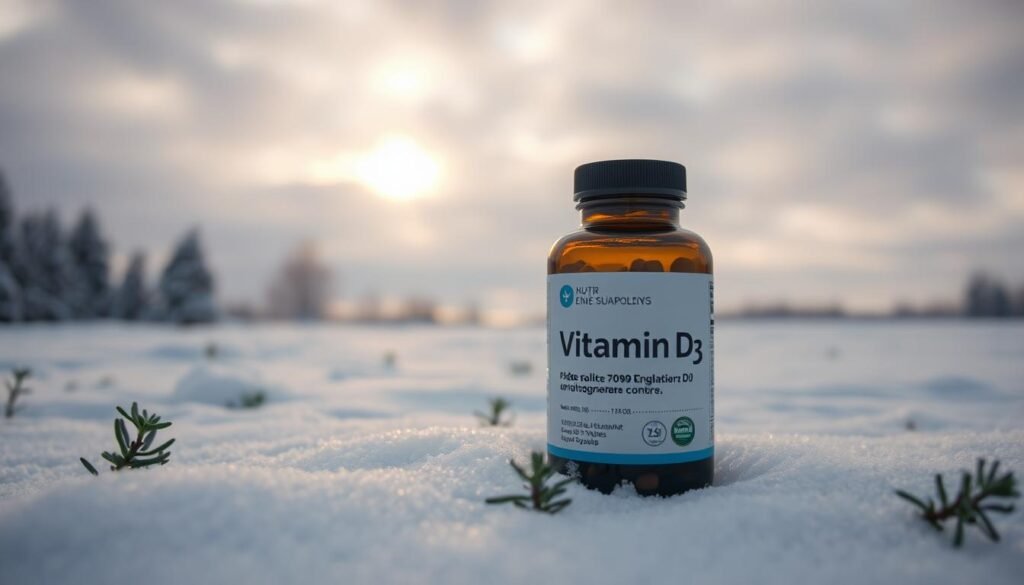
The Role of Vitamin D3 in Mental Health
Vitamin D3 is very important for our mental health. It helps make serotonin, a key chemical for mood. Low levels of vitamin D can lead to less serotonin. This can make people feel down, especially during winter.
This link between vitamin D3 and serotonin can help treat mental health problems. Knowing this, we can help those fighting depression or seasonal sadness.
How Vitamin D3 Influences Serotonin Levels
Studies prove that enough vitamin D3 raises serotonin in the brain. This keeps our mood steady and makes us feel better. People with seasonal depression might lack vitamin D, making them feel gloomy or tired.
To feel better, it’s key to get enough vitamin D. This can cut down the bad feelings from low serotonin. So, vitamin D3 plays a big role in feeling happy.
Benefits of Vitamin D3 Beyond Mood
Vitamin D3 does more than just help with our mood. It also makes our bones strong and boosts our immune system. Taking enough vitamin D is key to fighting depression.
Vitamins like B, C, and D are important for our brains and moods. By adding enough vitamin D3 to our meals, we can be healthier. This can also help us feel happier and more stable.
| Health Benefits | Description |
|---|---|
| Improves Mood | Boosts serotonin production, aiding in mood regulation. |
| Enhances Bone Health | Supports calcium absorption and helps maintain bone density. |
| Boosts Immune Function | Strengthens the immune response against infections. |
| Supports Overall Well-being | Contributes to various bodily functions, promoting health. |
Light Therapy as a Treatment Option
Light therapy is both popular and effective for treating seasonal depression. It targets the symptoms of Seasonal Affective Disorder (SAD). The therapy uses special lamps that simulate natural sunlight.
People usually have 20 to 60 minute sessions each day. This bright light exposure can boost serotonin levels. That is essential for a better mood.
In North America, 1.4% to 9.7% of people suffer from SAD. The symptoms hit hardest during the darker months. Adding mental health remedies, like Vitamin D, can make light therapy even more effective. Studies show that this combination can greatly improve well-being for those facing seasonal depression.
- Light therapy mimics natural sunlight.
- Daily sessions can improve mood and energy levels.
- Combining treatments offers a comprehensive approach.

Dietary Sources of Vitamin D3
Getting enough vitamin D3 is key for a happy mind, especially for those fighting seasonal sadness. Foods high in vitamin D3 are vital for people who don’t get much sun in the colder months. Adding these foods to your diet can help keep your mood stable and improve your mental health.
Foods Rich in Vitamin D3
Here are some top food sources of vitamin D3:
- Fatty fish: Like salmon and mackerel, these are great sources.
- Fish liver oils: Cod liver oil is packed with vitamin D3.
- Fortified dairy products: Many milks and yogurts have added vitamin D3.
- Certain mushrooms: Ones that have seen sunlight are good for vitamin D3.
If you’re a vegetarian or vegan, finding vitamin D3 sources is crucial. You might need to pick fortified foods or think about taking vitamin D supplements. Doing so can make a big difference in your mental well-being. It can also help reduce symptoms of seasonal depression.
Sunlight Exposure and Its Benefits
Sunlight exposure is key for vitamin D synthesis in our bodies. Just 20 minutes outside can make you feel better, especially if you have seasonal mood changes. This is true if you get some sun a few times a week.
The benefits of sunlight go beyond feeling happier. When it’s sunny in the summer, our bodies make and store vitamin D. This is great for facing the dark, cold winter days. Experts believe having enough vitamin D is important for our mental health when days are short.
Safe sun enjoyment is crucial. We should protect our skin while soaking up the benefits of the sun. This balance keeps us healthy and lowers risks, such as skin cancer.

Combining Treatments for Maximum Effectiveness
Seasonal Affective Disorder (SAD) needs a broad approach. Combining different treatments helps more than just one. This could mean light therapy, Vitamin D3, changes in diet, talking to a therapist, or medication when needed.
Natural remedies like a nutrient-rich diet can also boost mental health. Foods full of B vitamins and vitamin C help fight depression. Adding Vitamin D3 adds an extra layer of protection.
Exercise is also a powerful tool against SAD. It raises your mood by releasing endorphins. Another method, IV therapy, ensures your body gets key nutrients, including vitamin D3.
Using these varied treatments, many find their mental health improves. But, always talk to a healthcare professional before trying new treatments to make sure it’s right for you.
Conclusion
Understanding how Vitamin D3 connects to seasonal affective disorder (SAD) helps us look after our mental health. As winter comes, some people, especially those in cold areas or with dark skin, might not get enough sunlight. This makes vitamin D deficiency and SAD symptoms more likely.
Research on Vitamin D3’s effects on mood shows mixed results. Yet, we can’t ignore its potential for improving mental health. Those feeling down during winter should talk to doctors for a tailored mental health plan. This plan might include Vitamin D3 and light therapy, which helps many people.
To wrap up on vitamin D3 and seasonal depression, we need more research for better treatments. Being proactive in checking vitamin D levels and seeking therapy can make life better for those with SAD.