Surprisingly, over 300 million people around the world battle depression. This amounts to about 4.4% of everyone on the planet. With mental health concerns increasing, we ponder if video games can help those facing such difficulties. The link between video games and depression is crucial to understand. This is because games can offer emotional relief and a sense of belonging.
This article aims to explore gaming and mental health. We want to provide a comprehensive view on how video games can impact mental states in both good and bad ways. As we discuss the benefits of video games and depression, we’ll also cover the risks of gaming too much. It’s key to find a healthy gaming balance.
Nowadays, gaming support networks offer new help options. Community groups and therapeutic gaming sessions have come up. The Hero Journey Club is a great example. It works with gamers to build emotional strength and give support during gaming. These efforts are shown to make managing emotions easier and lessen stress, showing the crucial role gaming can play in mental health.
Key Takeaways
- Over 300 million people are currently affected by depression globally.
- Video games can foster sense of community and emotional support.
- Maintaining a balance in gaming can improve mental health outcomes.
- Excessive gaming may lead to negative psychological effects.
- Initiatives like Hero Journey Club can enhance emotional resilience through gaming.
- Therapeutic gaming offers new approaches for addressing depression.
- Proper gaming habits contribute positively to an individual’s mental well-being.
The Growing Relationship Between Video Games and Mental Health
Video games are becoming a big part of our lives. They form a relationship between gaming and mental health. Many people from different backgrounds play games. They show how big gaming’s impact is on video game culture. Gaming brings happiness and relaxation to many. Yet, some worry about its effects on our mental health.
Research shows how gaming and mental health are connected in complex ways. In rural China, playing games for extra hours can increase mental health issues in teens. About 20% might get depressed, and 68% could feel anxious. Boys and kids who are not left behind by parents working away may struggle more with their mental health because of gaming. It shows how gaming can be an escape but also make some feel left out or not good enough.
As more people in rural China go online, with 55.9% having internet in 2020, gaming keeps growing. This increase changes how we socialize and highlights the need to think of mental health awareness in gaming. It’s important to look at how gaming affects our mental well-being as it becomes a bigger part of our lives.
| Statistics | Details |
|---|---|
| Risk of Depression in Adolescents | 20% of adolescents in rural China |
| Risk of Anxiety | 68% of adolescents in rural China |
| Internet Penetration Rate (2020) | 55.9% of rural China |
| Number of Gamers Worldwide (2020) | Approximately 2.7 billion |
| Increase in Depression and Anxiety (US) | 3x more likely in adults during April-May 2020 vs. first half of 2019 |
Understanding the Benefits of Video Games
Video games improve mental health in several ways. They are great for stress relief and relaxation. Many people play them to relax and take a break from life’s stress. We’ll look at how games help with stress, build social connections, and make us smarter.
Stress Relief and Relaxation
Video games are a big help in reducing stress. They work whether you play light games or dive into big adventures. Players find that spending time in these virtual worlds can make them feel better and calmer.
Enhancing Social Connections
Video games bring people together through social interaction. They allow players to meet, work together, and form bonds online. This can make players feel less lonely and more connected, which is good for mental health.
Cognitive Benefits of Gaming
Playing video games also sharpens your mind. Gamers face challenges that teach them to think quickly and solve problems. Strategy games, for example, help players make fast decisions and plan ahead. But remember, playing in moderation is key to gaining these benefits without feeling overwhelmed.
| Benefit | Description | Supporting Statistics |
|---|---|---|
| Stress Relief | Gaming acts as a distraction, reducing anxiety levels. | 88.4% experience emotional benefits. |
| Social Interaction | Multiplayer games facilitate relationships and community. | 81.8% are aged 18-34, heavily engaged in online games. |
| Cognitive Skills | Role-playing and strategic games enhance problem-solving. | Significant cognitive improvement noted with RPGs. |
The Dangers of Excessive Gaming
It’s important to know the dangers of too much gaming in today’s world. Video games can be fun and help with stress. But, too much gaming can cause serious issues. We will talk about gaming addiction and its effects on the mind.
Recognizing Gaming Addiction
Gaming addiction happens when someone can’t stop gaming. They ignore their duties and people they care about. About 63.1% of people play video games every day. And 25.2% play for more than five hours. This can lead to a lot of stress.
For example, a study showed that 62.1% of kids in Saudi have gaming addiction. They had more anxiety, depression, and trouble paying attention. Adults with high addiction feel lonely and upset. This is because games take the place of real friendships. Noticing gaming addiction early can help avoid worse mental health problems.
Escapism and Its Psychological Effects
Some people play games to escape from real life. But, this can make mental health problems like anxiety and depression worse. A study found that 75% of people felt stressed from gaming. Especially 11.4% felt very stressed. Men seem to suffer more from too much gaming. They feel lonelier and have more social anxiety.
Playing games for happiness can lead to feeling more alone. Making real friends is key to deal with these mental health issues. It helps stop avoiding the real world.
| Risk Factor | Effect |
|---|---|
| Daily Gaming | Increased risk of addiction |
| Playing more than three hours | Elevated anxiety and depression |
| High exposure to violent games | More depressive symptoms |
| Neglect of Responsibilities | Relationship breakdown |
| Isolation | Worsened mental health |
Being aware of these risks helps people game in a balanced way. This protects their mental health while they enjoy gaming.
Video Games and Depression: Balancing The Scales
Video games can be both good and bad when it comes to depression. While they offer comfort and stress relief, it’s important to play them in moderation. Knowing how they affect mental health helps navigate their use wisely.
Gaming saw a big rise during the COVID-19 pandemic, especially among young people. A study with 1,778 kids showed more signs of Internet Gaming Disorder (IGD). Those who felt more depressed or anxious at the start tended to play more, especially boys. This situation shows why it’s crucial to maintain a balance in gaming habits.
Gaming can help build social connections and offer emotional support. But, it’s essential to keep it in check. Otherwise, it might turn from a helpful tool into a problem. Making rules around gaming can keep it positive for those fighting depression.

The issue of gaming addiction and its emotional impacts is serious. The World Health Organization has even listed IGD as a real mental health condition. It’s important to recognize the dangers of playing too much.
In the end, balancing how much we game is key to staying mentally healthy. Playing video games wisely allows us to enjoy their benefits and avoid the negatives. This way, the gaming experience can stay positive and enriching.
Strategies for Maintaining Healthy Gaming Habits
It’s key to use practical strategies for healthy gaming habits. Gaming is a big part of many people’s lives today. Knowing how to game mindfully helps keep life balanced. This means gamers can still love their hobby but also make sure it’s good for their mental health.
Setting Time Limits for Gameplay
Managing your time in gaming is important for a balanced life. Setting specific hours for gaming lets you enjoy other activities too. It stops you from playing too much. Here’s how to set time limits effectively:
- Use timer apps to control how long you play.
- Take breaks to do different activities and hobbies.
- Have clear gaming times for both weekends and weekdays.
Incorporating Mindfulness Techniques
Mindfulness can make gaming more emotionally and mentally engaging. Doing mindfulness exercises before and after gaming can boost focus and lower stress. Try these methods:
- Do deep breathing exercises to focus before you start.
- Think about your feelings and actions after gaming.
- Use meditation to be more mindful while gaming.
| Time Management Strategies | Mindfulness Techniques |
|---|---|
| Set timer for gaming sessions | Practice deep breathing before gaming |
| Identify peak gaming hours | Reflect on gaming experiences afterward |
| Schedule breaks between gaming | Incorporate meditation into routine |
Adding healthy gaming habits to your day can reduce the negative effects of too much gaming. It makes gaming more enjoyable. By balancing gaming with mindfulness and time management, you get a better experience. It blends fun with being mindful.
The Role of Physical Activity in Gaming Balance
Adding physical activity to your daily schedule is key for a balanced lifestyle, especially for gamers. Regular exercise counteracts the stationary nature of long gaming sessions. It also boosts both physical and mental health.
Exercise as a Counterbalance to Gaming
Exercise plays a critical role in balancing gaming hours. Many overlook its benefits on well-being. Being active through sports or outdoor activities helps lessen anxiety and depression, leading to a healthier life. By making physical activity a priority, you can handle screen time better and improve your mental health.
Exercise benefits for gamers include:
- Reduction of Stress: Working out manages stress, making gaming more enjoyable.
- Enhanced Focus: Regular activity boosts brain function and may improve gaming skills.
- Social Connections: Sports or group exercises promote socializing, reducing the loneliness gaming can sometimes bring.
- Improved Health: Exercise keeps you fit, supporting your mental health too.
Combining gaming with exercise leads to better mental health. The American Academy of Pediatrics suggests a two-hour screen time limit daily. This encourages a balance between gaming and physical activity. Following this advice, you can enjoy gaming while staying active and healthy.
Understanding Gaming Disorder and Its Symptoms
Gaming disorder is now a key concern for many. It involves gaming habits that interfere with everyday life. Recognizing these habits is crucial to keep gaming fun, not addictive.
Identifying Problematic Gaming Behaviors
There are signs that signal a move toward unhealthy gaming. Some key indicators are:
- Withdrawal symptoms: Feeling irritable, anxious, or sad when not playing.
- Neglecting relationships: Choosing gaming over spending time with friends and family.
- Failing to manage responsibilities: Having trouble keeping up with school, work, or home duties because of gaming.
- Escaping reality: Using games to avoid dealing with stress or emotional problems.
About 90% of young Americans play games. Roughly 15%, or over five million kids, might have gaming disorder. These kids could be facing serious issues related to their gaming habits. It’s important for both parents and gamers to understand this.
Spotting gaming addiction symptoms early is vital. It helps with getting the right help quickly. The fact that gaming disorder is in the International Classification of Diseases highlights its seriousness. It shows the need for proper diagnosis and treatment options.
Online Gaming Communities: A Supportive Space
Online gaming communities are key in helping individuals with mental health challenges. They offer a chance to make friends who have similar interests. This can be very important for those feeling alone.
The Positive Impact of Social Interaction in Gaming
Many with disabilities often struggle more with mental health, partly because they feel isolated. Online gaming communities are welcoming to all, letting people connect without usual social barriers. This can reduce feelings of loneliness and increase a sense of belonging.
Studies show that those feeling depressed and lacking support in real life find friends in these online spaces. These friendships go deeper than everyday talks, leading to meaningful connections. Some friendships even move from the online world to the real world, offering real support.
Online games are great for working on teamwork and leadership skills. Games with stories help players understand others’ feelings and different viewpoints.
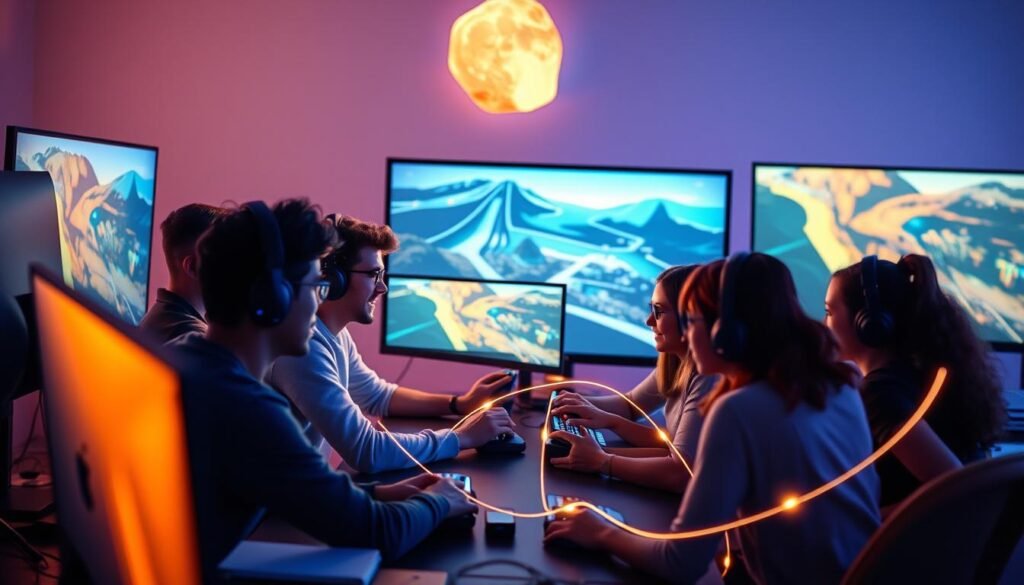
Even though these communities are supportive, there are issues like bullying that can hurt mental health. It’s worse for players from minority groups, as it makes them feel more left out. It’s important for everyone in these communities and the people making the games to keep these spaces safe and welcoming for everyone looking for support in gaming.
Therapeutic Gaming: A New Approach to Mental Health
Video games are now part of therapy, changing how we tackle mental health. This new method, called therapeutic gaming, offers a fun way for people with mental illnesses like depression or anxiety to get better. Through games, they can work on managing their emotions and improving their thinking.
Video Games as Tools for Therapy
Games play a big role in therapeutic gaming. They help therapists create a safe space for patients. Here, patients can open up more easily and work on their resilience. This is key in dealing with mental health challenges.
Statistics on Effectiveness of Gaming Interventions
Studies show that gaming therapy works well in many cases. It has a global reach, helping us understand mental health in new ways. Gaming therapy has been found to:
- Reduce symptoms in conditions like anxiety and depression
- Better social skills and thinking abilities
- Improve focus
Even with concerns about gaming addiction, the search for good mental health treatments includes games. The pandemic made more people play games for socializing and comfort. With the gaming industry growing, there’s more chance to use games to help mental health. This represents a forward-thinking approach to wellness.
When to Seek Professional Help
It’s important to know when to get help if gaming hurts your mental health. Feeling more depressed or anxious because of gaming is a red flag. 89% of people with Internet Gaming Disorder (IGD) also feel very sad, showing how too much gaming can make mental health worse.
Using gaming to deal with stress might mean you need a mental health check. If you’re feeling alone or unhappy, try spending time with others outside of games. Even though playing games with others can be fun, avoiding real-life friends is a problem.
There are many ways to treat gaming issues. Treatments like cognitive-behavioral therapy can help control gaming addiction. Also, exercising, sleeping well, and eating right improve your mood and health.

Asking for mental health help shows strength, not weakness. If gaming is messing up your life or making you unhappy, it’s time to take action. Creating a new routine with breaks from gaming, set playtimes, and healthy habits can really help your mental health.
Finding Support within Family and Friends
Family and friends are key in our mental health journey, especially when it comes to gaming. They help us by talking openly, which can make us feel supported. This leads to better gaming habits and stronger emotional health. Talking about gaming with our loved ones makes them understand and care more.
The Importance of Communication
Talking well helps families connect with members who play games a lot. It’s important to know how gaming can affect our minds, like causing sadness. A caring and open talk creates a safe place for sharing feelings and actions.
Talking truthfully can reveal the real reasons behind too much gaming. Some studies show that teens gaming a lot might feel depressed. Discussing their gaming experiences can open doors to finding the right support.
There are ways to strengthen family support for mental health. Here are some tips:
- Have regular family talks about what interests you and how you’re feeling.
- Make sure everyone feels okay talking about their gaming life.
- Try playing games together to see what it’s about, but keep it under control.
This can lessen the loneliness and worry linked with gaming. With open talks, families can grow closer and handle gaming’s effects on mental health better.
Creating a Balanced Gaming Environment
It’s important to create a balanced gaming environment to support mental health and well-being. A well-planned space can help stop the bad effects of playing too much. This fosters a safe and healthy gaming space.
- Manage Game Types: Select games that encourage friendly interaction and teamwork. Games with co-op modes boost social bonds and fight off loneliness.
- Limit Gaming Hours: Create specific gaming time limits to avoid playing all day. Mixing gaming with other hobbies is key for a balanced life.
- Incorporate Physical Activity: Adding exercise into your day can complement gaming. Being active lifts your mood and fights stress, which is good for gamers.
- Engage in Social Interactions: Connecting with others, online or in person, builds community. Positive connections help mental health.
Creating a structured gaming setup has many benefits. Responsible gaming can make you feel less lonely and more stable emotionally. Online support can also make you feel you belong, while protecting against the bad stuff like cyberbullying.
A smart gaming setup does more than improve gameplay. It helps build relationships and promote mindfulness. Ultimately, it leads to a gaming experience that is both healthier and more fun.
| Strategy | Benefits |
|---|---|
| Manage Game Types | Promotes teamwork and reduces isolation |
| Limit Gaming Hours | Prevents excessive play and maintains balance |
| Incorporate Physical Activity | Enhances mood and reduces stress |
| Engage in Social Interactions | Fosters community and emotional support |
Conclusion
As we wrap up our look at video games and depression, we see a clear need. We need to balance gaming with mental health well. Video games have always pulled us in. They improve our thinking skills and help us connect with others. Yet, they can also lead to addiction and make mental health problems worse.
Finding the right balance can make the good things about gaming shine through. It can also lessen the bad side effects.
To game in a healthy way, putting mental health first is key. Parents, friends, and mental health experts should support gamers in this. By talking more about how we play games, everyone can still enjoy gaming. This way, it won’t harm their mental health. Gaming right leads to a life where fun and health go hand in hand.
In the end, knowing how gaming affects us and sticking to healthy habits is important. It can make playing video games more rewarding. By accepting both the good and the bad, we can find a way to support mental health. This can help build a community that cares about both gaming and being well.