Did you know over 82% of Americans eat too much added sugar? This fact is important because it shows a link between eating carbs and feeling depressed. Today, people eat more refined carbs than ever. This change in eating habits is linked to more mental health problems.
Food alone cannot fix depression. But, the connection between our diet and how we feel is becoming clearer. This article looks at how eating foods high in refined carbs can really affect our moods and mental health.
Key Takeaways
- Over 82% of Americans consume more added sugars than recommended, contributing to mood disorders.
- High glycemic index foods are linked to increased odds of developing depression.
- Low blood glucose levels can result in irritability and anxiety, affecting mental well-being.
- Complex carbohydrates may offer more stable energy and support mental health.
- The connection between gut health and mood emphasizes the importance of diet in emotional regulation.
- Processed and refined foods can heighten the risk of depression through inflammation.
Understanding Depression and Its Symptoms
Depression is a major mood disorder affecting many people. It greatly interferes with how a person thinks, feels, and acts. This leads to a lot of emotional problems. Some common signs are constant sadness, fatigue, and losing interest in everyday things.
Depression comes in different types, including major depressive disorder. It’s crucial to spot these symptoms early. This helps in getting the right help quickly. Studies show a connection between not getting enough nutrients and feeling depressed. This lack can make depression worse.
Research has found that in many places, like certain parts of Asia and America, people aren’t getting enough vitamins, minerals, and omega-3s. This lack affects mental health. Filling these nutritional gaps can help lessen depression. It shows how important a good diet is for our mental health.
Talking about depression helps us understand its serious impact. Managing it may include changing what you eat, going to therapy, and taking prescribed medicines. Not following treatment plans increases the risks of mood disorders. Seeing depression in this broader view helps us be more empathetic. It opens doors for better treatments and support in the future.
The Link Between Diet and Mental Health
Diet plays a big role in how we feel, emotionally and physically. What we eat can affect our mood and even our risk for mental health problems like depression and anxiety. Eating lots of whole foods like fruits, veggies, and protein is good for both our minds and bodies.
Eating less refined carbs can lower the risk of depression. This shows eating patterns matter more than just single nutrients. Plus, too many refined carbs can make you feel tired and unfocused.
One study found eating too much Trans fats could raise depression risk by 48%. This tells us bad eating habits can make mental health issues worse.
Too much omega-6 fats might also make depression worse. Getting the right balance of fats and carbs can help your mood and brain work better. But not eating enough fat can increase depression risk.
Eating a balanced diet with lots of nutrients is key for a healthy brain. It can raise serotonin levels and help keep your blood sugar stable, which is great for your mental health. On the other hand, too much processed food and sugar can make you feel bad and harm your health over time.
Carbs and Depression: An Overview
It’s important to see how carbs and depression are linked. Carbs are big in making serotonin, which controls our mood. People feeling sad or tired often reach for carbs. This can make them feel better for a while.
This is because eating carbs might bump up serotonin when it’s low. This affects how we concentrate and feel emotionally.
The Role of Serotonin in Mood Regulation
Serotonin is crucial for how we feel. Not having enough can lead to mood issues, like depression. Going for carbs might lift someone’s mood for a short time. It shows why we crave sweets when we’re down.
Knowing this helps us handle cravings better.
How Carbohydrates Affect Serotonin Levels
Eating carbs affects serotonin, which makes us feel good. Carbs make the body release insulin. Insulin helps get tryptophan to the brain, where serotonin is made.
Too many carbs can mean extra calories and weight gain. If someone craves carbs a lot, it might mean they’re feeling depressed. This tells us eating right is key for mood and health.
The Impact of Refined Carbs on Mood Disorders
Refined carbohydrates are bad for mental health. They lack natural fiber and nutrients. This leads to bad changes in blood sugar levels. Blood sugar spikes can make people feel moody and irritable. Studies show that eating a lot of refined carbs increases the risk of mood disorders.
Blood Sugar Spikes and Mood Swings
Refined carbs shoot up blood sugar quickly. The American Journal of Clinical Nutrition found a link between high glycemic diets and depression in postmenopausal women. Regular intake of these foods results in blood sugar spikes, causing mood swings. It’s vital to eat a balanced diet to keep blood sugar and mood stable.
Connection Between Weight Gain and Depression
Weight gain and depression often go hand in hand. High refined carb diets lead to gaining weight. This makes people more likely to get mood disorders. Eating too much sugar and refined grains not only changes your body but also raises depression risks. Eating more fiber and whole foods helps manage weight and boosts mental health.
Adding a variety of nourishing foods improves mood and health. For tips on better eating, check out this resource.
Low-Carb Diets and Mental Health: What Studies Say
There have been many studies on low-carb diets and mental health. At first, research didn’t find a strong link between low-carb diets and better mental health. But now, some studies suggest that low-carb diets might affect mood.
They say some people might feel more anxious with fewer carbs. This shows how food can affect our emotions in various ways.
Research on Low-Carb Diets and Anxiety Levels
The keto diet is popular for its health benefits, like helping with migraines and epilepsy. It’s now being looked at for its effect on mood. This diet boosts substances in our body that help with stress and anxiety.
This can lead to a happier mood over time. One key benefit is fixing mitochondrial dysfunction, which is common in depression. By following a keto diet, this problem might become less likely.
Also, eating less sugar reduces stress on the body. This may help lower anxiety for some people.
Potential Impact of Low Carbs on Depression Symptoms
Low-carb diets have also been studied for their effect on depression. These diets are linked to less inflammation and better handling of stress. However, they can cause mood swings and nutrient shortages.
In studies with overweight people, improvements in mood and social life were noted. But, the type of diet played a role in these outcomes. Yet, we need more detailed research over longer periods to be sure of these findings.
Foods to Avoid for Better Emotional Well-Being
It’s vital to know how food affects our moods. Diets high in processed items and bad fats can worsen mood problems. Studies show eating these foods regularly can harm our mental state. So, it’s important to spot and avoid them.
Processed Foods and Their Effects on Mental Health
Processed foods often contain too much sugar, artificial sweeteners, and bad fats. These can trigger inflammation in our bodies, making depression symptoms worse. For example, a 2007 study found diets high in omega-6 fats increase the risk of depression and inflammation. High-glycemic diets, full of refined carbs, also up the risk for mood issues. Thus, eating balanced meals without processed foods is crucial.
The Dangers of Trans Fats and Omega-6 Fatty Acids
Even after the FDA’s 2015 ban, trans fats are still in many processed foods. They’re linked to depression and heart health risks. A diet with more omega-6 fats than omega-3s can result in poor mental health. It’s better to choose whole foods that support our emotional well-being.
| Type of Food | Impact on Mental Health |
|---|---|
| Processed Foods | Increase inflammation, linked to depression |
| High Trans Fats | Associated with depressive symptoms |
| Refined Carbohydrates | Higher risk of mood disorders |
| Artificial Sweeteners | Linked to neurophysiological issues |
Healthy Alternatives: Nutrient-Rich Foods for Mental Health
Eating foods full of nutrients can make your mind healthier. These foods give your brain the vitamins and minerals it needs. They help with thinking and feeling good. Eating more omega-3 fatty acids is especially good for brain health.
Incorporating Omega-3 Fatty Acids
Omega-3 fatty acids are in salmon, walnuts, and flaxseeds. They can make you feel better and less depressed. People who don’t eat enough of these fats often feel more depressed. You should try to get 250 to 500 mg of EPA and DHA every day. For example, a small piece of salmon has 1,841 mg of these good fats. Adding these to your meals can help you cope better with stress.
The Importance of Whole Grains and Fiber
Whole grains are important for a healthy gut and mind. Oats and whole grain bread have lots of fiber, which is good for your gut. This can also make you less likely to feel depressed. For instance, oats have 10 g of fiber in a small serving. Eating more fiber helps improve the mental health of women after menopause. By eating different whole grains and fibrous foods, you can improve your mood. For more tips on what to eat, you can check this resource.
The Role of the Gut-Brain Connection
The link between our gut health and mental health is intricate. Studies published in PubMed show over 90% of them focus on how our gut affects our emotions. Our gut is home to 10^14 microorganisms. That’s ten times more than all our human cells combined. These tiny life forms possess 150 times the genes of our genome, impacting how our bodies work.
Changes in our gut bacteria can lead to health problems. These can be as varied as stomach issues or mental health disorders. Gut bacteria and their balance play a big role. They affect how our bodies handle inflammation, which can impact our mood. An imbalance, known as dysbiosis, has been connected to conditions like anxiety and depression. This shows the big role a healthy gut plays in feeling emotionally well.
Probiotics might aid in bringing back microbial balance. For instance, strains like Lactobacillus and Bifidobacterium create GABA, important for controlling our mood. Some bacteria also make serotonin and dopamine, crucial for managing our emotions. This opens a new door for treating mental health through what we eat.
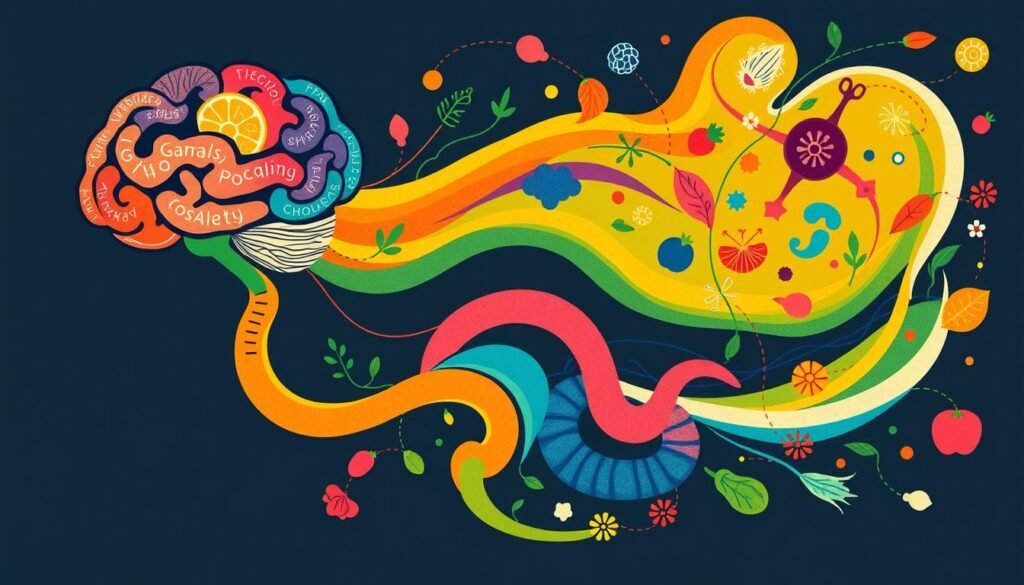
Diet can quickly change our gut bacteria, showing effects within 24 hours. Eating foods rich in fiber and probiotics helps promote a healthy gut. This, in turn, can lead to better mental health. It highlights how our nutrition is deeply linked to how we feel, proving how our gut health directly influences our emotional state.
How Lifestyle Choices Affect the Relationships Between Diet and Mood
Choosing how we live can greatly affect our mood and diet connection. Both caffeine and alcohol have big impacts on our mental health. They change how happy and emotionally well we feel. Learning about their impacts helps us make smarter choices.
The Impact of Caffeine and Alcohol on Mental Health
Caffeine can make us more alert but may also make anxiety or depression worse. Too much caffeine can cause restlessness, worry, and mess up our sleep. These things can make us feel down. On the flip side, drinking alcohol might seem to relax us at first. Yet, its downer effects can mess with our sleep and make us feel jittery. Limiting caffeine and alcohol intake is key to keeping our emotions in check.
Importance of Regular Physical Activity
Being active is a strong way to boost mood and mental health. It leads to higher serotonin levels, which help control our mood. Exercise helps us sleep better, manages stress, and increases energy. Adding exercise to our daily life can greatly help our emotional and mental health.
To make mental health better, focus on a balanced diet full of nutritious foods. Good nutrition is as important for mental health as for physical health. Eating healthy, like following the Mediterranean diet, lowers anxiety risks and boosts mood. To handle anxiety well, drink plenty of water, eat balanced meals, and live in a way that supports mental health. Diet and lifestyle changes need time to work, but they’re worth it in the end.
Nutrition plays a crucial role in managing anxiety and stress.
Conclusion
Looking into carbs and depression shows how what we eat affects our feelings. A diet with the right amount of carbs is key for our emotional health. In the U.S., it’s best to have 45 to 60 percent of our daily energy come from carbs. This helps those dealing with mood problems.
Studies show that eating fewer carbs doesn’t lead to more depression or anxiety. This was found in research with over 3,300 people. It points out the need for more studies to really get how diet and mental health are linked. For more on this, you can read a detailed study here.
Eating right and staying active are crucial for mental health. With mental health issues on the rise, paying attention to what we eat is a big step. It helps fight depression and boosts how we feel overall.