Did you know “Headspace” can help reduce stress for two months? This is possible after just two weeks of using it for ten minutes a day. With more people understanding mental health, free apps for anxiety and depression are now essential. They offer easy ways to manage symptoms, track how you feel, and find supportive people.
The best mental health apps come with various features. These include guided meditations and cognitive behavioral therapy techniques. Whether you’re an adult dealing with stress or a teenager facing hard times, there’s an app out there for you. In 2024, we have many effective and free apps that aim to improve emotional well-being without costing anything.
Key Takeaways
- Headspace can reduce stress for two months after a short daily practice.
- Many apps target different age groups and conditions, ensuring broad accessibility.
- Cognitive Behavioral Therapy (CBT) is commonly utilized in these apps.
- Most apps offer a mix of free and premium features to suit diverse user needs.
- Professional guidance is encouraged in selecting the right mental health app.
- Community support is a key feature in many of the highlighted apps.
- Mood tracking can significantly enhance one’s self-awareness and mental well-being.
Introduction to Mental Health Apps
Mental health apps are gaining popularity as they help manage emotional well-being. They are especially useful for people with anxiety and depression. These apps provide quick access to coping strategies. They are often used along with therapy or medication, adding extra support.
About 10,000 mental health apps are available among over 318,000 health-related apps. This shows a big move towards making help easy to get, especially for those hard to reach with traditional methods. Around 55.3% of these apps talk about using proven methods in their descriptions. This is key to their effectiveness.
Features like cognitive-behavioral therapy (CBT) are in 30% of these apps. Mindfulness is also included in 15.7% of them. However, only 6.2% of these apps show real proof that they work. Still, with five billion smartphone users worldwide, the demand is strong. This creates a huge chance to help improve mental health through these platforms.
These apps are a big help for those needing mental support fast. They benefit people in remote places or those who struggle with traditional care. For more info, one can check out a detailed online database. It has data on over 105 elements for each app. Visit mental health apps for more details.
Benefits of Using Mobile Apps for Mental Health
Mobile apps for mental health are becoming very popular. They offer key benefits. People searching for support find these tools easily accessible. With mental health apps, help is available anytime, anywhere. This is great for those who are busy or can’t get traditional therapy easily.
Accessibility and Convenience
Mental health apps stand out for being easy to access. With these apps, no need to wait for appointments. They fit into daily life smoothly, offering support 24/7. Whether you’re at home, work, or out, these apps are there for you whenever you need them.
Variety of Resources Available
There’s something for everyone in these apps. From guided meditations to self-help quizzes, the variety is huge. They’re designed to meet varying needs, making finding help enjoyable. These features not only aid in support but also make the healing journey engaging.
Understanding Anxiety and Depression Management
Understanding how to manage anxiety and depression means knowing they look different for everyone. Anxiety might show up as general worry, panic episodes, or discomfort in social settings. Depression ranges from slight mood changes to deep sadness. It’s key to find the right way to handle each person’s unique situation.
Mental health apps are a big help for those looking for aid. These apps blend depression management strategies like guided activities, learning materials, and ways to connect with others. They let users try meditation, breathing exercises, and tailored mental activities for their needs.
Being easy to reach is important. Many apps work on iOS and Android, so support is always there. The cost varies. Some apps are free, while others may charge up to $70 a year. Many offer free trials or let you buy features in the app. This lets people try them without spending upfront.
The Moodpath app is great for tracking your mood and offers specific activities to help. Sanvello and MindShift CBT also help with anxiety management. They have community support and tools for facing your fears bit by bit.
Mental health apps are key for those dealing with anxiety and depression. They mix different ways to deal in a flexible, easy-to-use format. These tools build strength and emotional health for people working on their mental wellness.
Best Free Apps for Anxiety and Depression
In 2024, many great free apps are available for anxiety and depression. Each app offers different features to help manage mental health. Here are some top recommendations and their key functions.
Overview of Top Picks
- 7 Cups: Offers a private chat room for therapy, providing free emotional support from trained listeners and licensed therapists. Available on Android and iOS.
- Sanvello: Recognized by the Anxiety and Depression Society of America, it features mood and anxiety tracking, along with coping strategies.
- Panic Relief: This app offers effective tools for panic attack management. It is endorsed by the Anxiety and Depression Society of America.
- MindShift: Aims to assist with anxiety management through specific tools for different anxiety disorders.
- Breathe2Relax: Created by the National Center for Telehealth & Technology, this app offers personalized breathing techniques for stress management.
- MoodTools: Useful for individuals with depression. It includes tools for tracking cognitive distortions and mood.
- BoosterBuddy: Designed for teenagers and young adults, it fosters overall health and resilience with an engaging approach.
Features to Look For in Free Apps
For coping with depression, look for apps with these features:
- Research-based Programs: Choose apps based on scientific research and techniques.
- User-friendly Interfaces: The app should be easy to use for a better experience.
- Compatibility Across Devices: It’s important for the app to work on different platforms.
- Positive User Reviews: Good feedback typically means the app is effective and reliable.
- Diverse Content: Features like meditation and mood tracking make an app more appealing.
Meditation and Mindfulness Apps
Meditation and mindfulness are key in managing anxiety and improving mental health. Studies show meditation’s positive effects on relaxation and self-awareness. It helps people develop a peaceful mindset, reducing daily stress.
Importance of Mindfulness in Managing Anxiety
Mindfulness meditation can lessen anxiety, bringing peace and focus. More people are using meditation apps for mental wellness. These apps offer guided practices and are easy to use daily.
Popular Meditation Apps to Consider
Many meditation apps help users with their mindfulness journey. Here’s a table of some top choices, each with unique features:
| App Name | Annual Cost | Key Features |
|---|---|---|
| Headspace | $70 | Guided meditations, sleep stories, seven-day free trial |
| Calm | $69.99 | Relaxation techniques, soundscapes, 1.5 million ratings |
| Waking Up | $99 | Premium library with over 50,000 positive reviews |
| Simple Habit | $96 | Designed for daily stress relief |
| The Mindfulness App | Varies | Flexible meditation sessions from 3 to 30 minutes |
| Aura | $60 | Personalized daily meditations |
These apps meet different needs, encouraging mental health in an accessible way. For free options and more info on mental wellness apps, check this link. They offer support for those seeking mental balance and clarity.
Mood Tracking and Journaling Apps
Mood tracking and journaling apps are great for understanding your feelings. They help you see patterns and triggers in your mood. This is key for self-reflection. Journaling apps ask guided questions to help you express your thoughts and emotions. This increases self-awareness.
How Mood Tracking Can Enhance Mental Health
Mood tracking can really boost mental health. By writing down feelings, one can track stress, anxiety, and depression. This diary can show trends, helping to find effective coping methods. MoodTools, for instance, uses a questionnaire to help monitor symptoms. It provides valuable feedback and safety plans. Whether alone or with therapy, mood tracking is a big help in mental health.
Top Journaling Apps for Self-Reflection
Journaling apps aid in self-reflection and managing moods with their structured prompts. Below are some top picks:
| App Name | Apple Store Rating | Google Play Rating | Notable Features |
|---|---|---|---|
| 5 Minute Journal | 4.8 | 4.8 | Quick daily prompts for positive mindset |
| Alan Mind Daily Journal | 4.9 | 3.9 | Comprehensive daily reflections |
| Clarity – CBT Thought Diary | 4.8 | 4.4 | Focus on cognitive behavioral therapy techniques |
| DailyBean | 4.8 | 4.5 | Simple mood tracking and journaling |
| Daylio Journal – Daily Diary | 4.8 | 4.7 | Mood tracking without writing |
| Day One Journal: Private Diary | 4.8 | 4.3 | Rich features for multimedia journaling |
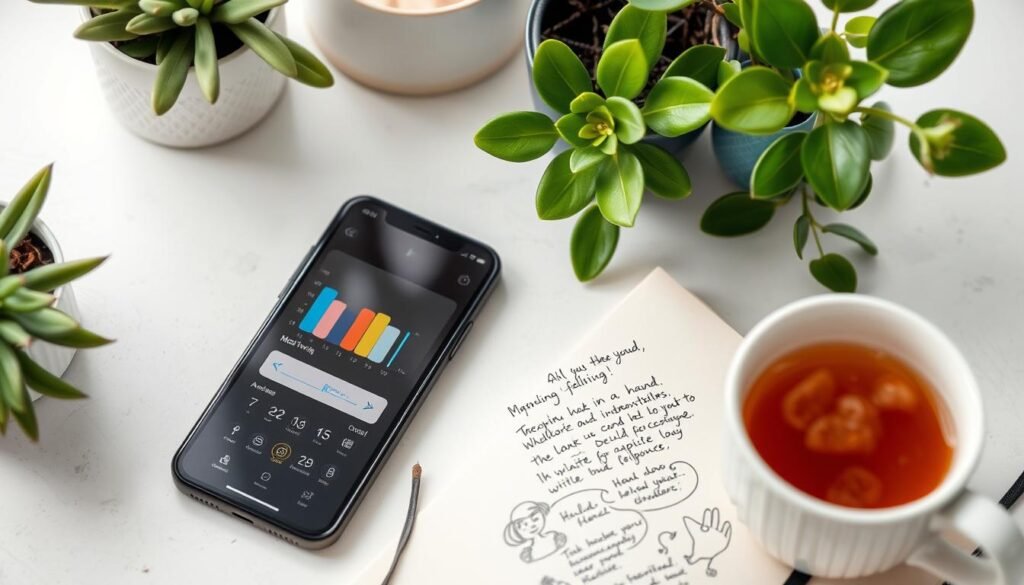
Adding mood tracking and journaling to your daily life can improve mental health. Reflecting on what you go through daily helps recognize emotional patterns. This way, you can better handle anxiety and depression.
Breathing and Relaxation Technique Apps
In our busy lives, stress often seems too high. Breathing exercises can help manage stress and bring calm. These methods trigger the rest-and-digest response in us, reducing stress and increasing clarity of mind. Many apps now make it easy to add these helpful exercises to our daily routine.
Benefits of Breathing Exercises
Relaxation exercises do more than just ease stress. They can make our lungs work better, help our heart health, lower swelling in the body, and keep our minds sharp. They also keep our mood steady by regulating the nervous system. Apps with reminders and guided practices encourage us to stick with it every day.
Notable Apps for Relaxation Techniques
Some apps are especially good for learning how to breathe to relax:
- Breathwrk: This high-rated app offers lots of breathing exercises and new classes daily. It tracks your progress and works with Apple Health.
- Calm: With a huge user base, Calm provides daily exercises and mindfulness programs for all skill levels.
- Othership: This app mixes music with guidance to help focus and relax.
- Mesmerize: It uses visuals and special music to achieve deep relaxation and reduce stress.
- Bliss: This app teaches resonant frequency breathing to make your heart rate more regular.
- Soundly: It gives a range of sounds, music, stories, and meditations for a better breathing exercise experience.
Understanding how our bodies react to these exercises shows why it’s good to use breathing app exercises regularly. For more info on how to weave these techniques into daily life, check out this article on the importance of relaxation techniques for easing anxiety.
CBT and Therapy-Based Apps
CBT apps are now crucial for mental well-being. They use cognitive behavioral therapy ideas to offer self-help tips. These apps are companions for better mental health, putting proven techniques into daily life.
Understanding Cognitive Behavioral Therapy
Cognitive Behavioral Therapy (CBT) aims to change negative thoughts causing anxiety and depression. It reshapes how individuals think and act. Apps like MindShift show how CBT works, with exercises for facing fears in social settings and panic situations. This mix of tech and psychology makes these strategies more reachable.
How Therapy Apps Can Help
Therapy apps like MindShift offer tools for emotional issues. It’s free on iOS, with a community for support. Features include mood tracking, relaxation practices, and coping strategies from CBT.

Free Apps for Anxiety and Depression: User Experiences
People often talk about how mental health apps have helped them. They share stories of feeling better and less anxious. These real stories motivate others and show how important it is to find the right app.
Real-Life Impact of Using Mental Health Apps
Many people see big benefits from using mental health apps. Over 500,000 folks have downloaded the PTSD Coach app, showing it works for many. Apps like QuitNow! get high marks for making users feel satisfied and better.
Success Stories and Testimonials
There are lots of success stories from those using mental health apps. The Shine app, for example, is highly rated and helps users daily. Apps like BellyBio have gotten praise for aiding anxiety with deep breath feedback.
| App Name | Downloads | Average Rating (App Store) | Average Rating (Google Play) |
|---|---|---|---|
| PTSD Coach | 500,000+ | N/A | N/A |
| QuitNow! | N/A | 4.7 | 4.6 |
| Take a Break! | N/A | 4.5 | 4.5 |
| Shine | N/A | 4.7 | 4.7 |
| Bearable | N/A | 4.7 | 4.7 |
| What’s Up? | N/A | 4.4 | 3.9 |
Choosing the Right App for You
Finding the right mental health app is more than just a quick download. It involves a thoughtful process. This ensures the app fits your specific needs. Consider its ease of use, whether it works on all your devices, its features, and if it helps meet your mental health goals.
Factors to Consider When Selecting an App
There are important factors to weigh in choosing a mental health app:
- User Experience: A simple and clear interface makes the app more engaging.
- Accessibility: The app should work on various devices for your convenience.
- Features: Look for functions like mood tracking or meditation guides.
- Compatibility: Make sure the app fits your mental health needs.
Budget and Subscription Options
Money can influence which mental health app you pick. Luckily, there are affordable options. Some apps are free or have a trial period to test them. Meanwhile, others might ask for a subscription for full access. Apps like Calm and Shine offer more for a fee. But MoodTools and What’s Up? are great without breaking the bank.
| App Name | Features | Pricing | User Ratings (iPhone/Android) |
|---|---|---|---|
| Moodfit | Goal setting, mood tracking | Free | N/A |
| Calm | Meditation, relaxation | $$$ | 4.8/4.3 |
| Colorfy | Adult coloring, stress relief | $$ | 4.7/3.8 |
| What’s Up? | Mood tracking, CBT | $ | 4.4/3.9 |
| Nature Sounds Relax and Sleep | Sound therapy for sleep | $ | N/A |
| Shine | Meditation tailored for People of Color | $$$ | 4.7/4.6 |
Conclusion
Mental health apps have become key for those fighting anxiety and depression. This is especially true for college students. About 30.6% of them experience depression. These apps offer important resources to help manage their emotions.
The “Feel Stress Free” app is a great example of progress in this area. By the sixth week, 83% of its users used it weekly. This app has been shown to help decrease feelings of depression and anxiety. This shows how apps can be vital in improving mental health.
During hard times, like the COVID-19 pandemic, the value of these apps has grown. Choosing the right app is crucial. It can really help improve someone’s mood and overall mental health. Using the best apps for anxiety and depression can make a big difference in how we feel.