Nearly half of adults in the United States don’t get enough magnesium from their diet. This lack of magnesium is a big issue that many don’t notice. It affects our mental health deeply. Magnesium is key for feeling calm and balanced. It’s getting more attention for helping with depression and anxiety.
This guide looks at how magnesium helps our mental health. Taking extra magnesium can help improve your mood, think clearer, and be more emotionally stable. Studies, like one on magnesium chloride, show it can really lower symptoms of anxiety and depression. To understand more, you can check out research linking magnesium and depression. Also learn how the right foods can boost your brain health through natural foods.
Key Takeaways
- Not having enough magnesium can cause health problems and mess with your mood.
- Adding magnesium into your diet can help lessen anxiety and depression symptoms.
- If you’re a bit low on magnesium, you might feel more stressed or easily upset.
- Eating foods with magnesium is important for your mental health.
- Various magnesium supplements can work differently for each person.
The Role of Magnesium in Mental Health
Magnesium is key for mental health, influencing both brain health and emotional well-being. It’s vital, supporting different magnesium functions in the body. These functions help control neurotransmitters, which play a role in our mood and thinking. This shows why magnesium is important for fighting mood disorders.
Understanding Magnesium’s Functions in the Brain
In the brain, magnesium is very important. It helps manage many brain processes. For instance, it impacts neurotransmitter activity and synaptic plasticity, which keep the brain working well. Magnesium also stops the brain from getting too excited, which helps with relaxation and lowering anxiety. Having the right amount of magnesium is key for clear thinking and good mental health.
The Impact of Magnesium Levels on Mood Disorders
Research links magnesium levels to mood disorders. Not having enough magnesium can lead to more depressive symptoms in different people. Studies have found a clear link between low magnesium levels and severe depressive symptoms. But, getting enough magnesium might lower the risk of mood disorders. This makes magnesium a promising natural option for improving mood.
Magnesium for Depression: Scientific Evidence
Recently, the link between magnesium and depression has caught lots of attention. Many studies show its role in controlling mood. Through research on magnesium and depression, the aim is to understand how magnesium levels affect mental health.
Recent Studies Linking Magnesium and Depression
Studies show magnesium deficiency can affect mental well-being. About 70% of Americans don’t have enough magnesium, leading to mood issues like anxiety. For those lacking magnesium, adding it to their diet can ease mild anxiety symptoms. A 2017 study found that magnesium glycinate improves sleep, lowers inflammation, and helps with metabolic disorders.
Clinical Trials and Their Findings
Latest trials look into magnesium’s mental health benefits. A 2022 study highlighted how magnesium l-threonate boosts brain function and clarity. These discoveries show that different magnesium types have unique benefits. With more trials, the support for magnesium in aiding mental health grows stronger.
| Study Year | Magnesium Form | Key Findings |
|---|---|---|
| 2017 | Magnesium Glycinate | Improved sleep, reduced inflammation, metabolic disorder management |
| 2022 | Magnesium L-Threonate | Enhanced cognitive function and mental clarity |
How Magnesium Affects Brain Function
Magnesium is key for our brains, helping with many important jobs. It mainly works on managing neurotransmitters, which are essential for a balanced nervous system. By doing this, it controls the flow of info in our brains, affecting our mood and feelings.
Neurotransmitter Regulation
This mineral is crucial in balancing the brain’s signals. When magnesium levels are low, our mood can suffer. But with enough magnesium, our brain signals work better, leading to mental well-being. Studies show that the right amount of magnesium can cut down anxiety and make moods more stable.
Stress Hormone Management
Magnesium also acts as a natural calm-down tool for our nervous system. It keeps stress hormones, like cortisol, in check. This reduces anxiety and boosts calmness. Since long-term stress can harm our mental health, having more magnesium in our diet can mean less stress and worry. Research backs this up, showing that people who get enough magnesium feel less stressed.
| Magnesium Functions | Effects on Brain Function |
|---|---|
| Neurotransmitter Regulation | Helps balance excitatory and inhibitory signals, promoting better mood |
| Stress Hormone Management | Reduces cortisol release, aiding in stress reduction |
| Emotional Stability | Minimizes anxiety, leading to improved overall mental health |
Symptoms of Magnesium Deficiency
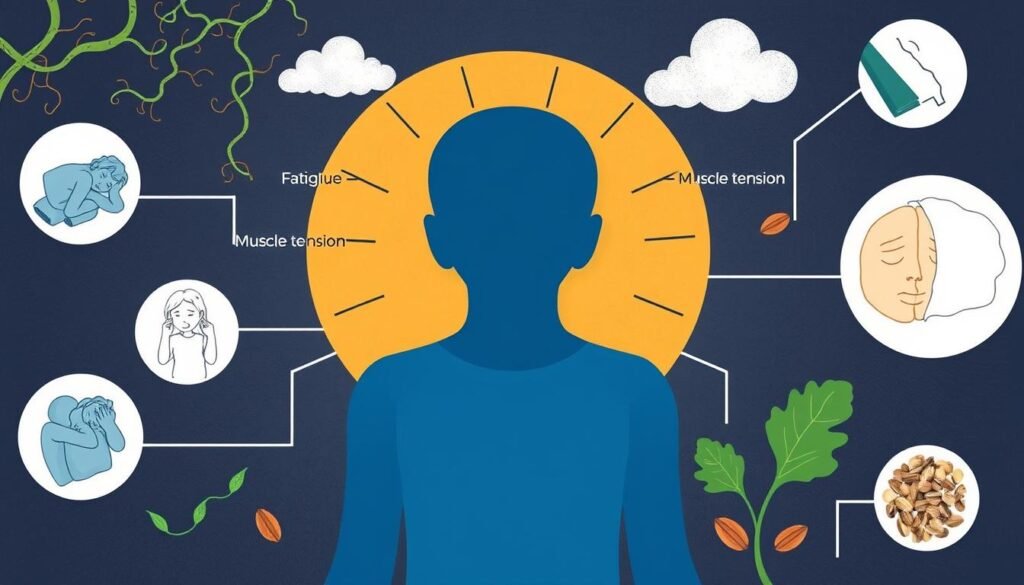
A magnesium deficiency can lead to many symptoms that harm our well-being. It’s key to spot these signs to stay healthy in mind and body. If you’re showing any of these symptoms, your health might be at risk. This includes issues like anxiety. Knowing the link between magnesium and your mental health helps in taking care of yourself.
Common Deficiency Symptoms
People low on magnesium often have symptoms such as:
- Nausea
- Constipation
- Headaches
- Nighttime leg cramps
- Numbness or tingling
- Muscle weakness
- Tremors
- Heart palpitations
These symptoms can make everyday life hard. They might mean you need to change your diet or take supplements. Solving a magnesium deficiency is key to avoid bigger health issues. This includes high blood pressure and osteoporosis.
The Link Between Deficiency and Anxiety
Studies show a clear connection between not having enough magnesium and feeling anxious. People with low levels of magnesium tend to struggle more with anxiety. This shows why it’s vital to ensure we get enough magnesium. This is especially true for those dealing with anxiety disorders.
Surprisingly, between 2.5% and 15% of Americans might not get enough magnesium. Those with diabetes, chronic diarrhea, or alcohol issues are especially at risk. With anxiety on the rise, spotting and treating magnesium deficiency is crucial for our mental health.
| Symptom | Potential Impact |
|---|---|
| Nausea | Can lead to loss of appetite and nutritional deficiencies. |
| Constipation | Can cause discomfort and impact digestive health. |
| Headaches | May affect daily functioning and productivity. |
| Leg cramps | Can disrupt sleep and lead to fatigue. |
| Anxiety | Might exacerbate existing mental health conditions. |
Magnesium Supplements: What You Need to Know
Understanding magnesium supplements is crucial for mental wellness. There are different kinds, each with its own benefits. Knowing about them helps choose the right one.
Forms of Magnesium Supplements
There is a variety of magnesium supplements available. Each type has a specific chemical makeup and absorption rate. Let’s explore some common types and their main features:
| Type of Magnesium | Bioavailability | Use |
|---|---|---|
| Magnesium Citrate | High | Improves digestion and assists in regularity. |
| Magnesium Glycinate | High | Calming effects, beneficial for anxiety and sleep. |
| Magnesium Oxide | Low | Often used as a laxative; lower absorption. |
| Magnesium Taurate | Moderate | May support cardiovascular health. |
Choosing the Right Supplement
Choosing the right magnesium supplement is based on personal health goals. Things to think about include:
- Desired Benefits: Think about your own health issues, like anxiety, sleep problems, or headaches.
- Formulation: Some forms are easier on your stomach, others are better absorbed for specific benefits.
- Dosage: Dosages often range from 200 to 400 mg daily. Always check labels for advice.
It’s best to talk to doctors or nutritionists when picking a magnesium supplement. They’ll ensure it’s safe and right for you.
Dietary Sources of Magnesium

Eating foods high in magnesium every day is crucial for your health. Many foods are packed with magnesium, helping our bodies work right. Eating a variety of these foods helps keep your magnesium levels up, which can make you feel happier and more mentally sharp.
Top Magnesium-Rich Foods
- Pumpkin seeds: 168 mg per 1-ounce serving
- Cooked black beans: 120 mg per 1 cup
- Cooked spinach: 158 mg per 1 cup
- Cashews: 83 mg per 1-ounce serving
- Cooked buckwheat: 86 mg per 1 cup
- Avocados: 58 mg per medium fruit
- Dark chocolate: 65 mg per 1-ounce serving
- Tofu: 35 mg per 3.5-ounce serving
- Salmon: 30 mg per 3.5-ounce cooked serving
- Bananas: 37 mg per large fruit
The Importance of a Balanced Diet
A diet full of magnesium-rich foods is key to being healthy. Almost half of Americans don’t get enough magnesium, which isn’t good. By eating more nuts, seeds, green veggies, and whole grains, you can get the magnesium your body needs.
Recommended Magnesium Intake for Mental Health
Knowing the right amount of magnesium to take is key for our mental health. Experts say the needed amount changes based on age, gender, and health. Finding the perfect dose can greatly help those with mental health issues.
Daily Requirements Based on Age and Gender
The FDA has different daily magnesium suggestions:
| Group | Recommended Daily Allowance (mg) |
|---|---|
| Women (19-30 years) | 310 |
| Women (31 years and older) | 320 |
| Men (19-30 years) | 400 |
| Men (31 years and older) | 420 |
These guidelines aim to keep us both physically and mentally healthy. Enough magnesium can fight anxiety and depression effectively.
Adjusting Intake for Mental Health Conditions
Those with mental health issues might need more magnesium. Studies show 250 to 360 mg daily can lessen anxiety and depression. It’s important to figure out the best dose for each person’s mental health needs.
Talking to a health professional can help create a diet plan that meets specific needs. This ensures the magnesium taken helps with mental health goals.
Potential Side Effects of Magnesium Supplementation

Magnesium supplements might be helpful, but knowing the possible side effects is crucial. Being aware helps people decide wisely about their mental health plans.
Understanding the Risks
Reactions to magnesium can differ among individuals. Common side effects include upset stomach, like nausea, and diarrhea. These are more common if you take too much magnesium.
Those with weak kidneys have more supplementation risks. Their bodies might not get rid of extra magnesium well. This can cause hypermagnesemia, leading to muscle weakness, low blood pressure, and even cardiac arrest in severe cases.
Who Should Avoid Magnesium Supplements
Some people need to think twice before using magnesium supplements. They should talk to doctors before starting:
- People with impaired kidney function
- Individuals taking medications that interact with magnesium, such as certain diuretics or antibiotics
- Those diagnosed with heart conditions that may be exacerbated by increased magnesium levels
- Pregnant or breastfeeding women without medical supervision
Knowing the side effects and who should be careful with magnesium supplements makes it safer for those wanting to better their mental health with diet or supplements.
Alternative Treatments for Depression
Looking into different ways to treat depression can help people. These ways can add to standard treatments. Adding things like magnesium is part of this strategy.
Integrating Magnesium with Other Natural Remedies
Magnesium can be a key part of fighting depression. It works well with other natural methods. Here are some effective ones:
- Cognitive behavioral therapy to help change bad thought habits
- Eating foods high in magnesium like green veggies, nuts, and seeds
- Using other natural stuff like omega-3 fats and B-vitamins
Using natural methods with magnesium may fix deficiencies and boost mental health. Many people feel stressed and tired. These methods offer hope for feeling better.
The Importance of a Comprehensive Treatment Plan
A good depression plan uses many different treatments together. Having a full plan gives people better tools to handle mental health. Making changes in life and trying natural methods can make treatments work better.
Talking to a doctor makes sure the plan fits your needs. A complete plan, with things like magnesium, leads to better mental health and happiness.
Consulting a Healthcare Professional
Talking to a doctor about magnesium for mental health is key. It’s especially important for those who already have health problems. Getting medical advice can help make sure that supplements are used safely and well. This is true when they’re being used to help with anxiety or sadness.
When to Seek Medical Advice
Seeing a doctor is a good idea if you start feeling more anxious or sad than usual. Signs to watch for include feeling sad a lot, being more nervous, or having trouble focusing. Here are times when it’s key to get medical advice:
- Experiencing severe or chronic feelings of anxiousness or sadness
- Thinking about taking many supplements or drugs at the same time
- Having other health issues or being on prescription drugs
Discussing Supplement Plans with Your Doctor
It’s important to talk openly with your doctor about supplements. People ought to share what worries them, what other medicines they take, and what they eat. Things you might want to mention include:
- Wanting to try magnesium to see if it helps lower anxiety and lift your spirits
- Any past attempts with magnesium supplements and what happened
- Figuring out the right amount and kind of magnesium that could work for them
This shows they’re serious about handling their mental health with a pro’s help. Their goals and the doctor’s advice come together this way.
Building a Foundation for Mental Wellness
A solid base for mental health means changing your everyday habits. This includes working out regularly, eating nutritious foods, and handling stress well. Among these habits, getting enough magnesium is very important. It helps with mood and thinking skills.
The Role of Lifestyle Changes
Making certain lifestyle changes can really help your mental health. Being active not only makes you feel happier but also more energetic. Eating foods high in magnesium supports your brain by keeping neurotransmitter activity balanced. It’s important to think about what you eat and how it affects your mood.
Incorporating Magnesium into Your Daily Routine
Adding magnesium to your day can do wonders for both your mind and body. Foods like leafy greens, nuts, seeds, whole grains, and dark chocolate are packed with magnesium. If eating enough of these is hard, you might consider taking supplements. Eating right is key to feeling mentally strong, and magnesium is part of that. Also, using apps to track what you eat can show if you’re getting enough magnesium.
Practicing mindfulness and ways to lower stress also helps. Being mindful improves how you handle feelings and supports healthier eating choices. Focusing on these changes and keeping up with your magnesium can greatly boost your mental health and emotional well-being.
Conclusion
Magnesium is key for mental health, especially for those with depression and anxiety. Research shows taking magnesium lowers depression scores. This highlights its role as a natural treatment option.
Eating foods high in magnesium is good. But, some might need supplements to get enough. It’s important to talk with doctors to get the right magnesium type and dose. Studies show it helps people of all backgrounds feel better from depression.
Magnesium boosts both emotional health and a healthy lifestyle. It’s a useful step for those wanting better mental health. For more info on how magnesium helps with depression, check out the study here.