Did you know that nearly 30% of people with depression don’t get better with regular treatments? This has made scientists look for new ways to help. Magnetic therapy, especially Transcranial Magnetic Stimulation (TMS), is gaining attention. It’s effective and doesn’t require surgery.
TMS is changing how we view depression treatment. It’s been recognized by the U.S. Food and Drug Administration since 2008. Not just for depression, TMS also helps with OCD and chronic pain. Many who try it see great improvements. This treatment could be a ray of hope for many.
Key Takeaways
- Approximately 30% of those with depression do not respond to standard treatments.
- Transcranial Magnetic Stimulation (TMS) is FDA-approved and non-invasive.
- TMS has helped improve symptoms not just for depression but also for OCD and chronic pain.
- Response rates for TMS therapy range between 30% and 64% for treating depression.
- Most patients report feeling better after as few as 10 to 15 TMS sessions.
- Benefits from TMS can last up to a year after the final treatment session.
Introduction to Magnetic Therapy for Depression
Magnetic therapy is an exciting approach for mental health issues, especially major depressive disorder (MDD). It’s regarded as a promising alternative to traditional depression treatments. Thanks to the FDA’s backing of Transcranial Magnetic Stimulation (TMS), there’s now a confirmed method that targets the brain areas responsible for mood regulation.
This treatment works by applying electromagnetic fields directly to the brain. It uses repetitive magnetic pulses, known as repetitive TMS (rTMS), to modify brain activity in a non-invasive way. This method avoids the significant side effects often linked with standard drug treatments. Consequently, TMS is gaining popularity as a trusted option for those dissatisfied with existing treatments.
TMS is found to be beneficial not only for MDD but also for conditions like obsessive-compulsive disorder (OCD), migraines, and helping people quit smoking. Treatments usually span several weeks, with patients going for daily sessions. Due to its effectiveness and flexibility, TMS offers new hope for many people in search of better mental health care options.
Understanding Depression and Its Impact
Depression affects about 280 million people worldwide. It hits various groups hard, leading to a big mental health challenge. The effects of depression can seriously lower someone’s quality of life.
People with depression often feel very sad, tired, and worthless. They may lose interest in things they used to like. This can affect their job, relationships, and social life.
Many, up to 35%, don’t get better with standard treatments. That’s why we need new ways to help them. Magnetic therapy is one of these new options.
Depression’s impact on mental health is huge. It can make it hard to concentrate, hurting someone’s work and relationships. Knowing all this, it’s clear we need better treatments that work for more people.
| Statistics | Details |
|---|---|
| Global Prevalence | 280 million people |
| Treatment Resistance | Up to 35% of individuals |
| Persons with TRD Responding to TMS | Effective in 30% to 90% of cases |
| FDA Approval of TMS | First protocol approved in 2008 |
| Reduction in Suicidal Ideation | 50% reduction with rTMS |
We must understand depression and find better treatments. Magnetic therapy shows promise for those struggling. It could bring hope to many facing this tough condition.
What is Magnetic Therapy?
Magnetic therapy uses magnetic fields to treat health issues. One key method is transcranial magnetic stimulation (TMS). It’s notable for its effect on mental health, especially depression. It employs magnets to stimulate the brain. Thus, it stands out in mental health treatments.
TMS employs magnetic pulses to target the brain. It is an FDA-approved, non-invasive approach for treating depression, OCD, and migraines. Its unique benefit is helping patients who didn’t improve with other treatments.
There are two main TMS treatments: repetitive TMS (rTMS) and deep TMS. rTMS sessions are shorter. Deep TMS targets wider brain areas for better effects. Treatments usually need at least 30 sessions, over one to six weeks. They are tailored to meet individual needs.
Most people handle TMS well, but some might get headaches. Another common issue is feeling discomfort on the scalp or facial twitching. The gravest, yet rare, risk is seizures. Anyone with non-removable metal in their head, except dental pieces, should not use TMS.
To conclude, magnetic therapy via TMS is a strong option for mental health issues. Its proven effectiveness and adaptability make it a notable choice for those seeking mental health treatments.
How Does Transcranial Magnetic Stimulation (TMS) Work?
Transcranial Magnetic Stimulation (TMS) is a great way to fight depression through brain stimulation therapy. It uses electromagnetic coils to send magnetic pulses to the brain. These pulses specifically target the dorsolateral prefrontal cortex. This area plays a big part in controlling our mood.
The process starts with placing an electromagnetic coil on the scalp. This coil sends out magnetic fields that go through the skull to affect nerve cells. These cells are important for managing our feelings.
The result? An increase in brain activity and more neurotransmitters. These changes are key to getting better from depression.
Studies show TMS has a 40% success rate. Plus, 36% of people get completely better. Around 67% stay well for a year if they keep getting care after TMS. Most patients see improvements in four weeks. They also continue to feel better with ongoing care.
| Statistic | Percentage |
|---|---|
| Success Rate | 40% |
| Complete Remission | 36% |
| Frequency of Wellness Maintenance (12 months post-treatment) | 67% |
| Response Rate after 6 weeks for severe depression | 40% |
| Patients feeling better within 4 weeks | Majority |
In summary, TMS is a revolutionary, non-invasive treatment. It’s fantastic for depression relief, especially when other methods don’t work. This breakthrough therapy offers hope and healing to many.
Benefits of Magnetic Therapy for Depression
The benefits of magnetic therapy for depression are notable. Transcranial Magnetic Stimulation (TMS) is a key method for treating major depressive disorder. It’s a lifeline for about 30% of people who don’t find relief with standard treatments. Studies show that 60% of these patients see a big drop in their symptoms. Many of them even get completely better.
TMS offers big advantages over traditional antidepressants. It’s not invasive, so there’s no need for being put to sleep. This makes the treatment more comfortable for patients. It has fewer side effects compared to common medications, which can have harsh reactions. Users often feel happier and think more clearly after TMS, which boosts mental health.
TMS therapy helps by making people more motivated and energetic. It can also lead to better sleep. Half of the people treated see their symptoms halve, making TMS a beacon of hope for many. A third of those treated with TMS are still symptom-free six weeks later. This shows its long-lasting effects.
Overall, magnetic therapy is especially valuable for those who have tried other treatments without success. The benefits of TMS, along with few side effects, make it a key option for managing depression.
Learn more about TMS formental health
Non-Invasive Nature of rTMS Therapy
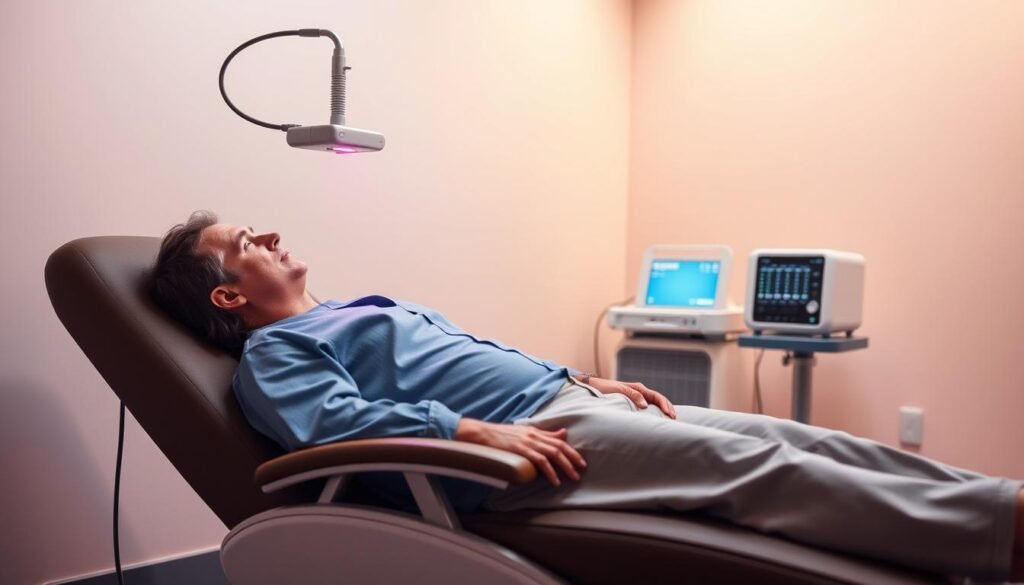
rTMS therapy is a non-invasive way to treat depression. It stands out from older methods like ECT. ECT needs anesthesia and has a long recovery time. Meanwhile, rTMS is easier on patients.
This advanced method uses magnetic fields to stimulate the brain. It targets areas important for mood control. Research, including a study from Neuro Wellness Spa, shows it helps over 75% of patients feel better.
How Does rTMS Differ from Other Treatments?
rTMS therapy can quickly improve mood, faster than medicines. Research says it’s twice as good as antidepressants for some. It’s great for those who haven’t had luck with usual depression drugs.
The treatment is made up of short sessions, taking 20-40 minutes each. Patients stay awake and can get back to their day right after.
Potential Side Effects of rTMS
rTMS has big benefits but there are some possible side effects. The most common are mild headaches and feeling uncomfortable on the scalp during or after treatment. But serious risks are very rare.
It’s a safer choice for those wary of invasive treatments. Studies say it can help improve symptoms in up to 58% of tough cases. This makes it a strong option for improving mental health.
| Treatment Type | Invasiveness | Recovery Time | Effectiveness |
|---|---|---|---|
| rTMS | Non-invasive | Minimal | Effective, particularly for treatment-resistant depression |
| ECT | Invasive | Longer | Effective, but often requires multiple sessions |
| Medications | Non-invasive | Variable | Effective in about 9 out of 10 patients using antidepressants |
Repetitive Transcranial Magnetic Stimulation (rTMS)
Repetitive transcranial magnetic stimulation (rTMS) is a new way to fight major depressive disorder. This advanced depression treatment uses magnetic fields to activate the brain. It targets areas linked with mood regulation, like the left dorsolateral prefrontal cortex (DLPFC). Studies show that 50% to 55% of people with depression respond to rTMS, proving it’s a promising option.
rTMS stands out because it has fewer side effects than traditional treatments. Most people only feel mild side effects, such as headaches and a tingling feeling. These are usually easy to manage. For those whose depression didn’t improve with other treatments, 50% to 60% found relief with rTMS, making it an appealing choice.
rTMS treatments involve multiple sessions over a few weeks, aiming for long-lasting mood improvements. Research has found that about 30% of patients see their depressive symptoms vanish after rTMS. Many patients maintain the benefits of treatment with follow-up antidepressant therapy, indicating good long-term outcomes.
| Study Attribute | Statistics |
|---|---|
| Lifetime prevalence of depression | 10% |
| Response rates to TMS | 50% – 55% |
| Remission rates of TMS | 30% – 35% |
| Full remission through rTMS | 30% |
| Average symptom return after rTMS | 1 year |
If you’re thinking about rTMS, its positive results and focus on personal treatment make it a strong option for combating depression. As more people become interested in repetitive TMS, the search for improved methods continues. This highlights the need to fine-tune the treatment for better outcomes. The push for holistic approaches supports this method, promoting a full view of mental health that covers emotional, physical, and psychological needs effectively.
Who Can Benefit from Magnetic Therapy for Depression?

Magnetic therapy is a hopeful option for many with depression. It’s important to know who magnetic therapy candidates are. This helps us see who can really benefit from TMS and make it work best.
Those with depression that doesn’t get better with other treatments are good candidates. About 70-75% of these people feel much better after TMS. And, 30-40% don’t feel depressed at all anymore. This group could really see a big difference with magnetic therapy.
People with other mental health issues might also do well with TMS. Even though it’s not FDA-approved for bipolar depression, it has helped some. It improves symptoms for those who don’t do well with usual meds.
This treatment could also help veterans and others with long-term mental health challenges. In a study of 42 TMS clinics in the US, 58% of patients got better. Some even saw their symptoms go away completely.
TMS is a great option because it’s not as harsh as some treatments, like ECT. It doesn’t just help with depression; it might also ease chronic pain, like in fibromyalgia. But, you need to talk to a doctor to make sure it’s right for you. They’ll help figure out if there are any risks and set up the best plan.
Here’s a quick summary of who might be good magnetic therapy candidates:
| Criteria | Details |
|---|---|
| Treatment-Resistant Depression | Individuals who have not responded well to at least one antidepressant. |
| Co-existing Mental Health Issues | Patients experiencing anxiety, PTSD, or other mental health disorders. |
| Chronic Pain Conditions | Individuals with conditions like fibromyalgia that may benefit from TMS. |
| Veterans | Service members who have higher rates of treatment-resistant depression. |
| Age and Health History | Management of age-related conditions and overall health should be evaluated. |
What to Expect During Treatment Sessions
Those considering TMS therapy often wonder about what happens during treatment. They think about how it all works. Getting to know this can make them less anxious. It helps them get ready for a journey to better mental health.
The Treatment Process
The journey starts with a meeting to talk about the patient’s past and needs. Each session takes 20 to 50 minutes. A device is placed on the head to send safe magnetic waves into the brain. These waves aim to improve mood by reaching certain brain areas. This method is especially good for people whose mood disorders didn’t improve with other treatments.
Expected Duration and Frequency of Sessions
Patients usually have about 30 sessions, five days a week, for 4 to 6 weeks. This schedule is designed to get the best results. Many folks start to feel better halfway through. Some even see a positive change after the first few meetings or within two weeks. Keeping up with the therapy schedule is key for getting better and staying that way.
Costs and Insurance Coverage for TMS Therapy
The cost of TMS therapy is a big deal for people looking for depression treatment. Without insurance, TMS can cost between $5,000 to $10,000. But, with insurance, what you pay can really vary depending on deductibles and copayments. Some patients even pay $0 per session, making TMS therapy easier to get.
Now, most insurance companies cover TMS therapy for major depression, OCD, and stopping smoking. Many people who are covered for insurance coverage for rTMS see their costs drop a lot. Insured patients often pay around $10 and $70 each session. Their total treatment costs range from $360 to $2,500.
Neuro Wellness Spa has done more than 140,000 TMS sessions with insurance. This shows how much more accepted this therapy is becoming in treating mental health. TMS therapy works really well, showing better results than oral meds in just two weeks. About 50% to 60% of people with hard-to-treat mental illness see big improvements. This means TMS therapy is a good investment for managing depression.
Without insurance, the cost for TMS can be high, typically $400 to $500 per session. However, the whole treatment plan might cost $2,000 to $5,000 without insurance. This can be a heavy extra cost for uninsured people, especially compared to long-term medication prices.
Conclusion
Magnetic therapy is a beacon of hope for mental health, especially for those battling depression. The benefits of TMS are impressive, with a success rate of 70% to 80%. This is much higher than the usual antidepressants, which have a 27.5% success rate. For people with depression that’s hard to treat, TMS offers a safe choice. It promises betterment without the harsh side effects of drugs.
This finding underlines the need for care tailored to the individual in mental health. The growth of treatments like TMS shows we’re getting better at personalizing care. With ongoing research, the future of fighting depression is bright. TMS is leading us to a future where it’s a common cure.
It’s crucial to know about new treatments like TMS if you’re facing mental health issues. As we find more uses for TMS and make it accessible to more people, the way we approach depression is changing. This gives us a lot of hope for the future.