Did you know only 1% of people finish a marathon? For many, it’s a huge achievement. But, it can bring unexpected sadness or emptiness. This is called post marathon depression or runner’s blues. Not just amateur runners, but elite competitors can feel this too. It’s important to understand this to maintain emotional health after such big races.
Experts like Pam Nisevich Bede and Dr. Beth McQuiston talk about recovery’s importance and dopamine’s role. Many runners deal with post marathon depression every year. They feel lost and unmotivated. Learning coping strategies and setting new goals can help them through this tough time.
Key Takeaways
- Only 1% of people have completed a marathon, indicating the significance of this achievement.
- Post marathon depression affects both novice and elite runners.
- Engaging in activities outside of running boosts mental recovery.
- Understanding neurochemical changes can help runners anticipate emotional letdowns.
- Setting new goals is essential for maintaining motivation after a marathon.
- Social support plays a vital role in overcoming post-race emotional challenges.
- Cross-training and varied fitness activities can alleviate the intensity of post-marathon blues.
Understanding Post Marathon Depression
Post marathon depression is when runners feel down after a big race. They go from training hard to having no set schedule. This can make them feel sad and without a purpose. These feelings come from the mind’s reaction to finishing a marathon.
The thrill of the race leaves a gap when it’s over. This is often called “post-race blues.” Remember, getting over this mentally is as important as getting physically better. Knowing more about this can help deal with the blues after a marathon.
Ending a long-term goal affects runners deeply. Studies show it’s like feeling down after achieving something big. A 2016 article by the Atlantic talked about “Post-Olympic Depression.” This is similar to the “arrival fallacy.” Often, looking forward to something is more exciting than the event itself. A google search for “post-achievement depression” shows about 94,000 results. This shows many people have gone through similar feelings.
Talking to mental health experts is important to tackle these feelings. Finding ways to cope can ease post marathon depression. For more advice, check out useful resources. They offer great tips and support.
What Causes Post Marathon Depression?
The causes of post marathon depression are varied. They combine biological, psychological, and socio-environmental factors. Runners often feel emotionally empty after the high of finishing a marathon.
This emptiness follows months of hard training and focus on a single goal. Once that goal is reached, many lose their sense of purpose.
Marathon training can physically wear you out and cause big hormone level changes. This can lead to mental health problems. For instance, a 32-year-old female banker felt very depressed and tired after her fifth marathon. Besides, she faced stomach issues since she started marathon running. These issues show how physical and emotional problems can mix, making depression worse.
Psychologically, stopping intense training suddenly has a big impact. Athletes may feel a great loss when they stop focusing on running. The excitement they felt during races contrasts sharply with the emptiness they feel after. This can lead to less motivation, anxiety, and a feeling of emptiness.
Not having enough social support after the marathon can make things harder. Runners often count on their friends from training and races. Without this support, they might feel more lonely and depressed. It’s important to take care of your mental health as well as your body after a marathon.
Biological Factors Contributing to Runner’s Blues
Understanding runner’s blues shows how exercise affects our feelings. Our bodies change a lot after intense workouts. These changes can then change how we feel for a while.
Endorphin Crash and Its Impact
After a hard race, an endorphin crash happens. During the race, endorphins go up, making us feel great and less pain. This feels like a big win. But when the race ends, our endorphin levels drop fast. This can make us feel empty or sad. It’s a big mood switch.
The Role of Dopamine Post-Race
Lower dopamine levels after a race also affect us. When we get ready and compete, our dopamine goes up. This makes us feel good and driven. But after the race, dopamine goes down a lot. This can make us feel less motivated and disappointed. It’s important for athletes to look after their feelings. They should set new goals before events end. This can help keep their spirits up, as shown in studies about post-race feelings.

Psychological Aspects of Post-Race Letdown
Many runners feel a huge drop in spirits after a marathon. This happens because their self-esteem and emotions are closely tied to their sport. Training hard and then finishing a race often leads to a mental slump. This slump is filled with feelings of loss and thoughts about their performance.
Once the regular training ends, some runners feel lost without their next goal. They start feeling unhappy. These feelings can include sadness, being easily upset, and lacking the drive to keep moving forward. Olympians sometimes experience this so strongly they quit after one big event. It shows how hard these challenges can hit mentally.
Sports psychologist Jim Afremow believes writing about your racing experiences can help. Writing down your feelings helps you understand them better. It teaches that feeling down after a race is normal. Then, taking it easy, doing fun activities, and setting new goals can help you bounce back.
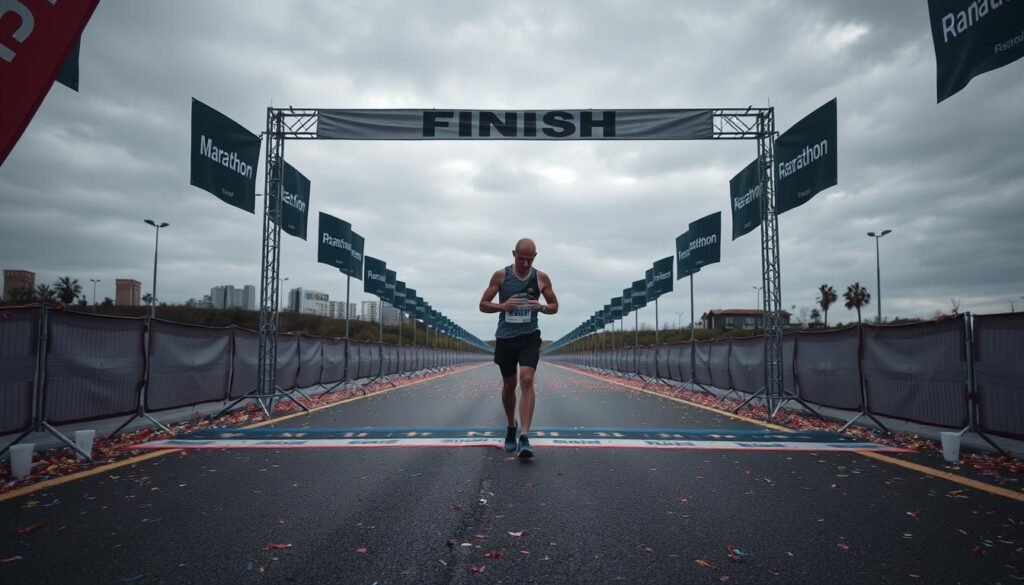
Runners should find joy in other things besides racing to beat the blues. Making memories with loved ones can make you feel less alone. Even light exercises, like walking, can help your body and mind recover. Understanding and accepting these down feelings is crucial. It prepares you to tackle new challenges head on.
| Emotional Response | Impact on Self-Esteem | Coping Strategies |
|---|---|---|
| Sadness | Can lead to a diminished sense of self-worth | Journaling experiences |
| Irritability | May create feelings of inadequacy | Engaging in non-competitive activities |
| Listlessness | Causes withdrawal from enjoyable activities | Participating in low-impact exercises |
| Lack of motivation | Contributes to negative self-perceptions | Sharing achievements with others |
The Socio-Environmental Effects on Runners
Runners often rely on community support during training and events. This helps their emotional health. After a race, they might feel social isolation as the friendship made during training lessens. They may face a training void without their regular groups or events, making them feel lost.

A study from Poland on runners showed varied reasons for their participation. It highlighted the need for mental well-being and social bonds. They wanted to feel strong emotions and connect with others at these events.
Nowadays, adults do sports more for fun and health than to compete. This matches with the healthism concept, which is about making health and fitness a priority. It’s believed to improve life quality.
Organized sports events help build connections and recognize personal wins. They’re attractive for many reasons, often giving women a break from everyday life. There’s a big talk on how these events can get more adults active. They also look at how these activities affect people’s minds and social lives.
| Motivation | Importance |
|---|---|
| Desire to Escape Everyday Life | Higher for Women |
| Experience Strong Emotions | Very Important |
| Unity with Others | Very Important |
| Test Themselves | Very Important |
The interaction of social factors can affect how runners deal with post-race blues. Understanding these socio-environmental effects is key to helping them and offering support.
Check out this resource for more on running and mental health.
How Long Does Post Marathon Depression Last?
It’s important to understand how long post marathon depression lasts for runners. This helps them deal with emotions after a race. The recovery time differs for everyone.
Typical Duration of Post-Race Emotional Dip
Studies show post marathon depression usually lasts about 10 days. One in three runners may feel sad or miss the excitement of race day.
The drop in endorphin levels by 40% after a race affects mood. Most runners, around 65%, feel lost without their training routines.
| Aspect | Statistic |
|---|---|
| Average Duration of Emotional Dip | 10 days |
| Percentage of Runners Experiencing Symptoms | 1 in 3 |
| Endorphin Level Drop | 40% |
| Runners Feeling Directionless | 65% |
| Improved Mood from Hobbies | 53% |
| Community Connection for Solace | 25% |
| Engagement with New Activities | 94% |
Taking up new activities helps recover faster. Runners finding new goals or helping in their community feel better quicker. This approach helps 60% succeed and reduces restlessness felt by 87% after the race.
Coping Strategies for Post Marathon Depression
After finishing a marathon, runners might feel overwhelmed during emotional recovery. Adopting effective coping strategies can make adjusting to life after the race easier. Engaging in hobbies and changing routines help keep a positive mindset and improve well-being.
Engaging in Other Interests
Runners should take this time to try new activities or revisit old hobbies. Engaging in hobbies brings fulfillment and joy outside of running. Whether it’s painting, gardening, or dancing, exploring different interests helps fight sadness. This strategy boosts emotions and reconnects runners with what makes them happy besides running.
Adjusting Your Routine After the Race
Moving to a less intense training schedule can be hard. Adjusting your routine thoughtfully is key to emotional healing. Building a balanced schedule with rest, light exercise, and relaxation is important. Setting new goals that aren’t about running can motivate. Adding time for friends made during training can also lift your spirits and aid emotional health.
If low moods continue for more than two weeks, getting professional help is wise. Talking to a mental health expert can offer more coping strategies. Many, like Olympic swimmer Michael Phelps, have shared their struggles, showing it’s normal. Realizing these feelings are not a sign of weakness is crucial for recovery. Learn more about managing depression after big events here.
Maintain Motivation Following a Marathon
After finishing a marathon, runners often struggle to stay motivated. They go through emotional and physical shifts. This can make them feel lost or lack drive. It’s crucial to set effective goals to get back on track. Setting new aims, in running or other activities, brings back excitement and purpose.
By setting specific and achievable goals, runners can focus on future successes. They might look for local races or try new training plans. Trying out new fitness classes or joining a sports team adds excitement. It also builds a sense of community.
To avoid post-marathon sadness and keep motivated, here are some strategies:
- Sign up for another race right after the marathon.
- Switch to a new athletic adventure.
- Think about running scenarios to stay positive.
- Review past training to find ways to get better.
- Do different exercises to help your muscles and improve fitness.
- Run with friends for support and togetherness.
Short runs of about 30 minutes can lift spirits and help ease back into a routine. This keeps the momentum going. Remember, many face post-marathon blues, so it’s important to take steps to stay motivated.
| Strategies | Benefits |
|---|---|
| Register for another race | Creates excitement and gives something to work toward. |
| Shift to a different challenge | Iguing new skills and experiences can renew passion. |
| Visualize running scenarios | Helps maintain focus and motivation. |
| Analyze past strategies | Provides insights for improvements and boosts confidence. |
| Engage in cross-training | Prevents burnout and encourages muscle balance. |
| Run with a group | Offers social support and strengthens community ties. |
Conclusion
Post marathon depression affects many runners. It stems from both mind and body factors. Social elements play a role too.
This downturn can make runners feel low and tired. It happens after a tough 26-mile race. These feelings might last up to a week.
It’s important to pay attention to runners’ emotional health. They can do things they enjoy or plan new challenges. Spending time with loved ones helps too.
These steps build resilience and cheer in runners. They help them bounce back after a marathon.
Knowing about post marathon depression is key. It helps runners appreciate their efforts better. Being proactive in recovery turns them into stronger athletes.