Did you know about the trial showing a 65% drop in depression symptoms in a month? This was after treating people with an LSD-like drug. As more folks face mental health issues, scientists are looking closer at psychedelic drugs for help. They think these drugs, like LSD, could change how we deal with emotional health issues. Groups such as MindBio Therapeutics are leading the way, guided by the FDA, into this new phase of care.
Key Takeaways
- 65% reduction in depressive symptoms observed in Phase IIa LSD trials.
- Research emphasizes the role of psychedelic treatment in enhancing mood, energy, and well-being.
- MindBio Therapeutics’ upcoming trials will focus on major depressive disorder and pre-menstrual conditions.
- Sub-hallucinogenic doses allow for normal day-to-day function during treatment.
- The FDA issued guidance in 2023, underscoring the importance of psychedelics in mental health therapies.
- Collaboration among top universities has propelled LSD research forward significantly.
- The potential for LSD and other psychedelics to offer robust alternatives in mental health treatments is becoming more evident.
Understanding LSD and Its Role in Mental Health
LSD, also known as lysergic acid diethylamide, is drawing new interest in psychedelics mental health studies. This comes as researchers look into lsd therapy for mental health issues, especially depression. Early research showed its power for deep psychological effects. Now, scientists want to test these effects more in clinical settings.
The usual dose for an LSD experience is between 25 to 80 mcg. This trip can last anywhere from 6 to 12 hours. In this time, users often have altered views and feel strong emotions. Studies say low doses might boost brain activity, helping those with depression. It could help the brain make new connections, aiding people with mental health troubles. LSD research depression shows it might ease depressive symptoms, but the effects might not last long.
LSD’s impact on the mind and emotions is significant, but it rarely leads to overdose. Still, users can have flashbacks long after their use, showing the challenges of LSD-related treatments. Treatment that tackles substance use and mental health together offers the best chance for recovery. It underlines the importance of more research into these treatment methods.
Today’s research includes microdosing, or taking tiny amounts of LSD. This method might reduce depression symptoms without strong hallucinations. In recent studies, people taking microdoses every few days noted improvements in mood. This supports more in-depth study of lsd therapy in clinical practices.
The interest in using psychedelics, like LSD, for mental health is growing. This shift in how we see LSD matches a bigger trend. It calls for new, creative treatments that mix medicine with traditional therapy to improve mental health.
The Mechanism of Action: How LSD Affects the Brain
LSD was made in 1938 and changes how the brain works. It activates serotonin receptors, mainly the 5-HT2A receptor. This receptor is key to controlling mood and making the brain more adaptable. A big research by Dr. Bryan Roth at the University of North Carolina found something interesting. LSD sticks to the serotonin receptor. It makes the receptor work in a new way, different from how it usually does.
This change is important to understanding how LSD creates its unique brain effects. The LSD molecule causes the receptor’s lid to close, keeping the effects going for longer. Studies with a changed version of this receptor showed different activity levels. This could help make new drugs that work well without bad side effects.
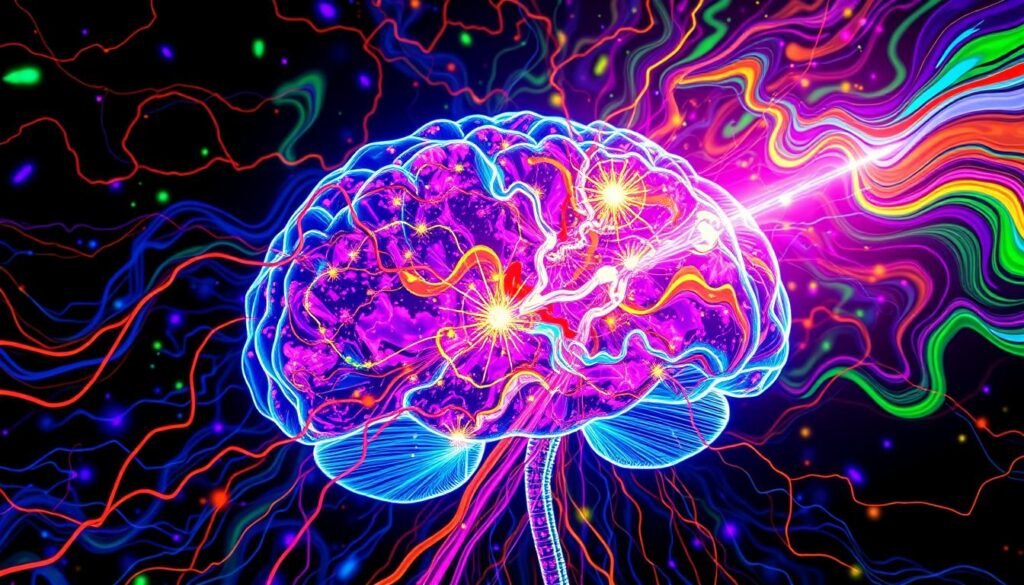
Research says LSD might help the brain in ways that are good for health. It makes different brain areas work more together during psychedelic experiences. This can change how the brain’s networks are organized for a while. LSD especially affects one brain area, making it less connected during certain states. A study with 15 volunteers showed LSD’s impact on the brain can vary over time.
In all, how LSD works is complex but offers insights. It shows how we might treat mood disorders differently in the future.
LSD Depression: Exploring the Therapeutic Potential
LSD is shedding new light on treating depression. As research grows, its role in mental health becomes clearer. It shows promise in easing depression and anxiety symptoms.
Research Insights on LSD and Depression
Recent lsd studies mood disorders reveal LSD could lessen depressive feelings. Studies use 10-20 mcg doses, impacting cognitive abilities positively. A significant 77.8% of participants felt less anxious in LSD therapy for serious illnesses.
Also, 66.7% reported a better life quality afterwards. This suggests LSD’s potential in offering relief for psychedelic treatment resistant depression.
Comparative Analysis with Other Psychedelics
LSD and other psychedelics like psilocybin have differences worth noting. LSD doses in research are 10-20 mcg, unlike psilocybin’s 1-3 mg. Both can boost mood and help with relationships if used in small doses.
However, LSD stands out in research for its lasting benefits. This makes it especially interesting for therapeutic use.

Recent Studies on LSD’s Efficacy in Treating Depression
New research shows LSD may be effective in treating depression. This includes big steps forward in clinical trials. MindBio Therapeutics is a key player, with its LSD-based treatments showing promise. Their Phase IIa trials, especially with the drug MB22001, have greatly reduced depression signs.
MindBio Therapeutics Phase IIa Trial Outcomes
The Phase IIa trials at MindBio Therapeutics saw a 65% decrease in depression symptoms after a month. This result points to LSD’s potential as a treatment in lsd research depression. The trials use controlled dosing to keep patients safe and improve therapy results.
Importance of Controlled Dosing in Clinical Trials
Controlled dosing is key for safety and success in trials. It ensures LSD is given in a safe way, lessening bad effects and helping patients stick with the treatment. Tailoring doses to each person helps unlock LSD’s benefits. More studies suggest LSD could lead to new ways to better mental health. For more on alternative treatments, see this detailed guide.
Psychedelics in Mental Health: The Bigger Picture
Research into psychedelic assisted psychotherapy is growing fast. It shows that hallucinogens could change how we treat mental health. In the past, people thought mental health problems were due to spiritual or moral issues. Now, we know they often come from the brain, leading us to look for new treatments.
Esketamine (Spravato) is the first psychedelic the FDA has approved for adults with hard-to-treat depression. This is a big step. States like Oregon are even starting to use psilocybin therapy for people 21 and older, with a program that started in 2023. This shows we are becoming more open to these kinds of treatments for mental health.
Clinical trials have tested psychedelics like psilocybin, MDMA, and DMT. One study on MDMA for PTSD had amazing results. After three sessions, 67% of the people no longer had PTSD. This shows we should take the benefits of these drugs seriously for mental health treatment.
Teams at places like Johns Hopkins University are studying these drugs for psychiatric disorders. Some studies show that one or two psilocybin sessions can improve depression for up to 12 months. This makes us think over how we’ve been treating these issues.
As opinions on psychedelics and mental health change, we see new chances for using these drugs in treatment. The way we view the human mind is evolving. This could lead to new, effective ways to tackle big mental health problems.
Microdosing with LSD: Benefits and Research Findings
Microdosing LSD is becoming popular for improving life quality and fighting depression. Users take tiny doses that don’t cause full-blown hallucinations. They notice better moods and more creativity. Recent studies show these small doses have big benefits.
Durability of Antidepressant Effects
Studies show microdosing LSD can have long-lasting antidepressant effects. One study looked at 18 young adults taking low doses over three sessions. It found improvements in brain activity linked to mood.
Interestingly, the smaller 13 µg dose improved certain brain signals more than the 26 µg dose. This suggests regular, small doses could keep moods enhanced over time.
Impacts on Creativity and Well-being
Many who microdose LSD say it boosts creativity and well-being. About 21% use it for depression relief. They also report better thinking and emotional health.
Nearly half of the users designed their own dosing routines. This shows how personalized dosing is key for better creativity and emotions.
| Aspect | Findings |
|---|---|
| Participants | 18 healthy young adults |
| Doses Administered | 13 µg and 26 µg |
| Sessions | Three sessions lasting five hours each |
| Timing of Sessions | Separated by at least 7 days |
| Electrical Brain Activity Observed | Reward-Positivity, Late-Positive Potential, Feedback-P3 |
| Effects on Brain Activity | Both doses increased Feedback-P3, 13 µg increased Reward-Positivity and Late-Positive Potential |
| Common Microdosing Amount | About 10 µg |
| Reported Microdosing for Depression | 21% of respondents |
Microdosing LSD could change how we see mental health therapy. With more research, its benefits for non-traditional treatment keep growing. This interests those looking for different treatment options.
The Future of Psychedelic-Assisted Psychotherapy
The landscape of mental health treatment is changing. This is due to the rise of psychedelic-assisted therapy. As people accept it more and research shows its benefits, using psychedelics in mental health care seems promising. This could really help those who struggle with major depression and PTSD.
About 40% to 60% of people with PTSD don’t get better with usual medications like SSRIs. And about a third of those with major depression find that treatments don’t work for them. Psychedelic-assisted therapy could be a new hope for these patients. Studies show it can greatly reduce PTSD symptoms and pave the way for new treatments.
New studies and funding are marking the start of new therapy methods. For example, John Hopkins got $17 million to start a center for psychedelic research. Also, states like Oregon and Colorado have made psilocybin use legal for adults under supervision. This supports more research and development.
As more and more people try psychedelics for healing, we need to think about safety and the challenges. Over 7 million Americans used psychedelics in 2020. So, talking about safety, oversight, and informed care is very important. Ensuring patient safety and understanding psychedelics’ effects is key to their future in mental health care.
Challenges and Considerations in LSD Research
Researching LSD’s therapeutic use is tricky due to several issues, like how people view it and safety worries. Despite the growth in lsd research, old stigma and wrong beliefs still shape what people think. Many are cautious around psychedelics because they were linked to counterculture and got banned in the 1970s.
Addressing Public Perception and Safety Concerns
How people see LSD greatly affects its acceptance for treating mental health. Some are scared of the drug because it can cause severe psychological issues in rare cases, like long-term psychosis. It’s key to talk about these safety concerns to gain trust from potential users and healthcare experts.
Explaining how LSD works with the brain’s serotonin receptors is crucial. This can lead to mood and thought changes. Effects range from happiness to anxiety, which might stop people from considering LSD as a treatment option.
The mental health community is working hard to debunk myths and share facts. Being more open in lsd research and reaching out to the public can fix wrong ideas about LSD. Educational efforts that show the good side of psychedelic therapy can change views, helping research progress.
To lessen worries about safety, strict clinical trials are needed to set rules for using LSD as medicine. Research groups must follow strict safety steps when conducting studies. This ensures risks are low. Such steps are important to make people believe in LSD’s therapy benefits.
| Challenge | Description | Proposed Solution |
|---|---|---|
| Public Stigma | Negative societal views towards LSD based on historical misuse and legal restrictions. | Educational outreach to raise awareness and clarify misconceptions surrounding its safety. |
| Safety Concerns | Potential for adverse psychological effects, especially among predisposed individuals. | Implementation of stringent safety protocols and monitoring in clinical trials. |
| Regulatory Hurdles | Legal restrictions surrounding LSD hinder research advancements. | Advocacy for reclassification of LSD to allow for medical studies. |
Conclusion
More and more, we see that LSD might help treat depression. Research shows more adults with major depression are trying LSD. From 2008 to 2019, its use grew from 0.5% to 1.8%. This increase is notable among young adults and people with less income. It shows changing views on LSD’s role in improving mental health.
Recent studies show LSD can change mood and perception. It can make people feel more connected. People with moderate depression felt better after using small doses of LSD. This points to how LSD could be used in therapy. It suggests we could use it alongside regular antidepressants.
The talk about using psychedelics in treatment is getting louder. We need more research to answer big questions. Understanding LSD’s full impact is key to using it safely in mental health care. There’s a bright future for LSD in helping fight depression. It could lead to breakthroughs in treating it.