About 6 million men in the U.S. face depression every year. This fact shows a huge problem in how we view men’s mental health. Depression is not just feeling sad. It often shows up differently in men, such as being irritable or angry.
There’s a big stigma with men and depression. This often leads them to hide their feelings. They might overwork or use drugs as a way to cope. This is dangerous. Nearly 30.6 percent of men will deal with depression at some point. Sadly, about 6 out of 10 don’t get the help they need. Knowing this is key to helping men find the right support and treatment.
We must notice the signs of depression in men. This way, we can break down the barriers. It’ll help men get the help they need and better their health.
Key Takeaways
- 6 million men in the U.S. are affected by depression annually.
- Men may express depression through irritability or anger.
- Substance use is a common coping mechanism for men experiencing depression.
- Investigation into physical symptoms may overshadow emotional concerns in men.
- Over 30 percent of men will face depression at some point in their lives.
- A significant percentage of men fail to seek necessary mental health services.
Understanding Depression in Men
Depression is a serious condition that affects people everywhere. It brings long-lasting sadness and a strong disinterest in everyday life. This illness can change how someone thinks, acts, and gets through the day. It’s especially important to understand how depression shows up in men, as it can be different.
What is Depression?
Depression is more than just feeling sad or going through a hard time. It’s a serious disorder that can really make it hard for someone to live their life. People with depression might feel very sad, worthless, and tired all the time. They might also have physical problems like pain, tiredness, and stomach troubles. If a man doesn’t get help for depression, it can lead to a lot of pain and even suicide.
How Does Depression Differ Between Genders?
Men and women experience depression in different ways because of society’s rules. Men are often expected to be strong, so they might hide their feelings. This makes it really important to recognize how depression can look different in men. Men might seem angry or act out instead of showing they’re sad.
- Substance abuse
- Aggression
- Social withdrawal
- Physical ailments, like backaches and headaches
- Low libido and erectile dysfunction
Studies show that men often try to deal with depression by not facing it. They might pull away from others, making it hard to get help. It’s very important to have support that meets the unique needs of men with depression.
Signs and Symptoms of Male Depression
It’s crucial to know how male depression shows itself. Men might feel both emotional and physical signs that are hard to notice. This often makes it late for them to get needed support. Feelings of getting upset easily, losing hope, or not enjoying favorite activities are emotional signs. Physical signs, on the other hand, include being very tired, eating differently, having headaches, and stomach problems. Spotting these signs early is key to helping men seek support fast.
Emotional Symptoms
How men feel when depressed can change a lot. They might show signs like:
- Irritability
- Feelings of helplessness or hopelessness
- Loss of interest in hobbies or activities
- Increased anger and mood swings
- Social withdrawal and isolation
Physical Symptoms
Men often talk about physical rather than emotional signs of depression. These include:
- Persistent fatigue or lack of energy
- Changes in sleep patterns, including insomnia or excessive sleeping
- Significant changes in appetite or weight
- Frequent headaches or unexplained aches and pains
- Digestive issues, such as constipation or diarrhea
| Type of Symptoms | Common Signs |
|---|---|
| Emotional Symptoms | Irritability, hopelessness, loss of interest, anger |
| Physical Symptoms | Fatigue, changes in appetite, headaches, digestive issues |
Unique Challenges Faced by Men with Depression
Men face special hurdles with depression because society expects them to stay strong and not show emotions. They often think they have to be tough and handle problems on their own. This makes it hard for them to admit they feel sad or without hope and to get help.
Cultural Expectations and Masculinity
How men view their mental health is strongly affected by society’s rules on being “manly.” Many worry that if they say they’re depressed, others will see them as less manly or weak. This fear can make them hide their true feelings, often showing up as anger instead. Changing how society thinks about men and feelings can help more men get the support they need.
Common Coping Mechanisms
Men use many ways to deal with depression. Some are healthy, like exercising or talking to friends. But, some might turn to harmful ways, like using drugs. It’s important to know all the ways men cope. This can help spot when these turn from helpful to harmful.
Seeing these different ways can start conversations about managing mental health better. This includes looking at how doctors diagnose depression in men and seeing signs of depression. For more on this, check out diagnostic criteria adjustments.
We need to understand depression looks different in men than in women. By challenging old ideas of masculinity, we can help more men admit they’re struggling and need help. As we talk more about men’s mental health, it’s everyone’s job to make it easier for men to seek help. Learn more about recognizing depression in men at common signs and symptoms.
Men and Depression: The Statistics
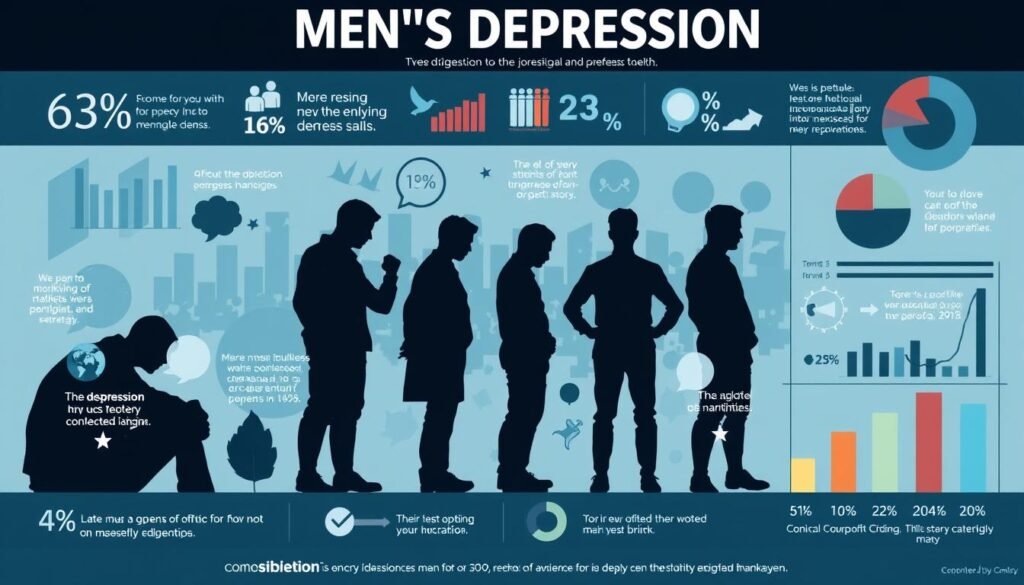
Male depression is increasingly getting attention. Around 6.2% of adult men in the U.S. have had a major depressive episode. That means roughly 1 in 8 men will face depression at some point. It’s vital to know these figures to boost awareness and prompt action.
Prevalence of Depression Among Men
Statistics show a concerning trend in depression among men. Though it’s less common in men than women, the impact is profound. Especially in young adults aged 18-25, where it jumps to about 18.6%. This highlights the urgent need for early support for young men.
Impact of Depression on Male Suicide Rates
Depression and suicide in men are closely linked. They make up 80% of all U.S. suicides, even though they’re less than half the population. Men’s suicide rate is four times higher than women’s. A big factor? Only 27% of men have close friends they can rely on. This lack of support increases suicide risks, showing how crucial friendships are in battling depression.
Recognizing Masculine Depression Symptoms
Understanding men’s depression symptoms needs a careful look. Signs often show up differently than expected. Irritability, avoiding social activities, and risky behaviors are key indicators. It’s essential to notice these signs early on.
Common Behaviors Associated with Male Depression
Men might show symptoms that aren’t usually linked to depression. These behaviors include:
- Irritability or anger: Men with depression might get angry or irritated more easily. This can affect their relationships.
- Social withdrawal: Pulling back from hanging out with friends or family could signal emotional stress.
- Conflict in relationships: Fighting more with loved ones might suggest depression is at play.
- Escapism through work or sports: Diving too much into work or hobbies might mean avoiding emotional problems.
- Substance abuse: Some men might use alcohol or drugs to deal with depression, which isn’t healthy.
Understanding Risky Behaviors
Knowing the risky behaviors tied to male depression is important. These actions often hint at deeper emotional issues. Such behaviors can include:
- Reckless driving: Taking too many risks while driving could show emotional struggles.
- Engagement in extreme sports: Looking for danger in sports might be a way to ignore feelings.
- Self-destructive habits: Not caring for one’s health or adopting harmful habits suggests neglecting well-being.
Spotting risky behaviors helps recognize depression signs in men. These behaviors mean he might need professional and emotional support. Catching these signs early improves the chance of managing depression well.
| Behavior Type | Description | Potential Impact |
|---|---|---|
| Irritability | Increased anger and frustration | Strained relationships with family and friends |
| Social Withdrawal | Avoiding social activities and interactions | Feelings of isolation and loneliness |
| Substance Abuse | Turning to alcohol or drugs as a coping mechanism | Long-term health risks and addiction |
| Risky Activities | Engaging in reckless behaviors or extreme sports | Increased likelihood of accidents or injuries |
By recognizing these signs, people close to the individual can help. Starting a conversation about mental health and looking for help is key. Understanding these behaviors helps create strong support for men dealing with depression.
Barriers to Seeking Help for Male Depression
Many men have a hard time dealing with their mental health, especially when it comes to depression. There’s still a stigma that makes it tough for men to ask for help. Knowing about these obstacles can help us support the mental health of men better.
Stigma and Misconceptions
The stigma about male depression is linked to societal expectations. These norms discourage men from showing their feelings. This stigma leads to wrong beliefs about depression, like thinking admitting to mental health issues is a sign of weakness. This makes it hard for men to seek the help they need. Also, research shows that men’s views on mental health stop them from getting help more than any other barriers do. Men often don’t want to share their feelings with doctors, which keeps them from getting the help they need.
Downplaying Symptoms
Lots of men don’t take their symptoms seriously. They see their sadness or worry as something to handle on their own. They think they should solve their problems by themselves. But, data shows only a few men with thoughts of suicide actually get professional help, even if they’ve dealt with major depression before. This shows why we need to overcome both the beliefs and practical issues that stop men from seeking help.
| Barrier Type | Description | Impact Level |
|---|---|---|
| Attitudinal | Reluctance to disclose symptoms | High |
| Attitudinal | Self-reliance, avoiding help | High |
| Structural | Cost and accessibility of therapy | Moderate |
| Attitudinal | Embarrassment or shame | High |
| Attitudinal | Difficulties in asking for referrals | Medium |

To help, we need to change how we see male depression and its misconceptions. We should create a space where men feel strong for seeking help. By breaking down these walls, we can improve mental health results for men.
Male Depression Treatment Options
It’s crucial for men with depression to get the right treatment. They can choose from several options like talking therapies and medications. These can help improve their mood and overall health.
Psychotherapy and Counseling
Men have therapy options such as cognitive behavioral therapy (CBT). CBT works on changing negative thinking and behavior. In therapy, men can explore their emotional issues in a safe place. Programs like Heads Up Guys! and Man Therapy are great at getting men involved. They help men face and deal with their mental health struggles. These programs make it easier for men to seek help.
Medications for Depression
Medications are also key in treating male depression. Drugs like SSRIs help by fixing the chemical balance in the brain. Men should work with their doctors to find the right drug. For those who don’t find relief in usual treatments, options like transcranial magnetic stimulation (TMS) are available.
| Treatment Type | Description | Effectiveness |
|---|---|---|
| Psychotherapy | CBT and tailored programs helping to address emotional issues. | High, especially when combined with medication. |
| Antidepressant Medications | SSRIs and other drugs to balance brain chemicals. | Effective for many, but monitoring for proper dosage is necessary. |
| Alternative Treatments | Transcranial Magnetic Stimulation (TMS) and lifestyle changes. | Promising for cases where traditional treatments fail. |
Using these strategies together can improve recovery in men with depression. Getting help is brave. It’s a big step towards better health.
Effective Coping Strategies for Men
Men dealing with depression can find help through effective coping strategies. These strategies boost emotional skills and help manage stress. By recognizing what triggers their stress and using helpful techniques, men can better handle their mental health.
Building Healthy Emotional Skills
Men can build emotional skills by understanding and managing their feelings properly. Learning to spot what triggers emotions leads to healthier reactions. This can make them more resilient and encourage them to share their feelings rather than hiding them.
Engaging in hobbies can also provide a big boost. Studies show that men who participate in activities they enjoy experience less depression and more happiness.
Stress Management Techniques
Managing stress on a daily basis improves well-being. Strategies like practicing mindfulness, regular exercise, and keeping up social ties are effective. A survey found that 65% of men are reluctant to get professional mental health help. This makes support systems crucial.
Self-care, such as spending time with pets or being active, can improve mental health.
| Strategy | Description | Effectiveness |
|---|---|---|
| Exercise | Regular physical activity helps reduce anxiety and improve mood. | 44.9% of men use it as a top prevention strategy. |
| Mindfulness | Incorporating mindfulness practices can lower stress levels. | 58% of men are open to trying mindfulness techniques. |
| Social Connections | Engaging in meaningful relationships can provide emotional support. | Important for preventing feelings of isolation. |
| Healthy Eating | Maintaining a balanced diet can influence mental health positively. | 54.2% of men prioritize healthy eating as a prevention strategy. |
| Time Outs | Taking breaks to recharge can significantly manage stress. | 35.7% of men practice this management technique. |
By adopting these coping methods, men can actively improve their mental health and reduce risks like stress and anxiety. Realizing the value of emotional skills and stress management paves the way for well-being and resilience in their lives. For more insights into how understanding depression empowers men, check out the information here.
Support Systems for Men with Depression
Finding help for men with depression is crucial. Various resources, including local groups and online communities, are available. They offer encouragement and share experiences. This greatly helps improve mental health.
Men’s Support Groups for Depression
Depression support groups for men offer a safe space. Men can share their struggles with others who understand. This support reduces feelings of being alone.
However, these groups don’t replace professional help. Mental Health America and other organizations help find local groups. Groups like Alcoholics Anonymous offer more specific support.
Online Resources and Communities
Online resources for depression are increasingly important. They provide information, support, and a sense of community. Websites maintain directories of support groups nationwide.
The GLBT National Help Center and National Domestic Violence Hotline offer vital help. They tackle unique issues some communities face. Online, men can find others who understand their journey.
How to Help a Man Experiencing Depression
Helping a man with depression means being sensitive and understanding. It’s key to start tough conversations. By creating a safe space, he might feel ok to share his thoughts. Men often hesitate to talk about their feelings or seek help. So, reaching out is even more important. Asking him to seek help should be seen as a step towards healing, not a weakness.
Starting the Conversation
Talking about mental health can be scary. Here are tips to make it easier:
- Choose a comfortable place without distractions.
- Ask open-ended questions to let him share his feelings.
- Listen without judging.
- Offer helpful resources.
- Remind him it’s common for men to face these struggles, making it feel normal.
Encouraging Professional Help
Professional help is key for men dealing with depression. Some men don’t see the signs or think they can fix it on their own. You can help by:
- Talking about talking to experts who understand male depression.
- Sharing information on treatments like therapy or medication.
- Telling him that getting better takes time, and it’s ok to need support.
- Suggesting groups or workshops for extra support.

Depression affects more than just the person. It touches every part of their life. Getting a man to seek help can hugely improve his life and lower the chance of worse outcomes like suicide. When you support someone with depression, remember to take care of yourself too. This makes sure both of you stay healthy on this journey.
Importance of Male Suicide Prevention
Addressing male suicide prevention is urgent due to alarming statistics. The World Health Organization sees suicide as a major global health issue, affecting males the most. Understanding the risks involves knowing the gap between depression diagnosis and high male suicide rates.
Studies show men often have less depression symptoms. Yet, they might act out through aggression, drinking, and risk-taking. These behaviors show the complexity of men’s mental health. Societal pressure to stay “masculine” can stop men from sharing feelings. In rural areas, these pressures increase, raising suicide risks.
Understanding the Crisis
In 2020, over 70% of U.S. suicide deaths were men. Barriers to seeking help, such as stigma, make it hard for men to ask for support. Issues like chronic pain, family mental health history, and addiction can raise suicide risks. To prevent suicides, we must promote mental health talks and understand these problems.
Effective Prevention Strategies
Preventing male depression and suicides needs specific strategies. Including interventions that reflect local and cultural issues is key. Here are some strategies:
- Community programs to raise awareness and fight stereotypes.
- Mental health resources like hotlines and groups for men.
- Training for healthcare providers on spotting depression in men.
- Promoting emotional regulation techniques, such as mindfulness and positive thinking, for men.
Building strong support networks can help prevent suicide attempts. Reaching out to others with similar struggles is important. Initiatives based on these ideas can lower suicide numbers and encourage seeking help. Learn more from this resource.
Conclusion
It’s really important to tackle male depression to make a healthier society. Signs of depression in men are often missed. This is because of the stigma around mental health and the tough guy image many feel they must show.
By starting conversations about feelings and breaking down harmful masculinity ideas, we can help men with depression. Programs that focus on men, especially those who feel left out, are crucial. They help men seek help without fearing they’ll be judged. We must show that caring for mental health is key to changing how society sees this issue.
Healing from depression involves everyone working together to remove the stigma around mental health. Men need to know it’s okay to show they’re vulnerable. Support should be easy to get and fit what men need.
For more details, look into resources about men’s mental health. They should honor what it means to be masculine but also focus on getting better. A great place to start is this article that talks about these issues.