Up to 80% of people with depression eat less because of their condition. This fact shows how mental health and eating habits are linked. When you don’t eat enough, your energy drops, and your mood gets worse. This makes it harder to eat right. Knowing what to eat during these times is key to feeling better.
We will discuss foods and meals that can help you if you’re not feeling hungry because of depression. You’ll learn about meals that are full of nutrients and easy to make. Our goal is to help you understand how to manage your nutrition when you’re feeling down and find foods that can help.
Key Takeaways
- Depression makes it hard to want to eat.
- Eating foods full of nutrients is important when you feel down.
- It helps to prepare meals ahead of time if you don’t feel like cooking.
- Having meals with friends can make eating more enjoyable.
- Sticking to a regular eating schedule can help bring back your appetite.
Understanding Depression and Appetite Loss
Depression and appetite loss are closely linked. People dealing with sadness often eat less or differently. They might skip making meals because they have no energy or desire. This makes even simple tasks feel really hard.
How Depression Affects Eating Habits
Depression impacts eating in several ways. It can make people care less about food, either eating too little or too much. Those eating less may miss meals or not enjoy food. People eating more might use food to handle their feelings, risking their health.
Signs of Decreased Appetite in Depression
Knowing the signs of less appetite due to depression is important. Symptoms include:
- Skipping meals frequently
- Lack of enjoyment or motivation to prepare food
- Feeling disinterested in usual foods or dining experiences
- Noticeable weight loss or lack of energy
If not treated, appetite loss can lead to other health issues. It can make conditions like anemia and diabetes worse. Addressing appetite changes in depression is crucial for health.
| Symptoms | Implications |
|---|---|
| Skipped meals | Increased risk of malnutrition |
| Lack of food enjoyment | Poor nutrition, leading to further health complications |
| Weight loss | Potential for anemia and fatigue |
| Overeating | Heightened risk of obesity and related diseases |
What to Eat When You Have No Appetite Depression
It can be hard to manage your appetite when feeling low. Yet, eating well is key for your health. What should you eat if you’re not hungry and depressed? Choose foods rich in nutrients to help boost your energy and mood. Quick, simple meals can make it easier not to skip eating.
Nutrient-Rich Foods to Consider
Choosing the right foods can really help. Look for foods packed with essential nutrients, such as:
- Leafy greens like spinach and kale, full of iron and folic acid
- Fruits like berries and bananas, loaded with antioxidants and vitamins
- Lean proteins such as chicken and fish, for vital amino acids
- Whole grains like quinoa and brown rice, for energy
- Healthy fats from avocados and nuts, great for your brain
Eating these foods can boost your overall health. They are great choices for tackling lack of appetite due to depression.
Quick and Easy Meal Options
When cooking feels too much, easy meals are a relief. Here are some meals that are quick to prepare:
| Meal Type | Description |
|---|---|
| Smoothies | Blend spinach, banana, and Greek yogurt for a nutrient-rich drink. |
| Wraps | Use a whole-grain wrap with lean turkey, veggies, and hummus. |
| Sandwiches | Try whole-grain bread with grilled chicken and a side salad. |
| Pre-made meals | A frozen vegetable stir-fry with tofu or lean meat saves time. |
These meal options make it easier to eat on tough days. They cut down on the time needed to make food. For more help on eating well when you’re not hungry, check out this useful link.
Best Foods for Depression Appetite Loss
Finding the right foods can really help with appetite loss from depression. Adding certain nutrients can boost mood and help make eating better. Focus on foods rich in omega-3 fatty acids, proteins, and B-vitamins. These are known to help stimulate appetite.
Foods Rich in Omega-3 Fatty Acids
Eating foods rich in omega-3 fatty acids is key for mental health. Studies show these fats can improve brain function and might lessen depression symptoms. Great sources are:
- Cold-water fish: Salmon, mackerel, and sardines
- Walnuts: Great for snacking or in salads
- Flaxseed: Perfect in smoothies or baked treats
Add these to your meals for enough omega-3. This can help your mental health and may even make you want to eat more.
Proteins and B-Vitamins That Help
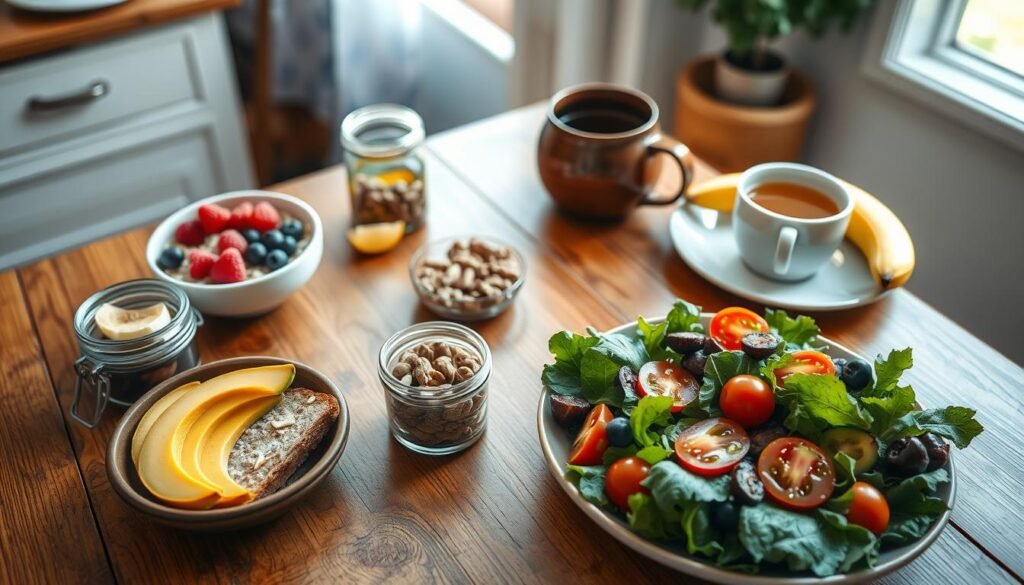
Best foods for depression appetite loss include those high in protein and B-vitamins. These nutrients keep your energy up and support well-being. Good choices are:
- Eggs: Full of protein and B-vitamins for breakfast
- Lean meats: Chicken and turkey are lean and nutritious
- Dairy products: Yogurt and milk are rich in protein and calcium
- Dark leafy vegetables: Spinach and kale offer folate, which helps mood
Talk to a doctor or nutritionist for advice on these foods. Adding them to your diet can support your mental health. Over time, it can also help improve appetite for those dealing with depression.
Healthy Snacks for Depression Nausea
Nausea and depression often go hand-in-hand, making eating hard. But the right snacks can help you feel better and stay nourished. Choose snacks that are simple and tasteful to comfort without overwhelming you. Here are some snacks that are both satisfying and mood-boosting.
Easy Snacks to Keep Handy
- Nuts and Seeds: A handful of mixed nuts offers protein, healthy fats, and is easy to pack for on-the-go snacking.
- Yogurt: Go for plain Greek yogurt for protein and good bacteria. Add honey or fruit for extra flavor.
- Applesauce: Unsweetened applesauce is gentle on your tummy. A half-cup has about 50 calories and 14 grams of carbs, making it a solid choice.
- Bananas: Bananas are filling, with 105 calories and important nutrients like potassium and vitamin B6. They’re also easy on the stomach.
- Whole Grain Crackers: Choose whole-grain for a simple snack that’s crunchy and light.
Comfort Foods That Uplift Mood
Comfort foods can make you feel better. Bright, colorful foods not only look good but can help if your taste is off. Try easy, feel-good foods like chicken broth for warmth and hydration, or gentle-on-the-stomach starchy foods like rice or potatoes.
Smoothies and milkshakes can be great if chewing or swallowing is tough. Customize them with your favorite fruits for a treat that’s as nice to look at as it is to drink. Pairing these snacks with comforting foods makes eating a more positive experience.
Learning about diet and mood relationships can offer even more help. Check out resources on foods that boost mood or how to keep your calorie intake up when it’s hard to eat. For more tips, finding out how nurses help patients eat can be very useful. They might suggest using favorite foods to tempt and nourish.
Depression Meal Plan No Appetite
Having a meal plan is key for those with depression and no appetite. Making a simple weekly meal plan lessens the stress of cooking daily. It ensures you have healthy food ready, lowering stress during tough times.
Developing a Simple Weekly Meal Plan
Creating a meal plan helps keep focus on eating well without getting overwhelmed. A depression meal plan no appetite needs simple meals. These meals should be easy to make and suited for when you’re not feeling hungry or energetic. Including different tastes and textures can make food more interesting. Here are a few meal ideas to consider:
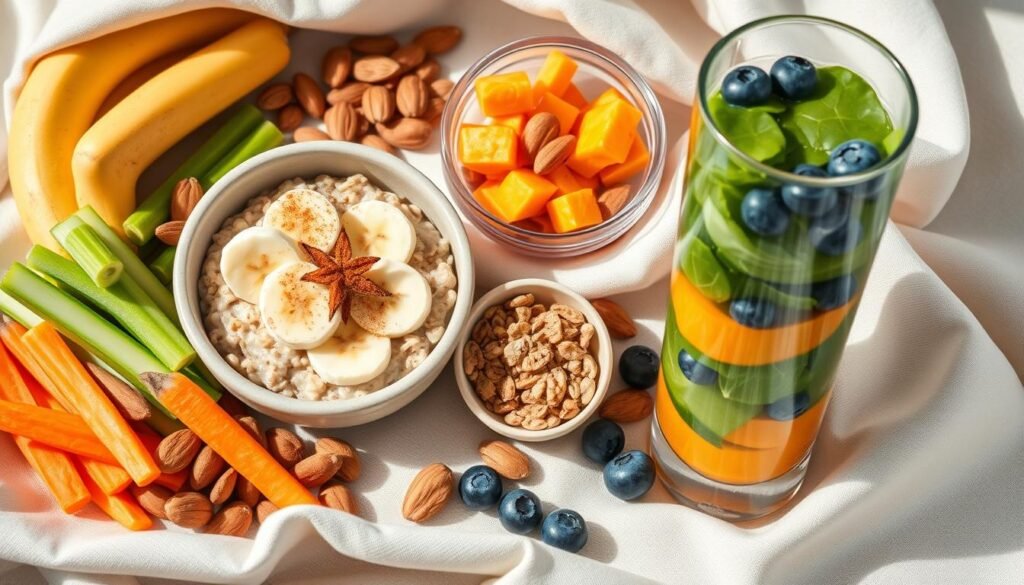
- Overnight oats topped with fruits and nuts
- Simple vegetable stir-fries with rice or quinoa
- Soups full of veggies and protein
- Easy sandwiches with lean meats or spreads
- Healthy smoothies with dairy, fruits, and veggies
Cooking in Batches for Easy Access
Cooking large amounts at once is helpful for those with depression freezer meals low appetite. It means making big portions to freeze and eat later. This takes away the hassle of cooking every day. And, it ensures you have good food available. Here’s a look at some ideas for batch cooking:
| Dish | Ingredients | Freezing Instructions |
|---|---|---|
| Vegetable Soup | Carrots, celery, onion, spices | Let it cool, then put in airtight containers to freeze |
| Chili | Ground turkey, beans, tomatoes, peppers | Freeze in portions, making reheating easy |
| Stir-Fried Rice | Brown rice, mixed veggies, soy sauce | Cool, divide, and freeze tightly wrapped |
| Quinoa Salad | Quinoa, black beans, corn, dressing | Put in bags, squeeze out air, and freeze |
| Fruit Smoothies | Frozen fruits, yogurt, spinach | Prep smoothie bags and blend when ready |
Meal planning and batch cooking can help anyone with depression eat well. Taking these steps can improve health and mood.
Nutrient-Rich Foods to Eat with Depression
Eating a balanced diet is key for mental health, especially with depression. Foods rich in nutrients can boost your mood and energy. Eating healthy helps people feel more stable and improves their health overall.
Incorporating Fruits and Vegetables
Adding fruits and veggies to your meals is crucial. They give you important vitamins, minerals, and antioxidants for your brain. Foods like berries, oranges, spinach, and broccoli are great choices.
These foods fight inflammation and help your brain work better. Eating a variety of fruits and veggies can make you feel better and fight off depression. For more info, check out these resources.
Selecting Whole Grains for Energy
Choosing whole grains helps keep your blood sugar stable, important for your mood. Foods like quinoa, oats, and brown rice give you energy and are good for your gut. Eating these grains can make you feel less tired or irritable.
Depression Nutrition Appetite Stimulants
For people feeling less hungry because of depression, many appetite help options exist. They include foods, lifestyle changes, and even herbal treatments and supplements.
Using Herbal Remedies and Natural Supplements
Many people use herbal remedies and natural supplements for better appetite. Ginger and peppermint can help with nausea, making meals more appealing. Also, not having enough zinc can make older adults eat less. So, zinc is very important in their meals.
Fish oil might help with hunger, but we’re not sure yet. Talking to a doctor about specific medicines like Dronabinol (Marinol) or Megestrol (Megace) is a good idea. They can prescribe something that really works.
Foods that Boost Serotonin Levels
Eating foods that boost serotonin levels can improve how you feel and make you hungrier. Try eating bananas, nuts, and dark chocolate to increase serotonin. This could make you look forward to eating more.
Try eating small, nutrient-packed meals more often. This can help you eat more calories. Having set times for meals and eating with others can make eating more fun. This helps in wanting to eat more.
Choosing the right foods is very important. For more tips on eating better, especially if you’re not feeling hungry, check this resource.
High-Calorie Shakes for Depression
High-calorie shakes are a tasty and rich option for those losing appetite because of depression. They’re perfect as a nourishing meal replacement or a healthy snack. These quick shake recipes are full of good ingredients. They help bring in more calories and the nutrients your body needs.
Quick Recipes for Nutrient-Dense Shakes
Making depression appetite boosting smoothies is easy with a few key ingredients. Here’s a look at two recipes that are both delicious and nutritious:
- Banana Nut Shake: Mix 1 banana, 1 cup of Greek yogurt, 2 tablespoons of almond butter, and a splash of milk. It’s full of healthy fats and vitamin B6 to help your brain feel better.
- Berry Protein Blast: Blend 1 cup of mixed berries, 1 scoop of protein powder, 1 tablespoon of flaxseed, and 1 cup of almond milk. This smoothie fights off cell damage and gets a boost from omega-3.
Adding Extras for Extra Calories
Adding more ingredients to your shakes can up the calorie and nutrient count. Here are a few great options:
- Rolled Oats: With lots of fiber, adding ¼ cup of rolled oats makes you feel full longer and boosts your health.
- Seeds: Chia or hemp seeds give you omega-3 fats, protein, and vital nutrients.
- Dark Chocolate: A bit of dark chocolate can make shakes taste better and help lift your mood.
- Nut Butters: Adding almond or peanut butter brings in more calories along with healthy fats and protein.
Using these high-calorie shakes can ease issues with losing appetite due to depression. Trying different flavors and mixes makes it easier to keep drinking them without getting bored of meal prep.
| Ingredient | Calories per serving | Nutritional Benefits |
|---|---|---|
| Greek Yogurt (1 cup) | 100 | Full of protein and gut-helping probiotics |
| Banana (1 medium) | 105 | Loaded with vitamin B6, good for your mood |
| Almond Butter (2 tbsp) | 196 | Gives you healthy fats and protein |
| Mixed Berries (1 cup) | 70 | Packed with antioxidants for fighting inflammation |
| Flaxseed (1 tbsp) | 37 | Filled with omega-3s, great for mental health |
Conclusion
Knowing what to eat when you’re not hungry because of depression is key. Adding foods full of nutrients, easy meals, and healthy snacks makes a big difference. These small, daily changes in diet can boost both your body and your mood.
It’s also important to deal with having no appetite. If feeling down lasts more than two weeks, it’s time to get help. Mental health experts can offer advice and support. Opening up about your feelings to friends and family can help too.
Nutrition and mental health work together to change how you feel. Projects like MooDFOOD show how diet affects depression. Eating well helps you handle life better and keep your mind healthy.