Did you know that during the Great Depression, the real GDP in the United States fell by 30%? This caused the unemployment rate to skyrocket to nearly 25%. This fact shows how damaging economic downturns can be. Knowing the differences between a recession and a depression is crucial. It helps both individuals and businesses. Understanding these economic contractions allows for better preparation against impacts on jobs, consumer mood, and market stability.
This article will explore the key differences between recessions and depressions. It will look into their characteristics, causes, and effects. The conversation about recession versus depression is key for navigating today’s financial world.
Key Takeaways
- The Great Depression saw a dramatic 30% decline in GDP between 1929 and 1933.
- Recessions are typically shorter and less severe compared to depressions.
- Unemployment rates can spike significantly during both recessions and depressions.
- Understanding the differences can help businesses and consumers navigate economic challenges.
- Historical context shows that economic downturns can impact multiple countries during a depression.
Understanding Economic Downturns
An economic downturn means we’re in a time when the economy isn’t doing so great. We can face a recession or a depression. A recession is when things like money made by the country (GDP), jobs, and spending go down for a short time. Depressions are worse, making it tough for everyone for much longer.
It’s important to spot signs like less GDP, more unemployment, and lower spending. These show a recession might be happening. The Great Recession between 2007 and 2009 is a good example. Then, unemployment in the USA hit 10.6%, and the country’s GDP fell by 4.3%.
Depressions, however, hit harder. They drastically drop production and spending. Take the Great Depression from 1929 to 1936. Unemployment reached almost 25%, and GDP fell by 30%. Knowing these key differences prepares us to face economic tough times.
Being aware of signs of downturns, as mentioned in this resource, helps people and businesses make smarter choices. Understanding economic ups and downs shields us from the worst of financial troubles.
What is a Recession?
A recession is a time when the economy slows down for months. It’s seen in less GDP, jobs, and spending. The National Bureau of Economic Research (NBER) says a recession starts after the economy peaks and ends when it hits the lowest point. This shows recessions are part of the economic cycle.
Definition of Recession
The NBER sees a recession as a big drop in economic activity over months. This is seen in GDP going down and more people out of work. Factors like income, making goods, and sales also fall. These changes affect the whole economy. Since consumer spending is a big part of the U.S. economy, changes in it matter a lot.
Common Characteristics of Recession
Recessions are known for certain things. These include:
- More people losing jobs: Tough economic times mean companies stop hiring or let go of workers, making unemployment rates go up.
- People buying less: When folks feel unsure about the economy, they spend less money. This makes things harder for businesses and the economy.
- Businesses putting off spending: Uncertain times make companies rethink spending. This can slow down their growth.
These parts come together to show how a recession affects the economy. Also, something like a big drop in investment prices can shake things up. This happens when investments are priced too high and then fall sharply. It leads to less spending and more economic downturn. To really get how these parts of the economy relate, checking out how economic downturns work can help.
What is a Depression?
A depression is a severe economic downturn lasting a long time. Experts often disagree on its exact meaning. It usually means big drops in GDP and a lot of people being out of work. Knowing this helps us understand how people act when the economy is very bad.
Definition of Depression
A depression goes on much longer than a recession, sometimes years. The National Bureau of Economic Research tells us that during depressions, the real GDP goes down a lot, for many years. Look at the Great Depression of the 1930s for an example of real economic disaster. The GDP then fell by nearly 27%.
Characteristics of a Depression
Depressions have several key features:
- Severe GDP Decline: GDP can drop greatly, like during the Great Depression where it went down for six of ten years.
- Widespread Unemployment: Unemployment can exceed 20%. In 1933, during the Great Depression, it nearly hit 25%.
- Consumer Behavior Changes: People spend much less, possibly causing prices to fall for years and making things worse.
- Prolonged Stagnation: While a recession might last about ten months, depressions can stretch for years, making daily economic life hard.
Looking at past depressions, like the Panic of 1837, shows the scary long-term effects. These times make us closely examine our economy and policies. For more on how recessions differ from depressions, check out this resource.
Key Economic Indicators of a Recession
It’s important to know the economic signs that show a recession. These include drops in GDP, higher unemployment, and changes in how much people spend. Each plays a key role in the economy, affecting how we deal with economic downturns.
GDP Contraction
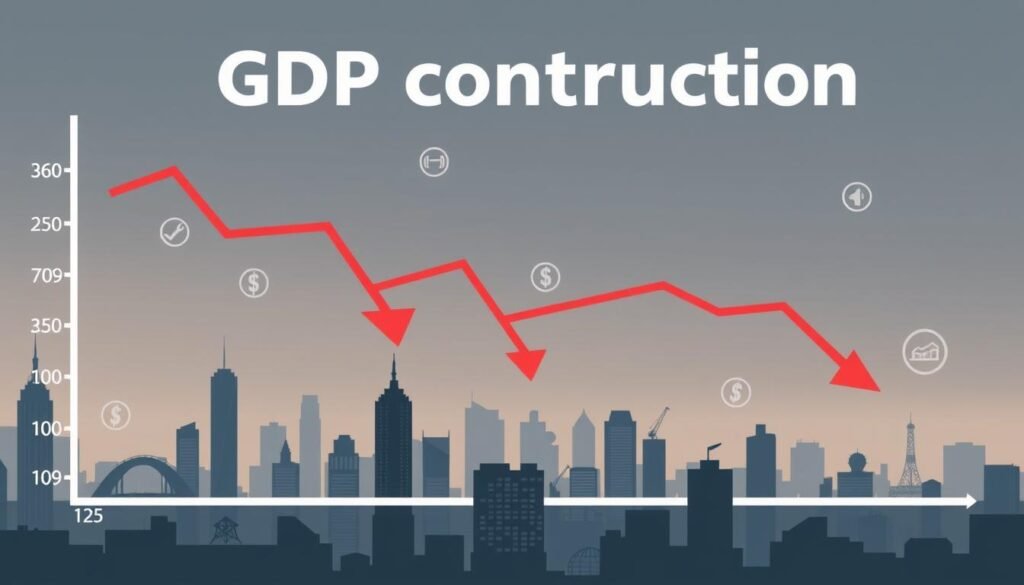
A fall in GDP is a clear sign of trouble. An economy in decline for two straight quarters alarms economists. The IMF says normal recessions can lower GDP by about 2%. In worse cases, it may fall by up to 5%. For example, during the Great Depression, the U.S. economy shrank by 33%.
Unemployment Rates
With GDP falling, companies lay off workers, causing unemployment to rise. At the Great Recession’s height, unemployment hit 10.6%. This can start a bad cycle: more job losses lead to less spending, causing even more layoffs. The Sahm Recession Indicator watches unemployment to flag when a recession starts.
Consumer Spending Trends
The way people spend money shows how they feel about the economy and affects its direction. When spending is stable or rising, it suggests people are confident. A drop in spending can start a downturn. The Great Depression saw a sharp fall in spending, which hurt the economy further. These trends help us understand the economy’s health and predict recoveries.
| Indicator | Typical Impact During Recession | Historical Data |
|---|---|---|
| GDP Contraction | Decline in economic activity | Great Depression: -33% GDP |
| Unemployment Rates | Increase in layoffs | Great Recession: 10.6% |
| Consumer Spending Trends | Decline in spending | Great Depression: Significant drop in spending |
Key Economic Indicators of a Depression
It’s essential to know the signs of a depression. This knowledge helps us spot and tackle big economic problems. These signs show how a long-lasting downturn affects both people and industries.
Severe GDP Decline
A big sign of depression is a huge drop in severe GDP decline. Sometimes, this drop is more than 30%. This is much worse than in recessions, where the economy might shrink a bit but recovers. This big drop affects many areas, changing how businesses work and how people spend money.
Widespread Unemployment
Depressions don’t just cause brief job losses like recessions. They lead to widespread unemployment that lasts for years. This forces companies to cut many jobs. For those out of work, finding new jobs is very hard. This situation can hurt both the economy and society for a long time.
Deflationary Spiral and Market Decline
A depression also brings a deflationary spiral. This means prices keep falling, so people wait to buy things, hoping prices will drop more. But this waiting makes the economy and prices fall even further. It’s a tough cycle that makes things worse. Breaking out of this cycle is hard and needs careful plans. For more tips on handling economic problems, check out these strategies.
Comparison of Recession vs Depression
Knowing the difference between a recession and a depression is key. Each one impacts the economy in unique ways. They differ in how severe they hit, how long they last, and how wide they spread.
Severity of Economic Impact
Recessions lead to less spending and jobs in some areas. They hit certain businesses or places hard but usually don’t drag on. Depressions, on the other hand, are much worse. Think of the Great Depression – the economy shrank by 30%, and one in four people were out of work. This shows how depressions affect many countries, not just one.
Duration of Economic Contraction
Recessions usually go by fast, lasting about 10 months. This quick period helps economies bounce back. But depressions stick around much longer, like the Great Depression which lasted ten years. It was so long, it included two recessions within it. Such lasting troubles change the way people and markets act for a long time.
Geographical Scope
Recessions often hit certain places or industries, while depressions impact the entire world. America has seen 34 recessions since 1854, but only one true depression. The Great Depression reached beyond the U.S., showing it was a worldwide problem. Knowing all this helps those in power make better plans when facing economic troubles.
Causes of Economic Downturns
Economic downturns, like recessions and depressions, have many causes. Understanding these causes helps us predict their impacts. This knowledge is key to navigating economic challenges.
Factors Leading to Recession
A mix of issues can start a recession. The main factors include:
- Overheated economy: Too much demand can cause inflation. This leads to higher interest rates and reduced spending.
- Financial bubbles: For example, the housing market crash shows how overvalued assets can trigger downturns.
- Economic shocks: Surprises like pandemics or global tensions can suddenly shake the economy.
Triggers of a Depression
Depressions come from deeper problems than recessions. The common causes are:
- Excessive consumer debt: Too much borrowing can spread financial trouble.
- Sustained economic mismanagement: Bad long-term policies can destroy trust in the economy.
- Sudden market collapses: Quick loss of market trust can lead to a deep economic crisis.
Historical Examples of Recessions
Learning about past recessions helps us understand how economies go through good and bad times. The Great Recession of 2008 is especially important in recent history. It deeply affected the whole world’s economy. This happened because of a big problem in the housing market and a financial crisis. It led to a big fall in GDP, higher unemployment, and many people losing their jobs in different areas. We can still see the effects on markets and how people spend money today.
The Great Recession of 2008
The year 2008 saw a very bad recession, noted for its quick drop in economic activities. The International Monetary Fund showed that rich countries’ economies were down about 10% of the time from 1960 to 2007. This crisis made governments change rules and how they handle money to get back to a stable economy. It shows how deeply this recession touched financial systems all over the world.
Other Notable Recessions
Many recessions have left their mark on the United States’ economy. The early 1990s recession and the early 2000s dot-com bust are just a couple of examples. Other downturns, like the Own Goal Recession of 1937 to 1938 or the Oil Embargo Recession from 1973 to 1975, tell us important lessons. They show us how economic policies, what people buy, and market forces are all connected.