About 20% of people with Seasonal Affective Disorder (SAD) find major relief with light therapy. This fact highlights how using light as a treatment can help with mood issues, especially when it’s dark a lot in fall and winter. It uses artificial light that acts like sunlight to fight off SAD symptoms and make you feel mentally better.
Studies show that light therapy can really help improve your mood and lessen anxiety. It’s becoming a favorite choice for those who don’t want to use medicines all the time. This article will explain how light therapy works, its benefits for mood disorders, the devices you can use, and tips to get the best results.
Key Takeaways
- Light therapy is effective for up to 20% of individuals with Seasonal Affective Disorder (SAD).
- The recommended light exposure level is 10,000 lux, ideally within the first hour of waking.
- Devices should minimize UV light to ensure safety during treatment.
- Daily use is crucial for effectiveness; convenience in device choice is essential.
- Most health insurance plans do not cover the cost of light therapy boxes.
Understanding Light Therapy
Light therapy, or phototherapy for mood disorders, uses specific light wavelengths to affect our body rhythms. This treatment usually involves light boxes that shine very bright light, measured in lux. These boxes can shine light ranging from 2,500 to 10,000 lux. Starting your day with a 30-minute session under a 10,000 lux light box is recommended. This mimics the sun’s natural light and helps people with major depressive disorder (MDD) that changes with the seasons.
Studies show that light therapy can help with both seasonal and non-seasonal MDD. People often start feeling better within a few days to two weeks of regular use. Keep using it through the winter to keep depression at bay, research suggests.
But it’s not just MDD that light therapy can help with. It might also improve conditions like bipolar disorder, osteoporosis, and skin problems like eczema and psoriasis. Plus, it looks promising for managing type 2 diabetes and Alzheimer’s disease. Dr. Carl Vincent believes using therapeutic lighting could make other depression treatments work better too.
Many people face mental health issues but don’t get help. In fact, about 54.7% of American adults with mental illness don’t seek treatment. This highlights the need for easily accessible treatments. Light therapy is one such option.
| Condition | Effectiveness of Light Therapy |
|---|---|
| Major Depressive Disorder (MDD) with Seasonal Patterns | High |
| Non-Seasonal Major Depressive Disorder | Moderate |
| Bipolar Disorder | Moderate |
| Osteoporosis | Low |
| Acne and Skin Disorders | Moderate |
| Type 2 Diabetes | Emerging |
| Alzheimer’s Disease | Emerging |
Learning about light therapy’s benefits shows its importance in mental health, especially for mood disorders. As its popularity grows, it could become part of a whole care plan along with other treatments.
What is Depression and Anxiety?
Depression and anxiety are common mental health issues around the world. Depression is when you feel very sad, hopeless, and lose interest in daily life. Anxiety involves too much worry, nervousness, and fear about the future. They can affect how well you do in life, at work, and with others.
To deal with these mood disorders, it’s important to know what they are. Research has looked into many treatments, including light therapy. This therapy is a non-drug way to help people feel better.
Light therapy can help along with other treatments, to bring back balance. Recognizing new solutions like this is key for better mental health. For more info on how light therapy helps, see this study.
How Light Therapy Works
Light therapy mimics natural sunlight. It typically uses a light box with bright light at 10,000 lux. This brightness is key for body responses, adjusting melatonin and serotonin levels. These hormones affect mood and energy. Studies show this therapy helps with seasonal affective disorder (SAD), improving mood quickly.
To see results, it’s best to use the light source for 20-30 minutes each morning. A 20-minute session can improve mood right away. Extending to 40 minutes can increase the benefits. But, going over 60 minutes doesn’t add more benefits.
People sit near a box that emits cool-white fluorescent light for this therapy. It’s a top choice for fighting seasonal symptoms. Combining it with talk therapy and medication is even better. Staying regular with sessions can greatly help with depression symptoms.
| Duration of Exposure | Effects on Mood | Intensity | Recommended Sessions |
|---|---|---|---|
| 20 minutes | Initial improvement | 10,000 lux | Daily |
| 40 minutes | Maximized improvement | 10,000 lux | Daily |
| 60 minutes | No additional benefit | 10,000 lux | Daily |
Before starting light therapy, talking to a doctor is a good idea, especially for those sensitive to light. It could greatly help those dealing with seasonal affective disorder.
For extra details on light therapy and its role in treating seasonal affective disorder, check out this resource.
Benefits of Light Therapy for Mood Disorders
Light therapy offers big benefits for various mood disorders, especially those related to seasonal changes. People with Seasonal Affective Disorder (SAD) often feel better after consistent light therapy. They report being in a better mood, having more energy, and sleeping better.
Studies point out the value of bright light, especially when there’s not much sunlight in winter. Using bright white light, from 1000 to 2500 lux, has been shown to reduce depression symptoms. A 1981 study found that bright light for 1-2 hours lowered depression scores in just a day.
Getting light therapy in the morning can be particularly helpful. It helps reset the internal clock that controls mood, hunger, and sleep. This makes light therapy more effective for treating mood disorders.
Light therapy doesn’t just help with mood. It also reduces fatigue and anxiety, according to studies. This makes it a broad approach to improving mental health.

| Study Year | Light Type (Lux) | Findings |
|---|---|---|
| 1981 | 1000 to 2000 | Reduced depression scores within a day with bright white light. |
| 1981 | 2500 | Morning exposure resulted in higher remission rates in SAD. |
| 1982 | 2000 | Brought remission of winter depression in a seasonal mood cycle patient. |
| 1983 | 2500 | Marked antidepressant effects noted with full-spectrum light, especially in winter. |
| Various | 2000+ | Longer response duration compared to dim light exposure. |
Light therapy is a non-invasive, effective way to improve mental well-being. It’s a key option for those seeking relief from depressive symptoms.
Light Therapy for Depression and Anxiety
Light therapy is a recognized way to fight depression and anxiety. It’s especially good for Seasonal Affective Disorder (SAD). SAD hits people during fall and winter when there’s less sunlight.
The Role of Bright Light Treatment
Bright light therapy means sitting near a light that’s really bright, about 10,000 lux, for a certain time. It helps fix your body’s clock, making you feel better and more energetic. If you do it for 30 minutes before 8 a.m. every day, it really helps with SAD symptoms. The light boxes used don’t make much UV light, so they’re safe for your eyes.
Impact on Seasonal Affective Disorder (SAD)
Light therapy is very important for those with SAD. Using the therapy every day for a week can fight the symptoms well. The recommended devices are from Carex Health Brands and Nature Bright Company. For example, the NorthStar 10,000 and BOXelite OS are great. These gadgets work like sunlight, making you feel happier in the darker months.
| Device Name | Lux Output | Features |
|---|---|---|
| NorthStar 10,000 | 10,000 | Full-size treatment box |
| SunRay II | 10,000 | Compact and portable |
| BOXelite | 10,000 | Designed for daily use |
| Day-Light Sky | 10,900 | Higher intensity at close range |
| SunTouch Plus | 10,000 | Flexible positioning options |
| BuddyLux | 10,000 | Portable for travel |
Different Types of Light Therapy Devices
Light therapy has grown, offering many devices for different needs. These tools help people pick the best one for their therapy. The top three devices are light box therapy, light visors, and dawn simulation therapy. Each has its own features and advantages.
Exploring Light Box Therapy
Light box therapy is well-known for its benefits. It shines at 10,000 lux, brighter than normal indoor lights at 100 lux. You sit close to the box for about 30 minutes every day. This can boost your mood and energy.
People also sleep better and feel less depressed with regular use. The effects of light therapy can be quick. So, it’s great for those looking for quick help.
Understanding Light Visors and Dawn Simulation Therapy
Light visors are worn on the head, shining light directly into the eyes. Their effectiveness is still being studied. Dawn simulation therapy slowly lights up like a sunrise. This helps you wake up feeling more natural and less tired during the day. These therapies offer different choices, fitting various lifestyles and needs.

Recommended Usage and Guidelines
To get the most from light therapy, it’s important to follow certain guidelines. Use a light box for 20 to 30 minutes each morning. Do this right after you wake up. This mimics natural sunlight and helps fix your sleep cycle.
Place the light box 16 to 24 inches away. Keep your eyes open but don’t stare at the light. Stick to a regular schedule as the maker suggests. This ensures the best results. If your box has lower lux—5,000 lux light requires 45 to 60 minutes and 2,500 lux needs 1 to 2 hours. You might need to use it longer.
You might feel better in a few days. But, it often takes two weeks to see big changes. Keep using the light box through winter to keep feeling good. Try upping your time to 60 minutes if you don’t feel better after 10 to 14 days. You can split this time between morning and night.
Talk to a doctor before you start light therapy. This is really important if you have health issues. Following these light therapy tips can make the treatment work better.
Want to know more about light therapy? Visit light therapy guidelines for extra help.
Choosing the Right Light Therapy Lamp
Picking the right light therapy lamp is very important. It helps a lot with mood problems like depression and anxiety. When choosing, certain key features to consider will really affect how well it works for you.
Key Features to Consider
- Light Intensity: It’s best to choose a lamp with at least 10,000 lux to see good results.
- Size: If you have room, bigger lamps like the Northern Light Technologies Boxelite can light up a bigger area.
- Portability: Need a lamp for different places? Models like the Erligpowht Light Therapy Lamp are easy to move.
- Ease of Use: Look for simple features, such as adjustable brightness, like what the Verilux HappyLight offers.
- Medical Approval: Make sure the lamp is okay to use for issues like Seasonal Affective Disorder (SAD).
Safety and UV Considerations
Always think about safety in light therapy. It’s very important to pick a lamp that doesn’t let harmful UV rays come through. This protects your skin and eyes. Also, talking to a doctor before you start is a smart move. This is especially true if you have eye problems, like glaucoma or cataracts.
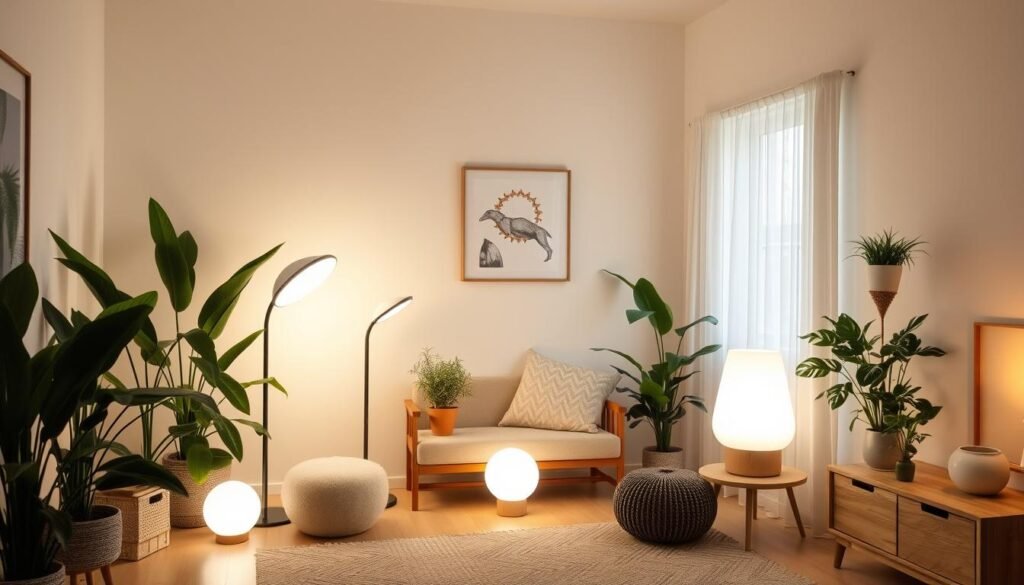
Understanding these points helps you make a wise choice. This means you’ll get more from this natural way to improve your mood.
| Lamp Model | Light Intensity (Lux) | Brightness Settings | Price |
|---|---|---|---|
| Erligpowht Light Therapy Lamp | 10,000 | 3 | $26 |
| Carex Light Therapy Lamp | 10,000 | 1 | $69 |
| Verilux HappyLight | 10,000 | 2 | $79 |
| Sunrise Sensations DayBright | 5,000-10,000 | Variable | $99 |
| Northern Light Technologies Boxelite | 10,000 | 1 | $235 |
Side Effects and Contraindications
Light therapy helps many with mood disorders. But, knowing the side effects of light therapy is crucial for safety. Common side effects are eyestrain, headaches, irritability, and sleep issues. These are usually mild. They can often be managed by changing the treatment setup.
Before starting light therapy, some contraindications need attention. Individuals with certain eye diseases may have higher risks. Also, those on medications making them more sensitive to light need to talk to their doctors about who should avoid light therapy.
Although 10,000 lux light boxes are generally safe for the eyes, it’s wise for those over 65 to check with their eye doctor first. Before beginning treatment, it’s important to discuss any health conditions and medications with healthcare providers.
In rare cases, light therapy may trigger a bipolar hypomanic or manic state. So, this therapy needs supervision by a trained clinician. With regular checks and careful monitoring, the therapy’s effectiveness can be maximized.
For more info on safety measures and risks, please visit this resource.
Conclusion
Light therapy is a natural treatment for depression and anxiety. It’s great for people facing Seasonal Affective Disorder (SAD). Studies show it really helps improve mood over two years. Out of 58 patients, more than half got much better after this therapy. This points to its effectiveness in treating mental issues.
Light therapy has few side effects and is safer than some other treatments. It’s especially good for young people who don’t do well with traditional medicine. This makes it a good choice for treating depression without needing surgery or drugs.
Scientists are still learning about light therapy. They’re figuring out the best doses and how it helps people of all ages. But it’s clear that light therapy can make a big difference in treating mental health. It offers hope for better days for those looking for relief.