Did you know that a staggering 46% of older adults saw positive changes from eating tomatoes? They reported fewer depression symptoms compared to those who didn’t eat them. This shows how much our diet can affect our mental health. Although no diet can completely cure depression, eating balanced and nutritious meals helps. It’s a key tool in fighting depression’s symptoms and boosting mental health.
Studies show that certain foods naturally combat depression. They stress the need to include specific items in our diet. Foods rich in omega-3s, antioxidants, and B vitamins are vital. Low levels of vitamin D and B-12 link to higher depression rates. These nutrients are key to a diet that makes our moods better. So, making smart food choices is crucial for anyone wanting to improve their mental health naturally.
For tips on using nutrition to better your mood, visit these mood-boosting nutrition tips.
Key Takeaways
- Diet plays a pivotal role in mental health, particularly in managing depression symptoms.
- Foods rich in omega-3 fatty acids, such as fish, have demonstrated mood-boosting properties.
- Adequate intake of vitamins like D and B-12 is crucial for preventing depressive symptoms.
- Overall, nutrient-rich diets can significantly enhance emotional well-being.
- Regular consumption of foods like leafy greens and berries contributes to better mental health outcomes.
The Connection Between Diet and Depression
The connection between diet and depression is very important for mental health. Studies show that eating right improves mood and lowers depression signs. Foods rich in nutrients stop cell damage linked to anxiety and mood issues.
In 2017, over 32% of people with bad depression got better with a good diet and nutrition advice for 12 weeks. Vitamins like Vitamin D and B are key for our minds. A study in 2019 found Vitamin D might reduce depression signs.
Omega-3 fats could help our brain work better and keep nerves healthy. But, more research is needed to be sure. Antioxidants in plants may reduce oxidative stress, affecting our mind.
What we eat affects not just our body but also our mood. Whole foods give important nutrients for making serotonin, which keeps our mood steady. Good bacteria from foods help our gut, which might lower depression risk.
Being overweight can make depression worse. Eating healthy diets like DASH can make us feel better. The pieces of nutrition for mental health matter for our well-being.
More studies show fruits, veggies, and healthy fats improve mental health. Eating well is key for body health and mental balance.
Understanding Nutrition for Mental Health
Nutrition is key in mental health, particularly for managing depression. Many are shocked to learn that ultraprocessed foods make up 57% of Americans’ calorie intake. For kids and teens, this number jumps to 67%. Eating too many low-nutrient foods can harm our mood and mental health.
Studies show that what we eat directly affects our mental health. A big review of studies found that changes in diet can greatly reduce depression symptoms. They were found to be less effective for anxiety, though. One study even saw a 45% drop in depression scores for those who improved their diet. This was much higher than the 26.8% decrease in a group getting social support.
Diets like the Mediterranean, Japanese, and Norwegian ones are praised for their mental health benefits. The Mediterranean diet focuses on fruits, vegetables, and healthy fats, perfect for fighting depression. This kind of eating not only feeds the body but also uplifts our emotional state.
Survey results show that 66% of adults know about the diet-mental health link. A hopeful 81% are willing to change their diets to feel better mentally. Eating well is also crucial for thinking clearly and making good decisions. Including brain foods in our diet can help us eat better and stabilize our mood.
Knowing which nutrients help mental health can guide us in choosing the right foods. Omega-3 fatty acids, abundant in fish, are essential for brain health. Antioxidants, found in fruits and veggies, protect the brain. For custom diet tips for mental wellness, resources from the American Psychiatric Association and the American Society for Nutrition are helpful.
| Nutritional Element | Benefits |
|---|---|
| Omega-3 Fatty Acids | Critical for brain health and mood stabilization. |
| Antioxidants | Combat oxidative stress, protecting brain cells. |
| Complex Carbohydrates | Help in maintaining stable blood sugar levels, contributing to a balanced mood. |
| Lean Proteins | Provide essential amino acids for neurotransmitter production. |
| Healthy Fats | Sources like olive oil and avocado support brain function. |
What Foods Help with Depression
Learning how our diet affects our mental health is key. It leads us to the best foods for fighting depression and boosts our well-being. Foods like leafy greens, whole grains, and seafood are full of nutrients that help our minds stay healthy. Adding these foods to our everyday meals can help fight the symptoms of depression.
Mood-Boosting Nutrients
Some nutrients have a big role in making our mood better and easing depression. Let’s look at these nutrients and where to find them:
- Omega-3 Fatty Acids: Found in fatty fish like salmon and mackerel, they improve mood-related hormone production. Eating these regularly helps your emotional health.
- Magnesium: Nuts, seeds, and leafy greens have magnesium, which lowers anxiety and boosts mental well-being.
- Vitamin D: Oily fish and mushrooms have vitamin D. It’s great for mood, especially if you don’t get much sun.
- Folate: Leafy greens like spinach and kale are rich in folate. It’s necessary for brain function and mood management.
- Tryptophan: Found in turkey and chicken, tryptophan helps make serotonin, which regulates mood.
Research on Diet and Depression
Many studies show a strong link between diet and mental health. Eating foods full of antioxidants, like fruits, vegetables, blueberries, and dark chocolate, helps reduce depression symptoms. These foods make you feel better.
Whole grains, legumes, and nuts give us steady glucose, keeping our brains working well. Eating probiotic foods like yogurt is good for the gut and mental health too. This shows how important the right food choices are in fighting depression.
| Food Category | Mood-Boosting Nutrients | Benefits |
|---|---|---|
| Fatty Fish | Omega-3 Fatty Acids, Vitamin D | Supports hormone production related to mood |
| Nuts and Seeds | Magnesium, Omega-3 Fatty Acids | Reduces anxiety, improves mood |
| Leafy Greens | Folate, Magnesium | Enhances brain function and mood |
| Dairy Products | Vitamin D, Calcium | Promotes mental well-being |
| Berries | Antioxidants | Lowers the risk of depression |
Anti-Depression Diet Overview
The anti-depression diet improves mental health with specific foods. It includes nutrients aimed to boost emotional well-being. The Mediterranean diet, rich in fruits, veggies, grains, healthy fats, and proteins, is highly recommended. Lower depression rates link to following this diet.
Eating lots of fish reduces depression symptoms. A large study with over 150,000 people shows fish as a depression fighter. Eating walnuts also helps; just 1/4 cup daily makes people feel 26% less depressed. Nuts boost optimism and energy, proving diet’s power on mental health.
Chickpeas are great for mood, with more than 100% daily folate in 1/2 cup. Pumpkin and squash seeds are high in mood-boosting tryptophan. Even three ounces of chicken breast offer a lot of this amino acid important for mood regulation.
Vegetables like Brussels sprouts, spinach, kale, and watercress give you omega-3 fatty acids, stabilizing mood. Cutting down processed foods and sugars helps keep blood sugar level, supporting mental health. It’s wise to limit alcohol, which can worsen depression.
Our body needs certain vitamins and minerals against depression. Lacking Vitamin D and selenium might increase depression risks. Omega-3 is crucial, especially for those eating little fish. Through wise food choices, we can foster a healthier mental state. This diet shows how food impacts our mental wellness.

Key Foods to Incorporate for Better Mood
Eating certain foods can really help your mood and mental health. By choosing foods full of nutrients, you can change your diet to feel better mentally. Here are some important food types to add to your meals for their great benefits.
Leafy Greens and Their Benefits
Leafy greens, like spinach and kale, are full of magnesium and folate. Magnesium helps control our mood, and folate is needed to make the brain chemicals that make us happy. Eating these greens often can make your mind clearer and your emotions more stable. They’re key for a better mood.
Berries: Nature’s Antioxidants
Berries are loaded with antioxidants, especially anthocyanins, which boost mood and brain function. Research shows eating more anthocyanins makes people less depressed. Adding berries to your diet is tasty and helps fight off the stress on your body, making you feel happier.
Healthy Fats from Fish and Nuts
Healthy fats from foods like salmon and walnuts give us omega-3 fatty acids. It’s good to get 250 to 500 mg of EPA and DHA omega-3s a day to help with depression. A single serving of salmon has about 1,841 mg of omega-3s. These fats make our brains and moods better, so they’re important to eat regularly.
| Food Category | Nutritional Benefits | Recommended Serving |
|---|---|---|
| Leafy Greens | Rich in magnesium and folate | 1 cup cooked per day |
| Berries | High in antioxidants and anthocyanins | 1 cup fresh or frozen per day |
| Healthy Fats (Fish) | High in omega-3 fatty acids | 2 servings weekly |
| Healthy Fats (Nuts) | Source of omega-3s and vitamin E | 1 ounce per day |
Understanding Depression-Fighting Nutrients
Nutrients are key in keeping our minds healthy. Certain ones are particularly good at battling depression. This part talks about important depression-fighting nutrients like omega-3 fatty acids, vitamin D, and magnesium. We will look at how they help stabilize our moods.
Importance of Omega-3 Fatty Acids
Omega-3 fatty acids greatly benefit our brain health. They are mostly found in fish like salmon and mackerel. Research with over 150,000 people has shown that eating more fish lowers the risk of feeling depressed. Omega-3s can be added to our diets through nuts and seeds too.
Flaxseeds, for example, are very rich in omega-3s. Just one tablespoon of flaxseed gives us 61% of our daily omega-3 needs. This helps keep our mood in check.
The Role of Vitamin D
Vitamin D is crucial for our mental health. Low levels of vitamin D are often seen in people with more depression symptoms. We get this vitamin from the sun, but some need it from food or supplements. Enough vitamin D makes us feel better overall.
Magnesium and Its Mood-Enhancing Properties
Magnesium is also important for our brain work and keeping our mood stable. A lack of magnesium is common in people with depression. It helps make serotonin, which makes us feel happy and balanced. Foods like spinach, nuts, and seeds have lots of magnesium.
By eating foods rich in magnesium, we can feel happier and fight off depression better.
| Nutrient | Sources | Potential Benefits |
|---|---|---|
| Omega-3 Fatty Acids | Fatty fish, walnuts, flaxseeds, chia seeds | May lower depression risk and improve brain function |
| Vitamin D | Fatty fish, fortified foods, sunlight | Linked to mood enhancement and lower depression symptoms |
| Magnesium | Leafy greens, nuts, seeds, whole grains | Supports serotonin production and emotional balance |
For more on how nutrition affects our mental health, look at this resource.
Foods Rich in Tryptophan
Tryptophan, an essential amino acid, helps make serotonin. This affects our mood and mental health. A link between tryptophan and feeling better has been seen. People eating foods high in tryptophan often feel happier and less depressed. Knowing how to get enough tryptophan in your meals can improve your mood.
The Serotonin Connection
Serotonin is a brain neurotransmitter that affects happiness and mental state. Low levels of it can lead to mood problems, like depression. Eating foods rich in tryptophan can raise serotonin levels. This may help those facing mood issues. Studies have found that eating more tryptophan-rich foods can boost serotonin.
Best Sources of Tryptophan
To get enough tryptophan, include various foods in your diet. The table below shows the top sources of tryptophan and how much they contain:
| Food Source | Tryptophan Content (mg) |
|---|---|
| Turkey (3 oz) | 350 |
| Salmon (3 oz) | 300 |
| Eggs (1 large) | 300 |
| Cheese (1 oz) | 200 |
| Pineapple (1 cup) | 40 |
| Tofu (1 cup) | 300 |
| Nuts (1 oz) | 150 |
| Seeds (1 oz) | 150 |
Adding these foods to your daily meals can lift your mood and energy. It’s important to eat a balanced diet. Combine protein-rich and carb-rich foods to boost serotonin and support your mental health.
Foods to Avoid When Battling Depression
Diet matters a lot when dealing with mental health. Knowing which foods to avoid for depression helps in making wise food choices. Avoid processed and sugary foods as much as you can.
Processed Foods and Their Effects
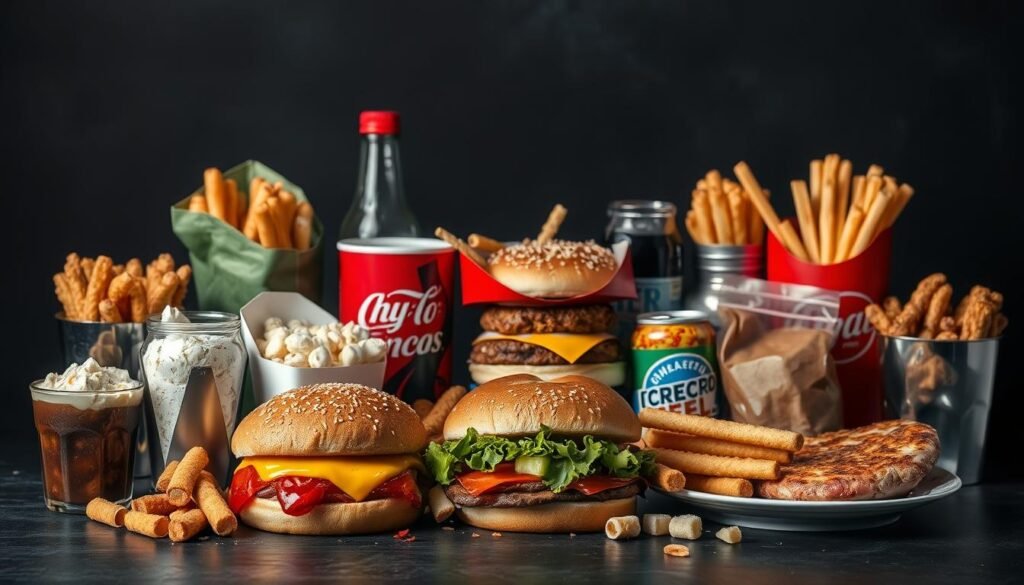
Processed foods come with a lot of sugar, bad fats, and fake ingredients. Eating them often can make depression worse. For example, items like white bread and refined snacks lead to mood swings. This can make you feel anxious or irritable.
Trans fats, found in fast food and pastries, are bad too. They are linked to a higher risk of getting depressed.
- Trans fats can be found in fried foods and pasties.
- Processed meats, which are linked to negative mood changes.
- Gluten-containing foods, like some breads and pasta, have been tied to anxiety.
The Impact of Sugary Foods on Mood
Sugary foods give you a quick energy boost, but the crash that follows can mess up your mood. Drinks high in sugar, such as fruit juices and sodas, are especially bad. They make your blood sugar level spike, leading to anxiety and depression. Even diet sodas can make you feel down because they contain caffeine.
- Energy drinks can disturb your sleep and make you anxious due to their caffeine and sugar.
- Too much caffeine can make you jittery and hurt your sleep, harming your mental health.
- Eating too many sugary snacks is bad since they have fats and sugars that ruin your mood.
| Type of Food | Effects on Mood |
|---|---|
| Processed Foods | Linked to increased rates of depression, cause energy crashes |
| Sugary Foods | Contribute to anxiety, create sugar spikes and crashes |
| Trans Fats | Increase depression risk, affect brain functioning |
| Gluten-containing Foods | Associated with anxiety and depressive symptoms |
Being aware of processed foods and sugary foods and mood helps you make better food choices. Choosing whole, nutrient-rich foods can boost your mood and health.
Dietary Supplements for Depression
Over 17 million adults in the U.S. may suffer from depression, with many not seeking help. Dietary supplements have become popular for those who might not get enough nutrients from food. Omega-3 fatty acids, vitamin D, and B vitamins are especially helpful for these individuals.
Vitamins play a key role in mental health and mood. Omega-3 supplements, especially those high in EPA, can reduce depressive symptoms. Rhodiola and saffron are also effective in fighting depression with consistent use.
It’s important to talk to a healthcare provider before starting any supplements. Many people are now using dietary supplements along with lifestyle changes to combat depression. The cost of these supplements can vary, making them accessible to many.
The following table outlines some common dietary supplements known for their positive effects on depressive symptoms:
| Supplement | Dosage Recommendations | Potential Benefits |
|---|---|---|
| Omega-3 Fatty Acids | 0.7–2 g EPA and 0.4–0.8 g DHA daily | Reduces depressive symptoms, particularly with higher EPA content |
| Vitamin D | 2000 IU/day or 50,000 IU/week | Improves mood; beneficial effects observed over 8 weeks to 24 months |
| N-acetyl-L-cysteine (NAC) | As directed by healthcare provider | May boost glutathione levels; potential health benefits for individuals with depression |
| Probiotics | Minimum doses of 108 CFU from Lactobacillus and Bifidobacterium | Effective in treating depression, enhancing gut-brain connection |
| Rhodiola | 1 to 4 capsules/tablets 1 to 4 times daily | Clinically meaningful reductions in depressive symptoms after 6-12 weeks |
| Saffron | As directed by healthcare provider | Demonstrated effectiveness in improving mood and reducing depressive severity |
To learn more, check out natural remedies for depression. Adding these supplements to a treatment plan can boost mental health significantly.
Natural Remedies for Depression through Diet
Diet is key in mental health. Adding certain foods can be a natural fix for depression. It boosts mood and brain work. By focusing on what we eat and drink, we can help our mental health.
Hydration and Mental Health
Not drinking enough water can increase depression risk. Having enough water helps our body and mood. Drinking plenty of water can make you think clearer and feel less anxious.
The Benefits of a Mediterranean Diet
The Mediterranean diet is known for mental health perks. It focuses on fresh, whole foods that are good for the brain. Nutritional psychiatry research shows diet affects our mental state. A good diet can help our gut health, which may lower depression risk. The SMILES trial proved diet help can ease depression symptoms.
Conclusion
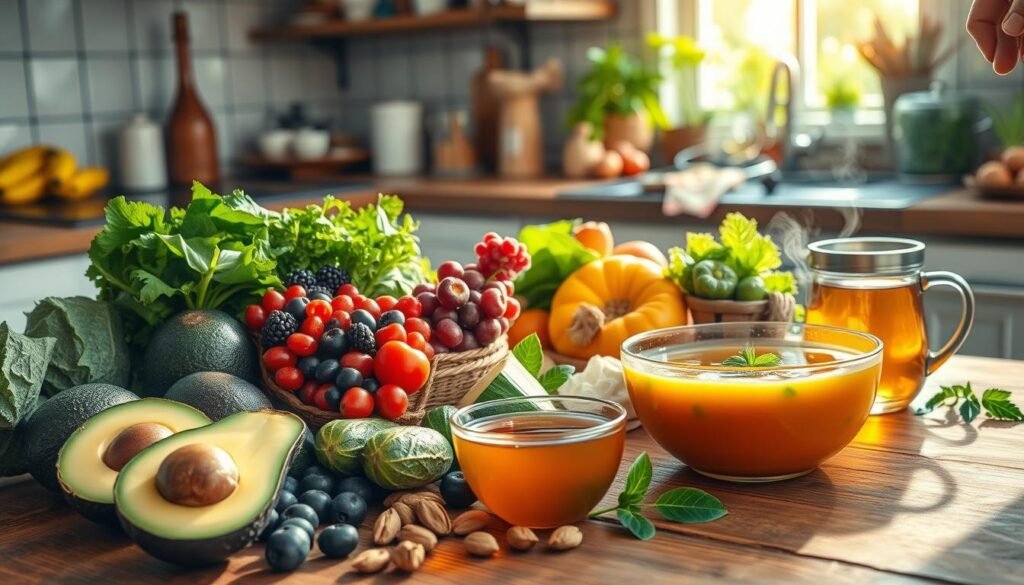
A healthy diet plays a key role in the fight against depression. Eating foods high in omega-3 fatty acids, antioxidants, and vitamins can help improve your mood. It’s clear from this summary of dietary impact on mental health that while changing your diet alone won’t cure depression, it can help along with other treatments.
Eating fatty fish, whole grains, and lots of fruits and vegetables gives your brain the nutrients it needs. It’s also good to stay away from foods that are heavily processed or high in sugar. This shows how much what you eat affects your mental health. Making smart food choices can lead you to feel better mentally.
The key takeaway on foods for depression is that certain foods can help manage depression symptoms. As more research is done, it’s becoming clear that eating well can support both your mind and body. To dive deeper, check out the role of nutrition in depression.