Did you know about 18.6% of adults with ADHD also face depression? This fact shows a deep part of mental health often missed. ADHD paralysis and depression impact lives majorly, affecting how a person functions, their motivation, and feelings. ADHD paralysis makes starting tasks very hard due to stress, while depression fills one with sadness and a lack of interest.
It’s key to know the difference for proper diagnosis and treatment. We will look into how ADHD paralysis and depression differ by their symptoms, effects, and treatments. For more info on ADHD and other mental health issues, check this resource.
Key Takeaways
- ADHD paralysis means trouble starting or finishing tasks.
- Depression can make ADHD symptoms worse.
- ADHD and depression often occur together in adults and teens.
- Both conditions usually need therapy and medication for treatment.
- Stressful environments can make depression worse for those with ADHD.
- Knowing the differences between ADHD and depression helps in finding the right help.
Overview of ADHD Paralysis
ADHD paralysis is common among those with attention deficit hyperactivity disorder. It often links with executive dysfunction, making it hard to start or finish tasks. People with ADHD paralysis feel stuck, unable to do even the tasks they want to.
Overwhelmed by choices, not knowing where to start, or fear of failing can trigger ADHD paralysis. In these situations, making decisions becomes incredibly hard. Learning about ADHD paralysis is crucial for understanding its impact on motivation and everyday productivity.
ADHD paralysis shows up in several ways:
- Choice paralysis: Too many options make it hard to pick one.
- Mental paralysis: Overthinking blocks focus and decision-making.
- Task paralysis: A struggle to begin or complete tasks, even with the desire to do them.
It’s important to know that ADHD paralysis is different from depression or procrastination. Each comes with its own set of challenges. Sometimes, ADHD paralysis and depression occur together, making the situation more complex.
To manage ADHD paralysis, developing coping skills is key, along with professional help if needed. Simple self-help steps and a balanced lifestyle can make a big difference. Understanding and addressing ADHD paralysis helps create better ways to tackle executive dysfunction and improves life quality.
Understanding Depression
Depression is a serious mood disorder that affects how you think, act, and feel. Knowing the signs of depression is key to telling it apart from other conditions like ADHD. Symptoms include lasting sadness, no interest in fun activities, and changes in sleep and eating. Knowing the different types of depression helps in finding the right help and support.
Symptoms of Depression
Symptoms of depression can change how you feel and act every day. You might feel:
- Fatigue or have low energy
- Worthless or guilty
- Hard to focus or make choices
- Eating more or less than usual
- Problems with sleeping too much or not enough
These symptoms show up in different ways, leading to various experiences with mood disorders.
Types of Depression
It’s important to know about the types of depression for the right diagnosis and treatment. There are two main kinds:
- Primary Depression: This type might run in families, affecting mood and how one functions over time.
- Secondary Depression: This kind occurs due to ongoing problems, like the issues faced by people with long-term ADHD.
Understanding these categories helps grasp the impact of mood disorders on lives and the direction for treatment.
ADHD Paralysis vs Depression: Key Differences
ADHD paralysis and depression are different, even though they might seem similar. Knowing how they differ can help you cope better. ADHD paralysis comes from mood changes and decision fatigue, leading to inaction. But depression is marked by ongoing hopelessness and tiredness.
People with ADHD can have motivation bursts that are linked to their interests. On the other hand, those with depression usually lose motivation in all areas of life. This symptoms comparison shows ADHD paralysis can be momentary and related to certain triggers. Depression, however, leads to a constant lack of interest.
When it comes to sleep, there’s a big difference too. Individuals with ADHD often can’t sleep because of restless thoughts and being too active. While people with depression may not sleep well because of sad thoughts or insomnia. This can make their depression worse.
| Aspect | ADHD Paralysis | Depression |
|---|---|---|
| Nature | Temporary and fluctuating | Pervasive and chronic |
| Motivation | Fleeting and interest-based | Consistent loss |
| Decision-Making | Driven by choice paralysis | Affected by feelings of hopelessness |
| Sleep Issues | Difficulties falling asleep | Insomnia and negative thoughts |
Understanding these differences is important for dealing with mood disorders effectively. Knowing the unique signs of ADHD paralysis and depression helps you find the right support and resources.
Executive Dysfunction in ADHD
Understanding executive dysfunction is key to knowing its effect on people with ADHD. It means they have trouble with certain mental tasks. This makes day-to-day activities quite hard for them.
Impact on Daily Life
Life can feel like a constant struggle for those with executive dysfunction. They face many hurdles:
- Difficulty completing tasks, often leading to unfinished projects.
- Struggles with time management, which causes missed appointments and deadlines.
- Disorganization affecting not just physical space but also mental clarity.
- Procrastination, which delays necessary actions and increases stress levels.
- Indecision that hampers productivity and slows progress on projects.
Mental paralysis is a common issue, leaving individuals stuck and overwhelmed. The demand to perform well can increase anxiety and avoidance. Simple tasks become huge challenges.
This situation often hurts how people view themselves. Constant difficulties can lead to a poor self-image and low self-esteem.
Comparing Motivation Deficits
Motivation deficits mean a general lack of will to do things. People with ADHD feel this deeply. They struggle to begin activities, partly due to dopamine issues which affect focus and memory.
| Executive Dysfunction | Motivation Deficits |
|---|---|
| Problems with task initiation and completion | Lack of drive to start or engage in activities |
| Struggles with organization and time management | Difficulty maintaining interest in tasks |
| Can lead to anxiety and avoidance behaviors | Often associated with feelings of lethargy |
| Involves cognitive roadblocks | Reflects overall energy levels and enthusiasm |
It’s important to grasp the difference between executive dysfunction and motivation deficits. Knowing these details helps understand ADHD better. This knowledge guides us toward the right support and treatment.

Mood Disorders: ADHD and Depression Connection
The depression relationship with ADHD shows a complex link that greatly affects people. This link is now more seen in mental health talks, showing ADHD can lead to mood disorders like depression. Factors like social rejection and failing in school add to this risk, causing ongoing frustration when goals are not met.
Both genetics and the environment make these conditions more likely to happen together. For instance, about 18.6% of adults deal with both ADHD and depression. ADHD’s impact goes beyond not paying attention. It can cause rocky relationships, bad job performance, and low self-worth. These problems can make someone feel not good enough, raising the chance of mood disorders.
Not diagnosing ADHD right can make people think it’s just depression, making treatment harder. Those with ADHD are more at risk for anxiety and other mental health issues. It’s key for doctors to tell the difference between depression relationship and ADHD. This helps in giving the right help.
| Condition | Associated Risks |
|---|---|
| ADHD | Low self-esteem, poor performance in school/work, anxiety, mood disorders. |
| Depression | Increased risk of suicide, substance misuse, interpersonal issues. |
Finding ADHD early and treating it well is key to stopping mood disorders from starting too. Using treatments that focus on both conditions can make life better for those affected. For more info on how ADHD affects mood, check out resources on the ADHD and depression relationship.
The Co-Occurrence of ADHD and Depression
The link between ADHD and depression is strong. Many studies show people with ADHD often have depression too. Knowing this helps in treating these conditions together.
Statistics and Prevalence
About half of adults with ADHD also face depression. The risk of depression increases a lot in the first year after being diagnosed with ADHD. Around 5.2% of kids and teens worldwide have ADHD.
This issue usually lasts into adulthood for 60-70% of these individuals. About 3.4% of adults in places like the USA and Europe live with it. Spotting ADHD and depression early is crucial. Quick help can really change how these individuals are treated. Knowing the stats helps in finding the best treatment.
Implications for Treatment
Choosing the right treatment for people with both ADHD and depression is key. Treatment plans often include behavior therapy, managing medication, and teaching about the conditions.
Managing ADHD well can ease not just its own symptoms but also reduce depression. For health professionals, understanding both conditions is important for better treatment plans.
Dopamine Dysregulation in ADHD and Depression
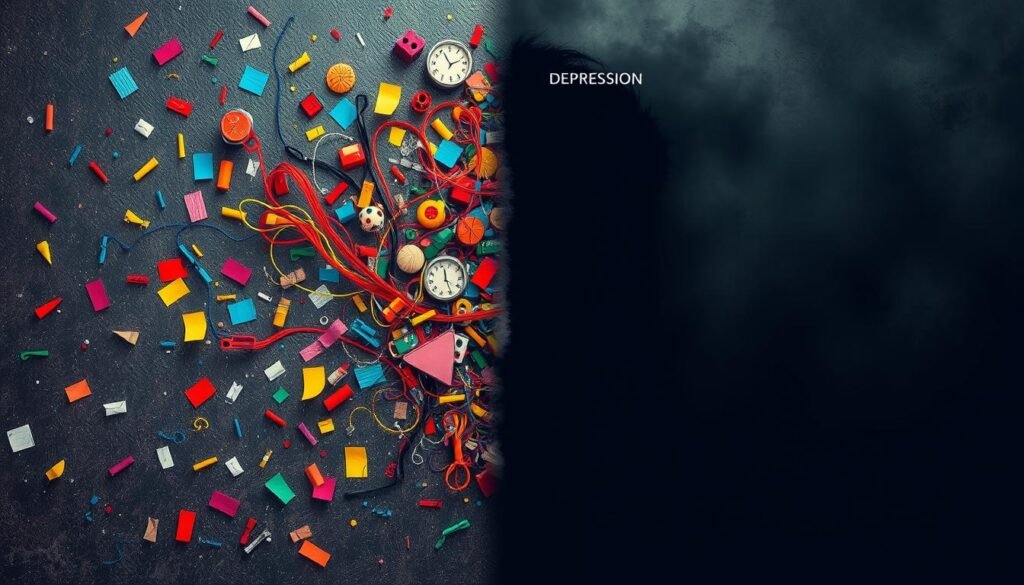
Dopamine dysregulation is key in both ADHD and depression. It leads to symptoms that can make diagnosis and treatment harder. Those with ADHD struggle with dopamine signaling. This makes it tough to pay attention and stay motivated, impacting daily life. About 3% to 5% of adults in the US have ADHD, making it vital to understand how it works.
For ADHD individuals, dopamine helps with feeling rewarded and happy. When dopamine levels are off, they might feel unmotivated, tired, and have trouble focusing. Genetic factors, like changes in the DRD4 and DAT1 genes, play a role. These changes affect how dopamine works. Brain imaging studies show that these dopamine pathways are disrupted, adding layers to ADHD’s complexity.
Depression, on the other hand, messes with dopamine in a way that decreases joy. Those with depression often face a lack of willingness to do things, made worse by low dopamine. This makes treating conditions that involve dopamine tough when symptoms for both overlap. To address this, new treatments aim to adjust dopamine levels for both ADHD and depression, offering hope for better outcomes.
ADHD and depression share symptoms and brain function patterns, complicating treatment for doctors. By diving into dopamine dysregulation, there’s a clearer path to treating these disorders. Treatments like methylphenidate for ADHD and SSRIs for depression stand out as helpful. Yet, more studies are needed to truly grasp how well these treatments work for everyone.
| Condition | Dopamine Role | Symptoms | Treatment Options |
|---|---|---|---|
| ADHD | Attention regulation, motivation enhancement | Lack of focus, impulsivity, fatigue | Methylphenidate, amphetamines |
| Depression | Mood stabilization, pleasure response | Anhedonia, low motivation, sadness | SSRIs, dopamine agonists |
Recognizing the Signs: ADHD vs Depression
It’s important to know the signs of ADHD and depression for good care. Each has special symptoms, yet some are the same. This can make it hard to tell them apart. Knowing the symptoms well is key to getting the right help and ways to deal with them.
Common Overlapping Symptoms
Many people find it hard to concentrate, feel tired, have mood swings, and lack drive. These common symptoms can make it hard to know if it’s ADHD or depression. For example, trouble focusing might seem like ADHD but could also mean depression. That’s why it’s so important to figure it out right.
- Difficulties in Concentration: Both conditions can make it hard to stay focused. ADHD might make you struggle to pay attention. Depression can make your focus much worse.
- Fatigue: Feeling very tired can come from depression, but ADHD can make you feel mentally worn out too.
- Mood Variability: People with either condition can have fast-changing emotions. This can make it confusing to know what’s going on with your mood.
- Lack of Motivation: Both ADHD and depression can make you feel low on energy and drive. It’s tough to tell them apart because of this.
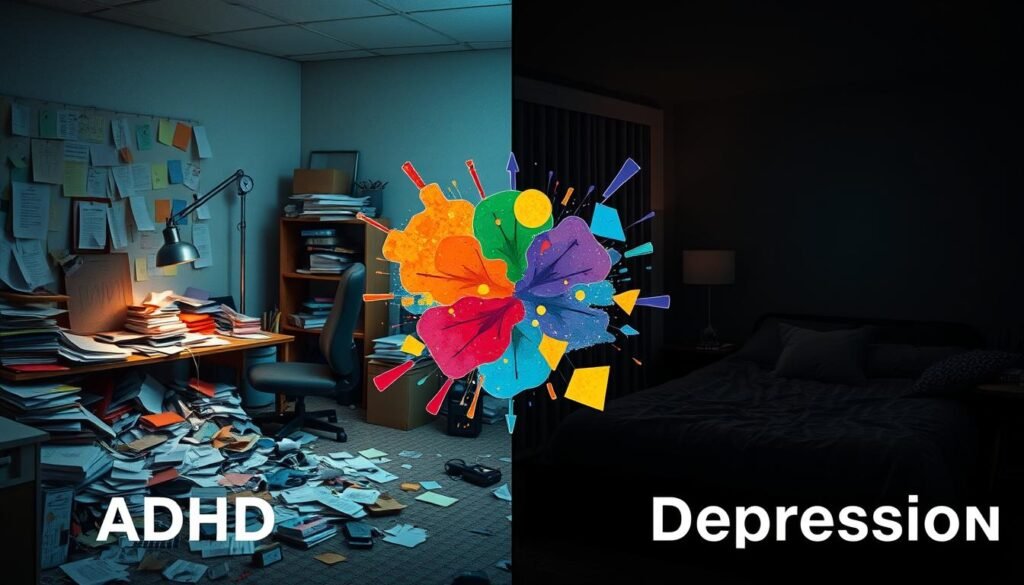
Understanding these shared symptoms helps people better deal with their situations. It leads to seeking the right help for ADHD and depression. Recognizing the signs early ensures treatments that really help, improving life quality.
Treatment Approaches for ADHD and Depression
Treatment for ADHD and depression needs a special plan. This plan helps tackle the unique issues of each condition. Knowing about these disorders can lead to better solutions and life quality.
Behavioral Therapy Options
Behavioral therapy is crucial for ADHD and depression treatment. It focuses on practical methods. These methods aid in developing skills to control symptoms. Techniques often include:
- Improving organization and time management.
- Enhancing emotional regulation and coping strategies.
- Encouraging consistent routines to reduce anxiety.
Behavioral therapy combined with medication can improve results. Stimulants for ADHD or antidepressants for depression are common. They help lessen symptoms and improve function. Cognitive-behavioral therapy and e-therapy, like phone or video sessions, also play a part. This mix offers flexibility and convenience in treatment plans.
Support groups provide essential support and connections. They allow people with ADHD and depression to share experiences. This can improve the healing process. For deeper understanding of mood disorders and early intervention importance, check out the Dysthymia and Major Depression comparison here.
Conclusion
It’s vital to know the differences between ADHD and depression for the best diagnosis and treatment. ADHD paralysis mainly comes from not being able to plan or decide, causing mental, choice, and task paralysis. On the other hand, depression is a mood disorder that deeply affects one’s daily life. Nearly half of adults with ADHD also have depression. This overlap can make it hard to tell the conditions apart. So, it’s crucial to understand how they’re different.
People with ADHD often feel buried by daily tasks. They might avoid duties or delay them, which increases fear and anxiety. But, those with depression usually have ongoing low energy. This makes it tough to do activities they once found meaningful. The impact of ADHD and depression goes beyond just self-productivity. It also affects personal relationships. Spotting the signs early can lead people to seek the right treatment and support.
To manage both ADHD and depression, a specific plan is needed. This plan should include learning, self-kindness, and seeking professional advice. Using a detailed calendar, breaking tasks into smaller parts, and having honest talks can greatly improve life quality. By knowing and understanding these conditions’ unique qualities, people can navigate their challenges better. This leads to better mental health.