Did you know that over 260 million people worldwide suffer from depression? Many of them are exploring natural remedies for help. Vitamins and supplements are becoming popular options for mental health. This article will explore how vitamins can help improve mood in those dealing with depression and anxiety.
Key Takeaways
- Deficiencies in B vitamins such as B-12 and B-6 may be linked to depression.
- Older adults and vegetarians are at higher risk of B-12 deficiency.
- Vitamin D deficiency is associated with increased anxiety levels.
- Omega-3 fatty acids play a crucial role in mental well-being.
- Supplementation with certain vitamins and minerals may support mood regulation.
Introduction to Natural Relief for Depression and Anxiety
More people are now looking into natural remedies for mood issues. They want alternatives to prescription medicines due to worries about side effects and whether the medicine will work. Adding nutrition and dietary supplements is becoming a key part of mental health care.
Natural options like St. John’s Wort and SAMe are sparking interest, even though the FDA hasn’t approved them for depression. Omega-3 fatty acids are also being looked at for their potential mental health benefits. Studies are finding that activities like yoga and listening to music can help our emotional health too. These methods are becoming more popular as people seek non-drug treatments.
However, moving towards these natural remedies needs careful thought. It’s risky to try these treatments on your own without advice from a doctor. Herbs and supplements could cause issues if they’re taken with other medicines. It’s crucial to do your research and talk to a health expert to stay safe.
| Natural Remedy | FDA Status | Potential Benefits | Risks |
|---|---|---|---|
| St. John’s Wort | Not approved | Mild to moderate depression | Interference with medications |
| SAMe | Not approved | Potential mood improvement | Nausea, constipation |
| Omega-3 Fatty Acids | Being studied | Possible treatment for depression | Interactions with other medications |
| Saffron | Not approved | May improve symptoms | High doses may cause side effects |
| 5-HTP | Being studied | Serotonin regulation | Concerns about safety |
| DHEA | Not approved | Linked to symptom improvement | Potential serious side effects |
The Connection Between Nutrition and Mood
The link between what we eat and how we feel is gaining more attention. This link is crucial for our mental health. Eating certain foods can change our mood, showing the need for a nutritious diet.
About one in eight people worldwide deal with mental disorders. Nutritional gaps, especially in certain vitamins and minerals, can worsen depression and anxiety. Vitamins like B, D, and omega-3 fatty acids, along with minerals like magnesium and zinc, are key for our brain and emotions.
Eating a healthy diet can boost our mental state. Diets like the Mediterranean diet help fight off depression. People who eat better tend to feel less depressed or anxious. Foods rich in antioxidants, like fruits and veggies, also play a role in preventing mood disorders.
It’s vital to understand how diet impacts our emotions. Adding dietary supplements for essential nutrients might help keep our mood steady. This shows a clear tie between what we eat and our mental well-being. Making the right food choices can support both our body and mind.
| Essential Nutrients | Impact on Mood |
|---|---|
| B Vitamins (B6, B12, Folate) | Vital for brain health and mood regulation |
| Vitamin D | Supports emotional stability and reduces depression |
| Omega-3 Fatty Acids | Reduces symptoms of depression and anxiety |
| Magnesium | Essential for neurotransmitter function |
| Zinc | Linked to lower risk of depression |
What Vitamins Are Good for Depression and Anxiety
Knowing which vitamins help mental health is key. Some vitamins are crucial for brain balance and mood stability. Nutritional gaps can heavily affect how we feel. Filling these gaps with the right vitamins improves mood and mental health.
Understanding the Role of Vitamins in Mental Health
The B vitamins, particularly, support mental health well. Folic acid, from the B vitamin group, helps fight depression. When taken daily, 1 milligram of folic acid boosts well-being, especially alongside antidepressants for women.
Being low in Vitamins B1 (thiamin) and B12 can make mood problems worse. Lack of B1 can cause anxiety and irritability. Not having enough B12 might lead to paranoia and confusion. These two vitamins work together to increase serotonin and dopamine, important for staying balanced emotionally.
Identifying Deficiencies That May Impact Mood
Vitamin shortages can deeply impact mental health and mood. Studies show not having enough vitamin D links to mood issues and depression. Those low in vitamin D often struggle more with their mental health. In one study, giving women with type 2 diabetes vitamin D helped lessen depression and anxiety.
Spotting and fixing nutritional shortages can vastly improve how we handle mental health. Catching a B vitamin deficiency early, especially B12, can mean less chance of depression or anxiety. Magnesium also plays a role in keeping our mental health in check.
| Vitamin | Role in Mental Health | Symptoms of Deficiency |
|---|---|---|
| Folic Acid (Vitamin B9) | Boosts mood and supplements antidepressants | Depression, fatigue |
| Vitamin B1 (Thiamin) | Supports energy levels and cognitive function | Anxiety, irritability, memory loss |
| Vitamin B12 | Affects neurotransmitter production | Mood swings, confusion, paranoia |
| Vitamin D | Helps regulate mood and combat depression | Fatigue, mood fluctuations |
| Magnesium | Reduces anxiety symptoms | Muscle cramps, irritability |
Boosting Mood with Vitamin D
Vitamin D is crucial for mental health and mood. It’s especially important for those with seasonal mood changes. People far from the equator or with certain conditions often lack vitamin D. This includes the elderly and those with darker skin.
Sources of Vitamin D
It’s key to add Vitamin D sources into your diet:
- Sunlight: A quick daily dose can enhance your mood.
- Fatty Fish: Salmon and mackerel are rich in Vitamin D.
- Egg Yolks: Each yolk offers a good amount of it.
- Fortified Foods: Many dairy products and cereals get an extra boost of Vitamin D.
Scientific Evidence Supporting Vitamin D’s Role in Mental Health
Many studies show Vitamin D’s impact on mental well-being. Teens, the elderly, the obese, and the chronically ill are most at risk of deficiency. This can lead to depression.
A major review of over 7,500 people found Vitamin D supplements help fight depression, especially with low 25(OH)D levels. High doses even eased anxiety and depression in trials.
Experts suggest several ways to increase vitamin D levels:
- Seeking more sunlight.
- Eating foods fortified with Vitamin D.
- Taking supplements, particularly in colder months.
- Leading a healthy lifestyle with exercise and good sleep.
These steps can boost your Vitamin D, improving mood and mental health.

| Group at Risk | Vitamin D Deficiency Factors |
|---|---|
| Elderly | Lower skin synthesis & dietary intake issues. |
| Individuals with chronic illnesses | Reduced absorption & increased requirements. |
| Obese individuals | Sequestration of Vitamin D in fat tissue. |
| People with darker skin | Higher melanin levels reduce skin absorption of sunlight. |
| People living far from the equator | Reduced sunlight exposure during winter. |
The Impact of Omega-3 Fatty Acids
Omega-3 fatty acids are key for mental well-being. They have a big role in improving mood and mental health. Studies show they can lower the risk of depression. This is crucial as more people face mental health challenges.
Benefits of Omega-3 for Mental Well-Being
Research shows people eating more omega-3s are less likely to get major depression. They’re also at lower risk for prenatal and bipolar depression. Those with severe depression often have less omega-3s in their body.
This unbalance can lead to mood issues. It makes omega-3 fats vital for good mental health.
Food Sources of Omega-3 Fatty Acids
Eating foods rich in omega-3s can greatly help your mind. Great sources include:
- Fatty fish (like salmon, mackerel, and sardines)
- Flaxseeds
- Walnuts
- Chia seeds
- Hemp seeds
Choosing these foods can help those aiming to boost their mental health. It supports the fight against depression.
The Importance of B Vitamins for Mental Health
B vitamins are key to mental health and mood balance. Thiamine (B1), riboflavin (B2), niacin (B3), pantothenic acid (B5), pyridoxine (B6), biotin (B7), folate (B9), and cobalamin (B12) are important. They help make neurotransmitters, which manage mood and emotions.
Not having enough B6, B12, and folate can raise the risk of depression and anxiety. Low levels may cause mood swings, tiredness, and thinking problems. Pregnant people, older adults, vegetarians, and those with some medical conditions might need extra B vitamins.
Getting enough B vitamins may reduce anxiety and depression symptoms. Studies show better mood and thinking with higher intake of these nutrients. A diet full of B vitamin sources like pork, sunflower seeds, greens, beans, dairy, and fish is good for mental health.
But, too much B vitamin supplementation can be harmful. It may cause nerve damage, skin redness, and high blood sugar. It’s best to get advice from a healthcare expert. They can customize your supplement intake. A healthy variety of B vitamins can improve mood and overall mental health.
| B Vitamin | Recommended Daily Intake (Women) | Recommended Daily Intake (Men) | Dietary Sources |
|---|---|---|---|
| B1 (Thiamine) | 1.1 mg | 1.2 mg | Pork, whole grains, legumes |
| B2 (Riboflavin) | 1.1 mg | 1.3 mg | Dairy, eggs, green leafy vegetables |
| B3 (Niacin) | 14 mg | 16 mg | Poultry, fish, whole grains |
| B5 (Pantothenic Acid) | 5 mg | 5 mg | Chicken, fish, whole grains |
| B6 (Pyridoxine) | 1.3 mg | 1.3 mg | Poultry, fish, potatoes, non-citrus fruits |
| B7 (Biotin) | 30 mcg | 30 mcg | Eggs, fish, nuts, seeds |
| B9 (Folate) | 400 mcg | 400 mcg | Leafy greens, legumes, seeds |
| B12 (Cobalamin) | 2.4 mcg | 2.4 mcg | Meat, fish, dairy, fortified cereals |
Magnesium: The Essential Mineral for Stress Relief
Magnesium is key to stress relief and better mood regulation. It affects how neurotransmitters work, easing anxiety and depression. Due to changes in farming and food processing, our diets now lack magnesium. Knowing where to get this mineral is important.
How Magnesium Affects Mood Regulation
Magnesium helps control mood by acting on neurotransmitters, like serotonin. Sadly, about half of U.S. adults don’t get enough. This is a problem since the right amount of magnesium improves mental health. Studies show that magnesium supplements can greatly decrease depression signs. Magnesium Taurate and Magnesium Threonate are good for the brain.
Food Sources and Supplementation Tips
Eat foods high in magnesium to up your intake. Great choices include dark leafy greens, nuts, seeds, and whole grains. Here is a table with magnesium-rich foods:
| Food Source | Magnesium Content (mg per serving) |
|---|---|
| Spinach (cooked, 1 cup) | 157 |
| Almonds (1 ounce) | 76 |
| Black beans (cooked, 1 cup) | 60 |
| Quinoa (cooked, 1 cup) | 31 |
| Avocado (1 medium) | 58 |
Some people might need supplements to get enough magnesium. This is especially true for those with certain health issues. But, too much magnesium is harmful. Always talk to a doctor before adding supplements to your diet.
The Role of Zinc in Mood Enhancement
Zinc is a key mineral for improving moods and mental health. A lack of zinc can make people more prone to depression and anxiety. For example, a study in 2019 found that low zinc levels were common in stressed Japanese workers. This shows that eating enough zinc is crucial, as nearly 1 billion folks worldwide don’t get enough from their diets.
Older people, in particular, can struggle with depression due to not having enough zinc. A study in 2020 linked low zinc levels to more depression and anxiety in the elderly. But, a 2021 study showed that zinc supplements could lower these symptoms, offering hope for better mood management with zinc.
While zinc is beneficial, too much can cause side effects like cramps and nausea. It’s all about finding the right balance in your diet. Also, the type of food matters. For example, whole wheat bread has more zinc than white bread. This detail is important for anyone looking to improve their mood through diet.
Over 120 million people worldwide deal with mental health issues. Zinc plays a role in brain function and mood regulation. By adding enough zinc to one’s diet, those experiencing mood problems might find relief. If you’re low in zinc, consider talking to a professional about supplements. For more info, explore current research here.

| Study Year | Findings |
|---|---|
| 2015 | Nearly 1 billion people worldwide have some level of zinc deficiency. |
| 2019 | Low levels of zinc linked to increased depression and anxiety in Japanese workers. |
| 2020 | Zinc deficiency in older adults tied to higher rates of depression and anxiety. |
| 2021 | Zinc supplements significantly reduced anxiety and depression symptoms in older adults. |
Probiotics and Their Connection to Mental Health
Scientists are exploring how our gut and brain talk to each other. They’ve found that the tiny life forms in our gut affect how we feel. Probiotics, good bacteria, may help make our moods more stable and even make us less sad. Research shows that particular types, like Lactobacillus and Bifidobacterium, are especially good for our guts.
Gut-Brain Connection Explained
Studies show that a happy gut equals a happy mind. Our gut talks to our brain in ways that influence mood, health, and even how we think. Taking probiotics might boost this conversation, leading to better mental health. One study found that adults feeling very sad felt better after taking a probiotic mix for a while, unlike those who didn’t.
Types of Probiotics Beneficial for Mood
Many different probiotics are out there, with various strains in each. The FDA sees them as food supplements, so they’re not as strictly checked. Because everyone’s gut is unique, results can vary. But some strains are known to help with mood.
- Lactobacillus: Found in yogurt and other fermented foods, it’s known for making moods more stable.
- Bifidobacterium: Known for easing stomach issues, which helps keep your mind healthy too.
- Bifidobacterium longum NCC3001: Shown to help those with stomach pains feel better overall and less sad.
Eating foods rich in probiotics like yogurt, kefir, tempeh, and kimchi is great for your gut. While they show a lot of promise, probiotics should be one part of treatment, not the only part. More research will help us understand how they can best be used for mental health.
| Probiotic Strain | Potential Benefits |
|---|---|
| Lactobacillus | Supports gut health and mood stability |
| Bifidobacterium | Relieves gastrointestinal issues, aiding mental health |
| Bifidobacterium longum NCC3001 | Improves quality of life; may lessen depression symptoms |
Herbal Supplements for Depression Relief
Herbal supplements are getting popular for helping with depression symptoms. St. John’s Wort and SAMe are especially noted for their effects. They are known to help with depression relief.
A Closer Look at St. John’s Wort
Studies have shown St. John’s Wort can be good for treating mild to moderate depression. It can be more effective than a placebo for some people. Nonetheless, it’s important to be careful due to its potential to interact with other medications. Always talk to a healthcare provider before starting it to stay safe.
Exploring the Benefits of SAM-e
SAMe, also known as S-adenosylmethionine, is beneficial like traditional antidepressants. It’s important for making neurotransmitters that affect your mood. Yet, we need more research to fully understand its safety and effects. If you’re considering SAMe, make sure to get it from trusted sources for the best quality.
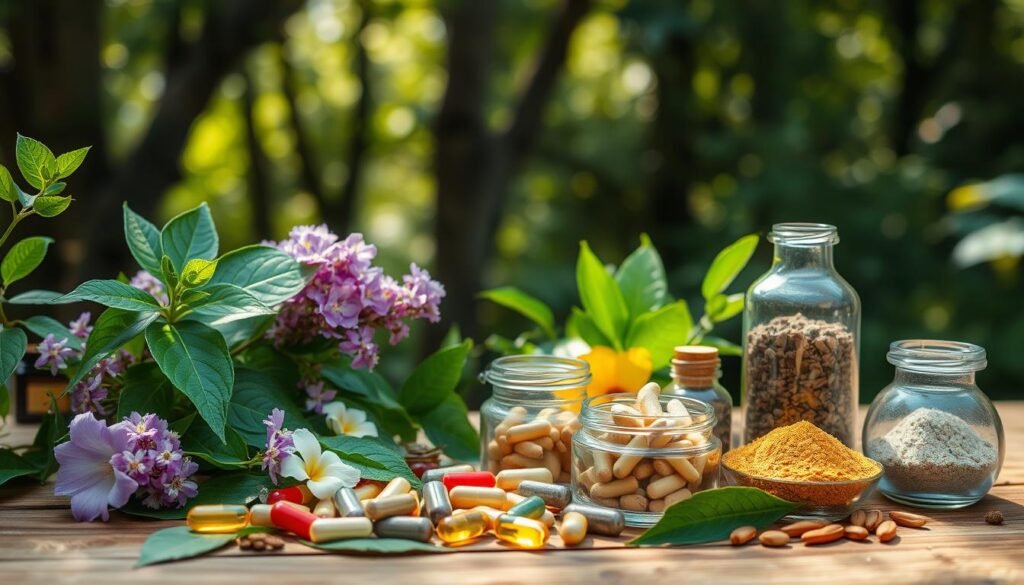
Using herbal supplements like St. John’s Wort and SAMe can help improve your mental health. To find out more, look up information on natural antidepressants and how nutrition plays a role.
Depression impacts millions in the US. Choosing the right herbal supplement is vital for good mental health management. Also, eating well, with lots of omega-3s and essential nutrients, can boost your mood along with herbal remedies.
Conclusion
Nutrients play a key role in mental health, especially for those facing depression and anxiety. This overview focuses on how lacking certain vitamins and minerals—like Vitamin D, B vitamins, magnesium, and zinc—can badly affect mood. It shows how adding these nutrients, through food or supplements, can help people manage their mental health better.
For someone dealing with depression, options like fish oil or L-methylfolate might help. However, it’s important to use these as part of a bigger treatment plan, supervised by a healthcare professional. As more research connects what we eat to how we feel, checking vitamin levels regularly becomes crucial in both preventing and treating mood disorders. You can learn more about supplements for depression at Brightside.
Improving mental health isn’t just about one method; it includes various approaches. As we learn more about diet’s impact on mental well-being, staying updated is key. This knowledge encourages people to make informed choices about food and supplements for their health.