Did you know 79% of people who lost a parent as kids felt a deep appreciation for life? This shows how powerful gratitude is. It helps us stay strong during tough times. Today, we all face many challenges. Gratitude helps us build our inner strength and be thankful.
Studies show that gratitude practices make us happier. They also help us see the good in tough situations. Experts like Shai Davidai and Thomas Gilovich say gratitude helps us see what we have, not what we lack. This makes us feel better about our lives.
Starting simple gratitude habits can make a big difference. Like writing in a gratitude journal or filling a jar with thankful notes. Science proves that being thankful often can change our brain. This change can make us mentally stronger and more resilient.
Key Takeaways
- Gratitude practices significantly lower depression rates among those who faced early life traumas.
- Gratitude activities can boost school performance by improving focus and confidence.
- Regularly expressing gratitude is linked to better sleep and more emotional awareness.
- Gratitude journaling can lessen stress and make everyday life more positive.
- Emphasizing gratitude helps people deal with tough times and build emotional strength.
- Scientific studies show that gratitude activates brain areas linked to reward and happiness.
- Simple actions like making a Daily Gratitude List can change how you see life in just minutes a day.
Understanding Resilience in Today’s World
Resilience is key in tackling today’s complex world. It’s about bouncing back from tough times. Resilience training helps people grow this skill through practice and understanding emotions. It’s something you can develop, not just a natural ability.
Optimism, empathy, patience, and self-regulation are core to resilience. They help us find our inner strength. As global issues grow, so does the value of being emotionally resilient. Practicing daily gratitude plays a big part in this, making us more positive and better at overcoming challenges.
Adding gratitude to everyday life changes things for the better. Keeping a gratitude journal helps manage stress and keeps relationships strong. Every thank you strengthens our emotional health, making us happier overall.
The Role of Gratitude in Emotional Health
Gratitude acts as a strong booster for emotional well-being. It helps people focus more on the good things in life. This change in view deeply improves emotional health by bringing more hope and higher self-esteem. It also helps lessen feelings of anxiety and depression.
Studies show gratitude is directly linked to better self-control. Grateful people are more emotionally tough, helping them handle life’s ups and downs better. This toughness is backed by science, showing gratitude lights up certain parts of the brain. This leads to many benefits like better physical and mental health, more joy, and stronger social ties.
Gratitude becomes especially important in tough times. By being thankful, people can create a healthier mental state and focus less on the bad. Showing gratitude also makes relationships stronger. People who are thankful have more friends because being grateful makes us kinder and less aggressive.
Writing down what you’re grateful for can deepen its emotional effects. Doing this often makes people more positive, helps with stress, and enhances mood over time.
| Benefit of Gratitude | Emotional Impact | Physical Impact |
|---|---|---|
| Increased Optimism | Enhances ability to cope with stress | Improves cardiovascular health |
| Improved Self-Esteem | Fosters positive self-image | Enhances immune function |
| Decreased Anxiety | Reduces stress hormones | Leads to better sleep quality |
| Strengthened Relationships | Promotes empathy and connection | Encourages engagement in healthy behaviors |
| Increased Resilience | Builds emotional fortitude | Boosts energy levels |
Building Resilience Through Gratitude Practices
Adding gratitude to your daily habits is powerful for building emotional strength. It helps people focus on the good in their lives, pulling their thoughts away from the bad. This change in thinking boosts your inner power, helping overcome life’s hurdles better.
How Gratitude Enhances Emotional Resilience
Studies have found gratitude makes a big difference in our mental health. People who often feel thankful sleep better, stress less, and understand their feelings more. These good habits even change the brain in a way that improves gray matter functionality.
This effect on the brain is key for resilience. It boosts the brain’s reward paths, making us more stable and able to manage our emotions.
Connection Between Gratitude and Inner Strength
Making thankfulness a regular practice builds up our mental muscle. Things like writing in a gratitude journal help think deeply about positive moments. This practice ups serotonin and kicks off dopamine production, making us feel happier overall.
And with gratitude, we see problems as challenges, not stop signs. This way of seeing things helps us stay upbeat, even when times are tough.
| Benefits of Gratitude Practices | Impact on Mental Health | Effect on Physical Health |
|---|---|---|
| Improved Relationships | Enhanced Emotional Awareness | Boosted Immune System |
| Increased Self-Esteem | Greater Resilience | Cardiovascular Health |
| Reduced Aggression | Less Depressive Symptoms | Potential for Longer Life |
| Improved Sleep Quality | Increased Empathy | Enhanced Social Connection |
Practical Gratitude Practices to Incorporate
Adding simple gratitude practices can make you feel happier. By trying different methods, people can discover what works best for them. Practices like gratitude journaling and creating a gratitude jar can boost positive thinking and gratitude.
Gratitude Journaling Techniques
Gratitude journaling means taking time to write about what you’re thankful for. It allows you to see the good in your life. This can make you stronger emotionally. Here are some ways to get the most out of it:
- Write daily: Make it a habit to note three things you’re grateful for each day.
- Be specific: Write about specific moments that made you happy or thankful.
- Reflect on challenges: Think about hard times and what you learned from them.
Doing this regularly can improve your mood and sleep. It also helps you be more thankful every day.
Creating a Gratitude Jar
A gratitude jar can be a visual way to remember the good stuff. It’s a fun way to keep track of happy moments each year. Here’s how to start:
- Find a jar: Pick a jar that you like or means something to you.
- Gather supplies: Have paper and pens ready so you can write anytime.
- Write notes: When something good happens, write it down and put it in your jar.
- Review often: Take time now and then to look at your notes and appreciate your blessings.
This approach encourages gratitude and provides comfort, especially when times are tough. By doing gratitude journaling and keeping a gratitude jar, you nurture a thankful attitude every day.

Benefits of Gratitude on Physical Health
Gratitude greatly benefits our health, reaching into our physical well-being. Studies show that saying thanks can improve health greatly. For example, expressing gratitude can lower blood pressure. This helps our heart health. The journal Psychosomatic Medicine found that thankful people have better heart function.
Gratitude also helps us sleep better. Those who write down what they’re thankful for sleep more soundly. Wood et al.’s research links being thankful with better sleep quality.
It even boosts our immune system. Research from the University of Utah shows thankful people have more white blood cells. This means gratitude might help us fight off sickness better.
Gratitude can also cut stress hormones like cortisol by nearly 23%, says University of California, Davis. Lower cortisol means less inflammation and healthier living. Thankful people often eat better and exercise more, improving their health.
Mindfulness Practices Complementing Gratitude
Mindfulness practices help build emotional resilience and inner strength. They let people experience the moment fully. This leads to enjoying the simple things in life more. Mindfulness creates an awareness of our thoughts and feelings. This awareness boosts positivity and lowers stress.
Adding mindfulness to daily routines with gratitude makes a strong combo. For example, writing in a gratitude journal makes us focus on the good. It improves our overall mood, strengthening mindfulness and gratitude together. Mindful breathing lets us live in the moment. It helps us appreciate life more deeply.
Feeling grateful lifts not just us but those around us too. Sharing gratitude strengthens bonds with others. Taking mindful walks lets us enjoy nature’s beauty. We become thankful for our senses. This bond between mindfulness and gratitude helps us handle life better.
Practicing mindfulness changes how we see things. It helps us find the good in tough times. This keeps our spirits up. Studies show that mindfulness, like meditation, boosts gratitude and stability. Mindfulness and gratitude improve our mental health and happiness.
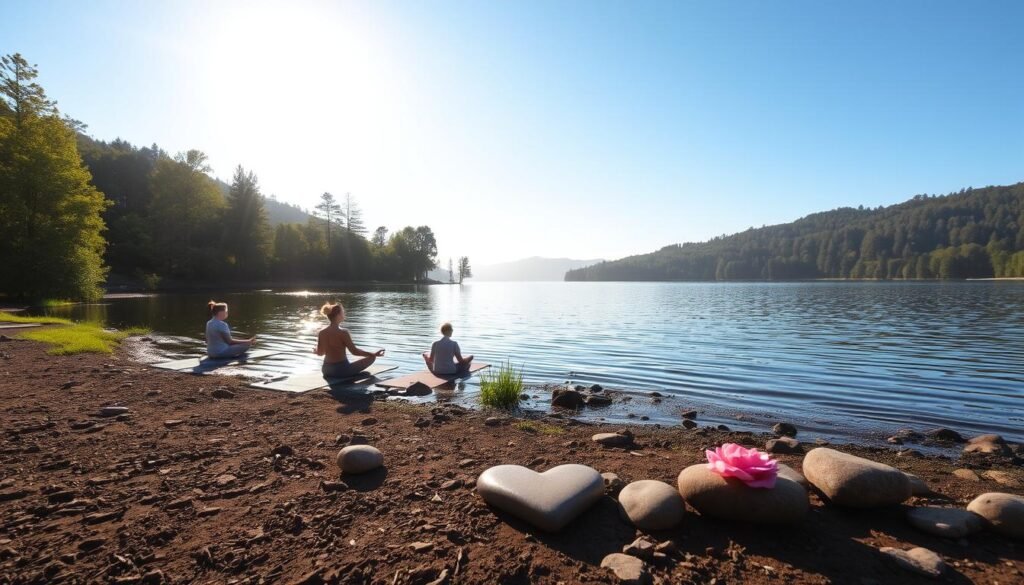
Overcoming Adversity Through Positive Psychology Techniques
Positive psychology gives us tools to face hard times. By being grateful, we focus on good things, not the bad. This helps us become stronger and cope better.
Leveraging Gratitude to Combat Toxic Emotions
Feeling thankful can help fight feelings like envy and resentment. Studies in the last ten years show its power. Even in tough times, being grateful can make us feel better.
It helps us handle stress, from small annoyances to big challenges.
Harnessing the Power of Appreciation in Tough Times
Being appreciative helps us during hard times. It can change bad memories into healing moments. Even those sick feel better recalling thankful moments.
Conclusion
Building resilience through gratitude helps both our minds and bodies. Many studies show that saying thanks makes us stronger. For example, 82% of people in a study felt more resilient thanks to gratitude habits.
Keeping a gratitude journal can boost well-being by 30%. Mindfulness, which goes hand in hand with gratitude, lowers stress by 23%. These methods prove that being thankful can improve how we solve problems.
To wrap up, focusing on gratitude is key to coping in a busy world. Reflecting on good moments improves mental health and life quality. Gratitude leads to a stronger, happier life. It’s a smart move for beating tough times.