It’s alarming, but true. More than one-third of adults in the U.S. take medication that could make them feel depressed. They might even think more about suicide. Doctors and patients must know about these common drugs. While they treat health issues, they can also make people feel very sad.
Research has found some meds can mess with the brain chemicals that affect mood. This can harm how you feel overall. Drugs for anxiety, pain, blood pressure, and hormones can make you feel down. Knowing the bad mix of meds and mood is key to choosing treatments wisely.
Key Takeaways
- Over one-third of U.S. adults take prescription drugs linked to depression risk.
- Long-term use of opioids can cause new-onset depression in about 10% of patients.
- Benzodiazepines may affect cognitive function and increase depression symptoms.
- Hormonal medications can lead to mood changes in some individuals.
- Taking multiple medications can exacerbate the risk of developing depression.
- Corticosteroids and certain antidepressants can have long-term mood impacts.
- Awareness of medication side effects is crucial for preventive health measures.
Introduction to Medication-Induced Depression
Medication-induced depression is a serious public health issue. Various medications can change your mood, causing depression. These are drugs meant to treat physical problems but can affect your mental health.
About 10% to 20% of people taking certain drugs may feel depressed. It’s crucial to know which medications can make you feel this way.
Drugs like anticonvulsants and hormonal medicines can make people feel more depressed. Health issues like heart disease, diabetes, kidney failure, and cancer also increase the risk. Shockingly, between 6% to 80% of patients with epilepsy might face depression.
Medicines like barbiturates and topiramate are linked to feeling low. Phenobarbital users, for example, show a 40% depression rate. This is a lot higher than the 4% seen in those using carbamazepine.
People with Parkinson’s disease also have a higher chance of getting depressed, estimated at 25% to 45%. Treatments like levodopa have raised concerns due to their depressive side effects on some patients. The FDA has issued warnings about drugs like varenicline and rimonabant because they might lead to depression and suicidal thoughts.
It’s important for doctors to talk to their patients about how their medications might affect their mood. For more information, check out resources like WebMD. They help explain how medications can cause depression.
Understanding Depression and Its Causes
Depression impacts many people around the world. At some point, one in six people will face a major depressive episode. It’s noted that up to 16 million adults have clinical depression each year. The reasons behind depression are many. They include biological issues, such as changes in brain chemicals linked to mood. Also, facing hard life events and not having enough support can affect mental health.
Various triggers can lead to signs of depression. Abuse, in any form, can increase depression risks later. The elderly and those without support are especially at risk. Women are twice as likely to get depressed compared to men. Almost 30% of people with substance abuse issues also struggle with depression.
Certain medications can negatively impact mood too. Using three or more medicines associated with depression raises the risk of feeling depressed. Diseases like diabetes and heart issues can worsen mental health. Making life changes like getting more sleep and exercising can help with depression symptoms.
Talking treatments, like cognitive behavioral therapy, are effective. They help in managing negative thoughts and increasing coping skills. Understanding depression and how medications impact mood is crucial. It helps in improving care for those affected and supports mental health overall.
Medications That Cause Depression
Many people don’t know that some medicines can affect their mental health. A lot of drugs that doctors often prescribe can make people feel depressed. It’s key to know which ones might make you feel this way to make good health choices.
Overview of Commonly Prescribed Drugs
Studies tell us that more than one-third of adults might be on drugs that could make them depressed or more likely to think about suicide. There are over 200 drugs that list depression or suicidal thoughts as possible side effects. Here are a few of them:
- Antibiotics: Taking Penicillin once raises your depression risk by 23%, and more so with every extra course.
- Anticonvulsants: Medicines like topiramate and gabapentin are linked to feeling down.
- Corticosteroids: If you use these for a long time, you might start to feel anxious or depressed.
- Opioids: Roughly 62% of people who have issues with opioids also battle depression, especially if they’ve been using them for a while.
- Hormonal birth control: Some studies show it might make some people feel depressed, but the results vary.
How Medications Influence Neurotransmitters
Drugs that can lead to depression change the levels of important brain chemicals. This affects how you feel and your energy. For example, using opioids for a long time can make you 25% more likely to get depression that’s hard to treat. Antibiotics might change the good bacteria in your gut, which can affect your mood.
Doctors should keep a close eye on people taking many drugs at once. About 15% of people taking three or more medications feel depressed. Those taking fewer drugs have less risk. Always talk to your doctor or a pharmacist about possible side effects to stay safe.
| Medication Type | Examples | Linked Effects |
|---|---|---|
| Antibiotics | Penicillin, Tetracycline | Increased risk of depression |
| Anticonvulsants | Topiramate, Gabapentin | Depressive symptoms |
| Corticosteroids | Prednisone | Anxiety, depression |
| Opioids | Oxycodone, Hydrocodone | Co-occurring mental illness |
| Hormonal Treatments | Birth Control Pills | Potential mood changes |
Antidepressant Side Effects and Depression Risks
Antidepressants are key in treating depression, especially the moderate and severe types. But they bring major risks, like antidepressant side effects that could worsen mood disorders. Knowing about the different types of antidepressants and their side effects is critical for understanding their effect on mental health.
Types of Antidepressants and Related Risks
Antidepressants come in various types, such as SSRIs, SNRIs, and tricyclics. Each type has its own risks and side effects:
- SSRIs (Selective Serotonin Reuptake Inhibitors): These often lead to nausea, headaches, and sexual issues. They also bring an increased risk of bleeding and serotonin syndrome.
- SNRIs (Serotonin-Norepinephrine Reuptake Inhibitors): Their side effects are like SSRIs, including a chance of higher blood pressure.
- TCAs (Tricyclic Antidepressants): They have a high risk of fatal overdose, causing heart problems and low blood pressure.
Using these medications might trigger iatrogenic depression, where the treatment itself causes depression symptoms. Serious side effects such as suicidal thoughts or big mood shifts show why careful monitoring by doctors is essential. For detailed info on these risks, the NHS has great resources.
Long-Term Effects of Antidepressants on Mood
Long-term antidepressant use brings up worries about becoming dependent and possibly facing worse depression. Studies show results vary. Some find relief, while others may feel emotionally numb or more anxious. Working closely with healthcare providers is a must to find the right depression treatment plan.
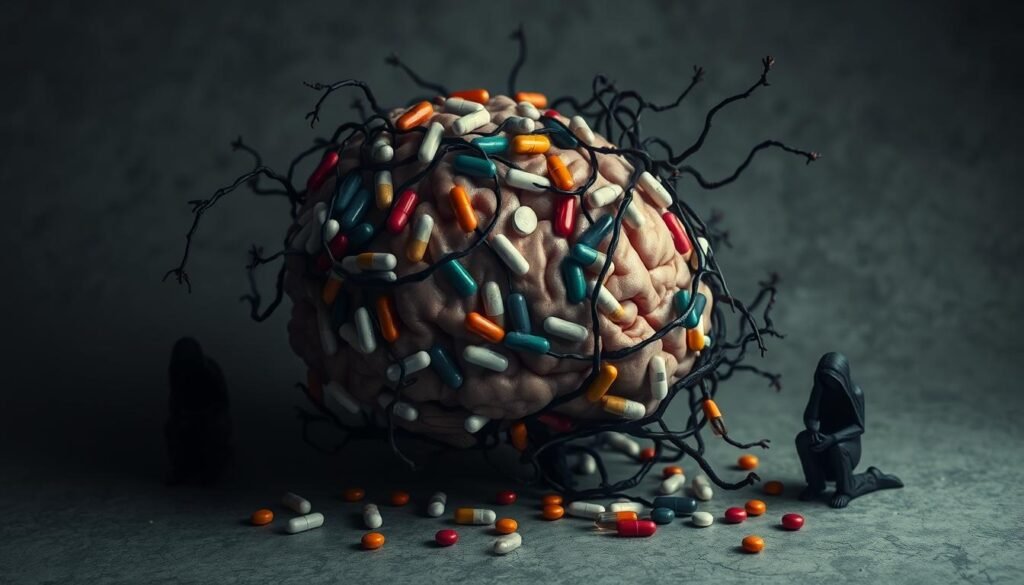
It’s important to regularly check if the medication is working and manage side effects. Strategies include changing diet, exercising, and getting therapy. Decisions to switch drugs or gradually stop them should always be made with a doctor’s help. This is especially true for anyone with major side effects or returning depression symptoms.
| Type of Antidepressant | Common Side Effects | Risks |
|---|---|---|
| SSRIs | Nausea, headache, sexual dysfunction | Risk of bleeding, serotonin syndrome |
| SNRIs | Increased blood pressure, nausea | Similar to SSRIs |
| TCAs | Dry mouth, drowsiness | High overdose risk, arrhythmias |
Anticonvulsants and Their Impact on Mood
Anticonvulsants help with epilepsy and mood disorders, but their effects on mood are mixed. Some people feel more depressed when taking these meds. It’s crucial to know which anticonvulsants affect mood to best help patients.
Key Anticonvulsants Linked to Depressive Symptoms
Here are some anticonvulsants and how they can change mood:
- Carbamazepine: It’s good for bipolar disorder but not for panic or cocaine problems. About 10% of users with mental challenges have bad reactions.
- Gabapentin: It helps with social fear, anxiety, and may calm those with dementia or stop harmful behaviors.
- Lamotrigine: Great for tough bipolar cases, it lessens depression and delays episodes better than a dummy pill. It can also boost thinking skills.
- Depakote and Tegretol: These are good against mania but not as good for bipolar depression.
Research Findings on Anticonvulsants and Depression
Studies show that anticonvulsants and depression are closely linked. Long-term use can cause side effects like nausea and unsteady moods. Monitoring mental health is key when prescribing these drugs.
Opioids and Pain Medications Linked to Depression
Opioids’ link to depression is getting more attention. Studies show that long-term opioid use raises the risk of depression. For example, using them nearly every day makes people up to 40% more likely to get depressed than those who don’t use them as much. Over 5,000 patients were studied. All were depression-free for a year before starting opioids. The findings were troubling about how these drugs affect mood.
The study looked at various opioids like codeine and oxycodone. From 2006 to 2017, the U.S. saw an increase in 30-day opioid prescriptions and how long people took them. This trend makes us question the effects of long-term opioid use on depression.
A study by St. Louis University found an important fact. 10% of patients started feeling depressed within a month of taking opioids. This highlights the need for careful watch. Cutting down on opioid use can help prevent depression. It’s also good to check for mental health issues during opioid treatment.
Many people with addiction also battle mental illness, with depression being very common. Some may be more prone to these issues due to their genes. Interestingly, opioids don’t work as well for those with depression. This often leads to higher dependency on the drugs. For more information, check out this important research.
Hormonal Medications and Depression Risks
Hormonal medications are key for many women’s reproductive health. But they can also cause mood changes. This part explores how birth control pills can lead to mood swings and depression signs.
Oral Contraceptives and Their Mood Effects
Oral contraceptives, especially those with ethinylestradiol, can cause mood issues. Older versions are linked to higher risks. Yet, newer versions with natural forms of estrogen might not affect moods as much.
The most common birth control method for women of childbearing age is the combined pill. These pills have 20 to 50 micrograms of ethinylestradiol. The kind of progestogen they contain can affect your mood. One study found a link between depression and certain hormonal drugs, like levonorgestrel IUDs. These can also lead to anxiety and sleep problems.
Estrogen and progesterone in these medications can change brain function, leading to mood drops. Some women want to stop taking the pill because of mood swings or feeling more depressed. This is especially concerning for teens using birth control pills.
In some cases, nomegestrol acetate with 17-beta estradiol is better tolerated by women with mood disorders. This combo might be safer for managing mood risks.
It’s important to talk to doctors about hormonal medications and mood changes. Doing this ensures you choose the best option for your health, while reducing depression risks.
Corticosteroids: A Common Cause of Mood Changes
Corticosteroids are often prescribed in the United States to manage inflammation and suppress immune responses. Physicians write about 10 million new prescriptions for oral corticosteroids each year. These medications can impact mood, leading to symptoms of depression and anxiety.
A significant study by Gift et al. found that patients with chronic obstructive pulmonary disease (COPD) on corticosteroids had higher depression scores. This suggests a link between corticosteroids and depression. The Boston Collaborative Drug Surveillance Program discovered that high doses of prednisone, above 80 mg/day, increase the risk of psychiatric issues. The chance of severe psychiatric illness rises to 18.4% compared to 1.3% at lower doses.
It’s clear that we need to be careful when prescribing these medications. Even low doses can cause cognitive problems. Varney et al. reported reversible cognitive deficits in patients on prednisone. Other research found milder memory issues with short-term dexamethasone or prednisone use. Out of 3138 patients on oral corticosteroids for more than 28 days, 142 developed mental disorders, mostly anxiety and depression.
| Study | Findings |
|---|---|
| Gift et al. | Higher Beck Depression Inventory scores in COPD patients on corticosteroids |
| Boston Collaborative Drug Surveillance Program | Psychiatric illness rates: 1.3% ( 80 mg/day) of prednisone |
| Varney et al. | Reversible cognitive deficits reported in patients on prednisone |
| Overall Prevalence Study | 5.5% of patients developed mental disorders after steroid use |
The average age of those affected by mental disorders due to corticosteroid use was around 49.56 years. Females made up 62.67% of the affected population. Prednisolone was the most commonly used steroid, given to 81.5% of these patients. These facts show the importance of understanding the link between corticosteroids and depression in treatment plans.
Cardiovascular Drugs and Their Depression Links
Knowing how heart meds affect mood is key for everyone involved. Heart meds and mood issues can make treating depression harder. We look at how certain heart meds might link to depression, with a focus on beta-blockers and calcium-channel blockers.
B-blockers and the Risk of Depression
Beta-blockers help with heart conditions and aren’t clearly linked to more depression risk. Some research thinks they might even help lift the mood a bit for some folks. So, they might be good for heart support without making mood issues worse.
Calcium-channel Blockers and Mental Health
Calcium-channel blockers help manage high blood pressure and heart problems. But it’s hard to say how they’re related to depression. This unclear link shows the need for open talks about treatment choices. People should watch their mental health when taking calcium-channel blockers.
Other heart treatments like nitrates and diuretics could also be linked to depression, but there’s not enough proof yet. It’s important to understand how heart meds and mood issues are connected to help patients do better.
Improving mental health with meds might mean better sleep habits and more exercise. For tips on better sleep for mental health, visit improving sleep hygiene.
| Medication | Association with Depression | Notes |
|---|---|---|
| Beta-blockers | No significant association | May have neutral or slightly antidepressant effects |
| Calcium-channel blockers | Associated but unclear | Impact may vary by individual |
| Nitrates | Reported association | Insufficient clinical evidence |
| Diuretics | Reported association | Insufficient clinical evidence |
Strategies to Manage Medication-Induced Depression
Managing depression from medication needs teamwork between patients and doctors. Talking openly about medication experiences helps find better treatment options. This chat lets doctors check for any bad reactions from the medicine or its amount.
Dealing with mood changes from drugs might mean looking at all medicines taken. If taking many medicines, doctors may suggest making the list shorter. This could mean changing medicines or doses to reduce mental health risks.
Trying psychotherapy, like Cognitive Behavioral Therapy (CBT), is a good idea. CBT helps with coping when medicines affect your mood. Learning about how treatments impact mental health is also key. This knowledge helps patients speak up and take charge of their care.
Making life changes is also important in dealing with depression from medicine. Exercise, eating well, and getting enough sleep all help your mood. Joining support groups brings comfort and connection, sharing struggles with others.

Signs and Symptoms of Depression from Medications
It’s important to know if medicines cause depression. Being aware lets you act fast. This may mean changing medicines or getting more tests. Signs of depression can be different for everyone.
Persistent Sadness: Some feel constantly sad or empty.
- Loss of Interest: It’s common to lose interest in enjoyable activities.
- Fatigue: Many feel tired all the time, even with enough sleep.
- Changes in Sleep Patterns: Sleeping too much or too little can show a mood problem.
- Appetite Alterations: Eating more or less than usual can be a sign.
- Difficulties in Concentration: Having trouble focusing is a common issue.
- Feelings of Worthlessness: Feeling guilty or worthless can be very hard to deal with.
- Glimpses of Suicidal Ideation: Thinking about self-harm means you need help right away.
If depression runs in your family, some drugs can make it more likely. This includes medicines for anxiety and depression. Talk to a doctor if the sadness doesn’t go away after two weeks.
Doctors say to talk about any mood changes when taking medicines. Noticing depression early can help fix it, making life better. Watching for changes in how you feel is key to understanding your treatment’s effects on your mood and health.
Conclusion
It’s key for everyone to know how meds can affect our mood, especially if taking more than one prescription. Research shows a clear link between some medications and the risk of depression, more so in older adults. Drugs for high blood pressure, inflammation, and even some meant to treat depression can change our mood.
This means we must talk openly with doctors about depression awareness in medication use. Working together helps spot depression signs early and deal with any mood side effects. Always check with healthcare experts before changing any medications to stay safe and healthy, especially with newer drugs being studied for their mental health effects.
Combining mental health support with medical treatments gives a full care approach, keeping both our body and mind in good shape. For deeper insights on how meds might impact your mood, visit AARP’s health guidelines.