About 1 in 3 people with depression find help with MAOIs like Phenelzine and Tranylcypromine. These drugs were some of the first for treating depression. Yet, their use has dropped because of side effects and food limits. Still, they are crucial for those hard to treat depression cases or when other medicines fail. Often, people ignore these medications because of the stigma around them. This leads to missing out on their benefits for mental health.
Key Takeaways
- MAOIs, including Nardil and Parnate, are vital for treatment-resistant depression.
- Dietary restrictions are crucial to avoid dangerous interactions with certain foods.
- Potential side effects include sleepiness, dry mouth, and weight gain.
- MAOIs can significantly affect levels of key neurotransmitters in the brain.
- Despite their effectiveness, MAOIs remain underutilized in clinical settings.
Understanding Monoamine Oxidase Inhibitors (MAOIs)
Monoamine oxidase inhibitors, known as MAOIs, are a unique type of antidepressant. They focus on the monoamine oxidase enzyme. This enzyme is key in breaking down important neurotransmitters like serotonin, norepinephrine, and dopamine. By blocking this enzyme, MAOIs increase these neurotransmitters. This helps improve mental health and reduce depression symptoms.
MAOIs were developed in the 1950s, making them one of the earliest antidepressants. They are especially useful for hard-to-treat depression or unusual types of depression. However, their popularity has decreased due to potential side effects and diet restrictions. Marplan, Nardil, and Parnate are specific MAOIs approved by the FDA for major depression treatment.
Each MAOI has its own timeline to fully work. Marplan takes about three to six weeks. Nardil needs around four weeks. Parnate can start to work in about three weeks. Selegiline is a newer option. It specifically blocks monoamine oxidase B and is used for early-stage Parkinson’s disease. This option does not have the strict diet rules other MAOIs do.
Even with their benefits, MAOIs are often not the first depression treatment choice. The diet rules, especially avoiding foods high in tyramine, can be hard. Side effects might include tiredness, feeling nervous, trouble sleeping, and high blood pressure. It’s very important to keep a close eye on young adults and kids taking these drugs. This is because there is a higher suicide risk.
In summary, MAOIs are effective in certain situations. But their use today is approached with caution. Proper patient care is crucial to ensure they are both safe and effective.
What are Phenelzine and Tranylcypromine?
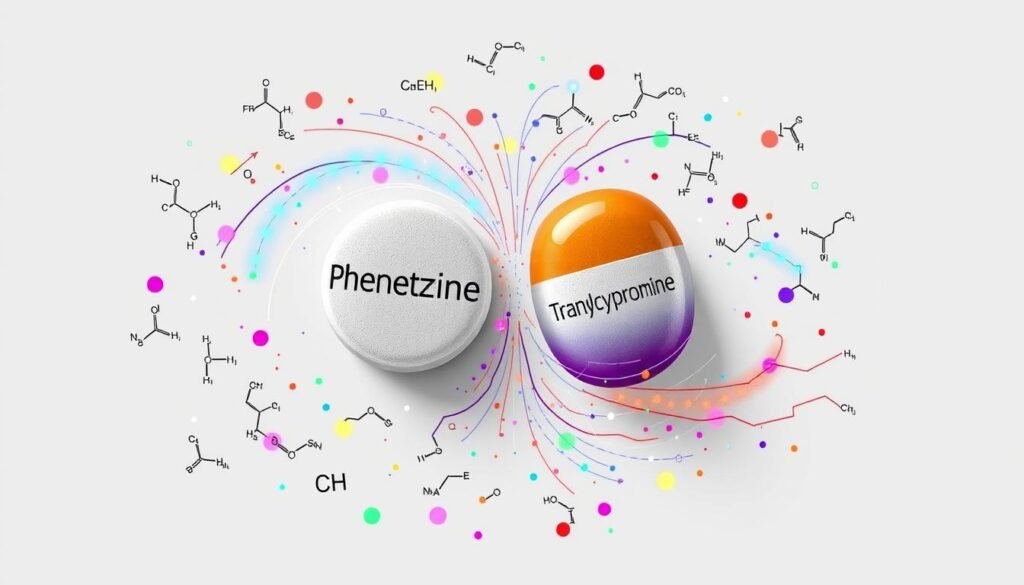
Phenelzine and tranylcypromine are both FDA-approved MAOIs. They are important for treating depression when other methods fail. Knowing how they work and what they do can help people choose the best treatment for their mental health.
Overview of Phenelzine (Nardil)
Phenelzine, also known as Nardil, has been used for over fifty years. It’s mainly for serious depression. It’s really effective for atypical depression. It helps improve mood, energy, and how you function day to day.
Nardil increases important natural substances in the brain. It’s great for those who didn’t find other meds helpful.
Overview of Tranylcypromine (Parnate)
Tranylcypromine, or Parnate, works like phenelzine but is a bit different. It’s picked when other antidepressants don’t work. Parnate has unique side effects that some people might prefer.
It has been proven effective for treating depression. This makes it a good choice for customized treatment plans. It considers how each person reacts to the medication.
Common MAOIs Used for Depression: Phenelzine and Tranylcypromine
Monoamine oxidase inhibitors (MAOIs) have been key in treating depression since the ’50s. Phenelzine (Nardil) and Tranylcypromine (Parnate) are noted for their effectiveness. They can help improve mood when other treatments have failed.
Other MAOIs like Isocarboxazid (Marplan) and Selegiline (Emsam) also offer alternative treatments. Despite new methods, the importance and effectiveness of MAOIs are recognized once again. This is especially true for those with treatment-resistant depression.
Depression treatment offers many options, but MAOIs are vital for their unique action. They work by altering brain chemicals. This can offer relief where other options haven’t worked, especially for those who have tried various treatments.
It’s critical to manage MAOIs carefully. Knowing the risks, like dietary restrictions, is important. Such knowledge helps avoid dangerous food interactions that can raise blood pressure dramatically. Following these guidelines is essential for safety and effectiveness.
If you’re considering MAOIs for mental health, knowing about them is crucial. It helps you talk more effectively with your doctors and choose the best treatment. For detailed information on MAOIs, check this resource.
The Mechanism of Action for MAOIs
MAOIs, or monoamine oxidase inhibitors, are key in fighting depression. They stop the enzyme monoamine oxidase from working, permanently. This blockage stops the breakdown of vital neurotransmitters like serotonin, dopamine, and norepinephrine.
With these neurotransmitters not breaking down, their levels go up in the brain. This increase helps ease depression symptoms.
The way MAOIs work supports the monoamine hypothesis of depression. This theory suggests that mood disorders come from low levels of certain neurotransmitters. Increasing these neurotransmitters can better mood and emotional stability, helping those with depression.
MAOIs are behind several FDA-approved depression treatments. Medications such as Isocarboxazid (Marplan), Phenelzine (Nardil), Selegiline (Emsam), and Tranylcypromine (Parnate) are often used. Selegiline is unique because it’s a patch, which can reduce side effects seen with pills.
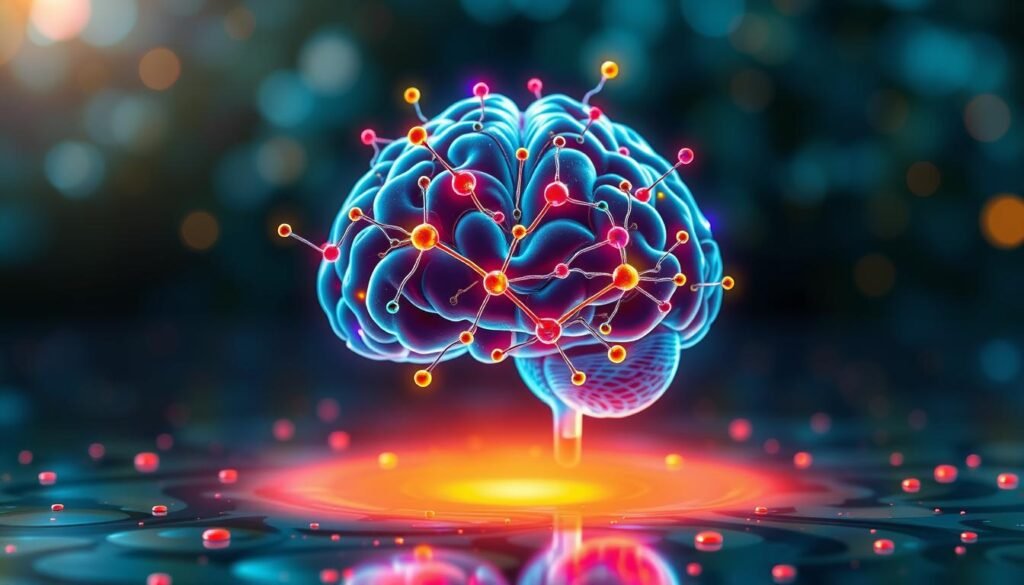
MAOIs can be a major help for those who don’t get better with usual antidepressants. But, they come with possible side effects and food restrictions. This makes it crucial for doctors to closely manage treatment.
The complex way MAOIs work makes personalized treatment plans essential. Everyone reacts to medication differently.
Benefits of Using Phenelzine and Tranylcypromine for Depression
Phenelzine and tranylcypromine are known for helping with tough forms of depression. They work well when other treatments don’t. People with hard-to-treat depression or bipolar disorder find them useful.
Efficacy in Treatment-Resistant Depression
Studies show that phenelzine can make symptoms go away in about 67% of people who didn’t get better with imipramine. This is a big deal compared to other treatments tried in the STAR*D study. Only 67% found relief there. These two drugs often work better than the usual antidepressants for people not helped by other meds, especially if they have atypical depression.
Phenelzine has a strong track record of success, showing big differences from placebos. For a deeper look into these MAOIs, check out this study.
Potential for Bipolar Disorder Treatment
Phenelzine and tranylcypromine could also help those with bipolar disorder. They might keep mood swings under control. This can significantly improve life for those who haven’t had success with other treatments. But it’s important to be careful when mixing these MAOIs with other meds to stay safe.
Possible Side Effects of MAOIs
MAOIs can greatly help people with depression but they have side effects. It’s important to know these side effects if you’re taking these drugs.
Common Side Effects
MAOIs can cause some mild side effects such as:
- Dry mouth
- Dizziness
- Gastrointestinal disturbances such as diarrhea or constipation
- Insomnia
- Drowsiness
- Increased anxiety
These effects can be managed but they might lower life quality. It highlights why patients should talk to their doctors about any new problems.
Serious Risks Associated with MAOIs
There are also serious MAOIs risks that need close watching. For instance:
- Avoid foods high in tyramine to prevent hypertension.
- Mixing with other serotonergic agents can cause serious serotonin syndrome.
- Stopping treatment suddenly might result in insomnia, nightmares, and agitation.
When beginning or changing a dose, it’s critical for patients to be closely watched. Knowing both the mild and serious possible effects helps in making informed treatment choices.
| Common Side Effects | Serious Risks |
|---|---|
| Dry mouth | Hypertension from dietary interactions |
| Dizziness | Serotonin syndrome |
| Gastrointestinal disturbances | Withdrawal symptoms |
| Insomnia | Agitation |
Dietary Restrictions with MAOIs
When on MAOI treatment, it’s vital to follow strict dietary restrictions. This avoids dangerous reactions, mostly hypertensive crises caused by tyramine foods. Tyramine is an amino acid that helps regulate blood pressure. It’s found in many common foods. Eating these can lead to a dangerous rise in blood pressure if MAOIs are also being taken.
Some high-tyramine foods to stay away from are:
- Aged cheeses
- Cured or pickled meats
- Fermented products
- Alcoholic beverages
- Overripe fruits
- Processed or spoiled foods
- Dried fruits and soy products
- Yeast-extract spreads
Cooking doesn’t lower the tyramine in these items. It’s also key to talk openly with doctors about food do’s and don’ts. They will guide you on handling tyramine exposure.
Here is a table of some common foods to avoid, their tyramine level, and possible effects:
| Food Item | Tyramine Content | Potential Effects |
|---|---|---|
| Aged Cheeses | High | Hypertensive Crisis |
| Cured Meats | High | Nausea, Headaches |
| Fermented Products | High | Chest Pain, Confusion |
| Alcoholic Beverages | Medium | Elevated Blood Pressure |
| Overripe Fruits | Medium | Dizziness, Sweating |
If you eat high-tyramine foods, knowing the symptoms is key. Watch out for severe headaches, vomiting, or a fast heartbeat. Call for help right away if these happen. Knowing what to eat and what to avoid is crucial for safely using MAOIs. It’s essential for managing your mental health well.
Drug Interactions to Watch For
When looking at treatments with monoamine oxidase inhibitors (MAOIs), it’s critical to know about drug interactions. These can ensure the safety of antidepressants. MAOIs have strong interactions with many medicines. These can cause serious or even deadly outcomes.
It’s especially dangerous to mix MAOIs with other antidepressants. Such a mix can lead to serotonin syndrome. This condition is rare but very serious. Signs include anxiety, restlessness, and a fast heartbeat. It’s important to seek help right away if these appear.
Some drugs that are risky with MAOIs include:
- SSRIs (Selective Serotonin Reuptake Inhibitors)
- Tramadol and other opioids
- Certain pain relievers
Doctors need to look at all the medicines a patient takes. This includes over-the-counter meds and herbal products. Teaching patients about MAOIs interactions is key to avoiding bad reactions. Usually, you should wait two weeks after stopping an MAOI before starting another antidepressant.
There are also important food limits to follow. Patients need to stay away from foods high in tyramine. These foods can cause dangerously high blood pressure, which is very serious.
Knowing about both medicine and food rules is important when using MAOIs. This ensures safety and effectiveness. Always talk to a healthcare expert before changing your meds in any way.
| Drug Type | Potential Risk |
|---|---|
| SSRIs | Increased risk of serotonin syndrome |
| Tramadol | Severe side effects including seizures |
| Dietary Tyramine | Dangerously high blood pressure |
Prescribing Practices for MAOIs Today
Doctors are now more cautious with monoamine oxidase inhibitors (MAOIs) than before. Their worry about side effects and dietary rules is big. A 1999 survey showed that 12% of psychiatrists had never prescribed an MAOI.
A significant number, 27%, hadn’t given an MAOI in the last three years. From this, we see a huge drop in their use – only 2% of psychiatrists still frequently prescribe MAOIs, a sharp fall from 25% ten years ago. However, MAOIs could be very effective, especially for hard-to-treat depression and certain patient needs.
When prescribing these drugs, the right dose is key. For isocarboxazid and tranylcypromine, doctors aim for 40–60 mg/day. Phenelzine usually needs 60–90 mg/day. Getting the dose right is important because it leads to the best treatment results.
Despite their benefits, MAOIs are not often the first choice now. They are usually considered later options. This shows a big change over time in how they’re used for tough depression cases.
Teaching health care workers about MAOIs is crucial. They need to fully understand the risks and benefits. Knowing about food limits and medication interactions is also key for patient safety. More education on these drugs could help bring them back into common use. For more on prescribing MAOIs, check out this guideline.
| MAOI Type | Common Dosage (mg/day) | Common Side Effects |
|---|---|---|
| Phenelzine | 60–90 | Weight gain, sexual dysfunction |
| Tranylcypromine | 40–60 | Central nervous system effects, insomnia |
| Isocarboxazid | 40–60 | Paresthesia, muscle pains |
Safety Considerations for Patients
Ensuring safety with monoamine oxidase inhibitors (MAOIs) is key. These drugs help a lot with tough depression. But, there are risks that need careful management. It’s vital to monitor MAOIs closely. This is especially true in the beginning and after any dose changes.
Doctors need to check the patient’s medical history well. This helps them spot any risks of bad effects. Knowing this info helps make the treatment safer. Talking about what foods to avoid with MAOIs is important too. Some foods can cause dangerous reactions.
It’s critical to talk about any other meds to avoid bad interactions. Sticking to the guidelines helps make MAOI therapy safe and effective.
Patients should know about possible side effects of MAOIs. Issues like constipation, dry mouth, and changing weight can happen. But, healthcare pros need to watch out for dangerous effects. This includes hypertensive crises and serotonin syndrome. For more on antidepressants, click here.
| Safety Considerations | Important Points |
|---|---|
| MAOIs Monitoring | Essential during initial treatment and dose adjustments |
| Health History Assessment | Key to identifying potential risks |
| Drug Interactions | Critical to prevent harmful reactions |
| Dietary Restrictions | Necessary to avoid dangerous interactions |
| Common Side Effects | Constipation, dry mouth, weight changes |
| Serious Side Effects | Hypertensive crises, serotonin syndrome |
Conclusion
Phenelzine and tranylcypromine are key in treating mental health, especially for those struggling with hard-to-treat depression and mood issues. Since the 1960s, their use has taught us a lot about their high success rates. Studies now show many patients get better with these MAOIs, even as doctors prescribe them less.
To make the most of these treatments, patients and doctors need to work closely together. MAOIs can help people who haven’t found relief with other treatments. Knowing what foods to avoid and which drugs don’t mix is crucial for success.
Research into MAOIs is ongoing, looking into how safe and effective they are. This could lead to more doctors using them. This means phenelzine and tranylcypromine could remain vital for treating mental health issues.