Did you know the World Health Organization lists creativity in the top 10 life skills? This fact highlights how vital creativity is for mental health. It shows that being creative, whether by writing, playing music, or making art, helps keep our emotions balanced. It builds our psychological strength too.
Creativity is tightly linked with mental health. Research has found that writers and musicians have special ways to cope that others don’t. Using creativity to deal with feelings leads to new, helpful coping methods. It lays the groundwork for emotional stability and personal development.
Exploring creativity shows us how arts like dance, drama, and painting are key for mental health. Creative activities offer strong support for those seeking emotional steadiness and mental improvement.
Creating bonds within communities also plays a big role in recovery. Being part of a community offers the strong support needed to overcome mental health hurdles. This connection makes people feel like they belong. It helps them become more resilient and recover, as discussed in an insightful article on support systems here.
Key Takeaways
- Creativity is essential for mental health and recognized as a critical life skill.
- Engaging in creative activities promotes emotional well-being.
- Writers and musicians have been shown to possess superior coping skills.
- Artistic pursuits serve as therapeutic tools for individuals facing mental health challenges.
- Establishing a support system can significantly enhance the benefits of creative expression.
- Innovative coping mechanisms derived from creativity can lead to lasting psychological benefits.
The Importance of Creativity for Mental Health
Creativity is very important for mental health and happiness. Doing artistic activities can help improve how you feel. Studies show that being creative every day makes people happier than those who aren’t.
Art like painting, music, and dance makes us feel better. Even four weeks of theater can boost how our brain works. Music can reduce stress and make us feel happier, showing creativity’s role in mental wellness.
Writing things down, like in a journal or poetry, is a great way to deal with feelings. It lets us understand our emotions better. Creativity helps us figure out who we are and take care of our mental health.
In conclusion, creativity is a powerful way to stay mentally strong. By doing creative things often, we can fight anxiety and stress. This leads to a happier life and a deeper self-understanding.
The Role of Creativity in Mental Health
The role of creativity in mental health is really important. It helps make our emotional health better. Studies show that creative work boosts good moods and lowers bad feelings. People who do artistic things feel less stressed and anxious. This not only helps right away but also makes their mental health better over time.
The Connection Between Creativity and Emotional Well-Being
Research shows a big link between creativity and feeling good emotionally. One study in the Journal of Positive Psychology found something interesting. People who spend time on creative goals feel more joy and optimism. Drawing, painting, and writing let people express themselves. They help people share their feelings and work through hard experiences. For those with PTSD, art therapy can lower stress and shame while helping them heal.
How Creativity Influences Positive Moods
Creative things like singing and dancing make people feel happier. They increase oxytocin and help build strong friendships. This is important for emotional health. Being creative regularly helps improve life quality. This is especially true for cancer patients and older adults. Writing and telling stories lets people express themselves in deep ways. It helps increase self-esteem and happiness.
| Creative Activity | Benefits |
|---|---|
| Singing | Increases oxytocin, fosters positive social feelings |
| Dancing | Relieves anxiety, improves quality of life |
| Art Therapy | Alleviates PTSD symptoms, reduces shame |
| Writing/Storytelling | Promotes self-expression, enhances communication skills |
| Drawing/Painting | Improves motor skills, relieves symptoms of depression |
Creativity fights loneliness and depression in many ways. It builds problem-solving skills and adaptability. By working on creative skills, people see quick and lasting health benefits. This shows the big impact creativity has on our well-being.
Creative Expression as a Therapeutic Tool
Creative expression is key to mental health. It’s a way to unleash therapeutic creativity. By doing art, we can show feelings that are hard to talk about. The perks of being creative are not just fun. They help reduce stress, lead to self-discovery, and heal. For many, making art brings peace and a deeper connection to themselves.
Definition and Benefits of Creative Expression
Creative expression includes activities like art, music, dance, and writing. These forms let people share their experiences and feelings in special ways. About 46% of Americans use creative acts to deal with stress or anxiety. Activities like painting, journaling, or playing music can boost emotional health and mental well-being.
Art Therapy: Utilizing Creativity for Healing
Art therapy is a powerful support in mental health. It uses creative acts, like drawing, painting, and music, for healing. Programs like those by Diversus Health bring creative therapy into care. This helps with trauma and builds strength. Stats show art therapy’s benefits: 82% cope better with trauma and grief. Also, 71% see fewer symptoms of anxiety and depression. Being creative can make 63% of people more confident. This helps them on their path to recovery and self-understanding.
| Creative Activity | Benefits |
|---|---|
| Art Therapy | 71% reduction in anxiety and depression |
| Music Therapy | Enhances mood, reduces anxiety, and improves cognitive function |
| Writing Activities | Boosts self-discovery and reflection by 89% |
| Visual Arts | Facilitates expression of complex emotions |
| Horticultural Therapy | Decreases agitation in dementia patients |
Innovative Coping Mechanisms Through Creative Pursuits
Creative pursuits are key for managing mental health. They offer new coping ways to tackle emotional troubles. Through art, people can find fresh methods to handle stress.
Developing Innovative Solutions to Mental Challenges
Creative activities can unlock special solutions to mental problems. Painting, singing, or writing help people express feelings in a positive way. This helps change negative thoughts into something constructive. Making art turns attention from stress to engaging with emotions.
Research shows that being creative makes the brain more flexible. This helps with solving problems better. By getting creative, people find new emotional outlets. This gives them insights into their feelings and needs.
Creating Emotional Outlets to Ease Stress
Art therapy and making music reduce stress a lot. These activities relax and bring a sense of “flow,” boosting mental health. When people dive into art, they discover ways to process emotions. This leads to better understanding and handling of complex feelings.
Gardening or crafting offers a peaceful break from everyday worries. These acts connect people with the moment, helping keep stress at bay.
| Creative Activity | Benefits |
|---|---|
| Art Therapy | Exploration of emotions, reduction of anxiety, and increased self-awareness |
| Music Therapy | Addresses emotional, cognitive, and social needs, useful for depression or trauma |
| Creative Writing | Helps process trauma, manage anxiety, and boost self-esteem through self-expression |
| Collaborative Art Projects | Fosters a sense of belonging and social connection, enhancing mental well-being |
Embracing creativity improves emotional regulation. It also offers key coping tools for life’s troubles. By choosing creative coping methods, people can strengthen their emotional well-being.
Mindfulness Practices and Creativity
Mindfulness practices boost creativity by helping you focus and stay present. Research from various fields shows a link between mindfulness and being more creative. Techniques like meditation clear the mind, making it easier to think of new ideas.
The Role of Mindfulness in Enhancing Creative Outputs
Mindfulness is key to boosting creativity. Stress can kill creative thoughts, but mindfulness cuts stress and clears the mind. Studies show it helps us think in new ways, crucial for creativity. Practicing mindfulness improves thinking and feeling, important for creating new things.
It also makes us think better by letting our minds wander on purpose. This can lead to surprising discoveries.
How to Incorporate Mindfulness in Creative Activities
Adding mindfulness into your creativity is easy and rewarding. Here are some tips:
- Begin with a breathing exercise: Focus on your breath for a few minutes before you start creating.
- Set an intention: Decide to stay present and dive deep into your creative process before starting.
- Take mindful breaks: Step away briefly during your work to clear your mind and relax.
- Practice slow observation: Really look and feel your materials or surroundings for a closer connection to your work.
Mindfulness not only makes you more creative but also improves mental well-being. This leads to a better and more satisfying creative journey.
Personal Growth Through Creative Exploration
Creative exploration helps people grow. It lets them find unique parts of themselves and learn more about their skills. This journey is about finding oneself through creativity and becoming strong. It helps people deal with life’s tough spots better.
Self-Discovery as a Byproduct of Creative Practices
Creating art leads to finding out who we really are. People find their hidden skills and likes when they do things like journaling, painting, or crafting. These activities show what we think and feel. They make people feel good about their abilities. This makes them more self-confident and helps them understand themselves better.
Building Resilience through Artistic Ventures
Art helps people become stronger inside. It teaches them how to handle stress and worry. When people get lost in art, they feel better and happier. Whether it’s music, dance, or painting, art makes them ready to tackle problems. They come out feeling more focused and driven.
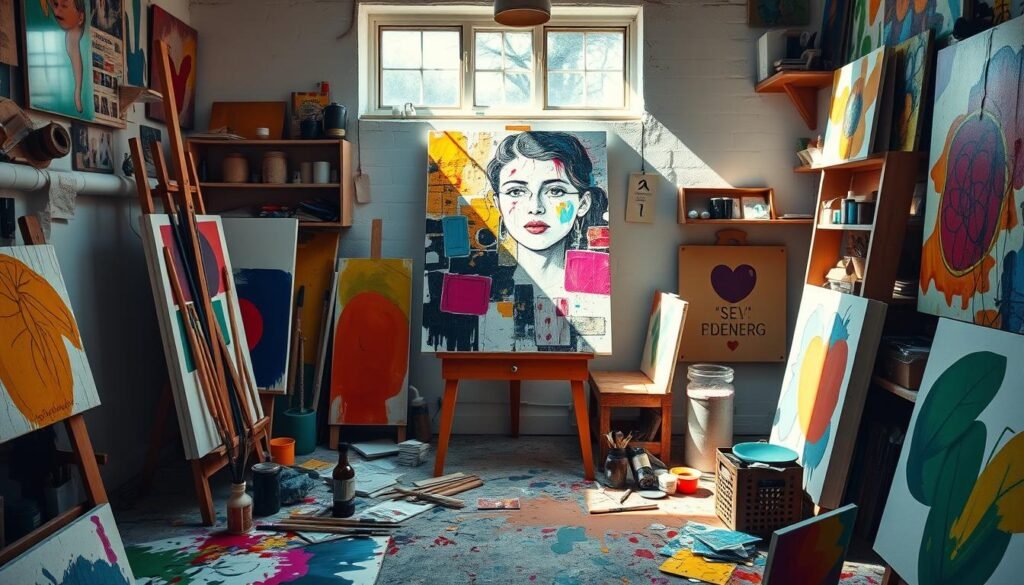
Practical Therapeutic Activities to Enhance Creativity
Exploring creativity through therapeutic activities can greatly benefit mental health. Activities like painting, dancing, and music provide a way to express oneself. They also improve mental well-being by fostering emotional healing and lowering anxiety and depression symptoms.
Artistic Pursuits: Painting, Dancing, and Music
Artistic activities help relax the mind and encourage self-discovery. Playing an instrument or dancing can trigger strong emotional reactions, promote relaxation, and enhance thinking skills. Doing crafts such as knitting or pottery offers a break from daily stress, creating a meditative state. This state of flow brings joy and a sense of achievement.
- Crafting activities provide a practical way to express creativity.
- Social engagement in art classes or choirs fosters a sense of community.
- Performing music enhances emotional connections and reduces feelings of isolation.
Engaging in Creative Writing and Storytelling
Creative writing helps people deal with difficult emotions and thoughts. It is a safe way to share stories about trauma, grief, or depression, offering a sense of relief. Writing boosts self-esteem by recognizing personal growth and storytelling talents. It supports thinking development through brainstorming new ideas and solving problems.
| Therapeutic Activities | Benefits |
|---|---|
| Painting | Enhanced mood and relaxation |
| Dancing | Improved self-esteem and emotional release |
| Playing Music | Cognitive stimulation and emotional connection |
| Creative Writing | Emotional healing and cognitive development |
Emotional Benefits of Engaging in Artistic Pursuits
Doing art has big emotional perks, more than just fun. It boosts mood, cuts down anxiety, and makes you feel happy and complete. When making art, like painting or dancing, you get to let out feelings hard to say in words. This helps you feel better and stand strong against tough times.
Creative Activities and Their Impact on Mood
Art activities help bring back memories and relax you. They’re great for adults who face emotional or thinking challenges. Making art gives a sense of success and ups self-esteem, making you feel better overall. Seeing what you’ve made boosts your confidence and keeps you feeling good.
Long-term Psychological Benefits of Creativity
Creativity in your daily life has many long-term benefits for your mind. It improves how your brain works, how you talk to others, and how happy you are with life. Being creative gives you a strong sense of purpose. Setting goals in art gives life a plan, helps you achieve more, and keeps you emotionally balanced. For tips on dealing with severe depression, check out these coping strategies.
The Science Behind Creativity and Mental Health
The link between creativity and mental health gives us deep insights into our minds. Studies have shown that being creative makes us feel better emotionally. It helps us understand how creativity builds resilience, increases happiness, and manages stress.
Research Findings Supporting Creativity’s Role
Many studies have found that being creative is key for our mental health. For example, an experiment at the Duke Institute for Brain Sciences showed something interesting. Paintings made while half-asleep were seen as more creative than those made while fully awake. This shows how unique states of mind can boost creativity. John Kounios, a well-known professor, talks about the rise in studying how creativity affects mental health. Thanks to new technology for studying the brain, we know more about creativity and mental health.
Understanding the Psychological Mechanisms Involved
Learning how creativity works in the brain is fascinating. Research by Adam Green tells us creativity needs different brain areas to work together. For instance, activating certain brain parts can make us more creative in solving problems. Kounios’s research shows that musicians and other artists use their brains differently. This lets them express their creativity in special ways. It also ties to feeling more rewards emotionally.
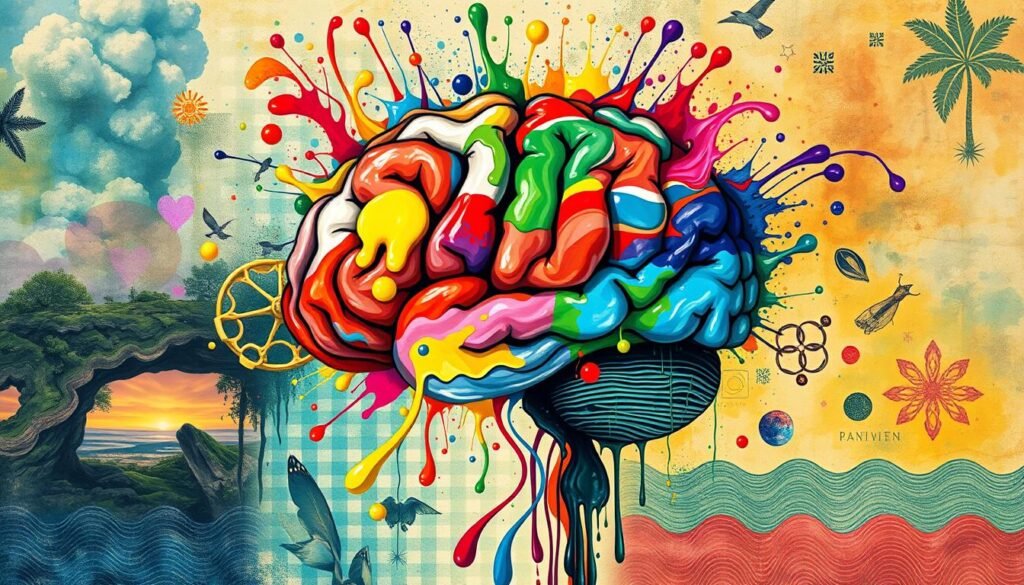
Research makes a clear distinction between being creative and having mental illness. Even though some creatives have conditions like bipolar disorder, their creativity is still productive. Studies suggest that creative people can do well when their symptoms are under control. This helps them maintain a positive connection with their mental health. So, creativity isn’t just about chaos; it’s about productive and meaningful work.
The study of creativity shows how important it is for our emotional well-being. By understanding how creativity and mental health are linked, we’re encouraged to seek out creative outlets. This is key for our mental toughness and overall happiness.
How to Cultivate Creativity in Daily Life
Cultivating creativity improves mental health and happiness. A few effective tips can help boost creativity. Having a routine encourages growth in creative areas.
Practical Tips for Boosting Creative Expression
To increase creativity, try these tips:
- Dedicate Time – Reserve weekly times for creativity. This helps focus on exploration and growth.
- Expand Artistic Pursuits – Try new creative activities like painting, dancing, or crafting. They can spark fresh ideas.
- Keep a Journal – A creativity journal aids in reflection and self-discovery, crucial for personal growth.
- Engage with Nature – Being outdoors boosts creative thinking. A simple walk or hike can refresh your outlook.
- Experiment in the Kitchen – Making new recipes, like vegan dishes, is a fun way to be creative.
Creating a Routine that Encourages Creativity
Having a creativity routine is key. It helps creativity grow over time. Try these strategies:
- Regular Practice – Regularly engaging in creative acts is like a workout for your creativity. It improves skills and imaginative thinking.
- Integrate Mindfulness – Add mindfulness to your creative process. Concentrate on making rather than the outcome. This enhances engagement.
- Set Goals – Small, achievable goals guide your creative journey. They bring a sense of achievement as you progress.
- Collaborate with Others – Being part of creativity groups or workshops brings new ideas and motivation. It broadens your creative scope.
Conclusion
The importance of creativity in boosting mental health is huge. Doing creative things has been found to lower anxiety and depression. It also helps build resilience during tough times. With 31% of U.S. adults reporting feelings of anxiety or depression in mid-2020, it’s key to find creative outlets.
Studies show a strong link between being creative and feeling good. Creative acts are more than just a way to let out emotions. They also help us connect with others, creating a sense of community. Through methods like art therapy, people can delve into their emotions safely and grow.
Adding creativity to our everyday lives can majorly improve our mental health. Activities such as drawing, writing, or playing music add to our life’s purpose and joy. Clearly, embracing our creative side can change our lives for the better. It helps us understand ourselves more deeply and improves our mental well-being.