Recent studies show almost 75% of people felt a lot of stress during COVID-19. This highlights the need for easy ways to check mental health. The Depression Anxiety Stress Scale (DASS-21) is a simple questionnaire. It checks for signs of depression, anxiety, and stress. It helps people see how they’ve felt over the last week.
The main goal of this tool is to quickly spot psychological distress. It helps users recognize worrying signs. Then, it suggests they get more help if needed. The DASS-21 tackles common mood issues. It’s crucial for those wanting to understand their mental wellbeing.
Key Takeaways
- The DASS-21 is an accessible self-report measure of mental health.
- It focuses on symptoms of depression, anxiety, and stress.
- This quick mental health test encourages individuals to seek help when needed.
- The scale’s structure allows for detailed insights into emotional well-being.
- It serves as a preliminary screening tool for psychological distress.
Understanding the Depression Anxiety Stress Scale
The DASS-21 is key for checking psychological trouble. It measures how severe someone’s mood disorder symptoms are, like depression and anxiety. It’s a self-report tool, meaning people use it to think about their mental health. It helps experts fully assess mental health too.
What is the DASS-21?
The DASS-21 has 21 questions, measured on a Likert scale. Scores go from 0 to 63. There are also scores for depression, anxiety, and stress, each from 0 to 21. This setup makes it easy to understand a person’s mental state.
The Purpose of the Scale
The goal of this questionnaire is to spot emotional issues early. Knowing about depression, anxiety, and stress levels lets experts help better. They can work more effectively in places like clinics or schools. It also makes people think about their mental health, aiming for better emotional well-being.
Components of the DASS-21
The DASS-21 has three main parts: the depression subscale, anxiety subscale, and stress subscale. Each part has seven questions. Together, they provide a full picture of someone’s emotional health.
Depression Subscale
The depression part looks at feelings of sadness, lost interest, and low self-esteem. It measures how deep depressive symptoms are. This helps people and experts get a clear view of someone’s emotional state. High scores mean more distress, and low scores suggest emotional stability.
Anxiety Subscale
The anxiety part checks on both body and mind signs of anxiety. It pays attention to symptoms like tense muscles and fear. This knowledge is key for making plans that tackle these anxiety signs directly.
Stress Subscale
The stress part checks how easily a person feels upset, their trouble in unwinding, and irritability. It helps in spotting stress levels that might lead to other emotional problems. This look into stress is a step toward handling it better and boosting emotional strength.
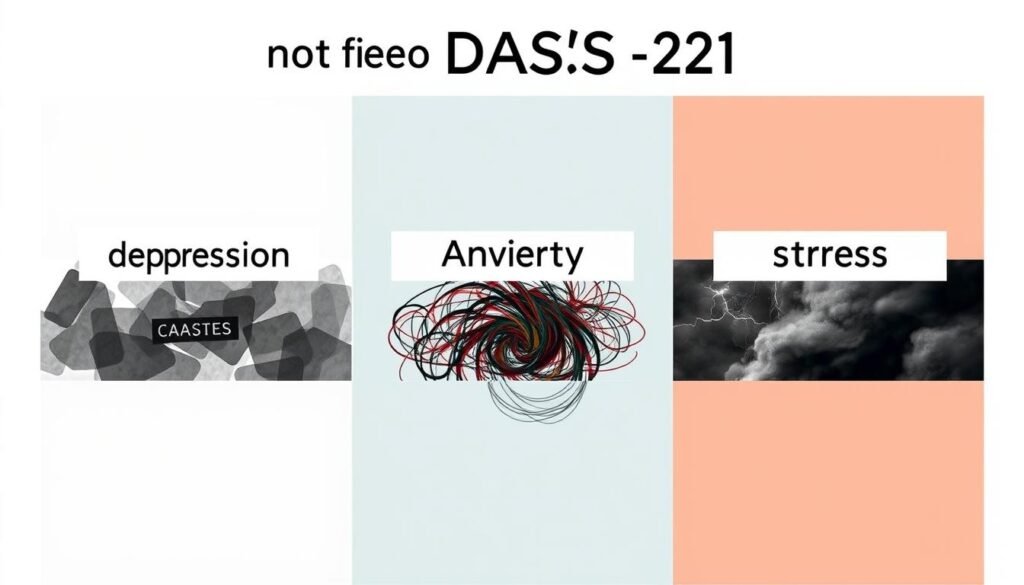
Together, these parts of the DASS-21 check the range of emotional symptoms. Talking about the results more can give a safe space for people to dig into their emotional well-being. To learn more about the DASS-21, visit DASS-21 overview.
How to Use the Depression Anxiety Stress Scale
Learning to use the Depression Anxiety Stress Scale (DASS-21) is key for checking your emotional health. It has a set of statements to measure how often you’ve felt symptoms of depression, anxiety, and stress in the last week. Here we’ll explain how to fill it out and understand your scores.
Instructions for Administration
To start, read each statement and decide how much it reflects your feelings. You’ll rate them from 0 to 3, like this:
- 0: Did not apply to me at all – NEVER
- 1: Applied to me to some degree or some of the time – SOMETIMES
- 2: Applied to me a considerable degree or a good part of the time – OFTEN
- 3: Applied to me very much, or most of the time – ALMOST ALWAYS
Try to answer quickly and honestly without overthinking. The DASS-21 has 21 questions, each checking for signs of depression, anxiety, or stress. This helps get a clear picture of your mental state.
How to Score the Questionnaire
To score the DASS-21, add up your answers for the three sections: depression, anxiety, and stress. Each section has 7 questions focusing on different symptoms. Once you have your totals, see how your scores match up with these levels:
| Severity Level | Depression Score | Anxiety Score | Stress Score |
|---|---|---|---|
| Normal | 0-9 | 0-7 | 0-14 |
| Mild | 10-13 | 8-9 | 15-18 |
| Moderate | 14-20 | 10-14 | 19-25 |
| Severe | 21-27 | 15-19 | 26-33 |
| Extremely Severe | 28+ | 20+ | 34+ |
Bigger scores mean more emotional trouble. This method gives a number value to your emotional state. It helps figuring out if you need to take more steps or seek help.

Interpreting Your DASS-21 Results
It’s important to know how to read your DASS-21 results. The DASS-21 checks for symptoms in three areas: depression, anxiety, and stress. Scores range from 0 to 56, showing different levels of severity in these areas. This way, the DASS-21 results interpretation puts people into groups based on their symptoms.
Understanding Severity Categories
The DASS-21 puts emotional health into five groups: normal, mild, moderate, severe, and extremely severe. Lower scores mean someone is doing okay emotionally. But high scores show they’re dealing with a lot in terms of depression, anxiety, or stress. Each group of seven questions gives a total score. This score helps figure out how serious someone’s symptoms are.
If a person scores between 0-21, they are seen as normal. Scores higher than that might mean they need more help or a check-up.
Normal vs. Clinical Cut-Off Scores
Clinical cut-off scores help find out who needs more help. These scores vary for different symptoms. Recognizing these scores quickly leads to getting the right help. The DASS-21 helps sort out who might need guidance from a professional fast. Knowing about the clinical cut-off scores makes using DASS-21 results interpretation better in all situations.
Using the DASS-21 correctly helps improve mental health. Understanding the severity and cut-off scores helps people take the right steps to get better. For more details on depression tests, see this mental health assessments guideline.
Psychometric Properties of the DASS-21
The DASS-21 is a widely recognized tool for measuring psychological distress because of its strong psychometric traits. It has proven to be reliable and comparable to other tools. This makes it trusted in both clinical and research settings.
Reliability and Validity
Studies have shown the DASS-21 to be highly consistent, with reliability scores ranging from 0.84 to 0.95. This consistency shows it works well for different groups. Its sections on depression, anxiety, and stress are also reliably measured, scoring between 0.70 and 0.99.
Its validity is confirmed by its alignment with other established tools. This proves its strength in accurately assessing mental health. Thus, the DASS-21 is a valuable tool for mental health screening.
Comparison with Other Assessment Tools
When compared to tools like the HADS and BDI-II, the DASS-21 stands out, especially in certain groups, such as those with breast cancer. It shows two different ways it can be structured to assess mental health. This flexibility makes it useful in a wide range of situations.

| Assessment Tool | Internal Consistency Coefficient | Target Population |
|---|---|---|
| DASS-21 | 0.84 – 0.95 | Diverse populations |
| HADS | 0.65 – 0.94 | General population |
| BDI-II | 0.91 – 0.93 | Clinical settings |
The detailed look at DASS-21’s reliability and its edge over other tools shed light on its importance in mental health. It helps in making well-informed choices when picking tools for different settings.
The Benefits of Using the DASS-21
The DASS-21 is a top-notch tool for spotting psychological distress quickly. It’s easy to use, making it perfect for clinics and studies. It checks for signs of depression, anxiety, and stress. Spotting these early helps to create custom treatment plans.
This was especially useful during the COVID-19 crisis. Healthcare workers found it very helpful because many were really stressed during this time.
Quick Screening Tool for Psychological Distress
The DASS-21 is great for fast checks on mental health. It looks at depression, anxiety, and stress through 21 questions. People say how they’ve felt over the last week. This gives doctors a quick snapshot of someone’s mental health, which helps them act fast.
This shorter version saves time but is just as good as the longer one. It’s great for doctors and patients alike because it doesn’t take too long.
Application in Clinical and Non-Clinical Settings
The DASS-21 works well in many places, like hospitals or schools. It’s good for seeing how people feel mentally in different situations. Studies show it’s very useful in seeing how stressed people are in certain health situations, like cancer care.
People dealing with more than one health issue often feel more anxious and stressed. Knowing this, we can use the DASS-21 in many areas to help everyone stay mentally healthy.
Limitations of the Depression Anxiety Stress Scale
The Depression Anxiety Stress Scale (DASS-21) helps to check for psychological distress. However, it’s important to know its limits. It quickly screens for issues but is not a detailed assessment. People often see the DASS-21 results as the final word on mental health. This overlooks the need for a professional check-up.
Not a Substitute for Clinical Diagnosis
The DASS-21 is good at spotting potential emotional problems. But it can’t give a clinical diagnosis. Mental health experts use more detailed methods to diagnose. They make sure they understand all aspects of a person’s mental health.
Potential Bias in Self-Reporting
Using the DASS-21 means acknowledging self-report bias. People might answer questions based on how they feel right then. This can twist the results. Their feelings or a misinterpretation of the questions can change answers. Doing the test more than once could show different results each time. This makes it hard to understand a person’s mental state.
Who Should Take the DASS-21?
The DASS-21 is a great tool for understanding your emotional well-being. It’s designed for those 17 and older. This includes anyone feeling anxious, depressed, or stressed. The DASS-21 is useful for both everyday people and those seeing psychiatrists.
Target Audience for the Questionnaire
The DASS-21 is for a wide range of people. It’s especially for those facing:
- Chronic stress
- Persistent anxiety
- Feelings of depression
It helps different people look into their emotions. By knowing their scores, they can better understand their mental health needs.
When to Seek Professional Help
Knowing when to get help is key if your DASS-21 scores are high. High scores may show serious emotional issues. It’s important to seek help if:
- You have a lot of anxiety, stress, or sadness.
- Your daily life is getting hard to manage.
- You feel hopeless or lack motivation.
Talking to a mental health expert is an important step to feeling stable. It’s a way to acknowledge your feelings and start healing.
Coping Strategies for High DASS-21 Scores
Getting high scores on the DASS-21 means it’s time to find good ways to feel better. Moving more and being around friends can make a big difference in how you feel. By creating a daily plan, exercising, and having support, you can beat those blues. Trying these steps is key to handling high DASS-21 scores well.
Strategies for Managing Depression
Healthy habits are important for fighting depression. Mindfulness, like meditation and yoga, helps build emotional strength. Taking deep breaths brings calmness, reducing depression and preventing worse anxiety. This is especially true with the mental health challenges from the pandemic.
Stress Management Techniques
Controlling stress is also critical. Learning to manage time can give you control over your life. Knowing how to face problems head-on is crucial for mental health. Using tools like the DASS-21 can show you how you’re doing emotionally. It helps you find the right help. Following these steps is big for getting your mental health on track.