About 17.3 million adults in the United States face depression each year. That’s 7.1% of the adult population. This fact shows how common depression is. It also points out why we must recognize depression signs and give proper mental health support.
Depression is a serious issue that makes people feel very sad for a long time. It makes them lose interest in things they once enjoyed. Without help, it can cause a lot of emotional pain. But with the right support, people can learn to deal with it and start to get better.
This article explores how to spot depression and support those dealing with it. Knowing help is out there is vital for anyone feeling down. For more info, visit depression symptoms and causes.
Key Takeaways
- Depression affects millions of adults annually in the U.S.
- It’s important to know the signs of depression to get help early.
- Not treating serious depression can hurt your life and how long you live.
- There are good treatments, like therapy and medicine.
- Having people to support you is key to handling depression well.
Understanding Depression and Its Impact
Depression is a complex mood disorder. It greatly affects a person’s life, making them feel sad and hopeless. They lose interest in activities they once loved. Recognizing depression as a serious mental health issue is key. It’s not a weakness but can affect anyone, at any age or background. This condition disrupts daily life and relationships, including major and persistent depressive disorder types.
What is Depression?
Depression shows up differently in each person. While it’s more common in women, men may not recognize their symptoms or seek help. This can lead to undiagnosed, untreated depression. Studies show that the LGBTQI+ community is also at higher risk. This highlights the need to understand how depression varies among different groups.
It’s important to know that depression often co-occurs with other mood disorders and chronic illnesses. For instance, those with diabetes or heart disease might feel more depressed. Many elements contribute to depression, including biological, psychological, and social factors.
Common Myths Surrounding Depression
Myths about depression can create stigma. This makes discussing mental health struggles hard. Some think depression is just a sign of weakness or something one can quickly overcome. This belief stops crucial conversations about recovery. Educating people about depression treatment is essential, starting with professional help.
Understanding that depression can look different, such as anger or irritability in men, helps fight misconceptions. It’s a real issue that needs attention. Open talks about depression can lead to support and healing. For more details on depression, visit this resource.
Signs of a Depression Attack
Knowing the signs of a depression attack can help offer support quickly. This part talks about the emotional, physical, and behavioral signs that show someone might be depressed.
Emotional Signs
Emotional signs are big clues to a depression attack. You might see someone show:
- Persistent feelings of sadness
- Frequent irritability
- A sense of hopelessness or helplessness
- Increased self-doubt and feelings of worthlessness
- Negative thought patterns that make their mood worse
These signs can mess with how someone functions every day and with others. It’s important to notice and talk about them.
Physical Signs
Depression isn’t just emotional; it shows up in the body too. Some common physical signs are:
- Chronic fatigue and lack of energy
- Sleep problems, like not being able to sleep or sleeping too much
- Big changes in weight because of eating differently
- Unexplained aches and pains
- Not feeling like doing even simple tasks
These physical signs can stop someone from living life fully. They might even avoid others more.
Behavioral Signs
Changes in how someone acts can also point to depression. They might:
- Stop hanging out with friends or doing things they used to enjoy
- Ignore their duties at home or work
- Seem less interested in pretty much everything
- Use alcohol or other substances to try to feel better
It’s vital to spot these behavior changes. They often show someone needs help and understanding now.
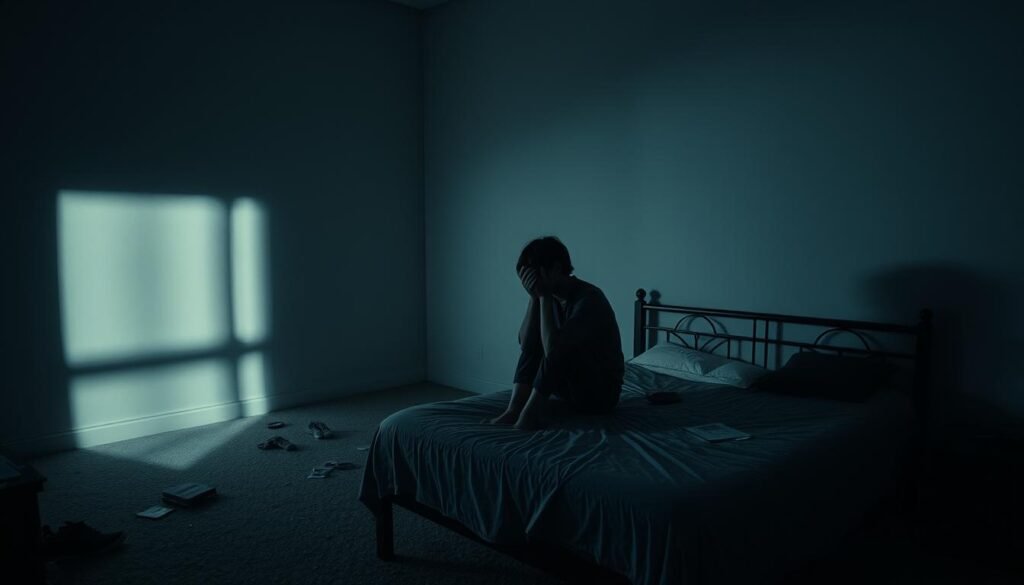
Symptoms of Depression
It’s key to know the symptoms of depression for early recognition and help. Every symptom plays a part in the influence of this mental health issue. Spotting them early is crucial for managing depression well.
Persistent Sadness and Hopelessness
Persistent sadness, along with hopelessness, is a main sign of depression. This sadness can affect every part of daily life. It makes it hard for people to find happiness in simple things.
These feelings may come and go for years. Living with them constantly can make people feel stuck in despair. This greatly harms one’s quality of life.
Loss of Interest in Activities
Losing interest in loved activities is another key symptom. This condition, called anhedonia, makes people pull away from their hobbies and friends. They stop enjoying things that once made them happy.
This lack of connection is worrying. It leads people to avoid others and harms their emotional health.
Thoughts of Death or Suicide
Thinking about death or suicide is among depression’s most alarming signs. These thoughts stem from ongoing despair. Knowing these are urgent signs is vital for one’s safety.
Anyone having these thoughts must get help right away. It’s important for dealing with their mental health properly.
| Symptom | Description | Possible Effects |
|---|---|---|
| Persistent Sadness | Ongoing feelings of deep sorrow | Can lead to feelings of despair and isolation |
| Loss of Interest | Inability to enjoy previous hobbies or interests | May cause emotional withdrawal from social activities |
| Suicidal Thoughts | Preoccupation with thoughts of death or self-harm | Indicates a severe mental health crisis requiring immediate help |
The Role of Anxiety in Depression
It’s important to understand how anxiety and depression interact for effective help. Many people face both issues at the same time. This is called comorbid anxiety disorders and depression. These two can feed into each other, making symptoms worse and causing more stress.
Understanding Anxiety Disorders
Anxiety disorders bring uncontrollable feelings like dread or panic. These feelings make dealing with mental health harder. Almost half the people with major depression also have severe anxiety. Knowing this helps us spot symptoms like irrational fears and ongoing sadness.
How Anxiety Attacks Interact with Depression
Anxiety attacks bring sudden, strong fear that affects depression. They can make depressive symptoms worse. This creates a hard cycle of anxiety and despair, making everyday life challenging. Treating both conditions might include talk therapy, medications, and lifestyle changes. These help reduce stress and improve health.

| Aspect | Anxiety Disorders | Depression |
|---|---|---|
| Common Symptoms | Fear, panic, irrational worries | Sadness, hopelessness, fatigue |
| Interrelationship | Can trigger depressive episodes | Can lead to increased anxiety levels |
| Treatment Options | Therapy, medications, lifestyle changes | Therapy, antidepressants, exercise |
Common Causes of Depression Attacks
Knowing why depression happens can help us better understand it. Depression comes from different factors: biological, social, and psychological. Each one affects a person’s mental health and how they feel depression.
Biological Factors
Our biology greatly affects our depression risk. If depression runs in your family, your risk is higher. Health issues like diabetes and heart problems can also make depression more likely. In women, hormonal changes can lead to depression. Problems with brain chemicals like serotonin and dopamine can upset mood balance too.
Social Factors
What happens in our lives can push us toward depression. Big life changes, like losing someone or a job, can start it. Being alone a lot makes things worse. This is because we need people for emotional strength. Whether we have access to health care and friends also shapes our mental health.
Psychological Factors
Our thoughts and how we deal with stress matter for depression. Thinking negatively, like always expecting the worst, keeps depression going. Not being good at handling stress pushes people deeper into depression. Knowing about these mental patterns can lead to better treatments that change how we think and make us stronger against depression.
| Factor Type | Examples |
|---|---|
| Biological Factors | Genetics, medical conditions, hormonal changes, neurotransmitter imbalances |
| Social Factors | Traumatic events, social isolation, availability of support |
| Psychological Factors | Negative thought patterns, inadequate coping mechanisms |
Recognizing a Mental Health Crisis
Knowing the signs of a mental health crisis is key to help on time. People may face a lot of emotional and physical stress. This can make it hard for them to keep up with life. Spotting these signs early lets loved ones step in to assist.
Warning Signs of a Mental Health Emergency
Several signs can show a mental health crisis is happening. These signs include:
- Severe emotional distress
- Withdrawal from social interactions
- Expressions of hopelessness or despair
- Engaging in self-harm or having thoughts of suicide
- Inability to perform everyday tasks
Noticing these symptoms is critical, especially for those with chronic illnesses. Being sick can make depression worse. This makes it even more important to get help quickly.
When to Seek Help
It’s critical to get help as soon as these signs show up. A mental health crisis needs fast response, particularly with any self-harm or suicide thoughts. Talking to a mental health expert can help find the right treatment and support, leading to recovery.
If daily tasks are becoming hard, it’s essential to reach out for help. This could mean making an appointment with a therapist, calling a mental health hotline, or dialing emergency services if needed.
Effective Support for Those Experiencing Depression Attacks
Helping people with depression attacks is key to their recovery. Knowing the different ways to treat this condition is critical. It helps to find out what each person specifically needs.
Being there for someone as they deal with depression is crucial. It helps them manage the challenges and symptoms that come with it.
Finding the Right Treatment
There are various ways to treat depression. These include medicine, therapy, and changing certain lifestyle habits. It’s important to work with doctors to figure out the best plan.
This plan should consider what the person prefers and their specific situation. This makes it more likely for the treatment to work well.
The Importance of Therapy
Therapy is very important in treating depression. Specifically, Cognitive Behavioral Therapy (CBT) can help change negative thoughts. It supports people through conversations.
These conversations help them handle their feelings better. They learn ways to deal with tough situations. Therapy is key to feeling emotionally healthy again.
Utilizing Support Groups
Being part of a support group is helpful. It lets people meet others who are going through the same things. They find comfort and understanding in each other.
In these groups, they share stories and how they get through difficult times. This creates a supportive space for everyone.
| Treatment Options | Description |
|---|---|
| Medication | Antidepressants that can help balance chemicals in the brain. |
| Therapy | Structured dialogue through modalities like CBT for effective coping strategies. |
| Support Groups | A gathering of individuals to share experiences and provide mutual support. |
| Lifestyle Changes | Incorporating exercise, healthy eating, and regular sleep patterns to improve mental health. |
To wrap up, combining different treatments, valuing therapy, and joining support groups is key for those facing depression. This approach helps create a caring and supportive environment. It makes the path to healing smoother.
Self-Care Strategies for Managing Depression
Managing depression means using self-care strategies that make your mind stronger. Having healthy habits gives you structure during tough times. It’s key to have a daily plan for sleep, eating, and exercise. This brings balance to your life.
Establishing Healthy Routines
Healthy habits are good for your mind and cut down chaos. Simple daily habits can really boost your mood. Having a regular sleep time and meal plan is important for health. Enjoying hobbies and staying in touch with family and friends helps your mood stay stable.
Writing in a journal lets you express feelings and spotlight negative thoughts. Setting achievable goals helps plan your day. This keeps you involved and sharp.
Importance of Physical Activity and Nutrition
Being active is key to lifting your mood and fighting depression. Studies show exercise can work as well as medicine to ease depression signs. Aiming for 30 minutes of exercise each day keeps depression at bay. Try walking, lifting weights, swimming, or dancing to get moving. Even a quick 10-minute walk can boost your mood for hours.
Eating right is just as important. Focus on whole foods and less on sugary or fatty snacks for better mental health. Getting sunlight also increases serotonin, making you feel happier. Try to get 15 minutes of sun a day. By exercising outside, you get the perks of both activity and sunlight for your mood.
For more help with self-care for depression, check out comprehensive guides for tips and techniques.
| Activity | Duration | Benefits |
|---|---|---|
| Walking | 10 minutes | Mood improvement for up to 2 hours |
| Brisk Exercise | 30 minutes | Prevention of relapse, mood elevation |
| Sunlight Exposure | 15 minutes | Boosts serotonin levels |
| Healthy Eating | Daily | Improved mental clarity and energy |
Conclusion
Depression has a deep effect on people, touching every part of their lives. Over 16 million in the U.S. suffer from major depressive disorder. Knowing the signs is key for helping. Learning about depression is crucial for those affected.
Treatment knowledge is vital for dealing with depression and anxiety. Cognitive Behavioral Therapy (CBT) is very effective. It offers ways to cope. Medications, like SSRIs, also help, though finding the right one can take time.
We must talk more openly about depression to end the stigma. Nearly 40 million adults in the U.S. also have anxiety. Understanding and addressing mental health fully is essential. Seeking professional help and support from others are important steps. Knowing more about situational depression helps people manage their feelings better. Getting support is crucial for a healthier life.