Did you know serious, ongoing depression can make people lose more gray matter in their brains? This fact highlights depression’s deep impact. It’s not just mental; it affects the brain’s structure and function. Knowing the differences between a depression brain and a normal brain is key. It helps us understand depression’s effects on our thoughts and feelings.
Studies show that depression creates neurological differences. It’s more than just feeling down. Depression changes the brain’s shape and how it works. The hippocampus and prefrontal cortex see big changes, showcasing the need to understand these shifts. They are crucial for grasping how depression affects us.
Exploring depression’s effects on the brain shows us how it messes with thinking, feelings, and behavior.Learn how depression alters the brain. This knowledge may guide us to treatments that can fix these problems and not just the symptoms.
Key Takeaways
- Ongoing depression can lead to significant loss of gray matter volume in critical brain areas.
- The hippocampus and prefrontal cortex are particularly vulnerable to structural changes due to depression.
- Understanding these neurological differences is vital for advancing mental health treatments.
- Long-term depression can result in brain inflammation and cognitive impairments.
- Research shows that treatment can potentially reverse some of these harmful brain changes.
Introduction to Depression and Its Impact on the Brain
Understanding depression is critical worldwide. It’s a top reason for disability, affecting over 300 million people globally. Its effects go beyond mental suffering. The depression impact on brain significantly alters structure and function.
Studies show lasting depression can reduce gray matter in the brain. After ten years, someone with major depression might see their brain inflammation jump by 30%. Areas like the amygdala swell up. This leads to trouble sleeping and shifts in mood.
Depression can also harm our physical health. It’s linked to heart issues, stomach problems, and using drugs in harmful ways. Stress hormones harm neurons, slowing their growth. This worsens mood problems.
We need to act fast to help those with depression. Many facing Major Depressive Disorder (MDD) might think about suicide. Around half of adult suicides are tied to depression or mood issues. Knowing about depression, its causes, and its brain effects is key to help.
Childhood trouble can make adults more likely to be depressed. Things like loss or abuse change the brain long-term. This shows how our genes and what we go through shape our brain health. Changes in key brain areas explain why mood disorders are complex.
We must quickly identify and help those with depression. Early action is crucial to lessen its wide-reaching effects on mental and body health.
What is the Depression Brain vs Normal Brain?
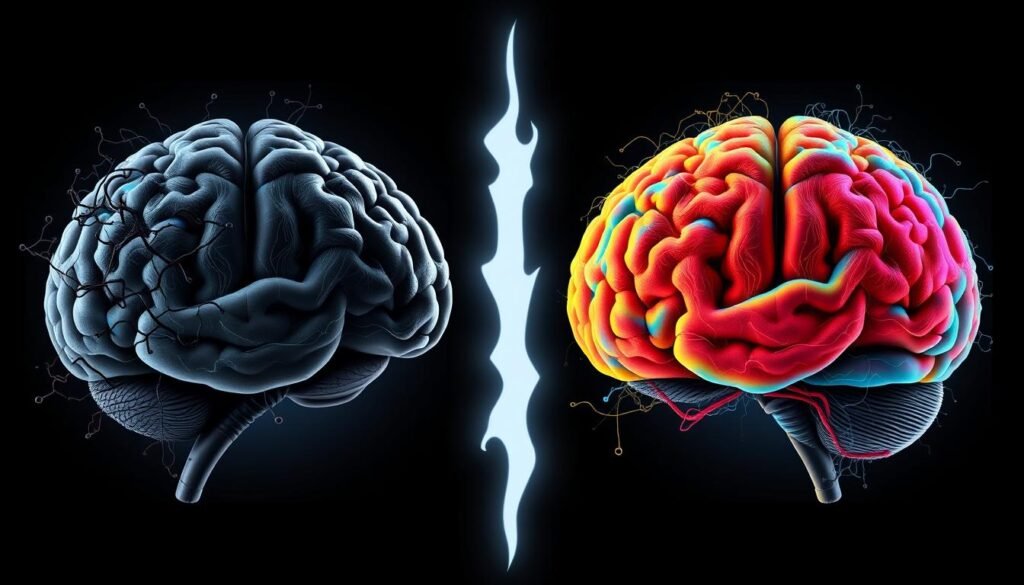
The difference between a depressed and a normal brain is big and very important. Depression brain characteristics include less activity in important parts. People with depression may have lower levels of important chemicals like dopamine and serotonin. Studies with images show less activity in the brains of those depressed compared to healthy ones.
In a normal brain, depression changes the way paths in the brain work. The hippocampus gets smaller, and the thalamus doesn’t work as well. Also, the amygdala might be too active or too small, leading to more anxiety and negative thoughts. The front parts of the brain, the frontal and prefrontal cortices, are not as active or as big in depressed people. This really shows how different a depressed brain is from a healthy one.
Having depression for a long time can lead to more inflammation in the brain. People with depression for many years often have a lot of inflammation signs. This shows how bad depression can affect the brain’s structure and how it works. It’s really important to notice and understand these signs of depression early. This can help find the right treatments and be more understanding of those affected.
Neurological Differences Between Depression and Normal Brains
The brain is different in people with depression compared to those without. We can see how depression changes the brain’s structure and function. This helps us understand why depression affects thoughts and feelings.
Structural Changes in the Brain
Depressed brains often look different in scans. Parts like the hippocampus, prefrontal cortex, and thalamus are smaller. This shrinking affects how we handle our emotions and think.
For example, depressed people might have up to 13% smaller hippocampi. This shows the big impact of depression on brain structure. Also, some areas might get thicker, which is unusual.
Functional Connectivity Disruption
Depression and stress mess up how brain parts talk to each other. This bad communication leads to problems. For example, the amygdala gets too active, and the prefrontal cortex doesn’t do enough.
This means people with depression might struggle more with their emotions. Also, they have different patterns in their brain waves, showing more alpha waves. This makes emotional processing harder.
Brain Activity Patterns: Understanding the Differences
Depression changes how different parts of the brain work. These changes are unlike what we see in healthy people. It’s key to spot these differences to grasp how depression alters thinking, feelings, and general brain operations.
Common Brain Regions Affected in Depression
Depression impacts specific brain areas, like the amygdala and the prefrontal cortex. These spots handle our emotions, choices, and memories. In depressed folks, the amygdala’s activity often goes up. This increases emotional reactions. Meanwhile, the prefrontal cortex may show less activity, making decisions tough.
- Amygdala: Involved in emotional responses; commonly overactive in depression.
- Prefrontal Cortex: Regulates cognitive functions; often exhibits decreased activity.
- Hippocampus: Plays a role in memory formation; may experience structural changes in depression.
How Brain Imaging Studies Reveal Changes
Tools like fMRI and PET scans give us a clear view into how depression alters brain activity. They let experts see which brain parts are active during certain tasks. A study compared 18 people with depression to 9 without it during memory tests with emotional words.
| Study Type | Participants | Key Findings |
|---|---|---|
| fMRI | 20 depressed, 20 healthy | Altered brain activity during episodic memory tasks |
| PET | 18 depressed, 9 healthy | Distinct activity patterns in emotional word recall |
| fMRI (Harvey et al.) | 10 depressed, 10 healthy | Differences in working memory task performance |
These studies highlight the need to understand brain activity patterns for better depression treatments. For more on these findings, visit this resource.
Cognitive Impairment Related to Depression
Depression affects how we think, causing hurdles in our mental processes. About 21 million adults in the U.S. had major depression in 2021. They often struggle with attention, focusing, and remembering things. Short-term memory and understanding words are usually hit hardest.
The brain changes physically when someone has Major Depressive Disorder. The hippocampus, which helps with memory and mood, can shrink. Stress leads to too much cortisol, harming the brain’s gray matter. This makes mental tasks more challenging.
Scans of the brain, like fMRI, show why these problems happen. They reveal more activity in parts of the brain tied to emotions. But, the brain areas used for thinking don’t respond as well. Even if the person does the task right, their brain isn’t working as efficiently.
This research tells us that cognitive issues deeply affect those with depression. It’s crucial to consider these issues when treating depression. Doing so can aid recovery and reduce the chance of falling back into depression, improving lives.
Neurotransmitter Imbalances in Depression
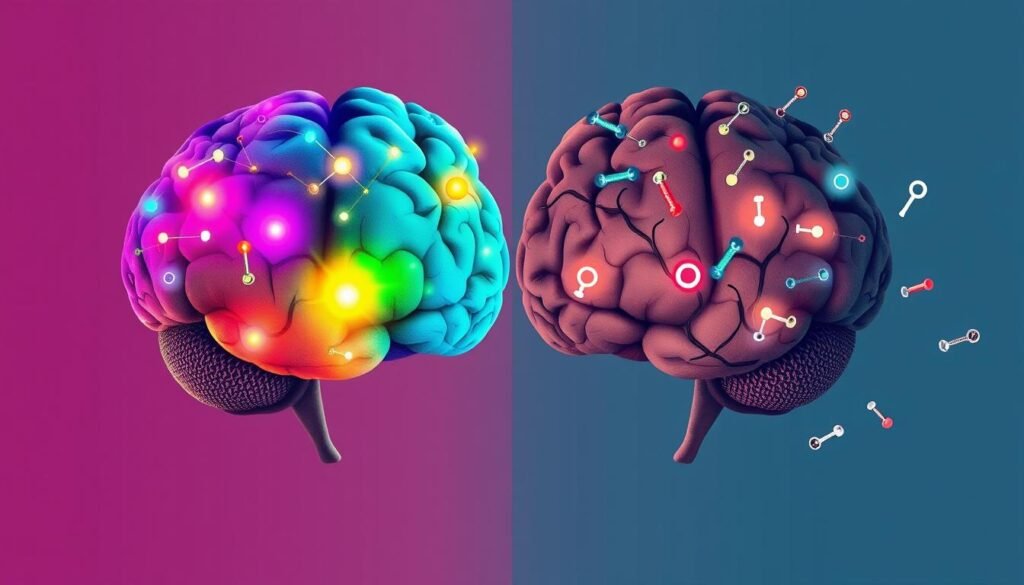
It’s key to understand neurotransmitter imbalances to fully grasp depression. Neurotransmitters like serotonin, norepinephrine, and glutamate greatly affect mood. When their levels are off, mood disorders including depression may start, making treatment challenging.
The Role of Serotonin, Norepinephrine, and Glutamate
Serotonin is crucial for mood regulation, and its low levels are tied to sadness. Antidepressants that target serotonin help ease these feelings. This proves the link between neurotransmitter imbalances and mood issues.
Norepinephrine is tied to stress response and mood. Changes in its levels can make people feel irritable. Also, glutamate affects mood when unbalanced, as it’s important for brain connectivity and emotion.
Impact of Biochemical Factors on Mood Disorders
The brain’s chemical environment deeply affects mood disorders. Imbalances can make depression worse. For example, chronic stress raises cortisol, disrupting neurotransmitters. This can worsen symptoms tied to low serotonin and norepinephrine.
Studies show genetics might cause 30-40% of major depressive disorder (MDD) risk. Environment, like tough childhood experiences, also plays a part. This means depression is complex, more than just chemicals out of balance. Find more info in this resource.
Understanding how neurotransmitters and mood interact helps in making better treatments. More studies are needed to see how these chemicals and psychological factors mix to cause mood disorders.
Structural Brain Changes Observed in Depressive Disorders
Major depressive disorder (MDD) shows clear changes in the brain. These affect how a person thinks and feels. The frontal lobe and thalamus are often abnormal in those with MDD. These issues can mess up the way brain signals connect, making life harder for affected individuals.
Studies with over 10,000 patients found big changes in brain structure and connectivity. We see:
- A decrease in gray matter in the insular and medial-prefrontal cortices. These areas are key for emotion and attention.
- Increased connectivity in the default-mode and frontoparietal networks. This means there’s an off-balance in brain activity.
- Reduced connectivity in limbic and salience networks, affecting how emotions are processed.
The research shows that changes in the brain’s structure and function are linked. Normally, there is a strong link between structural connections and brain activity at rest. But, MDD patients have lower brain volume and weaker connections.
Over twenty years ago, Mayberg’s dual network model helped explain depression. Now, Menon’s triple network model offers even more insight. Understanding these brain changes is crucial in learning more about MDD.
Emotional Regulation in Depression
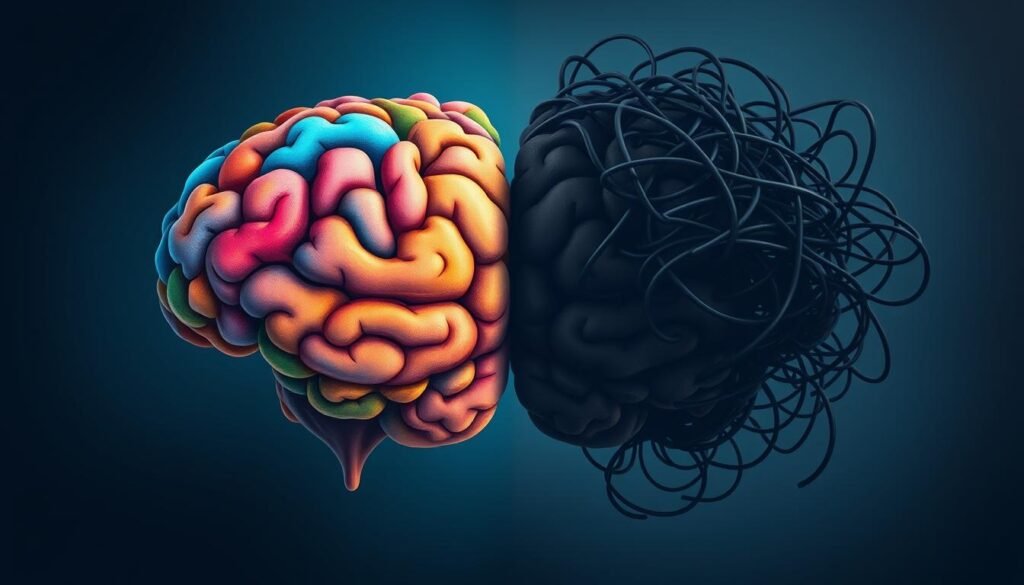
Understanding emotional regulation is key in knowing how depression changes lives. It’s about how people control their feelings. When depression hits, managing emotions gets much harder. This leads to problems in how we feel and react.
How Depression Affects Emotional Processing
Depressed people find it hard to handle their feelings. Studies link depression’s emotional effects to poor emotion control. They can’t stop thinking negatively, causing more worry.
Using expressive suppression makes depression worse. Not using positive strategies like talking things out or rethinking situations can increase distress. This results in more fear, guilt, and less happiness.
Some use negative thinking as a way to cope. But it’s harmful and can lead to depression. Positive thinking, however, can help manage emotions well. It shows the importance of handling our thoughts.
| Emotion Regulation Strategy | Adaptive or Maladaptive | Associated Effects |
|---|---|---|
| Reappraisal | Adaptive | Higher positive affect, better well-being |
| Thought Suppression | Maladaptive | Increased negative affect, anxiety |
| Expressive Suppression | Maladaptive | Reduced interpersonal functioning |
| Rumination | Maladaptive | Higher risk for depression recurrence |
Understanding depression helps us see the role of emotional regulation. Better support can improve mental health and lessen depression’s impact on life.
For more knowledge, feel free to check this guide on emotional impairments in clinical settings.
Long-term Effects of Depression on the Brain
Depression can deeply affect the brain over time, changing both how it looks and works. Studies show that long-lasting depression can alter important areas in the brain. These include the hippocampus, amygdala, and frontal lobe. For example, the amygdala becomes too active when someone with depression faces negative situations. This shows their emotions react too strongly.
Moreover, long-term depression can mess with how the brain handles happiness. The nucleus accumbens, which helps us feel motivated and enjoy things, works less in depressed people. They find it harder to feel joy or satisfaction. This means the brain’s system for feeling motivated changes, making happiness difficult to feel.
Not treating depression can cause more brain inflammation. This is bad for the brain’s health. People with depression for many years show way more inflammation in their brains. This can lead to losing brain cells and a higher chance of cognitive decline. These changes are worrying for both mental and physical health.
To avoid these problems, getting help early and sticking with treatment is key. Treatments like therapy and medication are important. They can keep the brain healthier, which helps with mood and thinking skills. To learn more about how depression affects the brain, click here.
Treatment Implications: Reversing Brain Changes
Over 17 million adults in the United States face depression, showing a great need for effective treatments. These treatments range from medication and therapy to lifestyle changes. They help improve brain health and support the recovery of brain function.
Medications like SSRIs and SNRIs are key in treating depression. They work by fixing the balance of important brain chemicals. For those who don’t get better with medicine or therapy, brain stimulation treatments like transcranial magnetic stimulation are options.
Cognitive-behavioral therapy (CBT) is crucial for better emotional control and fixing harmful thought patterns. Regular therapy encourages brain health and brings positivity. Making lifestyle changes, such as exercising and eating well, also helps by boosting substances that make the brain more adaptable.
Here’s a summary of various treatment options and their effects on brain health:
| Treatment Type | Description | Effect on Brain Health |
|---|---|---|
| Antidepressant Medications | SSRIs, SNRIs, and NDRIs to manage symptoms. | Correct neurotransmitter imbalances. |
| Brain Stimulation Therapies | Transcranial magnetic stimulation for resistant cases. | Enhances neural activity and connectivity. |
| Cognitive-Behavioral Therapy (CBT) | Addresses cognitive distortions and encourages positive thinking. | Improves emotional regulation and coping strategies. |
| Lifestyle Modifications | Encouraging regular exercise and proper nutrition. | Boosts neurotrophic factors, enhancing plasticity. |
Despite the challenges, the right mix of treatments can greatly improve emotional and mental health. Continuing to manage depression can bring significant benefits to one’s brain health and life.
Conclusion
The brain differences between those who are depressed and those who are not are large and complex. We’ve looked at how depression changes the brain, affects thinking, and messes with emotions. It’s key to know this to help spread mental health awareness and push for better ways to help those in need.
Treatments need to take these brain changes into account to be more effective. Prof. Moncrieff and Dr. Horowitz show us that the old idea of a “chemical imbalance” is out of date. Instead, we need ongoing studies for a fuller picture of depression, not just pills. To learn more, check out their work on serotonin here.
Creating a caring environment is very important for those dealing with depression. As we learn more about how complex depression is, we can get better at giving the right kind of help. Everyone touched by this tough mental health issue deserves understanding and good care.