Did you know a lot of hair can start to fall out because of stress? If someone is very stressed, like with long-term depression, up to 70% of their hair might enter a resting phase too soon. This shows how our mental health and hair are connected. When people feel the heavy burden of depression, it can show up as hair thinning or even losing hair.
Studies show that those with depression might have a bigger chance of losing their hair. This article will look at how depression and losing hair are linked. We’ll talk about what signs to look out for, what causes it, and how to treat it.
Key Takeaways
- Depression can lead to hair thinning due to hormonal changes and stress.
- Telogen effluvium, linked to emotional stress, causes increased hair shedding.
- Antidepressants may contribute to temporary hair loss within 3-6 months of use.
- Women are more susceptible to experience hair loss related to depression.
- Timely medical intervention is crucial for effective recovery from hair loss.
Understanding the Link Between Depression and Hair Loss
Depression and hair loss are closely linked. People with severe depression are much more likely to lose their hair. In fact, the risk increases by 90%. At the same time, those who lose their hair may feel more depressed. They have a 34% higher chance of facing major depressive issues. This shows how our emotions deeply affect our body.
Hair is very important to many of us. It’s part of who we are and how we see ourselves. Losing hair can make anyone feel really sad. This can be especially hard for women. They often feel the emotional pain more deeply. This problem doesn’t just affect the person but also their family and work life. Around 40% of women with hair loss face problems in their marriage. And 63% find it hard at their jobs.
Antidepressants add another layer to this complex issue. They help with depression but some, like bupropion, can cause hair loss. However, drugs like paroxetine are less likely to do so. Treatments for serious illnesses can also lead to losing hair. This makes dealing with mental health even harder.
To feel better about hair loss, talk therapy and changing some habits can help. These steps can ease the mind and improve mental health. If sadness lasts more than two weeks, seeing a doctor is important. Getting help early can stop the cycle of depression and hair loss.
| Condition | Statistical Insight |
|---|---|
| Major Depressive Disorder | 90% higher risk of developing hair loss |
| Hair Loss | 34% higher risk of developing major depressive disorder |
| Alopecia and Gender Effects | Females may experience more psychological symptoms |
| Antidepressant Risks | Bupropion has the highest risk of hair loss |
| Job Issues | 63% of women with alopecia face career problems |
Signs of Depression Hair Loss
When someone has depression-related hair loss, they show both physical and mental signs. Knowing these signs helps us understand how hair loss affects mental health.
Physical Symptoms Associated with Hair Loss
Physical signs of hair loss include changes in how the hair looks and feels. People might notice:
- Increased shedding of hair strands
- Thinning areas leading to bald patches
- Changes in hair quality, becoming finer or brittle
These changes can make people feel worse. They get into a cycle where depression causes more hair loss. This can hurt how they see themselves.
Psychological Symptoms Related to Hair Loss
Hair loss doesn’t just change how a person looks. It can also really affect how they feel inside. They might have:
- Low self-esteem and confidence
- Increased anxiety about how they look
- Social withdrawal from friends and family
- Feelings of embarrassment or sadness
Studies show women often feel worse because society values hair so much. Hair loss can make emotional problems bigger. If you have these problems, it’s important to get help for both your mind and body.
Causes of Depression Hair Loss
Looking into hair loss from depression shows it’s not simple. It’s about how feeling mentally unwell affects our bodies. Depression can cause hair to fall out. And losing hair can make someone feel even more depressed.
The Bidirectional Relationship of Hair Loss and Depression
Up to 50% of people will face hair loss. Those with a lot of hair loss often feel really stressed. Studies have found they might also have more serious mental health issues, like depression or anxiety.
It’s not just about genes or health problems. Emotions play a big part. This creates a tough cycle to escape.
Stress-Induced Shedding: What You Need to Know
Stress plays a big role in losing hair. Stressed women are way more likely to lose hair. Stress and sadness can mess with your hair growth. Big shocks or changes in life can cause a type of hair loss called telogen effluvium.
The Role of Hormonal Imbalance
Hormones out of balance make things worse. Like, PCOS can mess with your mood and hair. Some depression medicines, like Wellbutrin, might also lead to losing hair. Knowing about hormones helps tackle both mood and hair issues.
Taking care of these linked issues is key for good health. Knowing why hair loss happens can guide us to help sooner. To spot depression early on, knowing the signs is crucial.
Types of Hair Loss Linked to Depression
Hair loss comes in many forms, each impacting people differently. It can also affect their mental health. Knowing about types like telogen effluvium, alopecia areata, and androgenic alopecia is key. It helps tackle the mental challenges that come with them.
Understanding Telogen Effluvium
Telogen effluvium happens when stress messes with the hair growth cycle. Many hairs suddenly enter the shedding phase, causing thinning. This change can lower self-esteem, making anxiety and depression worse.
Alopecia Areata and Its Emotional Impact
Alopecia areata causes sudden, patchy hair loss because of an autoimmune response. It brings deep emotional pain. Adults with this condition are more likely to have anxiety and depression. Feeling isolated or embarrassed is common. Therapy or support groups are very helpful for mental health.
Androgenic Alopecia and Mental Health Concerns
Androgenic alopecia, or pattern baldness, is very common in men and women. It can start in the teenage years, causing a lot of emotional stress. This includes lower self-esteem and more anxiety. Societal views on looks can make it worse. Finding coping methods and support is crucial.
Impact of Nutritional Deficiencies on Hair Health
Nutritional deficiencies greatly affect hair health, leading to hair loss. Essential vitamins and minerals are vital for good hair and mental health. Being low in iron is the most common nutritional issue worldwide. Studies show that people with hair loss often have less iron in their blood.
About 80% of people losing hair lack enough vitamin D. Low zinc levels are also linked to certain hair loss cases. Other important nutrients for hair include copper, biotin, vitamin B12, folate, and riboflavin. Eating enough calories and proteins is necessary too. Low-calorie diets may lead to hair loss, especially after quick weight loss or strict dieting.
Some necessary nutrients can help hair grow back. But too much selenium, vitamin E, and vitamin A might cause hair loss. Smoking, drinking a lot, stress, and not sleeping well also increase hair loss risk. This shows the link between our body’s health and our mental well-being.
Keeping your nutrition balanced is key to healthier hair. It’s good to keep an eye on your intake of key vitamins and minerals. By dealing with these nutritional issues, you can better your hair growth and mental health too.
How Stress and Anxiety Lead to Hair Loss
Understanding stress and anxiety’s effects on hair is key. These emotional states hurt mental health and change hair growth. Increased hair shedding often happens, making the cycle hard to break.
The Cycle of Stress and Hair Shedding
Chronic stress raises cortisol, disrupting hair growth cycles. Telogen Effluvium, a common stress-related hair loss, follows emotional shifts. Hair loss can become noticeable 6 to 12 weeks after stress begins. This is because stress makes hair follicles go dormant, causing shedding.
Effects of Anxiety Disorders on Hair Growth
Anxiety can cause physical issues like muscle tension and more scalp sebum. This can lead to greasy roots and slow hair growth. Anxiety also harms nutrient absorption, needed for healthy hair. Eating well and taking vitamins can aid recovery. Managing mental health through exercise and relaxation helps too.
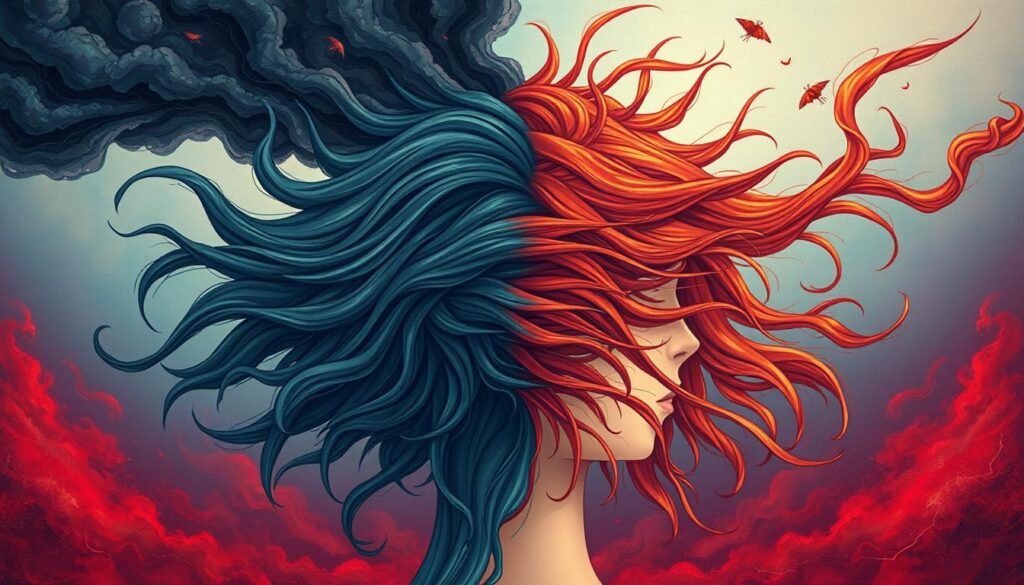
Handling stress and anxiety’s effects on hair health is crucial. Seeing experts like Dr. Bonaros offers strategies and treatments. They address both hair loss and emotional issues.
Psychological Effects of Hair Loss
Hair loss deeply affects how we feel about ourselves. When we start to lose hair, we might pull back from hanging out with friends. We also feel a lot of emotional pain. Studies show that guys under 26 worry more about how they look. This worry can lead to anxiety and depression.
Social Withdrawal and Emotional Distress
Dealing with hair loss, some people avoid social events. They feel too self-aware and scared of what others might think.
Research finds that single guys feel worse than those who are married. When relationships suffer, these individuals might isolate themselves even more. This makes them feel lonelier and sadder.
Impact on Self-Esteem and Body Image
Losing hair can make us feel bad about how we look. For many, hair is part of who we are. Without it, we can feel unhappy with our looks. Studies link hair loss to feeling bad about our bodies.
People with a lot of hair loss try different ways to deal with these changes. Because society cares so much about looks, losing hair can make people feel less valuable. This leads to a lot of emotional pain.
Assessment and Diagnosis of Depression-Related Hair Loss
An accurate assessment of depression-related hair loss is crucial. Doctors start with a detailed medical history to spot underlying conditions. They also use psychological evaluations to see how mental and physical symptoms connect.
Doctors perform physical exams to understand the hair loss better. They run tests to exclude other causes like hormone or thyroid problems. Research shows a big link between depression-related hair loss and mental health. For example, those with major depression are 90% more likely to have alopecia areata (AA), which means these conditions are strongly connected.
Mental health checks help find stress factors that could make hair problems worse. People with AA are almost three times more likely to feel depressed. So, treatments focus on both hair loss and the person’s mental health. This way, both the mind and hair issues are addressed. For more details, check this research on the impact of alopecia on life.

Treatment Options for Depression Hair Loss
Treating hair loss from depression requires looking at both mental and physical symptoms. It involves various treatments that help both your mind and hair. These effective treatments can make symptoms of depression better while also helping your hair.
Therapies for Alleviating Depression
Cognitive-behavioral therapy (CBT) is good for fighting depression. It helps people think in healthier ways and cope better. Other therapies like mindfulness and supportive counseling are also helpful. They improve your mental health. This could also make your hair healthier.
Medications and Their Side Effects
Some drugs, like SSRIs and SNRIs, can help with depression symptoms. But, they might also make your hair thin. For example, bupropion may lead to more hair loss than paroxetine. It’s important to talk about side effects with your doctor to choose the best option.
Lifestyle Changes for Overall Mental Health Improvement
Making changes in how you live can also improve your mental and hair health. These changes include:
- Regular exercise: Working out releases endorphins, which make you feel better.
- Balanced nutrition: Eating well gives your hair the nutrients it needs.
- Social support: Having friends and family around helps you feel less alone.
- Quality sleep: Good sleep is important for dealing with stress and staying healthy.
- Positive experiences: Doing things you enjoy can protect you from stress.
To manage hair loss related to depression well, you need a full plan. This plan should include therapy, medicine, and lifestyle changes that fit you. Doing this helps people find the right support and treatments for their specific situation.
| Treatment Option | Description | Potential Impact on Hair Health |
|---|---|---|
| Cognitive-Behavioral Therapy (CBT) | A therapy focusing on changing negative thought patterns. | May enhance mood and reduce stress, benefiting hair growth. |
| Antidepressant Medications | SSRIs and SNRIs, prescribed to manage depressive symptoms. | Can improve mental health but may cause hair thinning. |
| Lifestyle Changes | Involves exercise, nutrition, social engagement, and sleep quality. | Supports emotional stability and hair health improvement. |
Support and Resources for Those Affected
Hair loss affects millions, stirring emotions that need care. Finding help is crucial for dealing with hair loss and its mental effects. There are many support resources out there.
Mental health organizations, like NAMI and the 988 Suicide & Crisis Lifeline, give essential support. They offer advice and a community that gets the hair loss struggle.
Joining forums or support groups helps share and learn from similar experiences. This connection reduces loneliness. It’s a place for sharing ways to cope and support.
Using crisis resources can be key in tough times. Turning negative feelings about hair loss into positive discussions helps in healing. Activities and self-care improve control and confidence.
| Resource Type | Name | Description |
|---|---|---|
| Support Group | NAMI | Provides information and support for individuals struggling with mental health issues. |
| Crisis Resource | 988 Suicide & Crisis Lifeline | Offers 24/7 support for those in crisis, including emotional distress from hair loss. |
| Online Community | Hair Loss Community | An online forum where individuals share their experiences and tips for coping with hair loss. |
| Therapy | Licensed Therapist | Provides one-on-one support to discuss feelings related to hair loss and mental health. |
Seeking help for hair loss can change one’s view on life. Finding the right help for hair loss aids physical and mental health. A support network helps deal with the psychological side of hair loss.

Seeking Professional Help for Dual Issues
Struggling with depression and hair loss at the same time overwhelms many. Research shows that hair loss often leads to depression. This creates a difficult cycle to escape. Getting professional help is crucial to deal with both issues together. Mental health specialists create custom depression treatment plans. They make sure both conditions are treated at the same time.
Meeting with hair loss specialists is key. They give insights into hair loss causes and its impact on the mind. This holistic approach is vital. The mental pain from losing hair can lead to lower self-esteem, anxiety, and more depression.
The National Alopecia Areata Foundation (NAAF) gives resources and support for those dealing with hair loss. Adding mindfulness like meditation, breathing exercises, and yoga helps. It helps control stress related to depression and hair loss.
In terms of mental health support, CBT is very helpful. It lessens symptoms of both depression and hair loss. Treatments might include things to put on your scalp or dietary supplements. Iron, Vitamin D, and zinc are important for healthy hair.
Reaching out for professional help is important. With psychological support and hair loss advice, people can start healing. They focus on improving both their mental and physical health.
Conclusion
It’s crucial to understand how depression and hair loss influence each other. There isn’t direct proof connecting baldness to depression. However, it’s known that feeling emotionally good helps keep your hair healthy. You should pay attention to depression hair loss symptoms, as these are key signs that can’t be ignored. With many choosing hair transplants yearly,
it’s evident that solving these issues boosts confidence and lowers anxiety.
Treatments for these conditions include therapy, medicine, and changes in how you live. Research has found that people with major depression are more likely to lose hair, like with Alopecia Areata. This shows how connected our mind and body health are. By being aware of mental health and using a combined care approach,
people can better face these challenges.
Working towards resilience and healing helps improve life quality for those dealing with these linked issues. As we learn more from research, understanding depression and hair loss’s link and treatment effects is key. This will lead to stronger support for those affected.