About 80% of people with depression improve a lot with a good treatment plan. Different types of depression and their causes can affect many people deeply. This shows how important a well-planned treatment for depression is. It should include medicine, therapy, and changes in how we live.
Creating a strong treatment plan is key to getting better. It helps people face their own hard challenges. It involves finding problems, setting goals, and picking the right approaches. This leads to effective depression treatment. It can bring back emotional balance and make life better.
It’s important to know that being active in treatment helps a lot. People who go to therapy, talk about their feelings, and change their habits, tend to get 60-70% better in their daily lives. This article talks about different ways to get better. It stresses the need for a treatment plan that fits each person’s unique needs.
Key Takeaways
- A good treatment plan for depression has many parts that help with recovery.
- About 80% of patients get better with plans made just for their situation.
- Goals of treatment plans include feeling less of the bad symptoms, learning coping skills, and going to therapy.
- It’s very important to use medicine, therapy, and changes in lifestyle to get back to good mental health.
- Using things like Electronic Medical Records (EMR) to keep track of how you’re doing can make treatment work better.
Understanding Depression and Its Impact
Depression is a mood disorder that impacts about 17.3 million adults in the U.S. This is roughly 7.1% of adults. It makes people feel sad, worthless, and hopeless. There are different types, including major and persistent depressive disorder. Major depression affects daily life for over two weeks. On the other hand, persistent depressive disorder is milder but lasts two years or more.
The impact of depression goes beyond the person. It affects their relationships, work, and life quality. Nearly 29% of adults have dealt with depression at some time. It can lead to more problems, like thoughts of suicide. Depression often starts in the late teens to mid-20s. It’s vital for young adults to seek help and support.
Women are more prone to depression than men. Also, younger adults are affected more than older ones. This shows the need for specific help and awareness of symptoms. Thankfully, 70% to 90% of people get better with proper treatment. This shows how crucial early diagnosis and intervention are.
What Is a Treatment Plan for Depression?
A treatment plan for depression is like a map made by mental health experts. It’s tailored for each person’s battle with depression. Around one in six people in the U.S. will face clinical depression at some time. Depression is the world’s most common mental health issue. It comes in mild, moderate, and severe forms. Each level needs its own treatment approach.
Important parts of a treatment plan are therapy and medication. Doctors often use medications called SSRIs and SNRIs for the tougher cases. The older Tricyclic antidepressants aren’t used much anymore because they have more risks. Therapy types like cognitive-behavioral therapy (CBT) and interpersonal psychotherapy are key. They help tackle depression’s complex issues.
Treatment plans focus on understanding feelings of depression. They aim to find and work on the causes. Goals include learning how to cope, getting therapy, and improving how we function. Each plan checks on your progress and changes things if needed.
| Component | Description |
|---|---|
| Medication | Utilizes SSRIs and SNRIs for moderate to severe depression; other options include less common antidepressants. |
| Therapy | Involves CBT, interpersonal psychotherapy, and other methods to address cognitive distortions and improve coping. |
| Goal Setting | Aims for symptom reduction, improved functioning, and prevention of relapse through specific, measurable objectives. |
| Lifestyle Changes | Encourages physical activity, social engagement, and enjoyable activities as key aspects of effective depression management. |
The Importance of Seeking Help
It’s crucial to seek help for depression. It guides you through the maze of mental health. Many hesitate to reach out because they worry about judgment or being misunderstood. Getting help early significantly improves recovery chances.
Mental health experts provide a safe place for people. Here, they can talk about their feelings, pinpoint triggers, and learn coping skills. Therapy is not just treatment; it improves overall well-being. By facing their issues, people begin their journey to healing and feeling empowered.
- Using mental health resources betters the treatment journey.
- Expert advice makes understanding depression clearer.
- Connecting with others reduces the sense of being alone.
Different types of depression have unique signs. It’s vital to understand them, from Major Depressive Disorder to Seasonal Affective Disorder. Symptoms like ongoing sadness, hopelessness, and lack of energy differ among people. Men, especially, might struggle to acknowledge or deal with their feelings.
Taking the first step to seek help is key to recovery. Professional therapy provides a solid basis for better mental health and restoring balance in life.
Components of an Effective Treatment Plan for Depression
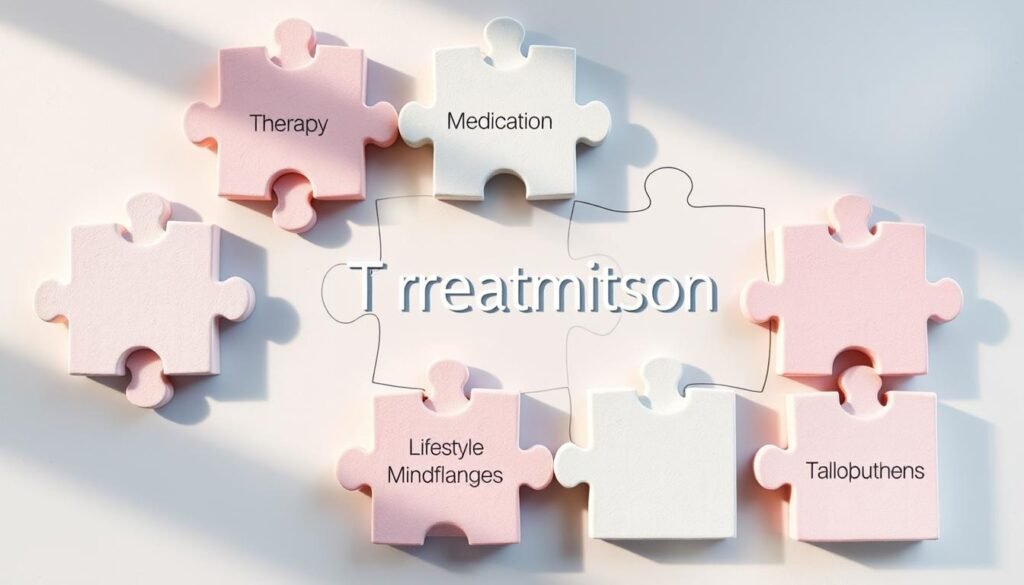
Creating a strong treatment plan for depression has several steps. It starts with understanding the patient’s needs. It includes identifying problems, setting goals, and finding interventions to improve health.
Problem Identification
First comes identifying the problem. Clinicians use tools to understand how severe the depression is. They look at the patient’s history, symptoms, and what triggers their depression. Spotting the different aspects of depression helps create a unique plan for each person.
Goal Setting
Then, setting goals is key. Working together, clinicians and patients make short and long-term goals. Goals might be to do better in daily life, connect with others, or feel less isolated. This sets clear targets and encourages patients as they go through treatment.
Interventions
The heart of the treatment plan is interventions. This mix often includes therapy, medicine, and changes in lifestyle to reach goals. Checking on these interventions regularly makes sure the treatment fits the patient’s changing needs. This ensures the best results.
| Component | Description |
|---|---|
| Problem Identification | Use of assessment tools to evaluate symptoms, triggers, and historical background. |
| Goal Setting | Collaborative definition of short-term and long-term meaningful goals. |
| Interventions | A mix of therapy, medications, and lifestyle changes aimed at achieving set goals. |
Cognitive Behavioral Therapy (CBT) for Depression
Cognitive Behavioral Therapy (CBT) is a top choice for fighting depression. It works by tackling negative thoughts. This method connects thoughts, feelings, and actions to help heal the mind. Usually, CBT for depression takes about 12 to 16 sessions, tailored to each person.
Overview of CBT
CBT helps people spot and fix negative thoughts that make depression worse. In these sessions, individuals learn new ways to deal with tough emotions. It’s especially good for those with mild to moderate depression, including expectant or breastfeeding mothers. The American Psychiatric Association notes CBT and medicine together often give better results, especially in hard-to-treat depression.
How CBT Can Transform Thinking Patterns
Changing how we think is a big part of CBT. It challenges the negative views people have about themselves, their world, and their future. Studies show CBT really helps people with major depression feel better. In fact, it can be just as good as medicine for some. It creates a supportive space, helping people find their way back to feeling good and functioning well in their daily lives.
| Aspect | CBT for Depression | Medication Alone |
|---|---|---|
| Effectiveness | Similar to or more efficient for mild to moderate cases | Works for approximately two-thirds of patients |
| Session Length | Typically 12-16 sessions | N/A |
| Suitable Cases | Mild to moderate major depressive disorder | May be effective for chronic depression |
| Risks | Minimal to none | Possible side effects associated with antidepressants |
| Combination Therapy | Recommended for severe cases | Often more effective with cognitive therapy included |
Antidepressant Medications: Pros and Cons
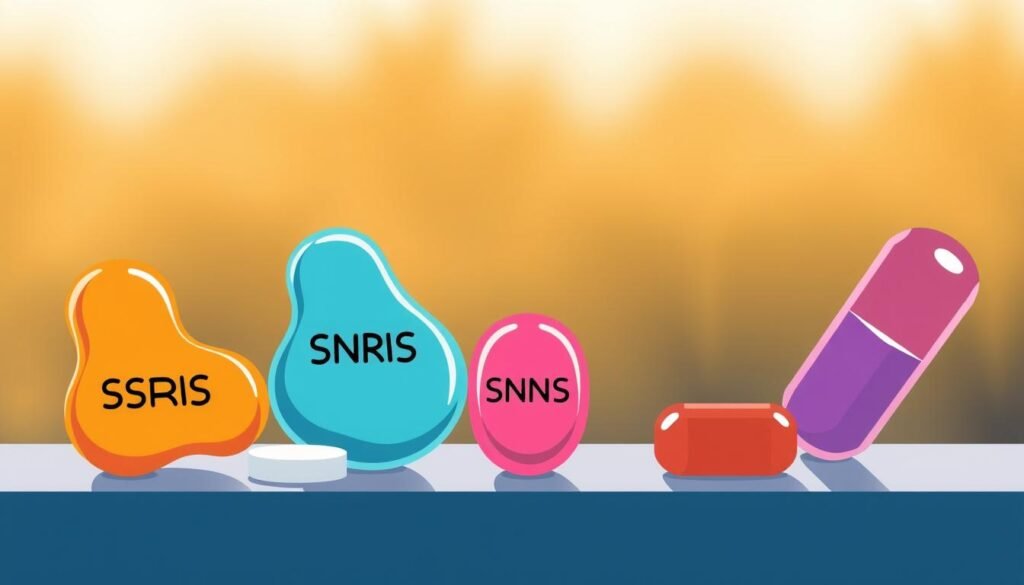
Many people with depression look for different treatments. Antidepressants are a key part of this search. Knowing the pros and cons helps people choose the best treatment for them.
Types of Antidepressants
There are many kinds of antidepressants. Each works differently to reduce depression symptoms. The most common types are:
- Selective Serotonin Reuptake Inhibitors (SSRIs): They boost serotonin in the brain and are often the first choice.
- Serotonin-Norepinephrine Reuptake Inhibitors (SNRIs): They increase both serotonin and norepinephrine, offering a wider treatment approach.
- Atypical Antidepressants: These offer different ways to treat depression than SSRIs and SNRIs do.
- Tricyclic Antidepressants and Monoamine Oxidase Inhibitors (MAOIs): Very effective, they’re used when other treatments don’t work.
Picking the right antidepressant is crucial for treatment success. For more on the benefits and limits of these drugs, you can check here.
Potential Side Effects
Antidepressants can really help with depression. But, they can have side effects like:
- Fatigue
- Upset stomach
- Decreased libido
- Weight gain, sometimes caused by eating more
- Sexual dysfunction, which may affect 1 in 5 adults
Side effects usually get better as your body gets used to the medicine. Stopping the medication suddenly can cause withdrawal symptoms. It’s important to talk with doctors about the benefits and risks of antidepressants.
Psychotherapy Techniques Beyond CBT
Many psychotherapy techniques help ease depression symptoms. Apart from cognitive behavioral therapy, interpersonal psychotherapy and behavioral therapy are key. They address different emotional distress areas. This makes them crucial for a broad treatment strategy.
Interpersonal Psychotherapy (IPT)
Interpersonal psychotherapy deals with relational issues that add to depression. It works on improving social functioning. IPT looks at how you communicate and your relationships. This treatment takes about 16 to 20 sessions. It focuses on better interpersonal skills and solving conflicts.
Patients in IPT often see their depression reduce through improved relationships. It also offers increased emotional support. For those with major depressive disorder, this method can be very effective.
Behavioral Therapy
Behavioral therapy links behavior with mood. It encourages positive activities to build a hopeful view. This way, it aids emotional health and tackles depression’s common feelings of helplessness. Adding more fun activities can lift spirits and motivation.
This approach enhances other psychotherapy techniques, making it vital for both therapists and patients. Read more about its benefits here.
| Psychotherapy Technique | Focus Area | Session Duration |
|---|---|---|
| Interpersonal Psychotherapy (IPT) | Relationship dynamics and communication | 16-20 sessions |
| Behavioral Therapy | Behavior and mood connection | Varies based on individual needs |
Incorporating Lifestyle Changes into the Treatment Plan
Making lifestyle changes can greatly improve mental and physical health in treating depression. These changes, along with medication and therapy, can make you feel better overall.
Mindfulness Practices
Meditation and mindful breathing are now big for managing depression. About 14% of U.S. adults try some meditation. It helps you stay focused on the present, lowering stress and bringing peace. Yoga, practiced by 33 million Americans in 2023, mixes mindfulness with exercise to boost emotional strength.
Exercise Routines and Their Benefits
Regular exercise lifts your spirits by making endorphins. Studies show staying active can lessen depression symptoms. People with depression often find exercise makes them feel the best.
- Working out more can make you sleep better, helping the 70+ million Americans with sleep issues.
- Eating like folks in the Mediterranean, full of veggies and nuts, is good for your mind.
- Hanging out with friends doing things together keeps you both physically and mentally fit.
These lifestyle steps help the effects of meds and therapy, giving you control over your healing. Check out these lifestyle tips for mental health support.
Support Groups: A Helpful Resource
Support groups are key in helping people with depression recover. They offer a chance to connect with others who truly understand. This can make people feel less alone and more supported. Being in a group where it’s safe to share feelings is very comforting.
Building Connections with Others
Being part of these groups helps build strong connections. Knowing you’re not fighting alone makes a big difference. In these groups, sharing and understanding are central. Everyone gets a chance to talk in a caring environment.
Share Experiences and Gain Insights
Members of these groups learn a lot from each other. Hearing how others face similar issues can give new ideas for coping. Sharing stories helps people understand their feelings better. This exchange of ideas can really help in the healing process.
Self-Care Strategies for Everyday Management

It’s key to have good self-care habits to keep your mental health in check. Having a daily plan helps those dealing with depression feel stable. Even simple things can make you feel much better.
Daily Routines and Practices
Having a steady daily routine can make you feel secure and sharp. Some simple things to do every day include:
- Try to sleep at the same time each night and cut down on screen time before bed.
- Eat lots of veggies, fruits, grains, and good fats to help your mood and brain.
- Get moving with yoga, aerobics, or just walking to help fight off depression.
- Use mindfulness to stay aware and see the good in each day.
- Keep a journal to remember the good times and what you’ve achieved, staying positive.
Setting Attainable Goals
Setting small goals that you can reach helps you feel good on your mental health journey. These goals add to your feeling of success and stability. You could try:
- Plan to exercise each day to stay physically healthy.
- Make it a point to cook healthy meals several times a week.
- Set aside time to relax or meditate to feel emotionally refreshed.
- Cut back on caffeine and alcohol before bed for better sleep.
- Include social activities, like meeting friends, into your week.
Adding these self-care steps to your daily life builds strength, lifts your mood, and makes life better. Sticking to a routine and achieving goals are key for lasting mental wellness.
Conclusion
Treating depression involves combining various methods. This approach should meet the person’s needs. Today, 29% of U.S. adults have been diagnosed with depression at some point. This fact highlights the importance of custom plans for recovery.
Making a treatment plan that targets both symptoms and life quality is key. Working with professionals to create goals can help. It ensures people stay on track towards feeling better. Treatments like Therapy and meds are options to consider.
Recovery from depression depends on the individual. A detailed plan that looks at all factors is essential. Talking openly with doctors can help people manage their mental health better. Looking at resources like this informative guidance can offer extra help in understanding treatment options.