About 21 million adults in the U.S. had a major depressive episode last year. This huge number, 8.3% of all adults, shows we need to understand emotional health better. While it’s normal to feel sad sometimes, this can be confused with depression.
Clinical depression is a long-term issue that needs help, but sadness goes away. The National Institute of Mental Health (NIMH) says it’s key to know the difference. This helps people find the right support early. Here, we’ll show how to tell depression from just being sad, and when to seek help.
Key Takeaways
- Understand the difference between temporary sadness and clinical depression.
- Recognize that depression affects millions of adults, highlighting its prevalence.
- Identify the symptoms that may indicate a need for professional help.
- Learn about treatment options available for managing depression.
- Be aware of risk factors contributing to depressive disorders.
Understanding Sadness
Sadness is a natural emotion we all feel at times. It comes during tough times in our lives. It shows we are truly human and helps us understand life’s challenges. Knowing what sadness really is helps us see it’s different from depression.
Definition and Nature of Sadness
Sadness is a feeling that comes and goes, especially after hard times, like losing something important or feeling let down. It’s less serious than depression and usually passes when things get better or when we find support from others. This feeling reminds us it’s okay to be sad sometimes. It doesn’t mean we are weak.
Common Triggers of Sadness
There are many things that can make us feel sad, such as:
- Experiencing a breakup or relationship issues
- Facing financial difficulties
- Grieving the loss of a loved one
- Struggling with personal failures or unmet expectations
Understanding what makes us sad helps us deal with our emotions better. It’s important to remember that friends and family can help us feel better.
Duration of Sadness
Everyone feels sad for different amounts of time. Usually, sadness is short and gets better once we deal with what’s causing it. But if sadness doesn’t go away, it may be a sign of something more serious, like depression. If you’re worried about your sadness turning into depression, it’s a good idea to look for help. You can find more information here.
Understanding Depression
Clinical depression is a serious condition that impacts daily life. It leads to constant sadness due to various factors. These include genetics, environment, and more. It’s crucial to grasp depression fully to manage it well.
What is Clinical Depression?
Clinical depression, or major depressive disorder, is more than just feeling sad. It stops people from doing daily tasks and enjoying life. Symptoms range from anxiety to physical pains. Recognizing these signs is key to getting or offering help.
Statistics on Depression
In the U.S., over 19 million adults battle depression. It’s more common in women for biological reasons. Around 1 in 5 will face depression eventually. Knowing these facts helps us understand the importance of support and treatments.
Diagnosis and Types of Depression
Professionals use the DSM-5 to diagnose depression accurately. Major and persistent depressive disorders are common types. Diagnosing the type correctly helps in choosing the right treatment, whether it’s medication, therapy, or both.
| Type of Depression | Characteristics | Treatment Options |
|---|---|---|
| Major Depressive Disorder | Persistent low mood, loss of interest, fatigue | Antidepressants, therapy |
| Persistent Depressive Disorder | Chronic low-grade depression lasting at least 2 years | Long-term therapy, medication |
| Premenstrual Dysphoric Disorder | Severe mood swings, irritability linked with menstrual cycle | Hormonal treatment, therapy |
| Perinatal Depression | Depressive symptoms during or after pregnancy | Support groups, therapy, medication |
| Perimenopausal Depression | Symptoms associated with hormonal changes during menopause | Hormone therapy, medication |

Key Differences Between Sadness and Depression
It is vital to know how sadness differs from depression. Sadness is a normal reaction to tough times. Depression, however, involves deep feelings that can disrupt everyday life.
Temporary vs. Persistent Feelings
Sadness can come from events like loss. It usually goes away with time or when things get better. But depression sticks around for weeks or more, affecting us deeply.
If ongoing sadness isn’t addressed, it might lead to worse mental health issues. It’s crucial to seek help if feelings don’t improve, as suggested on this resource.
Emotional Impact on Daily Life
Sadness can make us feel down but doesn’t usually stop our daily tasks. Depression is stronger, causing feelings of hopelessness that make daily life hard.
Knowing these emotional signs helps tell sadness from depression.
Physical Symptoms
Depression and sadness also differ in physical ways. Depression can lead to tiredness, sleep issues, and eating differently. These are signs to get checked by a doctor.
Sadness doesn’t often cause such physical symptoms. It’s key to see how our body and emotions connect to know when to ask for help.

| Aspect | Sadness | Depression |
|---|---|---|
| Nature | Temporary emotional response | Persistent feelings lasting weeks or months |
| Emotional Impact | Affects mood; usually manageable | Severe impact; hinders daily functioning |
| Physical Symptoms | Rare | Fatigue, sleep changes, appetite changes |
| Need for Support | Less urgent | Requires medical evaluation and support |
Symptoms of Depression
Understanding depression’s symptoms is crucial. It shows through emotional and physical signs, and changes in how we act. Knowing these signs helps tell it apart from just being sad. It’s a mood disorder that needs attention.
Emotional Symptoms
Depression brings deep emotional symptoms. Feelings of sadness, hopelessness, and worthlessness are common. People may cry more and get irritated easily. Losing interest in fun activities can lead to isolation.
Physical Symptoms
Physical symptoms are just as important. They make everyday life harder. Many feel always tired, have trouble sleeping, and don’t eat the same, which might change their weight. Headaches and stomach issues are common but often ignored signs of depression.
Behavioral Changes
Behavior changes include pulling away from friends and not enjoying things like before. People might not take care of themselves well and do worse at school or work. These signs can show it’s more than just sadness. Knowing about depression is key. It makes getting help easier, as sites like WebMD show.
How Can You Distinguish Depression From Ordinary Feelings of Sadness?
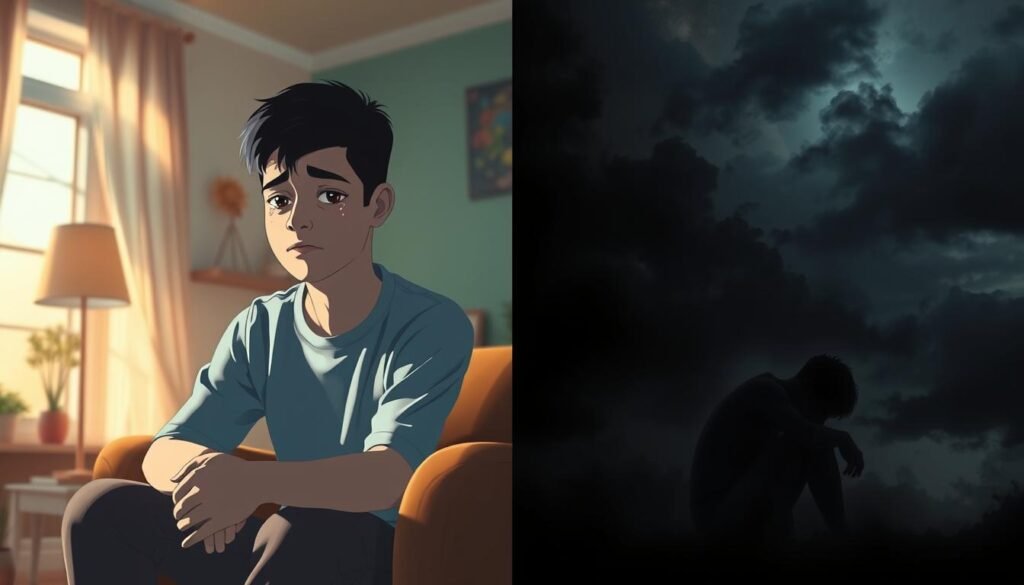
It’s key to understand the difference between usual sadness and clinical depression. To tell them apart, we need to look at how severe the symptoms are, how long they last, and if they stop you from doing everyday things.
Identifying the Severity and Duration
When figuring out if it’s depression or just sadness, think about how intense the feelings are and how long they stay. Sadness usually comes from a specific situation and doesn’t last long. Depression, however, is a deep sense of hopelessness that hangs around for at least two weeks.
It’s vital to notice these differences. If sadness doesn’t get better or gets worse, it might be something more serious. That’s when it might be time to get help from a professional.
Recognizing Functional Impairment
Determining if it’s depression also involves looking at how it affects your life. People with clinical depression find everyday tasks hard. This includes struggling to keep up with friends, work, or even household duties. While normal sadness might make you pull back for a bit, depression can really disrupt how you function every day.
Noticing these problems is crucial. It can help you understand your mental health better. And it might lead you to get the support you need.
| Aspect | Sadness | Depression |
|---|---|---|
| Severity | Mild to moderate | Intense, overwhelming |
| Duration | Short-term (hours to days) | Long-term (two weeks or more) |
| Functional Impact | Minimal; can continue daily activities | Significant; affects daily functioning |
| Response to Positive Events | Improves with positive experiences | Little to no improvement, persistent sadness |
Effects of Depression on Everyday Life
Depression deeply impacts daily life. It alters how people interact and perform at work. Knowing its effects helps us support those in need.
Impact on Relationships
Depression can strain relationships, causing trouble in connecting with loved ones. Emotional withdrawal leads to less social contact. This can make loneliness worse, harming mental health more.
Important relationship impacts include:
- Communication drops, causing misunderstandings.
- Social activities become tough due to low energy.
- Being overly sensitive to criticism can lead to fights.
- Relying too much on others strains their patience.
Impact on Work and Productivity
Depression greatly lowers work performance. Symptoms like tiredness, trouble focusing, and lack of motivation are big hurdles. This affects how well someone can do their job.
Work productivity suffers due to:
- Frequent absences, putting more work on others.
- Struggling to finish tasks on time.
- Reduced creativity hurts problem-solving and teamwork.
- Poor mental health can damage the spirit of a team.
It’s crucial to understand depression’s impact on work and relationships. A supportive environment that promotes open talks about mental health can greatly help those facing these issues.
When to Seek Help
Knowing when to ask for help is key to handle depression well. You might notice signs that point to needing professional help. Feeling very sad, not caring about daily stuff, and hopelessness are big signs. It’s vital to know that these feelings should not last more than two weeks. Or if they lead to thinking about harming oneself, it’s time to get professional help.
Signs That Indicate Professional Help is Needed
It’s crucial to know the signs that you need professional help early on. Important signs are:
- Persistent sadness throughout most days, for at least two weeks.
- Not enjoying activities you used to love, leading to not doing much at all.
- Having trouble sleeping or big changes in how much you eat.
- Feeling more hopeless or worthless than before.
- Thinking about self-harm or suicide.
Paying attention to these symptoms is a step towards getting help early. This can stop depression from getting worse.
Resources for Support
There are many support resources available for those dealing with depression. You can find national helplines, mental health services, and apps like MindDoc. For instance, MindDoc asks daily questions for two weeks to track mood and offers a doctor’s view at the end. Community health centers can help too. They often provide counseling and can connect you with experts.
Treatment Options for Depression
Dealing with depression involves knowing your treatment choices. These usually include medication and talking therapies. Medicines like Selective Serotonin Reuptake Inhibitors (SSRIs) help by correcting brain chemicals to lessen depression symptoms. It may take a few weeks to see changes. So, talking to a health expert is key to find what helps you the most.
Medication Types and Effects
There are many antidepressants, including Tricyclics and Monoamine Oxidase Inhibitors (MAOIs). Sometimes, trying different ones is needed to see what’s effective. If you stop them suddenly, you might feel worse. Thus, it’s better to reduce the dose slowly with a doctor’s guidance. For those pregnant or nursing, it’s smart to talk risks over with a doctor first.
Psychotherapy and Counseling Approaches
Talk therapy is key in fighting depression. Methods like Cognitive Behavioral Therapy help by teaching coping skills and addressing emotional issues. Mixing medicines and therapy works well for recovery and avoiding relapses. Knowing and using these treatments can lead to better emotional health.