Did you know that over 28 million adults in the US don’t get help for mental illness? This shows a big need for mental health solutions that work well and are easy to get. Seasonal Affective Disorder (SAD) is one condition that needs attention. Light therapy is a non-invasive way to fight depression symptoms. This guide takes a close look at how light therapy helps with depression. We will see its benefits and how it fits with other treatments.
Key Takeaways
- Light therapy is a non-invasive treatment option effective for addressing symptoms of depression, especially in people with SAD.
- Over half of American adults with mental illness do not seek treatment, emphasizing the need for alternative solutions like light therapy.
- Blue light therapy shows promise for those with SAD but lacks definitive evidence of efficacy for other depressive forms.
- Joining light therapy with traditional treatments like antidepressants may enhance overall effectiveness in managing depression.
- Morning exposure to blue light for about 20 minutes can lead to improved symptoms in individuals facing sub-syndromal SAD.
Introduction to Light Therapy
Light therapy, also called phototherapy, is an innovative way to treat depression. It’s especially effective for Seasonal Affective Disorder (SAD). This method uses artificial light that mimics natural sunlight. It helps reset the body’s clock and boosts serotonin, which can improve your mood and sleep.
Studies show that light therapy can work faster than antidepressants with fewer side effects. Usually, it involves sitting near a light box that emits 10,000 lux. These light boxes filter out harmful UV rays. They should be used 16 to 24 inches away from your face.
If you have SAD, using a light therapy box right after waking up for 20 to 30 minutes can help a lot. This routine makes the most of light therapy’s mood-lifting effects while staying safe. Always talk to a doctor before you start using light therapy. They can help you find the best treatment plan. Learn more about light therapy and its mental health.
Understanding Seasonal Affective Disorder (SAD)
Seasonal Affective Disorder, or SAD, is a type of depression that comes back during fall and winter. This is when there’s less sunlight. People with SAD often feel intensely sad and find it hard to handle daily tasks. Knowing the signs and how SAD is different from other depressions is key to dealing with it well.
Definition and Symptoms of SAD
SAD is a major depressive disorder with a clear pattern. It happens during certain seasons. Common symptoms include:
- Persistent sadness or a feeling of emptiness
- Low energy levels and fatigue
- Changes in sleep patterns, such as oversleeping or insomnia
- Loss of interest in previously enjoyable activities
- Difficulty concentrating
People with winter SAD often want carbs more, which can lead to gaining weight. Those with summer SAD might eat less and sleep poorly. These changes show how SAD differs from other depression types.
How SAD Differs from Other Depression Types
SAD is different because its symptoms link to the seasons. Mostly affecting folks in fall and winter. Unlike other long-term depressions, SAD eases up when spring comes. This makes it unique.
Statistics on SAD Prevalence
About 5% of U.S. adults deal with SAD. It’s more common where winter days are shorter. Studies show women are more prone to it. Many improve with more natural light. SAD’s impact varies with location. This shows why it’s vital to consider where someone lives in understanding SAD.
How Light Therapy Works for Depression
Light therapy helps people with depression by affecting the body’s internal clock. It’s especially good for seasonal depression, known as SAD. It improves mood and reduces depression symptoms.
Mechanisms of Light Therapy
Light therapy uses artificial light to change how our body works. Bright light in the morning increases serotonin, a happy chemical in our brain. Serotonin helps you feel good and stable.
Studies show light therapy is effective for SAD. People feel better after 40-minute sessions than 20-minute ones. It’s an important treatment option.
Impact on Circadian Rhythm
Your circadian rhythm is like an internal clock that controls when you sleep and wake up. Light therapy during winter can help with this. Using a 10,000 lux light for 30 minutes each morning can make your sleep better and mood more stable.
But, not everyone should use light therapy without talking to a doctor. It can cause eyestrain or headaches in some people. Always get medical advice first.

| Exposure Duration | Mood Improvement | Significance |
|---|---|---|
| 20 Minutes | Moderate Improvement | p |
| 40 Minutes | Significant Improvement | p |
| 60 Minutes | Comparable to 40 Minutes | p = .733 |
Light therapy is proven to help with mood. It works by affecting our internal clock and serotonin. This makes it a key way to feel better in the darker months.
Types of Light Therapy
Light therapy comes in many forms, each using light to help those with depression. The most researched method is bright light therapy. There are also several other light therapies available. They work differently for everyone.
Bright Light Therapy Explained
Bright light therapy (BLT) uses strong light, about 10,000 lux, to mimic the sun. It typically lasts 20-30 minutes a day. It’s a drug-free way to ease symptoms of seasonal depression and major depression. Research shows it may boost serotonin, helping to improve mood and well-being.
Other Forms of Phototherapy
There are more light therapies being explored for depression:
- Dawn Simulation: This light gently wakes you, similar to a sunrise. It helps start the day smoothly.
- Blue Light Therapy: This uses certain wavelengths of light. It’s thought to help increase serotonin and aid treatment.
- Red Light Therapy: An alternative light therapy that may improve cell function. This could help energize cells and reduce depression.
- Green Light Therapy: Known to improve circulation, it might help ease migraines. It could also lift your mood.
Choosing the right light therapy depends on the person’s specific condition. Light therapy can do more than improve mood. It also helps with better sleep and managing emotions.
Light Therapy Benefits
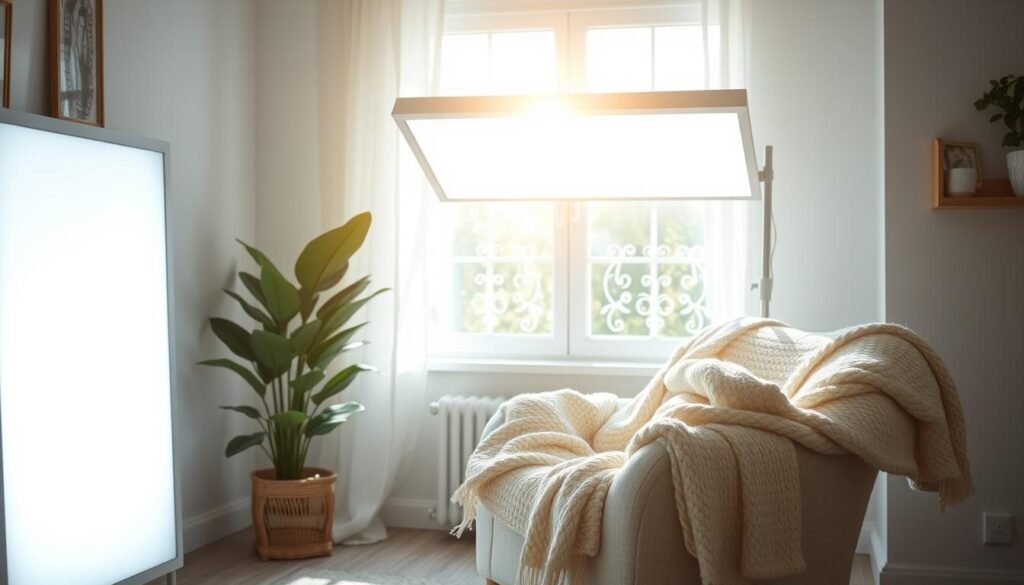
Light therapy is great for improving mood and fighting off depression. It especially helps those with seasonal affective disorder (SAD). It makes people feel less hopeless, irritable, and anxious. So, light therapy is a good option instead of usual treatments.
Improved Mood and Symptom Relief
Studies support light therapy’s ability to lessen depression signs. People using light therapy lamps feel more energetic and sleep better. It’s especially helpful during fall and winter when there’s less sunlight.
Comparison with Traditional Treatments
Choosing light therapy offers a fast solution compared to standard treatments. Antidepressants take weeks to work, but light therapy works in days. It’s attractive for quick relief without the side effects of many drugs.
Rapid Onset of Effects
Light therapy can work wonders quickly. Research shows improvements can start in just a few sessions. Traditional medicines may take over two weeks to help. Many like the fast help light therapy provides.
| Aspect | Light Therapy | Traditional Treatments |
|---|---|---|
| Onset of Effects | Days | Weeks |
| Common Side Effects | Headaches, eyestrain | Nausea, weight gain |
| Dependence | No | Possible |
| Treatment Focus | Seasonal and non-seasonal | Varies based on medication |
Guidelines for Using Light Box Therapy
Using light box therapy means picking the right one, using it well, and following key tips. Understanding these guidelines helps users get the most out of this treatment. It’s useful for Seasonal Affective Disorder (SAD) and other mood issues.
Choosing the Right Light Box
When choosing a light box for SAD, it’s important to think about a few things:
- Light Intensity: Aim for a device with at least 10,000 lux for the best results.
- UV Light Exposure: Choose light boxes that keep harmful UV light to a minimum to protect your skin.
- Design and Size: Bigger screens can help avoid eye strain and make the therapy more comfortable.
Talking to a healthcare provider can help in picking a safe and fitting device. They will make sure it matches your needs, guiding you on the right light box therapy dosage.
Typical Treatment Dosage and Duration
The advised light box therapy dosage for effective treatment is about 20 to 30 minutes each day, best done in the morning. Place the light box 16 to 24 inches away from your face for the most benefit. Start slow with the therapy and adjust based on what feels right for you.
Best Practices for Effective Use
For the best use of light therapy:
- Use the light box soon after waking up. This helps keep your body’s natural sleep/wake cycle in check.
- Steer clear of using the light box in the evening to avoid messing with your sleep.
- Keep your eyes open and look towards the light while doing activities like reading or working. This makes the therapy more effective.
Sticking to these light therapy best practices can greatly improve your mood and lessen SAD symptoms. This ensures a more positive therapy experience overall.
Side Effects and Considerations
Light therapy helps with major depressive disorder. But, it’s crucial to know the possible side effects. Watching how one reacts to the treatment is key.
Common Side Effects of Light Therapy
During light therapy sessions, people may face some common side effects. These can be:
- Headaches
- Eyestrain
- Agitation
- Increased irritability
- Fatigue
- Blurry vision
- Nausea
Headaches might hit those who usually get migraines. Some find relief after stopping the therapy, but for others, it hangs on. Studies show the right light intensity and how long you’re in it can help. The correct time and how far you are from the light are key to avoiding insomnia and tiredness.
Who Should Avoid Light Therapy?
Knowing who shouldn’t use light therapy is important before starting. If you have conditions like:
- Photophobia or sensitivity to bright light
- Specific skin conditions such as lupus
- Medications increasing sensitivity to light
you should talk to a healthcare provider first. This step is critical for safety. It helps check the risks of using light therapy lamps. These lamps may give off UV light, harmful for some eye conditions.
In summary, light therapy can be good for treating depression. But, knowing its possible side effects and who should steer clear is key for safe use. For more risks linked to light therapy, check here.
Combining Light Therapy with Other Treatments
Combining light therapy with traditional antidepressants gives a full approach to treat major depression. Bright light therapy works well with medicines like sertraline or fluoxetine for nonseasonal major depressive disorder (MDD). Studies show that using both treatments can significantly reduce depression scores.
This approach has a 75.9% response rate, proving its benefit. It shows how combining therapies can be powerful.
Potential for Combining with Antidepressants
Adding light therapy to antidepressants is very promising. This is especially true for nearly 40% of MDD patients not helped by usual medications. Light therapy increases the success of treatments, improving depression scores and bringing higher remission rates of 58.6%.
This emphasizes the need to explore both light therapy and antidepressants together. They tackle depression from both biological and psychological angles effectively.
Light Therapy and Psychotherapy
Light therapy combined with psychotherapy, like cognitive behavioral therapy, is especially useful for Seasonal Affective Disorder (SAD) or other depressions. This method not only goes after physical symptoms but also deals with psychological issues. Using light therapy and psychotherapy together offers a whole treatment that promotes overall health and ensures lasting recovery.