Did you know more than 67% of people in studies felt better after ketamine for depression? Many are asking what the right dose of ketamine is. As ketamine therapy becomes more known, it’s important to know how much to use, especially for tough cases of depression. This piece will look into ketamine therapy, how it’s dosed, how well it works, and how it’s given.
Research on ketamine is helping us learn more about how it can fight depression. This is good news for those who haven’t seen results from other treatments. This article aims to share knowledge on dosing ketamine correctly. It hopes to help patients and doctors make better choices in treating depression.
Key Takeaways
- Ketamine therapy can induce rapid antidepressant effects within hours of administration.
- The standard recommended dosage of ketamine for depression is typically 0.5 to 2.0 mg/kg.
- Variability in patient responses suggests a tailored approach might be necessary.
- Administration routes include intravenous infusion, nasal spray, and oral forms.
- Potential side effects range from mild symptoms like nausea to more severe reactions.
- Long-term studies are needed to assess the enduring effects and safety of ketamine therapy.
- Understanding effective dosing protocols is essential for preventing relapse.
Understanding Ketamine as a Treatment for Depression
Ketamine is now a key treatment for people with depression who don’t get better with usual drugs. We will see what ketamine is, how it’s used for mental health, and its rise as a therapeutic option.
What is Ketamine?
Ketamine is a drug that blocks NMDA receptors and is a dissociative anesthetic. First made for surgery, it does more than ease pain. Ketamine therapy shows quick results in fighting depression, working within hours. It changes the brain’s wiring and helps grow important connections for managing emotions and thinking.
Historical Context of Ketamine Use in Mental Health
Ketamine started as an anesthetic in the 1960s. Over the years, its value for mental health became clear, especially for stubborn depression. The FDA’s approval of a ketamine-based depression treatment in 2023 was a big achievement.
Studies show ketamine not only lowers depression signs but also fixes brain damage from stress. Success rates with many infusions reach up to 90% of patients.
Research tells us that ketamine could keep helping even after the first treatments by promoting synaptic growth. It offers hope against depression, especially when usual treatments fail. For more details on ketamine and depression, check out this source.
What is Treatment-Resistant Depression?
Treatment-resistant depression (TRD) is a tough challenge in mental health. It doesn’t get better with three different antidepressants. TRD hurts the quality of life, causing pain and frustration.
Defining Treatment-Resistant Depression
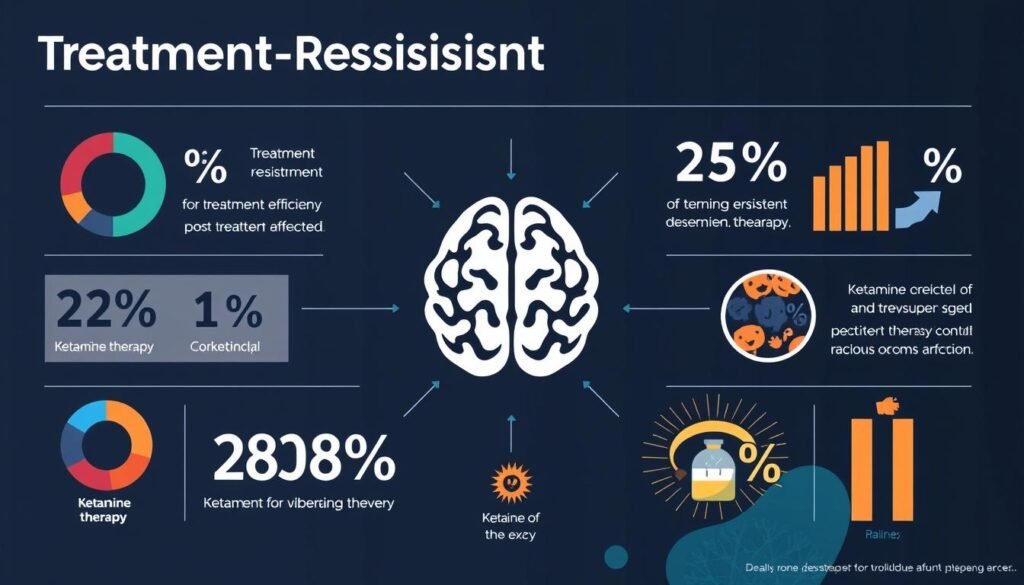
People with treatment-resistant depression are in a hard spot. About 30% of people with depression face this issue. It shows we need new ways to help them.
Doctors are turning to new options like ketamine. They hope these treatments give people a way to feel better.
Statistics on Treatment-Resistant Depression
In the US, treatment-resistant depression is a big problem. About 1% of people have it. And 30% of those with depression find usual treatments don’t work.
These numbers show we need to find better treatments. It’s key to helping those who can’t find relief elsewhere.
How Much Ketamine for Depression Treatment Works Best
Choosing the right ketamine dose for depression is key. Doctors see different results because everyone reacts differently to the medicine. Most often, ketamine is given through an IV.
Conventional Dosage Recommendations
A common dose for treating depression with ketamine is between 0.5 mg/kg to 2.0 mg/kg. The go-to starting point is 0.5 mg/kg. This level is both safe and effective. Some studies show quick improvements in depression symptoms, even within 24 hours.
Variability in Patient Responses
How people respond to ketamine can vary widely. Some find relief with lower doses. However, others might need more to see benefits. There’s a push for treating each patient based on their unique needs. This includes considering their health, the severity of depression, and how they metabolize the drug.

Administration Routes for Ketamine
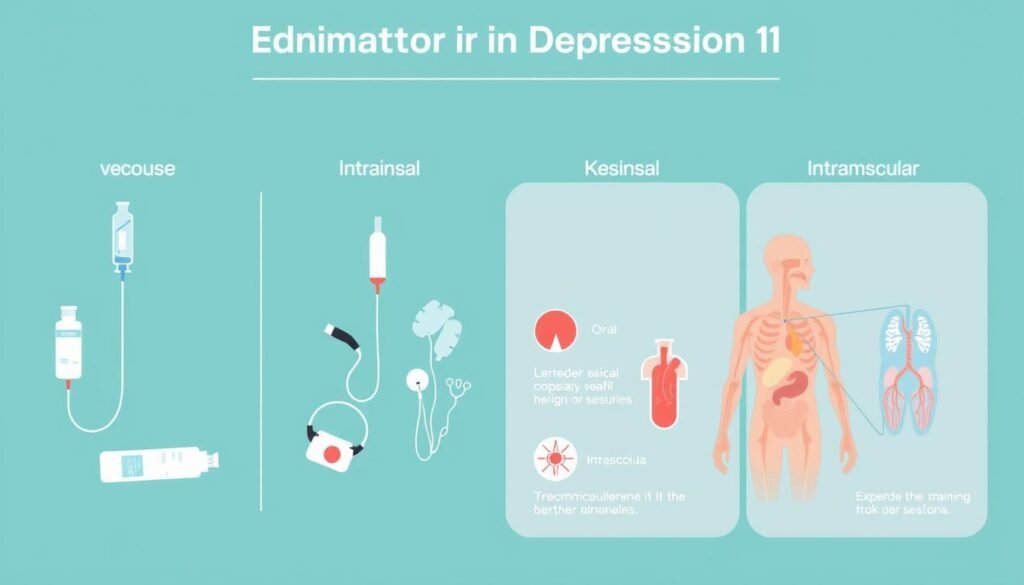
Understanding how ketamine is administered is key to better treatment for depression. The main ways include ketamine through an IV, by mouth, and as a nasal spray. Each method has its pros and cons.
We emphasize the quick and effective nature of using ketamine through an IV.
Intravenous Ketamine: The Fastest Route
Ketamine given intravenously works very fast, as almost all of it goes straight into the bloodstream. This quick action helps those with tough-to-treat depression. Patients usually get six IV doses over two or three weeks, and then every four to six weeks for maintenance.
The ability to adjust doses for each person makes this route very effective.
Alternative Methods: Oral, Nasal, and More
While IV is most effective, there are other ways like taking ketamine orally or by nasal spray. Taking it by mouth is easy but doesn’t absorb as well. Only a small amount gets into the system compared to IV.
The nasal spray gets absorbed at about 20-30%. It needs more frequent use—twice a week at first, then weekly. Each method has its advantages and challenges.
Even though IV ketamine works best, other methods are crucial for those who can’t use IV. The difference in how well and how often treatments are absorbed affects results and comfort.
For detailed information on these administration routes, visit this resource.
Risks and Side Effects
Opting for ketamine therapy to fight depression means knowing the possible side effects and risks. It is key for making a well-informed choice. Many find symptom relief, but being aware is essential.
Common Side Effects of Ketamine Therapy
Out of 120 side effects tested, 34 were signficantly tied to ketamine. In fact, eight side effects were common in over half of the people treated. They felt:
- Strange or bizarre
- Spacey
- Woozy or loopy
- Dissociated
- Like floating
- Visual distortions
- Hard to speak
- Numb
Usually, these effects fade within four hours post-dose. Only 1 in 10 might face these during treatment. Less common problems affect less than 1 in 100. Thankfully, no serious adverse effects or cognition issues were noted later. This means ketamine treatment might be workable for many.
Long-term Risks Associated with Ketamine Administration
Despite immediate risks being handleable, long-term use risks need focus. No clear addiction risk has been found for lower ketamine doses. Yet, recreational use could lead to dependency.
Side effects like allergic reactions or bladder issues are rare. A study with 163 depressed or bipolar patients and 25 healthy controls had no death cases using smaller ketamine doses for depression.
Clinical Trials and Research Findings
Research on ketamine for depression has brought key findings through many trials. These have looked at different doses to treat forms of depression like TRD. A look at important studies shows how doses affect patient results and treatment success.
Overview of Key Studies on Ketamine Dosage
Clinical trials have tested ketamine doses on depression. A significant trial by the Cleveland Clinic found ketamine led to a 50% symptom improvement for 55% of participants. This was more than the 41% improvement seen with ECT. Ketamine’s main side effect was temporary dissociation, unlike ECT’s memory loss risks.
Comparison of Different Ketamine Dosing Protocols
Different ketamine doses have shown varied success levels in trials. Here’s a comparison of recent study findings:
| Study | Patient Population | Ketamine Dosage | Improvement Rate | Side Effects |
|---|---|---|---|---|
| NIMH Controlled Study | 403 patients | 0.5 mg/kg IV | 71% felt better | Transient dissociation |
| Esketamine Clinical Trial | 329 screened, 231 in trial | 180 mg tablet | 55% sustained improvement | Minimal adverse effects |
| Comparison Study with ECT | Randomized controlled trial | 1.0 mg/kg IV | 55% improvement versus 41% ECT | Memory loss (ECT only) |
More research is crucial to improve ketamine dosing guidelines. Understanding how different doses affect various patients is key to fighting treatment-resistant depression.
Exploring the Effects of Ketamine on Mental Health
Ketamine therapy is now a big option for fighting depression. This is especially true for those with treatment-resistant depression (TRD). It’s known for its rapid antidepressant effects. People can feel better just hours after taking it. This is different from traditional antidepressants, which might take weeks to work. Ketamine can quickly improve mood and lessen depressive symptoms.
Rapid Antidepressant Effects of Ketamine
Ketamine works fast, which is vital for those in severe depression. Research shows it can greatly lower suicidal thoughts in just one day. After a single dose, this effect can last from three to seven days. This quick help offers hope to those suffering from Major Depressive Disorder (MDD).
The Mechanism of Action of Ketamine
It’s important to understand how ketamine works. It mainly affects the glutamatergic system, messing with NMDA receptors. These receptors help control mood and emotional responses. Ketamine boosts synaptic connectivity and supports neuroplasticity. This makes it a strong choice for tackling depression’s root causes. It also affects other neurotransmitter pathways, explaining its fast action.
The FDA has approved esketamine, a ketamine form, for urgent suicidal thoughts and tough cases. Doctors like ketamine therapy because it has few side effects. These include some dissociative symptoms and blood pressure changes. Ketamine is leading the way in new mental health treatments.
For more on ketamine therapy’s risks and benefits, check this informative resource.
Determining the Optimal Ketamine Dose for Patients
Finding the right ketamine dose for depression involves several factors. These greatly influence a person’s reaction to the treatment.
Factors Influencing Ketamine Efficacy
Many elements affect how ketamine works. A patient’s weight, metabolism, and history with depression play key roles. For example, a study shows that 64% of patients improved on the Hamilton Depression Rating Scale. With 0.5 mg/kg of ketamine, 48% got better, and 80% improved at 0.75 mg/kg. This shows why treatments must be personalized.
Individualization of Treatment Plans
Custom treatment plans are crucial. They look at dosing, how often treatment is given, and how it’s administered. Research found that the lowest doses were not very effective. This highlights the importance of higher doses, like 0.5 mg/kg, for good results. Adjusting treatment based on regular checkups helps in tackling depression effectively.
| Dosing Group | Hamilton Rating Scale Response (%) | Beck Depression Inventory Response (%) |
|---|---|---|
| 0.5 mg/kg | 48% | 44% |
| 0.75 mg/kg | 80% | Data Not Available |
| Overall Response | 64% | 60% |
For more information, visit this link.
Conclusion
Ketamine is showing promise as a new option for treatment-resistant depression. Studies show quick improvement in symptoms after just the first dose. This improvement continues with treatment, reducing depression and anxiety.
Finding the right ketamine dose is tricky. It has to be tailored to each person because everyone’s body reacts differently. Things like age, health, and past treatments affect how well it works. Research suggests doses between 0.5 mg/kg and 1.0 mg/kg work best for tough cases of depression.
There’s ongoing study to better understand ketamine’s long-term outcomes and risks. As research goes on, ketamine not only offers hope to those fighting depression but also highlights the complexity of treating mental health. For more details, check out this study on ketamine intervention.