About 7% of people in the U.S. have major depressive disorder (MDD). It’s a big cause of disability. Many don’t find relief with usual treatments. That’s why exploring new options like implants for depression is vital. These options are especially important for those who haven’t responded to other treatments. Implants like deep brain stimulation and transcranial magnetic stimulation are changing the game. They offer hope for getting better by targeting the brain in new ways. To learn more about these advancements, see insights on the latest advancements in implant-based treatments.
Key Takeaways
- The impact of major depressive disorder affects around 7% of Americans.
- Many with MDD don’t get better with current treatments.
- Cranial implants are a new way to treat tough depression.
- Deep brain stimulation is showing promise in studies.
- Studies on neurosurgical treatments for depression are hopeful.
- It’s key to tailor treatment plans to each person.
Understanding Treatment-Resistant Depression
Treatment-resistant depression is tough for patients and doctors. This happens when depression doesn’t get better after trying many treatments. It means medicines and counseling didn’t help enough after trying at least two different ones. This can really affect someone’s mental health and life quality.
Definition and Symptoms
People with this kind of depression have various depression symptoms. These can be mild or severe. They often feel very sad, tired, and lose interest in things they usually like. They also find it hard to focus.
- Persistent sadness
- Lack of energy
- Difficulty concentrating
- Loss of interest in daily activities
Because it’s a complicated issue, working closely with doctors is key. They might try different treatments not usually for depression. These aim to boost the usual antidepressants.
Statistics on Treatment-Resistant Depression
It’s important to know how common treatment-resistant depression is. Studies show 30-60% of people don’t get better with their first antidepressant. The STAR*D study saw a 67% success rate after trying four types of treatments within 14 months. About 10% to 20% of those with major depression still struggle after two years of treatments.
More than 100 million people globally are affected by this condition. It can lead to long hospital stays and more doctor visits, costing society a lot. This shows why finding better treatments is critical for this serious mental health problem.
What is an Implant for Depression?
Depression implants are at the cutting edge of neuromodulation therapies. They use high-tech devices to aim at brain areas that control mood. A key example is the brain pacemaker. It sends exact electric signals to boost brain activity and lessen depression signs.
This new tech is a boon for patients who haven’t been helped by usual treatments. Research suggests many with hard-to-treat depression might find relief with these options. For example, a study found 27% of people getting Vagus Nerve Stimulation (VNS) saw major improvement. This is compared to only 13% improvement in those with standard care.
While more exploration is needed, the promise of VNS and deep brain stimulation is clear. They mark a new dawn for those battling severe mood disorders. For info on options like deep brain stimulation, click here.
Cranial Implants: How They Work
Cranial implants offer a new hope for severe depression, especially if other treatments fail. These devices use cutting-edge technology to change brain activity. They send exact electrical pulses to areas that control mood, aiming to fix unbalanced neural circuits.
Mechanisms of Action
These implants work by adjusting how brain chemicals act. This can greatly improve mood and mental health. Researchers are working to find brain signs that show the implants are working, making treatments better. By watching brain activity, doctors can tailor the therapy to what each person needs, making it more effective.
Exploring Deep Brain Stimulation for Depression
Deep brain stimulation (DBS) is an innovative way to help those with depression that doesn’t get better with standard treatments. This technique involves placing electrodes in the brain, like the subcallosal cingulate cortex. These electrodes send out electrical signals. This can change brain activity, bringing new hope to people with severe depression.
What is Deep Brain Stimulation?
DBS has been developed over the past 20-30 years. It’s like a pacemaker for the brain. It sends steady signals to certain areas. It’s used not just for movement issues but also for mental health problems. These include treatment-resistant depression and PTSD. This shows a big change in how we treat these conditions, offering new hope to those who haven’t been helped by other treatments.
Benefits and Risks of DBS
The benefits of DBS are significant. About 90% of people who get it see a big improvement in their mood and how they function. It can greatly improve someone’s quality of life and daily activities. Often, patients feel better right after the electrodes are put in the right place.
But DBS has risks, like infection, bleeding, and problems with the brain. Picking the right patients and assessing risks carefully is crucial. Follow-up care, including therapy and support from mental health professionals, is also important. This helps maintain mental health after DBS.
| Aspect | Details |
|---|---|
| Procedure | Surgical implantation of electrodes in targeted brain regions. |
| Conditions Treated | Primarily used for treatment-resistant depression, PTSD, Parkinson’s disease, and essential tremor. |
| Reported Success Rate | Approximately 90% of patients report some level of symptom relief. |
| Risks | Infection, bleeding, neurological complications, and incomplete response. |
| Ongoing Care | Includes therapy and psychiatric support for comprehensive recovery. |
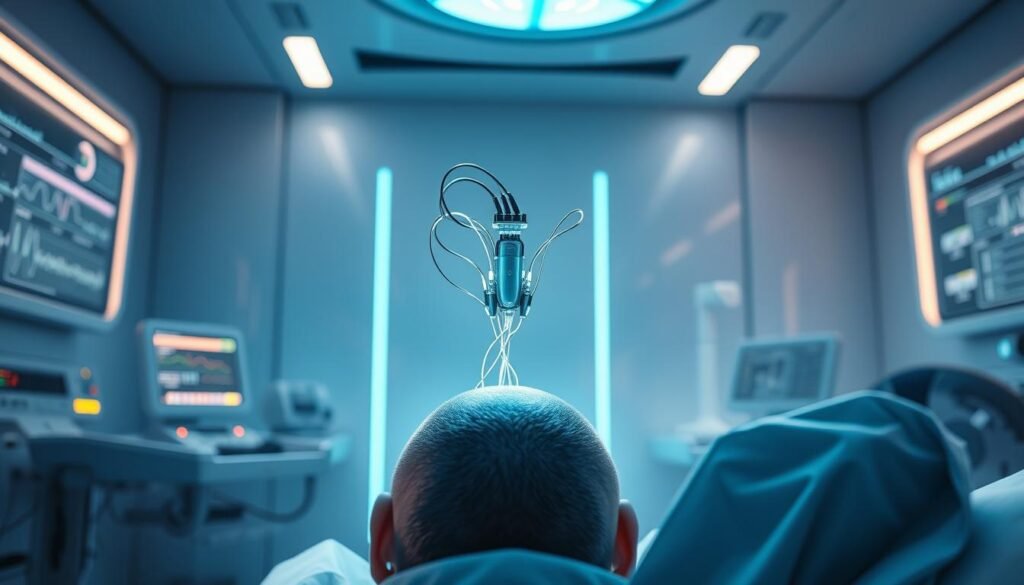
There have been big leaps in how we understand and map the brain. These advancements have made DBS possible. As we learn more about mood disorders, DBS could become even more tailored to each person. This could make it a game-changer in treating mental health issues.
Learn more about deep brain stimulation.
The Role of Neurosurgical Treatments in Depression Management
Neurosurgical treatments are becoming a beacon of hope for those with severe, hard-to-treat depression. They include methods like deep brain stimulation (DBS). DBS directly targets certain brain areas to lessen severe symptoms. These surgical options are vital, especially when normal depression treatments don’t work for everyone.
A study showed a special DBS device quickly easing depression symptoms. This is unlike standard treatments, which take weeks to start working. This progress is crucial for patients who haven’t found relief elsewhere. The device’s effects lasted over 15 months, offering a new hope through neurosurgery.
The University of California, San Francisco (UCSF) began a trial with a new way to map depression in the brain. So far, it’s been used on one patient. But, the team hopes to include more people. This could change how we use innovative therapies in psychiatry.
Using neurosurgery in depression care is changing how we view the brain and mood disorders. New trials and studies keep showing us new ways to help those with severe depression.
| Type of Treatment | Duration | Patient Experience | Notes |
|---|---|---|---|
| DBS (Deep Brain Stimulation) | Immediate effects; ongoing management | Alleviates symptoms; tailored to individual circuits | Study: Over 15 months of effectiveness |
| ECT (Electroconvulsive Therapy) | 2-3 times weekly for 6-12 treatments | Varied response; typically slower | Minimizing side effects under research |
| rTMS (Repetitive Transcranial Magnetic Stimulation) | 30-40 minutes per session, 5 days a week for a month | Immediate but with potential risks | Serious side effects possible |
| VNS (Vagus Nerve Stimulation) | Continuous stimulation post-surgery | Managed symptoms; side effects vary | Includes various risks |
Comparing Traditional Treatments with Neuropsychiatric Interventions
Many people choose traditional therapies for depression, such as cognitive-behavioral therapy (CBT). CBT helps by changing negative thought patterns and encouraging healthier coping ways. On the other side, neuropsychiatric interventions offer new paths for those with depression that’s hard to treat. This shows why it’s key to look at different methods for the best mental health results.
Cognitive Behavioral Therapy vs. Neurosurgical Options
Research proves the effectiveness of cognitive-behavioral therapy. For example, the STAR-D program found that patients on citalopram had only a 47% response rate and a 28% remission rate. These numbers show the limits of usual antidepressant treatments. Meanwhile, options like vagus nerve stimulation (VNS) and deep brain stimulation (DBS) bring hope. VNS got FDA approval in 2005 and had a 40% response rate in a study. DBS showed a 56% response rate in tough cases.
Electroconvulsive therapy (ECT) works well 79% of the time in specific settings. Yet, its success often falls outside these environments due to stigma and worries about memory loss. So, for those unsure about ECT, neuropsychiatric methods could be the answer. Here’s a table comparing how different treatments do:
| Treatment Option | Response Rate | Remission Rate | Adverse Event Rate | Stigma Level |
|---|---|---|---|---|
| Cognitive Behavioral Therapy (CBT) | 47% | 28% | N/A | Moderate |
| Vagus Nerve Stimulation (VNS) | 40% (Pilot Study) | 17% Full Recovery | Reported, but not quantified | Low |
| Deep Brain Stimulation (DBS) | 56% | 35% | 67% | Moderate |
| Electroconvulsive Therapy (ECT) | 79% (Research Settings) | 75% | Varies widely | High |
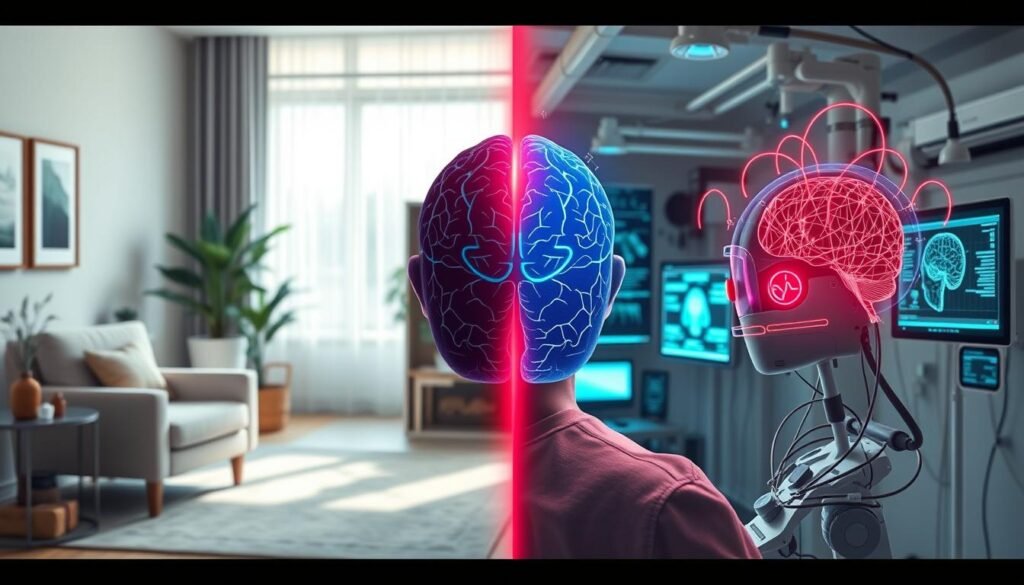
To sum up, when we look at how to treat depression, it’s clear we need diverse options. Neuropsychiatric methods like VNS and DBS offer effective alternatives, especially for treatment-resistant cases. They’re important for those seeking different paths than CBT.
Transcranial Magnetic Stimulation: A Non-Invasive Alternative
TMS is a new, non-invasive way to help people with major depression. It uses magnetic fields to target brain cells linked to mood. This method is great for those who haven’t found relief with other treatments. It offers a surgery-free option.
How TMS Works
Doctors use magnetic pulses on the brain in a process called rTMS. Patients undergo rTMS about five times a week, for a few weeks. Each visit is about an hour. This includes time to adjust the treatment for each person.
Doctors are also finding quicker ways to deliver this treatment. These new methods make the process faster for patients.
Effectiveness and Patient Response
About half of the people treated with TMS see a big improvement. It works well, especially for those who haven’t had success with other medications. Most patients start feeling better after a few treatments.
The side effects, like scalp discomfort or a mild headache, are usually minor. Serious side effects are uncommon. As experts learn more, they’re making TMS even better. For those interested in how mental health affects the brain, check this resource.
Innovative Technologies in Treating Mood Disorders
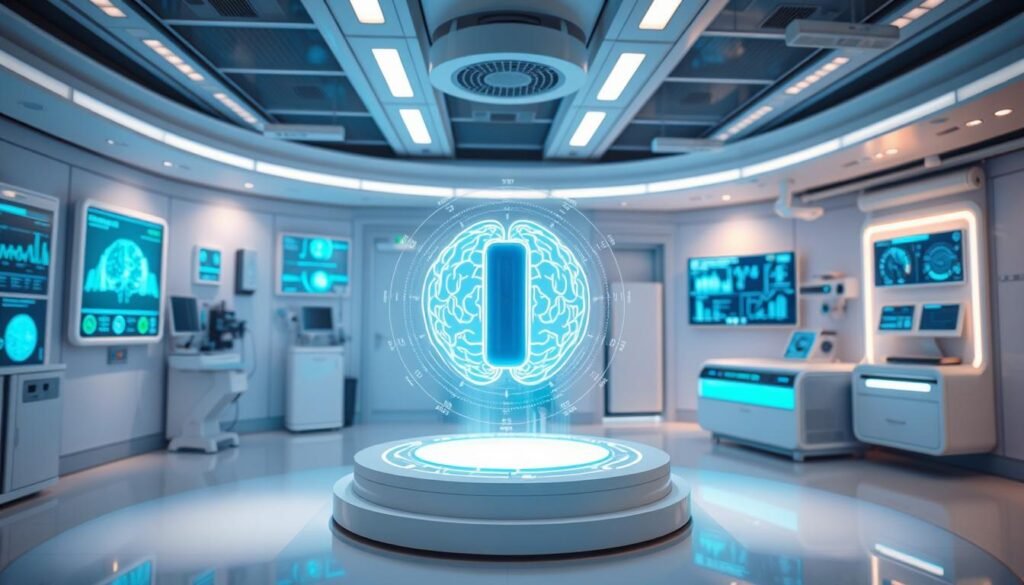
Modern technologies are leading the fight against mood disorders. Among these, AI in therapy shows great promise. It’s thought to change the way we treat tough cases of depression. AI helps by digging into brain data to find signs that point to depression. This helps tailor treatments to fit individuals’ needs perfectly.
Emerging Therapies Using AI
Researchers are working hard to use AI in treating mood disorders. For example, the University of Southern California is creating a “closed loop” system. This system checks brain activity and looks for issues. Then, it stimulates the brain to work normally again. This could be a beacon of hope for those with hard-to-treat depression. The system also includes a “mood decoder.” This decodes brain activity to better match treatments to how someone feels.
Deep brain stimulation (DBS) is another tool for psychiatric conditions. It’s showing good signs for beating tough depression cases. This approach mixes human understanding with tech. Together with machine learning, experts are unraveling how depression affects the brain. For more info on how changes in the brain link to mood disorders, check out related articles.
| Innovative Technology | Description | Potential Impact on Treatment-Resistant Depression |
|---|---|---|
| Deep Brain Stimulation (DBS) | Implants electrodes deep in the brain to deliver electrical pulses. | Promising results in symptom management, personalized therapy adjustments. |
| AI-Mood Decoder | Analyzes brain activity patterns to identify a person’s emotional state. | Facilitates tailored treatment options based on individual mood tracking. |
| Closed Loop System | Tracks brain activity to stimulate corrective responses when abnormalities are detected. | Offers real-time interventions, enhancing the effectiveness of therapeutic approaches. |
| Machine Learning | Utilizes algorithms to decode complex brain data and identify relevant biomarkers. | Increases accuracy in diagnosis and personalization of treatment plans. |
Case Studies: Success Stories with Implants
The use of implants to treat depression has brought new hope to many. Two key case studies show amazing changes after getting Vagus Nerve Stimulation (VNS).
After ten years, two Italian patients showed significant improvement from VNS. The first one had 80% fewer depression episodes each year. Their episodes were shorter by 62%, a big leap towards better health. They felt much better, with a 73% improvement on the Sheehan Disability Scale. These success stories highlight how implants can deeply help with treatment-resistant depression (TRD).
The second patient faced constant depression and many hospital visits. VNS changed their life, marking a breakthrough in their mental health care.
Deep brain stimulation (DBS) brought hope through another story. Sarah, who tried this new method, saw a big decrease in her depression symptoms. She had less troubling thoughts and no more thoughts of harming herself. The treatment showed over 18 key changes an hour in her brain.
Sarah’s device activated with certain signs, bringing fast and ongoing relief. Her condition improved so much, her daily markers dropped from 450 to 300. The device in her head is expected to work for ten more years.
UCSF researchers are ready to try this on nine more patients. The stories of Sarah and those from the VNS study show how much these treatments can help. They offer hope and show how effective implants for depression can be. This could lead to more doctors using these treatments in the future.
Conclusion
Exploring new treatments, like using implants for hard-to-treat depression, is a big step forward in mental health care. Traditional methods have helped, but new techniques like neurosurgery offer hope for those who haven’t been helped by usual treatments. Studies show that implants, including vagus nerve stimulation and deep brain stimulation, have success rates from 15.2% to over 83%.
This success shows they could greatly improve how patients feel. Certain brain areas are key targets for these new treatments. Research is ongoing to confirm these methods, tailor treatments to individuals, and find the best use for different kinds of depression. These developments are not just small steps; they are starting a new chapter in battling severe depression, giving millions new hope.
Looking ahead, we expect more research on how safe and effective these new techniques are. By combining technology and brain science, doctors want to make detailed treatment plans. These plans will meet the specific needs of people dealing with depression that doesn’t respond to usual treatments. This progress in mental health care looks promising. It opens new doors for both patients and doctors in treating depression.