Have you ever thought about why ADHD and depression often appear together? This question invites us to examine their complex relationship closely. It is key to recognize that ADHD, also known as Attention Deficit Hyperactivity Disorder, isn’t just about behavior. Depression, on the other hand, is a serious mood disorder. Studies show up to 30% of kids with ADHD also face mood challenges like depression.
The way ADHD and depression interact is complicated, and one can make the other worse. This makes it very important to understand both well. People with ADHD are more likely to have anxiety and depression. This fact points to an urgent need for deeper understanding of how these disorders connect.
Let’s think deeply about whether we can see ADHD as a kind of depression. How do these conditions affect each other in diagnosis, treatment, and daily life? Knowing more about ADHD’s link to depression and mood disorders is crucial for those impacted and their loved ones.
Key Takeaways
- Up to 30% of children with ADHD also have serious mood disorders like depression.
- Individuals with ADHD often receive treatment for depression at some point in their lives.
- Anxiety symptoms often manifest before depression in those with ADHD.
- Treatment usually combines medication and psychotherapy for managing both ADHD and depression.
- Research suggests a genetic link between ADHD and depression, with family history playing a significant role.
Understanding ADHD and Depression
It’s important to understand ADHD and depression to grasp their link. ADHD stands for Attention Deficit Hyperactivity Disorder. It’s a condition where people have trouble with attention, impulse control, and being overly active. People with ADHD face difficulties in various areas of life due to ADHD symptoms.
Overview of ADHD
ADHD comes in three main types: inattentive, hyperactive-impulsive, and combined. It makes focusing hard for kids and adults. They might also act without thinking. About 30% of those with ADHD could experience depression, showing how mental and behavioral health are connected.
Overview of Depression
Depression is a mood disorder that makes people feel sad, hopeless, and tired. Those with depression struggle with everyday tasks and keeping up relationships. It’s 2.7 times more common in adults with ADHD than others, highlighting the importance of recognizing depression symptoms.
Having ADHD makes the risk of facing depression four times higher. When someone has both conditions, it can make finding the right treatment harder. A well-rounded approach is essential for addressing the understanding mental health needs of those impacted.
| ADHD Symptom Category | Prevalence of Depression | Risk Factors |
|---|---|---|
| Inattention | Common | Increased likelihood of frustration and low self-esteem |
| Hyperactivity/Impulsivity | Higher risk of suicide | Social isolation and relationship challenges |
| Combined Type | 30% risk of mood disorders | Emotional dysregulation |
What is ADHD?
ADHD stands for Attention-Deficit/Hyperactivity Disorder. It affects both ADHD in children and ADHD in adults. Though often spotted in kids, it can last into grown-up years if missed early on. This condition comes in three main types. They are predominantly inattentive, predominantly hyperactive-impulsive, and combined type. Each type brings its own set of issues.
Life with ADHD can be tough. It may cause problems in behavior, emotions, and learning. For example, focusing, time management, and keeping impulsive behaviors in check can be hard. About 8.4% of kids and 2.5% of adults live with ADHD. It’s more commonly diagnosed in boys, mainly due to noticeable hyperactivity. Girls, however, might show less obvious symptoms.
To diagnose ADHD, symptoms must have been there for at least six months. Those with the inattentive type might struggle with details, sticking to tasks, and being organized. On the other hand, the hyperactive/impulsive type includes a lot of movement and impulsive actions, which might annoy others. Often, the combined type means dealing with all these symptoms together.
Luckily, with good treatment plans and changes in lifestyle, dealing with ADHD gets easier. Genetic factors play a big role too, as 74% of ADHD cases are linked to inheritance. This knowledge is crucial for better understanding ADHD and its effects on people’s lives.
| Type of ADHD | Characteristics |
|---|---|
| Inattentive Type | Difficulties in sustaining attention, organization, and listening |
| Hyperactive/Impulsive Type | Excessive movement, impulsiveness, and fidgeting |
| Combined Type | Meets criteria for both inattentive and hyperactive/impulsive types |
Knowing more about ADHD helps us see its effects in daily life. For example, up to 70% of those with ADHD struggle with sleeping well. This can affect their day-to-day activities. Boosting awareness leads to better help and ways to manage ADHD for both kids and adults.
Common Symptoms of ADHD
It’s vital to know the symptoms of ADHD for early and right adhd diagnosis. People with ADHD face challenges that touch many parts of life. Knowing about these symptoms helps manage adhd mental health better.
Key ADHD symptoms include:
- Difficulty in Maintaining Attention: Staying focused on tasks or conversations is hard, causing mistakes in school or elsewhere.
- Organization Challenges: Keeping places tidy, planning, or managing time well is a struggle for many.
- Impulsive Behavior: This leads to interrupting, making quick decisions without thinking, or acting on impulse.
- Restlessness: A constant need to move makes it hard to stay still when needed.
ADHD symptoms can lead to problems like depression. Teens with ADHD have a higher depression risk. Girls with ADHD are more likely to face depression than boys. Those with inattentive or combined ADHD are more prone to feel depressed than those with just hyperactive type.
Knowing the various adhd symptoms can mean better results. Support from parents, teachers, and doctors is key for helping those affected.
| Symptom | Common Age Group | Impact |
|---|---|---|
| Difficulty in Maintaining Attention | Children, Adolescents | Affects school and social life |
| Organization Challenges | All Ages | Results in missed deadlines and mess |
| Impulsive Behavior | Children, Adolescents | Creates conflicts with others |
| Restlessness | Children, Adults | Makes focusing and finishing tasks hard |
Understanding these symptoms better can lead to effective help, improving adhd mental health.
What is Depression?
It’s key to know what depression really means. It’s a serious mental health problem, not just feeling sad. People with depression face many hard symptoms. These symptoms mess with their life and happiness.
Here are some common signs of depression:
- Persistent sadness or emptiness
- Irritability and frustration
- Significant changes in appetite and weight
- Sleep disturbances, such as insomnia or oversleeping
- Loss of interest in activities once enjoyed
- Difficulty concentrating and making decisions
- Feelings of worthlessness or guilt
To diagnose depression, you need at least five of these symptoms for two weeks. It’s complex, leading to a 65.9% misdiagnosis rate. Correct diagnosis and treatment are vital.
Depression affects more than just the person. It touches on work and friendships. For people with ADHD, it’s even more complicated. About 18.6% of adults with ADHD also have depression. The National Institute of Mental Health found that 4.4% of adults have ADHD. This shows why deep mental health checks are crucial.
Common Symptoms of Depression
Recognizing depression can be tough. However, knowing the common symptoms leads to quicker help and better mental health. People with depression often face different emotional and physical troubles. These may include:
- Feelings of hopelessness
- Irritability or mood swings
- Fatigue or lack of energy
- Changes in appetite or weight
- Sleeping issues, like insomnia or oversleeping
Depression really impacts how one functions daily. Studies show 17% of kids and teens with ADHD also have depression. This is way higher than the 4.4% seen in the general population.
In adults with ADHD, about 18.6% are depressed. This is compared to 4.7% in adults without ADHD. These stats underline the need to notice depression symptoms in people with ADHD.
Finding depression signs early is key to getting the right treatment. This could be medicine or therapy. Not treating these symptoms can really lower one’s life quality, causing more problems. Knowing and tackling these signs helps improve mental health and overall happiness.
Is ADHD a Form of Depression?
The link between ADHD and depression sparks lots of talk. ADHD is a separate condition but can happen with depression. Due to shared signs like trouble focusing and mood swings, people wonder if ADHD is a form of depression.
Exploring the Link Between Both Conditions
Studies show a strong link between ADHD and depression. People with ADHD are three times more likely to get depressed. This means ADHD and mood disorders often come together, affecting how patients are treated. Sadly, only 20% of those with ADHD symptoms seek help. The rest deal with anxiety or depression instead.
Overlap in Symptoms
It’s key to notice the shared signs of ADHD and depression. These include low self-esteem, mood swings, and focusing problems. Between 16% and 31% of adults with ADHD also have depression. In kids, it’s up to 50%. Since both are linked to dopamine imbalances, understanding this helps in giving the right treatment. You can find more information here.
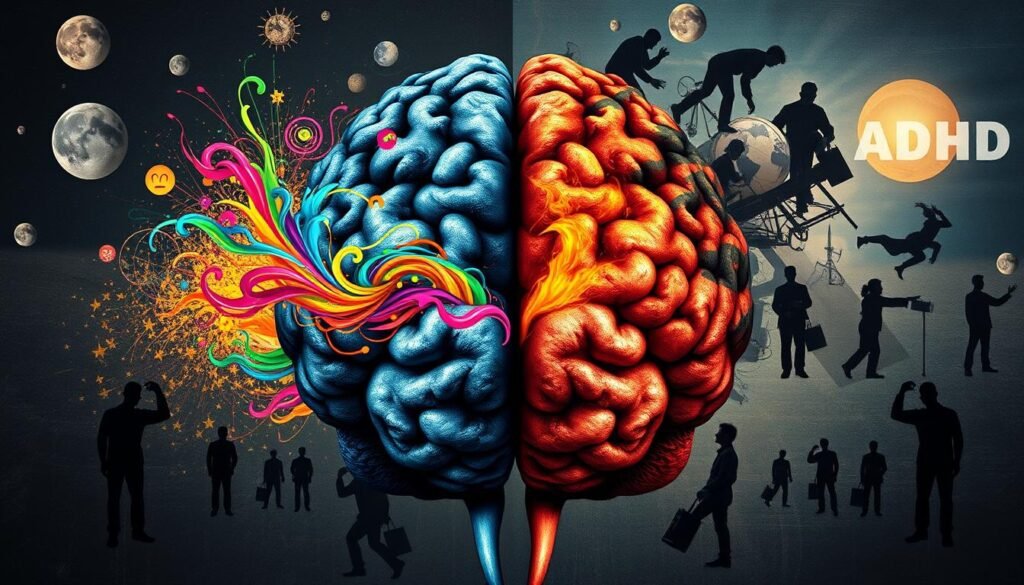
The Relationship Between ADHD and Depression
The link between ADHD and depression is alarming due to their shared symptoms and characteristics. It’s crucial to understand how they affect each other for better treatment. This understanding aids in managing both conditions effectively.
Prevalence of Comorbid Conditions
Studies reveal a high rate of ADHD and depression occurring together. As many as 30% of kids with ADHD also face major depression. This situation points out the critical need for attention.
Estimates show that 14.7% to 75% of children with ADHD also have symptoms of depression. These statistics stress the importance of addressing mental health risks. Specific treatments can then be created.
Risk Factors Leading to ADHD and Depression
Several factors increase the risk of ADHD and depression. There are differences between genders. Boys are more inclined to have ADHD, and girls to have depression. The type of ADHD also affects depression risks.
Moreover, a mother’s mental health is crucial in determining a child’s mental well-being. These insights highlight the importance of detailed assessments.
The risk factors for these conditions include family history and environmental pressures. Understanding these factors is key for early detection and personalized care. Over half of those with ADHD will also seek help for depression, showing the need for continuous support.
By understanding how common ADHD and depression are together, we can make better choices for mental health care and interventions.
Diagnosis of ADHD and Depression
Diagnosing ADHD and depression accurately is key. Symptoms of ADHD, like inattention, overlap with depression’s sadness or fatigue. This makes the mental health evaluation tricky. Experts must distinguish between these conditions carefully.
To diagnose ADHD, experts perform detailed evaluations. These include tests that look at how ADHD affects different parts of life. A diagnosis is made if symptoms greatly impact multiple areas, like school or work.
For depression, diagnosis involves exams, interviews, and mental status checks. Doctors look for overlapping symptoms such as trouble focusing. Recognizing these shared signs is crucial for a holistic mental health evaluation.
Getting professional help is essential for accurate diagnosis and treatment. ADHD patients are at higher risk for depression. Treating both conditions together when needed can improve outcomes. For more on treating Persistent Depressive Disorder, visit this link.

Treatment Options for ADHD and Depression
Managing ADHD and depression takes a variety of treatments. This is because the two conditions affect each other. So, doctors often use different meds and therapies together.
Medications used for ADHD
Medications are key in treating ADHD symptoms. Stimulants are usually the first choice. They help reduce inattention, hyperactivity, and impulsiveness. If stimulants aren’t suitable, atomoxetine might be used, especially if depression is also present.
Medications for Treating Depression
There are many meds for depression. SSRIs are often used first but can have side effects like sexual issues or nausea. For tough cases, doctors might try Tricyclic Antidepressants, even though they can cause dizziness and anxiety. Bupropion, an atypical antidepressant, can be a good choice for those with both depression and ADHD.
Medications work best when combined with therapy, such as Cognitive Behavioral Therapy (CBT). CBT teaches coping techniques for both ADHD and depression. Consulting healthcare professionals is important to find the best treatment plan for each person.
| Medication Type | Example Medications | Considerations |
|---|---|---|
| Stimulants | Methylphenidate, Amphetamines | First-line treatment for ADHD |
| Non-stimulants | Atomoxetine | Effective for ADHD, especially in comorbid cases |
| SSRIs | Fluoxetine, Escitalopram | Common first-line treatment for depression; can have side effects |
| Tricyclic Antidepressants | Amitriptyline, Nortriptyline | Useful for treatment-resistant depression; side effects present |
| Atypical Antidepressants | Bupropion, Mirtazapine | Targets various aspects of depression; may help with ADHD |
Conclusion
Understanding how ADHD and depression are linked is key for better mental health support. These two conditions, while separate, often overlap in who they affect and how they feel. A big study shows that around 44% of people with ADHD will get depressed by age 30. This shows why it’s important to see how these two issues connect.
Treating both ADHD and depression together is critical. This can include medicines and specific therapy programs. Programs like BEAM and the Integrated Parenting Intervention for ADHD help a lot. They reduce depression in teens and their moms. These successes show we need plans that tackle both ADHD and depression at the same time.
In the end, knowing more about ADHD and depression together can really help those who suffer. With ongoing research and better treatment options, we can understand more. We can also make life better for those impacted. It’s clear that although ADHD and depression are linked, each needs its own treatment.