About 37% of depression risk comes from genes. This info is from a study of twins. Depression affects nearly 16.9% of people in the U.S. It’s a big issue in mental health. Women get diagnosed twice as much as men. This makes us wonder: why are some people more likely to get depressed? We’ll look at how genes and environment work together to affect mental health.
Key Takeaways
- The heritability rate for depression is approximately 37% according to twin research.
- Individuals with a first-degree relative diagnosed with depression face a two- to threefold increase in risk.
- By 2020, depressive disorders were predicted to be the second-leading cause of disability worldwide.
- Research indicates that women may be more genetically susceptible to depression than men.
- Family studies suggest that genetics plays a crucial role in the mental health inheritance of depression.
Introduction to Depression as a Mental Health Disorder
Major depressive disorder (MDD) is a significant mental health issue worldwide. It causes a lot of pain across the globe. In some places like Japan, about 3% of people suffer from it. But in the U.S., up to 16.9% of people might experience it. On average, between 8% and 12% of people in many countries are affected by MDD.
This disorder doesn’t just hurt the person with it. It also puts a lot of pressure on communities. In fact, MDD is a leading reason why people in the U.S. can’t go to work or do their daily activities. It’s also a big problem in Europe, where it’s the third most common reason for disability.
Understanding depression means looking at both mind and genetic factors. More women than men get diagnosed with it, which makes scientists think about why. They’ve found that MDD can be partly passed down in families, about 37% to 40% of the risk. However, bad experiences or a tough environment can also make MDD worse.
Research today is digging into how our minds and genes work together in MDD. By studying these links, scientists hope to find better ways to treat and prevent it. Their work is crucial for deepening our understanding of this complex disorder.
Understanding Heritability in Mental Health
Heritability is key in understanding mental health issues. It shows how much genetics play a part in mental disorders like depression. By comparing identical twins to fraternal twins, researchers can see differences. Identical twins share almost all their genes, while fraternal twins share about half. Studies have found that genetics account for 30% to 50% of depression risks. This tells us genetics do matter but understanding these numbers is complex.
Looking into heritability tells us more than just percentages. It shows how those with a family history of depression are more at risk. Through twin studies, we learn how our genes and environment work together. This helps us understand mental health conditions better.
Every psychiatric disorder has different genetics influencing it. For example, major depression genetic risk is around 37%. Conditions like bipolar disorder and schizophrenia have risks as high as 85% and 81%. These numbers show the strong link between our genetics and environment in shaping mental health. For deeper insights into genetics and depression, check this research on genetics’ role.
What is Depression Heritability?
Depression heritability helps us understand genetics in major depression. It shows how much of depression is due to genetic differences. Knowing this can predict depression risks in families.
Defining Heritability and Its Significance
The heritability of major depression varies. It can be between 28% and 50%. This shows how genes and environment affect depression risk. It helps identify who might be more likely to get depressed.
Estimates of Heritability for Major Depression
Men and women share about 75% of depression-related genetic factors. Heritability can go up to 46% in certain groups. Adults aged 23 to 38 have a 40% chance based on genetics. Older adults have a slightly higher chance, around 48%.
Studying 130,620 people with depression and 347,620 without has found specific genetic markers. This research helps understand depression’s complex nature. It leads to better prevention and treatment for those at risk.
The Role of Genetics in Depression
Genetics helps us understand depression better. It provides clues about where it comes from and how it shows up. Studies on twins have been key. They show how genetics influences the chance of getting depression.
Research with identical twins tells us a lot. If one twin gets depression, the other is much more likely to get it too. This is compared to fraternal twins. It points to genetics playing a big role in depression.
Insights from Twin Studies
Genetics is crucial in depression, twin studies suggest. If one identical twin has depression, there’s a 40-70% chance the other will too. But for fraternal twins, the chance drops to 20-30%. This shows how important genetics are.
Impact of Family History
Family history is a big factor in depression risk. If your parent or sibling has it, your own risk goes up two to three times. This shows how our family’s genetics affect us. It reminds those with family depression history to take steps for their mental health.
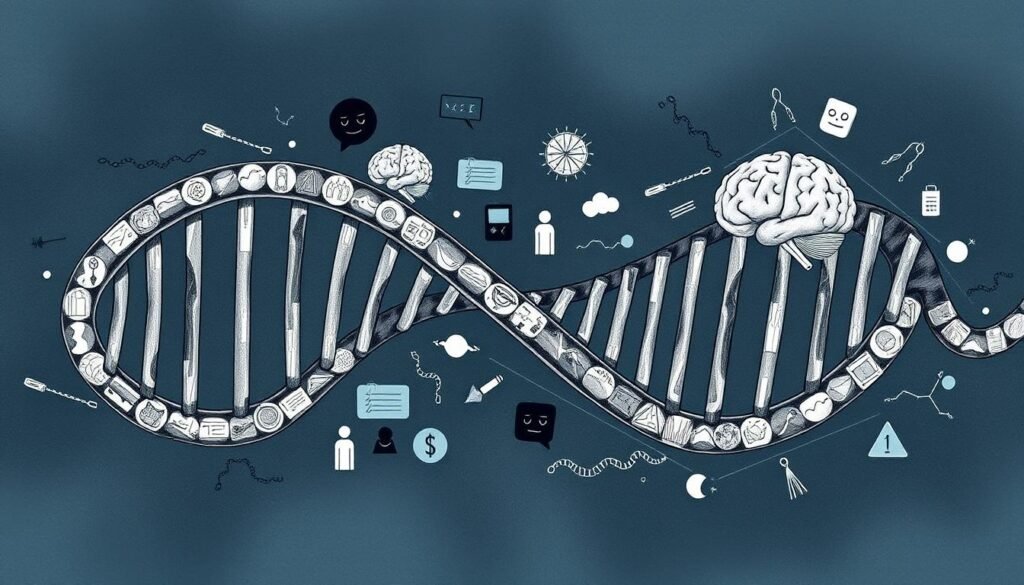
| Type of Relative | Increased Risk Factor for Depression |
|---|---|
| Identical Twins | 40-70% |
| Fraternal Twins | 20-30% |
| First-Degree Relatives | 2-3 times greater risk |
Environmental Influences on Depression Risk
Exploring how the environment affects depression is crucial. It shows that things outside us can impact our mental wellness. Stressful life events, like bad experiences, abuse, and neglect, are important. They can make someone more likely to get depressed. These events can either make a pre-existing chance worse or, in some situations, help a person be more resilient.
How Stressors Contribute to Depression
Stressful life events play a big role in depression risk. Trauma in childhood, for example, can lead to problems later. Violence, poverty, and facing discrimination also increase depression risk. Studies show that these factors, alongside someone’s genetics, can make depression more likely. It depends on their life story and experiences.
The Interaction Between Genes and Environment
The gene-environment interaction idea explains how our genes and environment work together. People with a family history of depression might be more at risk if they face big stressors. This means our genes don’t work alone in shaping our risk of depression. What we go through and where we are play a huge part in influencing these risks.
Epigenetics: A New Frontier in Understanding Depression
The study of depression gets deeper with knowledge of how our environment influences our genes. This aspect, known through epigenetics, shows how certain experiences might turn genes on or off. These actions affect our mental health. The gene-environment interaction through epigenetics uncovers detailed information on depression risks.
Defining Epigenetics and Its Relevance
Epigenetics is about changes in gene activity without changing the DNA itself. It involves processes like DNA methylation, which affects gene activity. These changes play a key role in how likely someone is to face depression. Studies show epigenetic changes can shape how environmental factors impact our mental health.
Examples of Gene-Environment Interactions
Many studies show the role of epigenetics in depression related to gene-environment interactions. Stressful events, for example, can cause epigenetic changes leading to a higher depression risk. Factors like childhood trauma or ongoing stress may trigger these genetic changes. Such changes can last a lifetime, influencing a person’s mental health and ability to cope.
Polygenic Inheritance and Depression
Understanding depression’s genetics means looking at polygenic inheritance. This idea says many genes can increase the risk of this disorder. Polygenic risk scores (PRS) help guess how likely a person is to face depression from these genes.
The Concept of Polygenic Risk Scores
Polygenic risk scores use data from lots of genetic variants to forecast depression risk. They are key in clinical psychiatry, adding insight from big studies. These studies show genes often overlap in different mental health issues. One big study looked at over 246,000 major depression cases. It found 102 gene spots linked to depression. This shows how complex depression is genetically. But these scores only partly explain why people get depressed, showing we need to look at this issue from many angles.
The Complexity of Genetic Variants in Depression
Finding specific genes related to depression shows it’s a complicated problem. Studies say about half of major depression risk comes from genes. But another measure puts this number at 8.9%. This highlights how hard it is to pinpoint genetic causes. Genes and environment together shape depression risk. If someone gets depressed young, genes might play a bigger part. More genetic clues help point to better treatments. Research also shows how genes and environment work together on depression symptoms.
The Impact of Gender on Depression Heritability
Understanding how gender affects depression heritability offers key insights into mental health. Studies indicate that the difference in heritability between genders appears early and lasts through life. Girls start showing a higher risk of depression during their teen years. This trend extends into adulthood.
Differences in Heritability Estimates Between Genders
The heritability of depression varies between males and females. Studies point out that teenage girls might have a higher genetic risk for depression. Despite mixed findings, it’s clear that women generally face depression more often. This is shown by a sex ratio of over 1.7 in lifetime prevalence. Factors like age and who is being studied add to the challenge of pinpointing these differences. Some research finds this increased risk in women, but other studies do not.
Potential Reasons for Increased Susceptibility in Women
Many factors make women more prone to depression. Biological aspects, especially hormonal changes during puberty, are vital. Sociocultural expectations and experiences unique to women also play a role. Women tend to display different symptoms, such as wanting to eat more and having more physical complaints. Understanding these differences helps us grasp depression heritability better. It also shows why we need tailored treatment and prevention methods.
| Aspect | Women | Men |
|---|---|---|
| Lifetime Prevalence Ratio | 1.7 | 1 |
| 12-Month Prevalence Ratio | 1.4 | 1 |
| Age of Onset | Adolescence | Adolescence |
| Heritability in Adolescents | Higher | Lower |
| Symptom Profile | Increased appetite, hypersomnia | More variable symptoms |
Childhood Trauma and Depression Heritability
Childhood trauma greatly affects mental health, especially depression later on. Understanding how early experiences link to depression risk is key. It helps us grasp mental health disorder heritability.
Understanding the Importance of Early Experiences
Research finds 47% of low-risk trauma exposure is genetic. High-risk exposure’s genetics rise to 60%. The mix of childhood trauma and genes plays a big role in mental health.
For PTSD, genetics influence 46% of the risks. For Major Depressive Disorder (MDD), it’s 27%. This shows early trauma could make genetic depression or PTSD risks worse.
Linking Childhood Experiences to Genetic Risk
Genetic factors strongly link to PTSD and MDD chances. Studies show a total genetic overlap between these disorders. This implies childhood trauma boosts mental health genetic risks.
71% of PTSD-positive women also have MDD. This shows a tight link between the two. Male veterans with MDD history are seven times more likely to get PTSD.
| Statistic | Finding |
|---|---|
| Genetic Contribution to Trauma Exposure | 47% (low-risk), 60% (high-risk) |
| Heritability in PTSD | 46% |
| Heritability in MDD | 27% |
| Overlap of Genetic Factors | r = 1.00 (PTSD & MDD) |
| Women with PTSD meeting MDD Criteria | 71% |
Studies suggest childhood maltreatment affects mental health, with about 6% heritability rate. Polygenic scores highlight the impact of childhood on depression risks. This underlines the role of genetics and early life in mental health.
The data show we must consider genetics and environment in depression’s development. Recognizing childhood trauma helps in creating effective aid and better mental health.
Learning about handling mild depression and its early signs is crucial. Finding coping methods can help greatly. For more resources, check here.
Research Advances in Depression Genetics
Recent research studies are making big strides in the genetics of depression. Scientists are discovering complex genetic factors. This knowledge could change how we treat and prevent depression.
Prominent Studies and Their Findings
Key studies have shown genetics matter in depression. For example, large-scale studies found over 80 genetic areas linked to depression. This proves many genetic factors can increase the risk of getting depressed. The UK Biobank study found 16 specific genetic areas tied to depression symptoms, showing depression comes from many genes working together.
The rate of depression passed down in families is about 30% to 50%. Twin studies often find a heritability rate close to 35%. This supports that genetics are key. A major research group identified 44 unique genetic areas related to depression, strengthening the genetic link.
The Current Understanding of Genetic Contributions to Depression
Today, we know that environment and genetics together can cause depression. Stressful life events and tough childhoods can trigger depression in those already at risk. But finding specific rare genes and linking them to depression is hard. Researchers are working hard to understand more so they can fill the gaps in our knowledge.
Learning more about depression’s genetic roots could change how we treat it. Knowing more helps with personalized care, early action, and better medication with fewer bad effects for people with depression.
Implications for Treatment and Management
Understanding how heritable major depressive disorder (MDD) is can shape how it’s treated. It allows for tailor-made management plans that meet each person’s needs. This approach is more efficient and aimed at the individual.
Personal and family histories are vital in understanding a patient’s risk. They provide important clues for effective treatment. This focused insight helps in crafting strategies that are likely to work better.
The Role of Personal and Family History in Treatment Plans
Knowing the link between family history and depression helps in crafting good treatment plans. If depression runs in a family, targeted help might be needed. It’s about finding the best therapy method for each person.
Recognizing this pattern is key in preventing and treating depression. It leads to better outcomes for those affected. As research grows, so does our understanding of how to fight MDD.
Tailoring Therapies to Individual Genetic Profiles
Thanks to advances in pharmacogenomics, treatments can now be customized. Tools like the FDA-approved Roche AmpliChip test help match therapies to a person’s genes. This ensures drugs work well and are safely dosed.
Such customization improves how patients with major or treatment-resistant depression recover. It considers both the biology and the life circumstances affecting someone’s mental health. Genetic knowledge is crucial for picking the right approach to manage depression.
Future Directions in Depression Research
Ongoing work in the field of depression is showing a lot of promise. By focusing on genetics, scientists hope to uncover the complex links between our genes, our surroundings, and our mental well-being. Finding new pathways could lead to breakthroughs in tackling this major health issue.
Potential Areas for Further Study
As the study of depression advances, certain areas stand out for further exploration:
- Looking into how certain genetic markers may increase the risk of depression.
- Examining how environmental factors and genetics work together.
- Studying the genetics of other mood disorders to get a fuller picture.
- Conducting larger genetic studies for more solid results.
The Importance of Genetic Studies for New Treatments
Genetic studies are key to finding new ways to fight depression. By identifying specific genetic factors, scientists can create targeted therapies. These approaches aim for better recovery rates and help customize treatment plans. They offer insights into personalizing care based on genetic makeup.
Conclusion
It’s vital to understand how heredity affects depression to get how complex mental health is. The link between genetic factors and environment shows why some people are more likely to get depressed. Studies show having family with depression means you might too. This is seen in research like the Lifelines Cohort Study, available here.
There’s a shocking rise in depression among young people. Statistics show 2% to 8% of teenagers are affected. This shows a big issue with youth mental health.
In kids, the rate of having depression for a year is 0.5% to 3%. This highlights how crucial early help is.
Many teens deal with severe depressive feelings. Even if they don’t have a diagnosis, they struggle in daily activities. This shows why we need treatments that really fit the person.
We must keep studying depression heritability and how it affects treatment. Using genetics and environment to guide treatment will help. This way, we can get better at helping those with depression and improve mental health care.