Did you know about 3% of people in the U.S. have Seasonal Affective Disorder (SAD) during fall and winter? It’s a type of depression that makes everyday hard. Luckily, Light Therapy for Seasonal Affective Disorder (SAD) helps many people feel better.
Light therapy, or bright light treatment, is like natural sunlight. It improves mood and reduces feelings of being overly tired or sleeping too much. This article covers SAD, why it happens, its symptoms, and how light therapy can be a key to dealing with it. If you’re dealing with seasonal depression, here you’ll find useful tips for your treatment plan.
Key Takeaways
- Seasonal Affective Disorder (SAD) affects around 3% of Americans, mainly during fall and winter.
- Light therapy is recommended as a treatment option for SAD by various healthcare providers.
- For effective results, exposure to 10,000 lux of light for 20 to 30 minutes is crucial.
- While light therapy has many benefits, individuals with specific medical conditions should consult a healthcare provider.
- Side effects of light therapy might include headache, tiredness, and sight changes.
- Light therapy’s impact on mood regulation is attributed to its influence on melatonin and serotonin levels.
Understanding Seasonal Affective Disorder (SAD)
Seasonal Affective Disorder, known as SAD, is depression that comes and goes with the seasons. It usually happens during winter when there’s not much sunlight. SAD begins in young adulthood and often affects more women than men. About 5 percent of Americans experience SAD each year.
In places with short days like Alaska and New England, SAD is more common. If your family has a history of mental health issues, or if you’ve dealt with depression or bipolar disorder before, you might be more likely to get SAD. Changes in your body’s internal clock can also play a role.
Symptoms of SAD include feeling sad or tired, changes in appetite or sleep, and trouble doing normal activities. These symptoms make daily life hard for people with SAD. Without proper help, SAD can affect them for nearly half the year. It’s crucial to be aware and understanding of this condition.
Since the 1980s, light therapy has been the main way to treat SAD in winter. Light boxes used in this therapy are much brighter than usual indoor lights. Using these lights for about 30 minutes a day can ease the symptoms of SAD.
What Causes Seasonal Affective Disorder?
Seasonal Affective Disorder (SAD) is mainly caused by less sunlight in fall and winter. This lack of light messes with our body’s clock. It leads to a drop in serotonin levels, which helps control our mood. Less sunlight means less serotonin, causing depression and a lack of energy.
Vitamin D deficiency also plays a big role in SAD. The sun helps our body make vitamin D, which is key for our health and mood. When we don’t get enough vitamin D, we might feel more depressed and tired. This can make it hard for people to feel good during these months.
Lastly, less sunlight changes how much melatonin our bodies make. Melatonin helps us sleep. But when it’s off, people with SAD might sleep too much or feel really tired. This can make them more irritable and less interested in things they usually enjoy.
It’s crucial to understand these factors to treat SAD effectively. Some people may not notice their symptoms change with the seasons for years. But knowing the causes can help them get the right support.
Signs and Symptoms of SAD
It’s important to know the signs and symptoms of SAD for good management. It shows issues similar to general depression but follows a seasonal pattern. Symptoms usually start in the fall and last until winter for most people.
Some common signs are:
- Persistent feelings of sadness
- Fatigue and low energy
- Changes in sleep habits
- Altered appetite
- Social withdrawal
- Lack of interest in previously enjoyed activities
Winter-onset SAD often includes symptoms like:
- Oversleeping
- Cravings for carbohydrates
- Weight gain
Summer-onset SAD, though less common, includes:
- Insomnia or trouble sleeping
- Poor appetite and weight loss
- Increased agitation or anxiety
- Heightened irritability
Young adults are at a higher risk for SAD. Not treating it can lead to serious problems, like social withdrawal and other mental health issues. Spotting these signs early helps in getting the right help. This can prevent mental health from getting worse during tough winter months.
| Type of SAD | Common Symptoms |
|---|---|
| Winter-Onset |
|
| Summer-Onset |
|
The Role of Light Therapy in Treating SAD
Light therapy is a key treatment for people with seasonal depression, known as SAD. About 5% of people get affected by it. By using a special light box that shines bright light, it works like the sun. This helps adjust our body clocks, boost happy hormones, and lessen sadness related to the seasons.
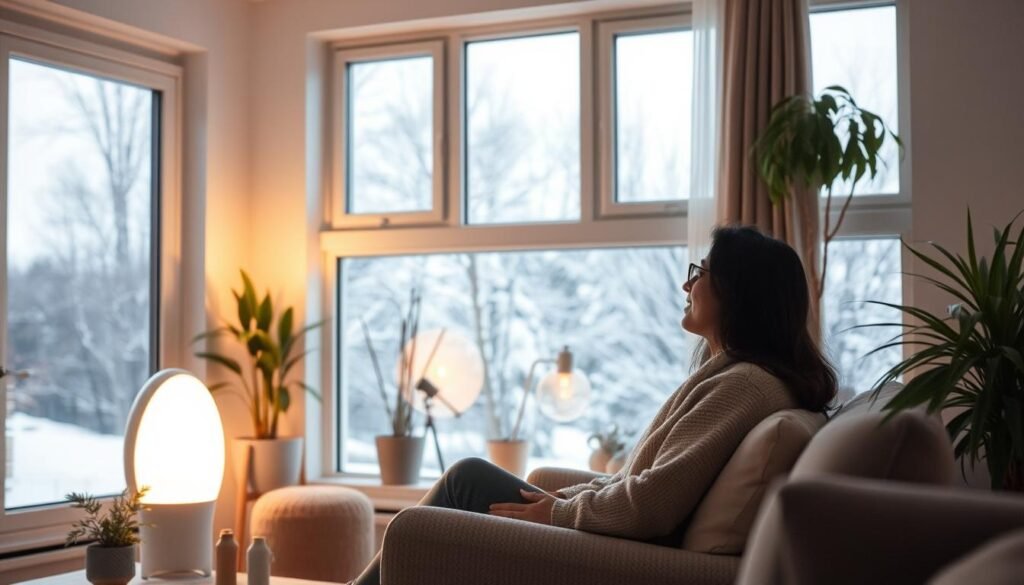
Studies indicate that 60% to 80% of SAD patients see improvements with light therapy. It’s often chosen when other treatments haven’t worked. It’s best to start light therapy in early fall and continue daily until spring. Starting with 20-minute sessions, one can possibly extend to 60 minutes to meet their needs.
However, there are side effects such as eye strain, headaches, and feeling irritable. People with bipolar disorder need to be careful to avoid triggering manic episodes. There’s also a chance for serious side effects like hypomania or suicidal thoughts at the start of treatment. Always talk to a doctor to make sure the treatment fits your specific health needs.
More research is needed to fully understand how light therapy stands against other treatments. Yet, current data shows even brief light exposure can immediately make moods better.
Learn more about the safety and efficacy of light therapy for SAD
Different Types of Light Therapy Devices
Many different light therapy devices are made for those with Seasonal Affective Disorder (SAD). These include light boxes and sun lamps. They give the right amount of light, about 10,000 lux, without harmful UV rays. Picking the right device is key to getting good results.
Light boxes come in various shapes and sizes. Some look like regular lamps, fitting easily into any room. Others are small and portable, perfect for both home and work use. It’s crucial to choose a device made for SAD to get real benefits.
Below is a comparison of some notable light therapy devices currently available:
| Device Name | Price | Discounted From | Features |
|---|---|---|---|
| Verilux HappyLight Therapy Lamp | $48 | $60 | Compact design, 10,000 lux output |
| Erligpowht Light Therapy Lamp | $21 | $26 | Portable, affordable option |
| Carex Day-Light Classic Plus | $135 | $170 | High-output light box, adjustable height |
Using a light therapy device right can really help with SAD symptoms. Using it for about 30 minutes a day can make you feel more positive. Making the right choice based on your needs is very important for it to work well.
Light Therapy for Seasonal Affective Disorder (SAD)
Light therapy is becoming popular for those with Seasonal Affective Disorder (SAD). It uses artificial light to improve mood and behavior. Understanding this treatment is key to using it right.
How Light Therapy Works
Light therapy copies sunlight to kickstart a chemical change in the brain. This boosts serotonin and lowers melatonin, which helps with depression. A light box, which gives off intense light, is used for this therapy.
Recommended Light Intensity and Duration
To get the best out of light therapy, follow certain tips. Aim for 20 to 30 minutes of light early in the day. The light should be strong, around 10,000 lux, but can be less if needed.
The light box should be 16 to 24 inches from your face. Keep your eyes open but don’t look straight at it. Following these steps will help make the most of light therapy.
For more information, check out the Mayo Clinic’s insights. Or, learn more at Immune Vitality resources about light therapy.
Benefits of Light Therapy
Light therapy helps a lot, especially for people with seasonal affective disorder. It works to make mood better and boosts energy levels. This is good for those feeling symptoms of depression. Light therapy uses special lights to increase serotonin, which makes our mood better.
Improving Mood and Energy Levels
Many people say their mood and energy get better with light therapy. Studies show that folks start feeling happier within a few days to weeks of starting. The bright light, which is like the sun’s light, helps increase serotonin. This leads to feeling happier and more alive.
Using light therapy in winter can stop depression symptoms from coming back. People find it very helpful during the colder months.
Regulating Circadian Rhythms
Light therapy is also great for fixing sleep schedules. It increases melatonin, helping with a regular sleep-wake cycle. This reduces problems sleeping that often come with mood problems.
Studies show it makes sleep better for many people, like those on chemotherapy or with diseases affecting their brains. Light therapy is a hopeful way to get better sleep and feel well overall.
Considerations When Using Light Therapy
Before you try light therapy for Seasonal Affective Disorder (SAD), talking to a healthcare provider is key. This is extra important for people with conditions like bipolar disorder or eye issues. They will give you advice that fits your health, making light therapy for SAD safer.
Consulting Healthcare Providers
Talking to a healthcare provider is crucial before starting light therapy. They set the right time and brightness levels and watch for side effects. These could include headaches, eye strain, or feeling more restless. This discussion leads to a better and well-informed treatment plan.
Potential Side Effects and Risks
Light therapy is mostly safe, but you should watch out for negative effects. Too much light may cause anxiety or restlessness. Make sure to use a 10,000 lux light for around 30 minutes each morning. If you start feeling off, stop using it and check in with a doctor. For more on light therapy, check this light therapy resource.