Recent studies have discovered something amazing. They found psilocybin, found in magic mushrooms, helps treat chronic depression with a 75% success rate. This was seen in 436 people struggling with mood disorders for a long time. This news places these mushrooms in the spotlight as a possible help for those fighting depression and anxiety.
This guide digs into the growing interest in magic mushrooms, especially psilocybin, for battling depression and anxiety. Evidence shows it can provide lasting relief from mood disorders. The talk about psilocybin’s use in therapy is getting louder. This article will give you detailed info on how psilocybin works, how it can be used, safety issues, and legal changes regarding its use.
Key Takeaways
- Psilocybin shows a 75% response rate in treating chronic depression.
- The average participant in studies is around 40 years old, showing older people are also seeking this treatment.
- Psilocybin’s effects can last up to 12 months after treatment.
- Microdosing with psilocybin is becoming a new trend for mental health, even though it’s not well-studied yet.
- It’s important to keep up with laws as states start changing rules about psilocybin.
Introduction to Magic Mushrooms
Magic mushrooms contain an ingredient called psilocybin. This has been used in different cultures for a long time. People have used them for religious reasons and to help with emotional issues. Lately, there’s been more interest in how these mushrooms can help with mental health, especially depression and anxiety.
Studies show that psilocybin, found in these mushrooms, might really help people with mood problems. It works with the brain’s serotonin, which could help the brain form new thought patterns. This process might help people break free from negative thinking tied to mental health problems. Experts are looking more into how psilocybin can be used for health.
There’s now a growing interest in the benefits of magic mushrooms. Unlike some regular medicines, psilocybin therapy might not have as many side effects. Research has shown that it could really help with tough cases of depression, anxiety, and PTSD.
Understanding Psilocybin
Psilocybin is found in certain mushrooms, often called magic mushrooms. It’s known for causing hallucinations. When taken, it turns into psilocin and affects the brain’s serotonin receptors. These changes can alter what we see and feel. Studies show it may help treat anxiety and depression.
What is Psilocybin?
Psilocybin changes how we think and feel. Researchers study it to understand its benefits for mental health. Depending on the person, its effects can greatly vary. Some people find it helps improve mood and understanding. They see potential in using it for mental health problems like depression and anxiety. To learn more, visit mushrooms for depression and anxiety.
The Natural Sources of Psilocybin
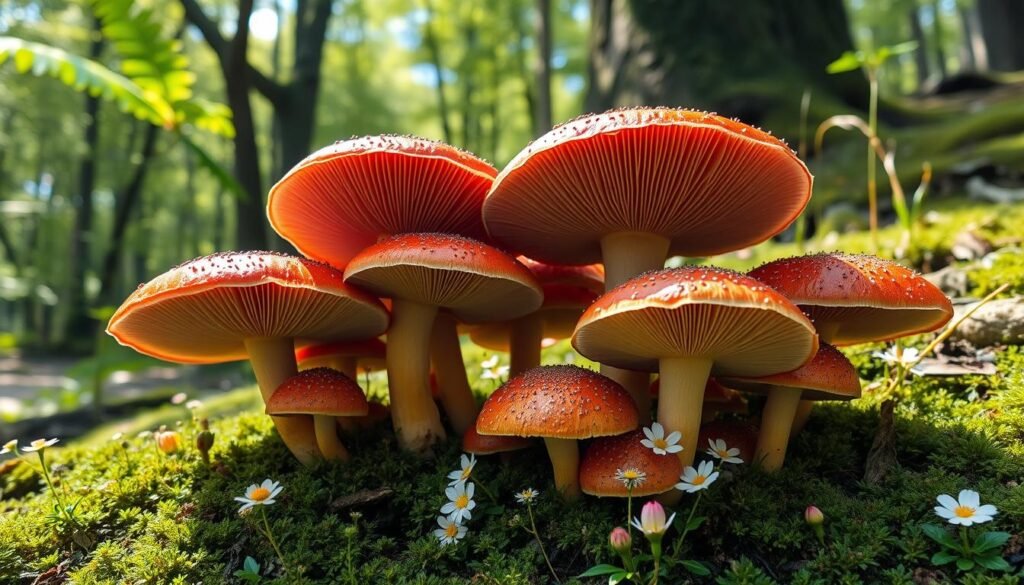
Psilocybin mushrooms are found all over the world, including the Pacific Northwest. They have been used for ages in indigenous medicine. Now, there’s more interest in their therapeutic use again. The demand is growing for ways to obtain these mushrooms sustainably. This ensures they can keep helping people with mental health challenges.
Mental Health Benefits of Psilocybin
Studies show psilocybin, found in special mushrooms, can really help with mood disorders. Research on psilocybin shows it helps fight severe depression and anxiety. Scientists note it has a power to change deep feelings of sadness and worry.
Research Findings on Anxiety and Depression
Research notes psilocybin has a big impact on mental health. It has been found to greatly reduce anxiety and depression symptoms. A major study found that small doses of psilocybin made people feel happier, cutting down anxiety and stress in just one month. These findings point to psilocybin’s key role in easing long-term mental struggles.
Effects of Psilocybin on Mood Disorders
Psilocybin does more than offer quick relief; it helps change mood over time. It has been seen to help people with serious mood problems feel lasting changes. People often get to a point where they see their thoughts differently, opening up to new ways of thinking.
Also, psilocybin is thought to boost neuroplasticity, working better than common depression meds. This brings hope, showing psilocybin as a new option for those in need. It invites more study into how it can heal minds.

Therapeutic Applications of Magic Mushrooms
Psilocybin-assisted therapy is a new hope for mental health issues. It uses psilocybin in a safe space with expert guidance. The mix of psilocybin and talk therapy helps patients find deep insights. This is something hard to get with just traditional methods. Psilocybin studies show big mental health boosts. This is especially true for those who don’t get better with usual treatments.
Psilocybin-Assisted Therapy Overview
Research on psilocybin as a therapeutic aid began in the 1940s. It looked into how it could help with mental illnesses. However, it was halted when psilocybin became illegal. Now, interest is back, with studies showcasing its benefits. Psilocybin-assisted therapy starts with thorough preparation. Then, there’s an eight-hour session supported by two therapists. Follow-up sessions help patients process their experiences. This enhances the therapy’s benefits.
Use in Treating Terminal Illness Anxiety
Psilocybin seems very effective in reducing anxiety for those near the end of their lives. Studies show it lessens anxiety and boosts mood. This improves life quality during palliative care. The success of these studies highlights the need for further research. Psilocybin could change how we approach anxiety in terminal illness, offering a new option where others fail. For more on its success, check the meta-analysis findings.
Mushrooms for Depression and Anxiety
Recent studies highlight mushrooms’ potential to help with depression and anxiety. This is mainly due to psilocybin. It can prompt emotional and cognitive change, offering a new option beside traditional methods. Clinical trials show it’s effective in easing mood disorder symptoms.
How Psilocybin Can Alleviate Symptoms
Psilocybin has been shown to quickly reduce depression and anxiety symptoms. In many studies, people felt better just days after treatment. For instance, a major study from Johns Hopkins Medicine found about 67% of participants had their symptoms halved after just two doses. By four weeks, over half were no longer seen as depressed. This shows how mushrooms can be a powerful help for those looking for relief.
Case Studies and Clinical Trials
Research and trials provide strong evidence for psilocybin’s use. Many studies report better moods in people with depressive symptoms. Subjects often described their therapy sessions as life-changing. Most participants, between 71% and 100%, considered their experiences with psilocybin therapy as highly impactful. This indicates significant personal growth. The findings show mushrooms could be a valuable tool for mental health.
Microdosing Psilocybin: A New Trend?
Microdosing is about taking small amounts of psilocybin. This method boosts mental health with minimal risk of hallucinations. People use it daily to improve creativity, focus, and mood.
What is Microdosing?
Microdosing is becoming popular among those who want to work better. People take tiny doses, like 1/10th of a full dose. Studies are now looking at how it helps with emotions and anxiety.
Potential Benefits of Microdosing for Mental Health
A study followed almost a thousand people microdosing psilocybin for a month. They saw improvements in mood and mental health. Older participants got better at some physical tasks too.
Many microdosers mix psilocybin with lion’s mane mushrooms and niacin. This mix might help even more by affecting the brain in positive ways. Users feel less anxious and more emotionally stable.
| Study Findings | Details |
|---|---|
| Duration of Study | 30 days |
| Participants | 953 microdosers, 180 non-microdosers |
| Reported Benefits | Mood improvement, reduced anxiety, enhanced focus |
| Psychomotor Performance | Specific improvements observed in older adults |
| Common Combinations | Psilocybin, lion’s mane mushrooms, niacin |
| Health-Related Motivations | Lower levels of anxiety and depression in microdosers |
Microdosing could be a step forward for those wary of traditional therapy. It reflects a turn to natural remedies for mental well-being. To learn more about natrual mood support, check out psychobiotics for mental health.
The Role of Stress in Psilocybin Treatment
The link between stress and psilocybin treatment is key to understanding its mental effects. Studies show that stress levels can greatly affect psilocybin therapy’s results. High stress might increase the good effects for some people. But, for others, it could make bad experiences worse due to high stress.
Psilocybin, a psychedelic, helps the brain change and grow. This could be really helpful for people dealing with stress-related issues. Figuring out how to manage stress during psilocybin treatment could make it work better. It means treatments can be more personalized.
Research has found that psilocybin activates certain brain receptors, which can lead to growth in parts of neurons. This growth might change based on stress levels. By making treatment better, we can use psilocybin’s mental benefits while lowering stress-related risks.
This understanding may help improve how we use psilocybin for therapy. It’s not just about treating anxiety and depression. It also involves looking at how stress affects each person. Combining personal treatment plans with psilocybin’s benefits could help people seeking mental health support.
Potential Risks and Considerations
Psilocybin is known for its potential to help with mental health issues. Still, it’s important for people to know about its safety and risks. Before using it, understanding the possible side effects is key. This knowledge helps create a safe experience for everyone.
Safety and Side Effects of Psilocybin
Research shows psilocybin is safe when a professional oversees its use. Users might feel a quick heart rate increase, nausea, anxiety, and blurred vision. These are temporary and manageable in the right setting. The hallucinogenic effects bring about strong emotional states, from happiness to fear. That’s why having expert support is crucial during its use.
Who Should Avoid Psilocybin?
People with serious heart issues or psychotic disorders should not use psilocybin. It could worsen these conditions. It affects how people feel and perceive things, which might not be good for those with anxiety or bipolar disorder. These individuals are at a higher risk of negative reactions. Getting a proper check-up and advice before using psilocybin ensures safety. For more information, check out trusted medical sources.
Legal Status and Availability of Psilocybin
The journey to understand the legal status of psilocybin in the United States is filled with changes. It is currently classified as a Schedule I substance. This means it’s seen as having a high abuse potential with no accepted medical use. But, the scene is changing. Many states and cities are starting to see its potential benefits for treatment. Oregon, for example, has already made psilocybin legal for mental health treatment in controlled settings since February 2021.
Current Laws and Regulations in the United States
When we look at state regulations, there’s a clear move toward decriminalizing psilocybin and making it more accessible. Colorado, for instance, has decriminalized psilocybin mushrooms for adults over 21. In the District of Columbia, people can now possess and gift psilocybin mushrooms without profit motives. These actions show that even though the national law still bans psilocybin, local efforts are making a difference.
Decriminalization and Legalization Updates
Lawmakers are not stopping there. In California, there’s a bill that could legalize certain amounts of psilocybin and other substances. The global scene also affects U.S. policies—Canada and Australia are using psilocybin medicinally. With the FDA exploring psilocybin’s health benefits through clinical trials, there’s hope. This could lead to wider access to psilocybin therapy in the future.