It’s surprising to learn that about half of the people having a manic episode in bipolar disorder might also see things that are not there or believe things that aren’t true. These facts highlight how complex understanding bipolar disorder is. This condition goes through high and low mood swings that greatly change a person’s thoughts and actions.
Getting to know the differences between manic vs. depressive episodes is key to handle and treat them well. The manic phase includes very happy moods, a big sense of self-worth, and risky acts. Meanwhile, the depressive phase can make someone feel very sad and too tired to do anything. Not recognizing these cycles can lead to serious problems, like abusing drugs or having thoughts of suicide.
For more details about bipolar disorder phases and signs, looking at resources such as this link on Healthline can help. These resources stress the need to notice and deal with these mood swings.
Key Takeaways
- Bipolar disorder involves alternating manic vs. depressive episodes.
- Symptoms during mania can include elevated mood and decreased need for sleep.
- Depressive episodes may lead to significant distress and impairment.
- Early diagnosis is crucial for effective management of symptoms.
- Understanding these cycles can prevent the worsening of the condition.
Defining Bipolar Disorder and Its Mood Episodes
Bipolar disorder is a condition that affects a person’s mood and energy drastically. It makes understanding the condition essential, as it experiences various phases. From anxiety and lack of sleep to periods filled with extreme happiness or deep sadness, these are signs of bipolar disorder stages.
There are main three kinds of bipolar disorder: Bipolar I, Bipolar II, and Cyclothymic disorder. Bipolar I is known for severe happy periods lasting a week or more, with sad times for over two weeks. With Bipolar II disorder, the sad times are longer, but the happy times are milder. Cyclothymic disorder involves mild mood changes that happen for more than two years.
Dealing with bipolar disorder is complex due to many reasons. Most people with it have family members who also had mood issues. It usually starts in the late teens or early twenties. Getting help early and using the right treatments are key. This might include drugs and therapy techniques like cognitive-behavioral therapy (CBT).
People with bipolar disorder often face other mental health problems too. This includes anxiety disorders and ADHD. Rapid cycling is when someone has four or more mood episodes in a year. Understanding all aspects of bipolar disorder helps in better managing it.
For more on bipolar disorder, check out this resource. It covers symptoms, types, causes, and how to treat it.
Understanding the Manic vs. Depressive Episodes: Key Differences
It is important to know the difference between manic and depressive episodes for managing bipolar disorder. Each type brings unique traits that change how a person feels and acts. Understanding these differences helps grasp the condition better.
Characteristics of Manic Episodes
Manic episodes mean a person feels very upbeat and full of energy. They might:
- Increased talking and energetic behavior
- Reduced need for sleep
- Impulsivity and risk-taking behavior
- Racing thoughts and distractibility
- Elevated self-esteem or grandiosity
These symptoms can greatly disrupt someone’s life. Manic episodes cause emotional highs that can lead to big life or relationship changes.
Characteristics of Depressive Episodes
Depressive episodes, on the other hand, bring intense sadness and other hard symptoms. You might see:
- Persistent feelings of sadness or emptiness
- Fatigue and lack of energy
- Loss of interest in activities once enjoyed
- Difficulty concentrating or making decisions
- Feelings of hopelessness or worthlessness
These symptoms of manic depression can lead to thoughts of self-harm, showing how serious depression is. Knowing and understanding these symptoms helps people get the right support.
| Aspect | Manic Episodes | Depressive Episodes |
|---|---|---|
| Duration | At least 7 days | At least 2 weeks |
| Mood | Elevated, irritable | Sad, hopeless |
| Energy Levels | Increased | Decreased |
| Sleep Patterns | Decreased need for sleep | Insomnia or hypersomnia |
| Thought Patterns | Racing thoughts, distractibility | Difficulty concentrating |
The Duration and Frequency of Manic and Depressive Episodes
The duration of bipolar episodes varies a lot from person to person. It’s hard to know how long someone will be manic or depressed. Knowing about these differences helps with treatment.
How Long Do Episodes Last?
Studies show that duration of bipolar episodes differs by type. Manic episodes can last from two weeks up to four months. Depressive episodes might go on for about six months. On average, bipolar depression sticks around for about 15.8 weeks. Mixed episodes last about 15.5 weeks, and manic or hypomanic episodes are around 13.3 weeks long. This means people tend to be depressed more often than manic.
Factors Influencing Episode Frequency
Many things affect how often bipolar episodes happen. Sticking to treatment plans is key. Changes in the season can also trigger episodes, as can stress from bad experiences or too much pressure. Then there’s rapid cycling. This affects about 10% to 20% of those with bipolar disorder. It means having four or more episodes in one year. Rapid cycling shows how genes, environment, and past mental health can all play a part.
Symptoms of Manic Depression
Knowing how to spot bipolar disorder’s signs is key to managing it well. It shows up through different mood changes. Spotting these signs early can help in treatment.
Common Symptoms of Mania
Manic episodes change how one acts and their energy. Key signs of mania include:
- Increased energy or restlessness
- Rapid speech or racing thoughts
- Grandiose ideas or inflated self-esteem
- Impulsiveness and risky behavior
- Decreased need for sleep but still feeling full of energy
During manic times, these symptoms can make daily life tough. They need careful handling to reduce risks from impulsive acts.
Common Symptoms of Depression
Depressive episodes have different symptoms. They often include:
- Persistent sadness or a sense of hopelessness
- Lack of motivation or loss of interest in favorite activities
- Changes in appetite—up or down
- Fatigue or dropping energy levels
- Thoughts of death or self-harm
Spotting these signs is crucial for those dealing with bipolar disorder. Recognizing them can truly make a difference in treatment success.
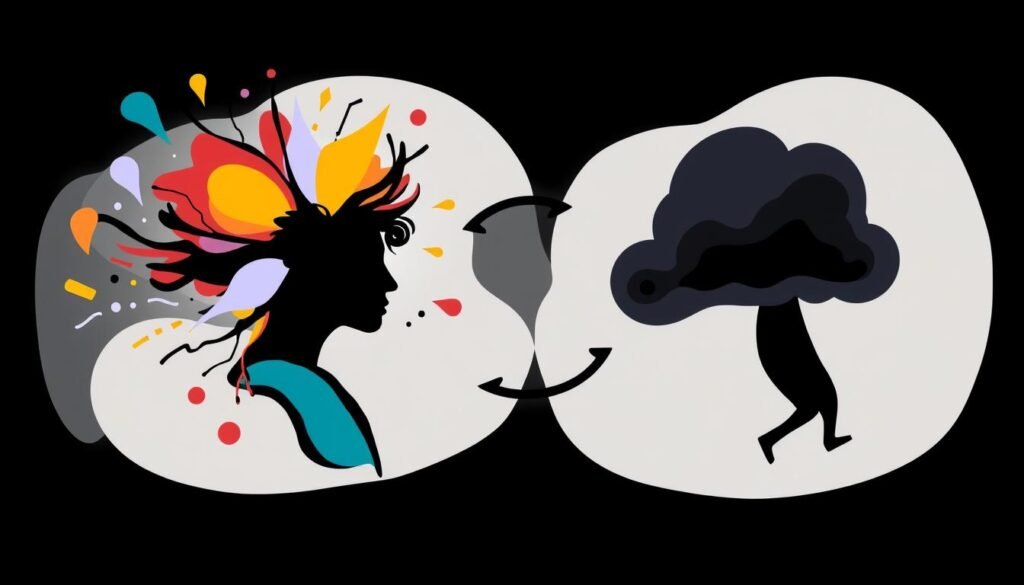
| Type of Episode | Common Symptoms |
|---|---|
| Manic Episode | Increased energy, rapid speech, impulsivity, decreased sleep |
| Depressive Episode | Persistent sadness, lack of motivation, fatigue, appetite changes |
Understanding these symptoms helps in planning effective care. This can greatly improve life for those with bipolar disorder.
Managing Bipolar Episodes Effectively
Managing bipolar episodes takes a full approach. This includes therapy and changes in day-to-day life. People with bipolar disorder find helpful to have support, therapy, and self-care that suits them.
Therapeutic Approaches
Therapy is key in dealing with bipolar episodes. Techniques like Cognitive Behavioral Therapy (CBT) and interpersonal therapy teach coping skills. They show how thoughts and actions can affect mood. They also give ways to handle the disease. Medicines are also essential to avoid severe mood swings.
Lifestyle Changes and Self-Management Strategies
Making life changes greatly improves well-being. Exercising 30 minutes daily, three to five times a week helps. It boosts brain chemicals that balance mood, reducing mood swings. A stable sleep pattern is critical to prevent manic episodes.
Keeping a mood diary helps notice mood shifts and discover what triggers them. It aids doctors in adjusting the treatment plan. Having support from loved ones reduces stress and eases bipolar disorder symptoms. These steps lead to a healthier life and better handling of bipolar episodes.
Bipolar Disorder Treatment Options
Managing bipolar disorder effectively is crucial for those dealing with it. Treatment usually involves medication and psychotherapy. These methods are personalized to help maintain stability and enhance life quality.
Medication Choices
Meds for bipolar disorder mainly include mood stabilizers, antipsychotics, and antidepressants. These medicines play different roles. They control symptoms and stop relapses. Below is a brief overview of typical meds:
| Medication Type | Examples | Usage |
|---|---|---|
| Mood Stabilizers | Lithium, Valproate | Helps manage mood swings and reduces the frequency of episodes. |
| Antipsychotics | Quetiapine, Olanzapine | Useful in treating manic episodes and stabilizing mood. |
| Antidepressants | Fluoxetine, Sertraline | Target depressive symptoms, often used with caution. |
Sticking to your meds is key to stability. It prevents mood shifts and supports a fulfilling life.
Psychotherapy Techniques
Psychotherapy is vital alongside meds for bipolar management. Effective techniques include:
- Cognitive-Behavioral Therapy (CBT): Aims to identify and change negative thought patterns, fostering healthier behaviors.
- Interpersonal Therapy (IPT): Focuses on improving interpersonal relationships and enhancing emotional support networks.
- Family-Focused Therapy: Involves family members in treatment, promoting mutual understanding and support.
These psychotherapy approaches tackle emotional challenges. They equip individuals with coping tools for their condition.

Understanding the Manic vs. Depressive Episodes: Understanding the Cycle
Manic depression cycles switch between high and low moods in bipolar disorder. These changes may happen without warning. A manic phase can last from a week to months, just like depressive periods often do. Studies have shown that depressive episodes average around 5.2 months in length.
People with bipolar disorder typically go through one or two cycles each year. There’s a tendency for these to happen more in spring and fall. Around 10% to 20% experience rapid cycling, which means having four or more cycles in a year. Early signs, having bipolar disorder for a long time, and drug misuse can lead to rapid cycling.
Some experience even more frequent mood changes, known as “ultra-rapid” or “ultradian” cycles. Knowing these patterns helps in quick mood swing recognition. This lets people get the right help and manage bipolar disorder better. For extra information on rapid cycling, see this useful link on rapid cycling in bipolar disorder.
Coping with Mood Swings and Triggers
People with bipolar disorder often struggle with mood swings and finding their triggers. Knowing what causes mood changes can really help. This way, individuals can better handle their emotions. Stress, seasonal shifts, and using substances are big triggers.
Recognizing and Avoiding Triggers
It’s important to know what causes mood swings in bipolar disorder. Stressful events might make depression worse. Not getting enough sleep can lead to more manic episodes, especially in women and those with bipolar I disorder. Also, changes in hormones during manic episodes can make mood swings worse.
Women are reported to be 1.43 times more likely to experience manic episodes due to sleep loss than men.
- Stressful life events
- Seasonal variations
- Substance use disorder
- Sleep deprivation
- Hormonal changes
Strategies for Coping with Mood Swings
To deal with mood swings, blending different strategies is key. Keeping a regular sleep schedule helps with sleep-related issues. Regular physical activity helps in managing emotions. Support from therapy and group discussions is also crucial for emotional support.
Lifestyle changes like diet and exercise are important for mood management. Having a set routine makes daily life easier. Practices like mindfulness strengthen emotional resilience.
| Strategy | Description | Impact on Mood Swings |
|---|---|---|
| Sleep Hygiene | Consistent sleep schedule and adequate rest | Reduces likelihood of manic episodes |
| Regular Exercise | Physical activity tailored to individual preferences | Improves mood stability |
| Nutritional Management | Balanced diet rich in Omega-3 and nutrients | Supports overall well-being |
| Mindfulness Practices | Meditation and stress-reduction techniques | Enhances emotional regulation |
| Therapeutic Support | Engagement in counseling or group therapy | Provides emotional reinforcement |

Support for Individuals Experiencing Bipolar Disorder
Support is key for those living with bipolar disorder. It helps a lot when friends and family are involved. They create a space where understanding thrives, making it easier to deal with mood changes. This part talks about how to offer that crucial support and where to find help for bipolar disorder.
How Friends and Family Can Help
Being there for someone needs empathy and patience. Ways to help include:
- Pushing for professional aid, highlighting its importance in managing the disorder well.
- Listening during tough times so the person feels heard and understood.
- Learning about bipolar disorder to fully grasp what your loved one faces.
- Spotting mood swings and knowing their impact on daily activities.
- Building a supportive home that sticks to a routine.
Resources and Support Groups
Good resources for bipolar disorder can really help in coping and healing. Here are some good choices:
- Support groups nearby for sharing with others who get it.
- Online chat rooms and forums for making connections and talking about struggles.
- Therapy, like Cognitive Behavioral Therapy (CBT) and family-focused treatment.
- Educational stuff to learn about managing the disorder, available at health centers.
To understand more about mood episodes and treatment, check out different types of treatments and info.
| Type of Support | Description | Examples |
|---|---|---|
| Emotional Support | Being there to listen and empathize. | Checking in often, talking about feelings. |
| Educational Support | Learning more about the illness. | Reading up, going to bipolar disorder workshops. |
| Practical Support | Helping with daily challenges. | Organizing daily routines, handling meds. |
Taking steps to offer support can change lives for those dealing with bipolar disorder. Finding and connecting with resources is key to finding balance and wellness.
Conclusion
Bipolar disorder is complex, mixing manic and depressive episodes. Diagnosing it is hard because symptoms often overlap. This situation calls for increased awareness from everyone. Sleep problems can warn us of future episodes. Spotting these early on is key to getting help fast.
Fast help can improve the situation for people with bipolar disorder. It’s especially true during the early warning phase of the disorder. This phase can last a few days to months, depending on the episode. Good support systems are crucial here. Learning how to handle bipolar episodes can help both individuals and their loved ones.
Research shows that treatment needs to be specific to the person. This includes medicine, therapy, and lifestyle changes. With the right support and understanding, people dealing with bipolar disorder can find balance. It opens up the possibility of facing bipolar disorder with more strength and optimism.