Did you know nearly 30% of people with major depressive disorder don’t get better with first-time antidepressants? This fact shows we urgently need more ways to help, especially for those with *treatment-resistant depression*. Monoamine Oxidase Inhibitors (MAOIs) are often overlooked but can be very effective. They are especially useful for people who haven’t had success with other *psychiatric medications*. Understanding MAOIs is key. They work differently from other drugs and can greatly help people with continuous mood disorders. This guide will explore how MAOIs work, their safety, and how they can help people with hard-to-treat depression.
Key Takeaways
- Approximately 30% of individuals with depression may not respond to standard treatments.
- Monoamine Oxidase Inhibitors (MAOIs) provide an alternative for treatment-resistant depression.
- MAOIs work by altering neurotransmitter levels in the brain, offering unique effects compared to other antidepressants.
- Four FDA-approved MAOIs are available in the United States, each with specific uses and characteristics.
- Despite their effectiveness, MAOIs are often underutilized in clinical practice.
- Patient education and regular monitoring are essential for safe MAOI use.
Understanding Treatment-Resistant Depression
Treatment-resistant depression (TRD) is tough to treat. It’s when standard antidepressant methods don’t work after trying two or more times. Around 30% of people with major depressive disorder (MDD) face this issue. This severe depression impacts every part of life, from work to relationships.
Statistics show that 10% to 20% of MDD patients still have strong symptoms after two years. The STAR*D study found that after four attempts at treatment over 14 months, 67% got better. But many people don’t find relief, showing the need for different treatment plans. When usual drugs don’t work, doctors might try others like monoamine oxidase inhibitors (MAOIs).
Finding TRD involves detailed checks, looking at a patient’s history and past treatment results. Those with lasting depression might face long, costly treatments. However, as we learn more, new treatments, including MAOIs, offer hope to those not helped by other antidepressants.
What Are Monoamine Oxidase Inhibitors (MAOIs)?
Monoamine Oxidase Inhibitors, or MAOIs, are one of the first antidepressant types. Created in the 1950s, they were meant to fight tuberculosis at first. But soon, they began to be used for mental health issues, especially depression.
MAOIs work by stopping a certain enzyme in the brain. This enzyme breaks down important chemicals like serotonin and dopamine. When the enzyme is blocked, these chemicals increase, which can make people feel happier.
Today, we know of several MAOIs, but four are specially approved for depression: Nardil (phenelzine), Parnate (tranylcypromine), Marplan (isocarboxazid), and Emsam (selegiline). Emsam is unique because it’s a patch and may have fewer side effects. Doctors often prescribe these for tough-to-treat depression, showing they’re valuable despite being less common now.
Even with newer drugs available, MAOIs like Nardil still work well in studies. They’re as good as other modern antidepressants. But, they can have side effects like tiredness and reduced sexual desire, which makes doctors think twice.
For those with hard-to-treat depression, MAOIs are important. They offer a different way to help when other treatments might not work. Knowing their history and how they work helps patients and doctors talk about the best treatment plan.
How MAOIs Work in the Brain
Monoamine oxide inhibitors (MAOIs) target hard-to-treat depression. They work by stopping an enzyme called monoamine oxidase. This enzyme breaks down serotonin, norepinephrine, and dopamine.
Stopping this breakdown increases these neurotransmitters in the brain. This can help improve mood and lessen depression symptoms.
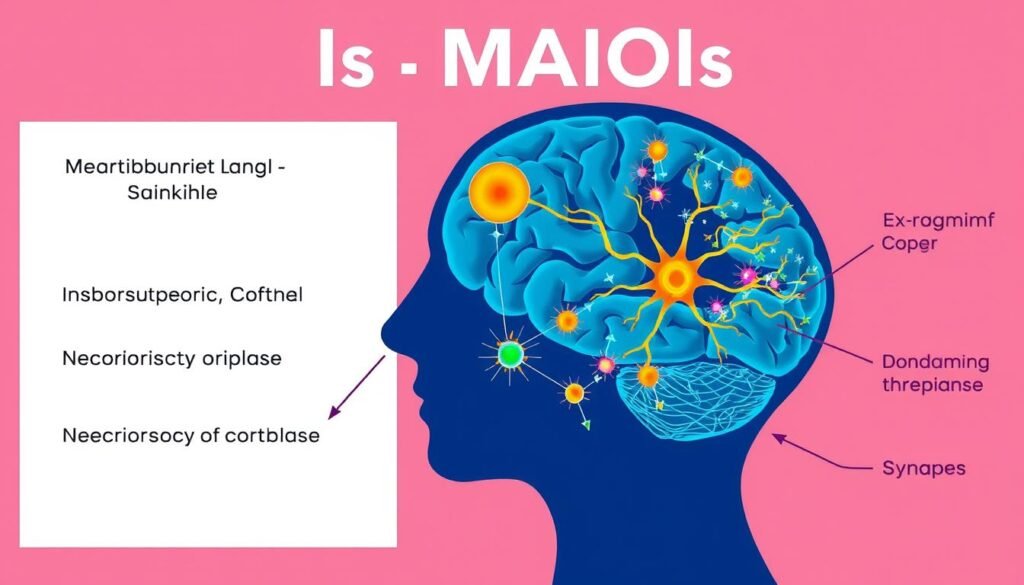
For those with depression, MAOIs change the game. Higher serotonin can stabilize mood. More dopamine boosts motivation and pleasure.
Additionally, more norepinephrine means better energy and alertness. This is key for people with depressive disorders.
Studies show these drugs really do help by raising neurotransmitter levels. This can relieve symptoms of depression. Knowing how MAOIs work helps doctors create better treatments.
It’s important for patients to talk with their doctors about MAOIs. They need to discuss which MAOIs to use, side effects, and food restrictions. For more info on these drugs, check out this guide.
| Neurotransmitter | Function | Effect of Increased Levels |
|---|---|---|
| Serotonin | Mood regulation | Improvement in overall mood |
| Norepinephrine | Energy and alertness | Increased energy, reduced fatigue |
| Dopamine | Reward and pleasure | Enhanced motivation and enjoyment |
By understanding how MAOIs work and talking with their doctors, people can find a way to get better.
Monoamine Oxidase Inhibitors (MAOIs) for Treatment-Resistant Depression
Monoamine Oxidase Inhibitors (MAOIs) are important for treating hard-to-treat depression. They are often the last choice, but they work well for some people. Knowing when to use MAOIs can help achieve better results, especially for those not helped by other antidepressants.
Indications for Using MAOIs
MAOIs are best for those with atypical depression or who don’t respond to other treatments. For instance, phenelzine has helped people with stubborn depression. One man in his 60s relied on phenelzine for over 30 years. He quickly got worse when he had to stop because phenelzine was not available.
A study in 2005 showed MAOIs helped 56% of people with tough depression. Even though they’re not often used due to possible bad reactions, they can be very helpful. Doctors usually think of them after other treatments don’t work, especially if the person has unusual symptoms or a lot of anxiety.
MAOIs vs Other Antidepressants
MAOIs, like phenelzine, often do better than other drugs for certain kinds of depression. They work in a different way in the brain, which can make people feel better. Some who didn’t get better with typical treatments felt improvements after switching to MAOIs.
| Antidepressant Class | Effectiveness in Treatment-Resistant Depression | Considerations |
|---|---|---|
| MAOIs (e.g., Phenelzine, Tranylcypromine) | 56% effective in treating resistant cases | Potential for hypertensive crisis. Requires dietary restrictions. |
| SSRIs (e.g., Sertraline, Escitalopram) | 10%-30% show no improvement | Generally well-tolerated but less effective in resistant cases. |
| Tricyclic Antidepressants | May be effective but less so than MAOIs for atypical features | Side effects can be more severe; often not the first choice. |

Knowing how MAOIs differ from other antidepressants can help patients and doctors choose the best treatment. For those dealing with treatment-resistant depression, this can be crucial. To learn more about MAOIs, check out this informative guide.
Types of MAOIs Available
Monoamine oxidase inhibitors (MAOIs) are crucial antidepressants, especially for serious mood issues. They are not as common now but still essential for certain conditions like hard-to-treat depression. Phenelzine, tranylcypromine, and isocarboxazid are notable for their distinct features and uses.
Phenelzine: A Closer Look
Phenelzine, or Nardil, is approved for depression, panic, and social anxiety disorders. It works by boosting brain neurotransmitter levels, as a non-selective and permanent MAOI. Patients can take up to 90 mg/day safely, under close monitoring. However, they must follow strict diet guidelines to prevent serious side effects.
Tranylcypromine and Isocarboxazid: Key Insights
Tranylcypromine, also known as Parnate, is effective for social anxiety, panic disorders, and unique types of depression. It is usually prescribed in doses of 40-60 mg/day, depending on how well a patient can tolerate it. Isocarboxazid, sold as Marplan, is beneficial too. Studies show it often needs at least 85% MAO enzyme inhibition to work, highlighting its importance in treatment.
Despite their historic value, MAOIs like phenelzine, tranylcypromine, and isocarboxazid should be prescribed carefully. They can cause serious issues such as sudden blood pressure drops and hypertensive crises. For more details on MAOIs, including their pros and cons, click here.
Side Effects and Safety Concerns of MAOIs
MAOIs have both potential side effects and safety issues. They can treat hard-to-manage depression. But people need to know about the risks. These include a chance of a hypertensive crisis and serotonin syndrome. Also, you need to watch what you eat.
Understanding Hypertensive Crisis
When on MAOIs, eating tyramine-rich foods like aged cheese can spike your blood pressure. This severe rise is called a hypertensive crisis. Avoiding certain foods is crucial.
To prevent this, you must stick to a diet plan. Plus, checking your blood pressure often helps catch any problems early.
Risk of Serotonin Syndrome
Serotonin syndrome is a big risk with MAOIs. It happens when MAOIs mix with other antidepressants or serotonin boosters. Symptoms include feeling agitated and having hallucinations.
This scary risk makes it essential to talk over treatment options carefully. Ensuring you manage your meds properly is key.
Managing Dietary Restrictions
Following a diet is key to using MAOIs safely. Avoiding foods with tyramine is a must to dodge serious health risks.
Your doctor should give you a list of foods to steer clear of. This helps keep you safe and compliant. More information on side effects helps patients understand better.
When to Consider MAOIs
Figuring out when to start monoamine oxidase inhibitors (MAOIs) involves many clinical steps. This is especially true when past treatments haven’t worked. MAOIs are a good choice for people with tough-to-treat depression. This means they didn’t get better after trying at least two different kinds of antidepressants. It’s critical to look at indications for MAOI use for those with few options left.
Prior Treatments That Have Failed
Many seeking relief from depression have tried several antidepressants without success. Around 60%–70% of those with major depressive disorder (MDD) might not respond to usual treatments. Examining previous treatment failures can show the patient’s specific hurdles. MAOIs might offer hope, particularly for those with atypical depression.
The safety and side effects of MAOIs mean careful prescribing and watching is key.
Patient Preferences and Collaboration
Working together with patients is crucial when thinking about MAOIs. People often have definite views on treating their mental health. It’s vital to discuss dietary limits, possible side effects, and drug interactions clearly. These talks help patients play a big part in their treatment choices.
Knowing a patient’s treatment history, including past failures, aids in making decisions together. This approach improves the chance of finding the right treatment.
Combining MAOIs with Other Treatments
Treatment-resistant depression (TRD) needs new ways to help people feel better. Using MAOIs with other treatments like therapy or other drugs can work better. This method helps when normal antidepressants don’t.
Augmentation Strategies for Enhanced Efficacy
Doctors might use extra strategies with MAOIs to help more. Adding mood stabilizers or different antipsychotics can help. Studies show that combining MAOIs with other drugs or stimulants helps about 21% of patients. This shows there are many ways to help those with TRD.
Transitioning from Other Antidepressants
It’s important to switch to MAOIs safely. Doctors need to watch out for bad reactions from old medicines. They usually reduce the old medicine slowly before starting an MAOI. This makes the change safer and easier. For instance, patients moving from older antidepressants to MAOIs often do well with the right care.
Combining MAOIs and other treatments needs healthcare providers and patients to work together. Tailoring this to what each person needs can greatly help those with hard-to-treat depression. People should know both the good and bad about these options. They should learn about boosting their treatment to get better.
Patient Education and Continuous Monitoring
In managing treatment-resistant depression with MAOIs, patient education is vital. Patients need clear information about their treatment to be safe and effective. They should know about side effects and dietary restrictions. This knowledge helps patients work closely with their healthcare providers.
Patients must understand the risks of hypertensive crises and serotonin syndrome. Realizing these risks lets them take charge of their health. They can then have better, more informed discussions with their providers.
Essential Information for Patients about MAOIs
It’s important for patients on MAOIs to know the benefits and risks of their medication. They should keep track of any mood swings or negative effects. Following dietary rules is key to avoid serious health problems.
Staying in touch with healthcare providers helps manage and adjust treatment. This ongoing communication is crucial for recovery.
The Role of Healthcare Providers in Monitoring
Healthcare providers are crucial in keeping an eye on patients taking MAOIs. They ensure the treatment matches the patient’s needs through regular check-ups. This helps with adjusting medicines or changing treatment approaches when necessary.
Support from healthcare teams makes patients more involved in their care. This support aims for a better life quality for those with mental health challenges.