Over 17 million adults in the U.S. battle with depression. This fact shows we urgently need better treatments and support for mental health. Many people are now looking at herbal supplements as natural ways to fight depression. Supplements like St. John’s wort, omega-3 fatty acids, and saffron may help with mild or moderate depression. But, they are not FDA-approved for treating depression in the U.S.
When considering herbal supplements for depression, remember they can help with symptoms but shouldn’t replace what doctors prescribe. This guide will give you a thorough look at these options. It will also talk about lifestyle changes for better mental health.
Key Takeaways
- Herbal supplements can help manage depression symptoms.
- Natural remedies should go along with, not replace, traditional treatments.
- It’s important to think about the risks and benefits of each supplement.
- Studies are ongoing to find out how effective and safe these supplements are.
- Talking to a healthcare provider before starting any supplement is very important.
Understanding Depression and Its Impact
Depression is a prevalent mental health condition that affects both individuals and society. About 3.8% of the global population suffers from depression. This includes 5.0% of adults and 5.7% of seniors, totaling around 280 million people worldwide. It’s critical to know the symptoms of depression for early treatment and reducing its effects on daily life.
Prevalence and Symptoms of Depression
The symptoms of depression range widely and can include sadness, hopelessness, irritability, and fatigue. Other signs are sleep problems and changes in appetite. A diagnosis of Major Depressive Disorder requires at least five of these symptoms for two weeks. In 2019, about 6.5% of U.S. adults experienced depression, with women being more affected than men.
In Europe, there’s has been a recorded prevalence of 6.38% for depressive disorders. This points to the need for more awareness and diagnosis efforts. Poland, for example, has about 1.5 million people facing depression, about 3% of its working-age population. With the risk higher in those over 60, raising awareness and early intervention are key.
Common Treatment Methods for Depression
Treatment usually involves medications like antidepressants and psychotherapy. These methods are essential for easing symptoms and improving life quality for those affected. However, studies reveal nearly 68% don’t respond to first-line therapies, and 15-30% find no relief even after trying different antidepressants.
Psychotherapy, such as cognitive-behavioral therapy or interpersonal therapy, often enhances treatment when combined with medication. Consulting healthcare professionals is crucial to create a personalized treatment plan.
Natural Approaches to Manage Depression
Many people are trying natural ways to fight depression. They find herbal remedies a good choice. This is because plants like St. John’s wort help with mild to moderate depression. Studies show these natural methods help with fewer bad side effects.
The Rise of Herbal Supplements
Herbs like St. John’s wort, SAMe, and 5-HTP are getting popular for depression relief. St. John’s wort, for example, may increase serotonin in the brain. This can help people with mild to moderate depression feel better. Saffron also shows promise in reducing depression.
The Role of Lifestyle Changes
Making changes in how you live can boost your mental health. Exercising can lower depression and stress. It helps you relax more. Adding activities like yoga and meditation brings peace.
Eating right is key to feeling mentally strong. Not having enough B12 and vitamin D can make you feel low. Eating foods with omega-3s, greens, and important nutrients can help balance your mood.
Benefits and Risks of Herbal Supplements
Herbal supplements have become popular for managing depression. The benefits of herbal supplements include acting as natural antidepressants. This offers a choice for those seeking alternatives to standard drugs. For example, St. John’s wort and saffron are promising in easing mood issues with fewer side effects than traditional medications.
Potential Benefits for Managing Depression
Herbal supplements can improve mood and offer health benefits. They are often effective for mild to moderate depression, improving well-being with fewer side effects. Examples include:
- St. John’s Wort: Known to be effective for depression.
- Saffron: Its effects are similar to antidepressants.
- Lavender: Helps reduce anxiety with its calming scent.
- Omega-3 Fatty Acids: Linked to better mood and less depression.
Many people have found these supplements helpful as alternative treatments grow in popularity. In 2020, consumers spent over $11.3 billion on herbal products, with mental health as a common reason for their choice like managing stress and anxiety.
Safety and Quality Concerns with Supplements
Even with the benefits of herbal supplements, there are safety and quality issues. The safety of herbal supplements is less controlled compared to standard medications. This means consumers must be cautious when choosing products. The FDA’s regulations for supplements are not as tough as for drugs. This leads to inconsistent labels and strengths between batches.
Potential risks include:
- Interactions with standard medications.
- Side effects like nausea, dizziness, or headaches.
- Extreme allergic reactions causing breathing problems.
Before starting any herbal regimen, consulting healthcare providers is key. It’s crucial to understand the quality assurance of herbal products for safety and effectiveness. Choosing reputable brands committed to manufacturing best practices ensures optimal health benefits.
Herbal Supplements for Depression
Herbal supplements are becoming popular for those looking for natural depression relief. St. John’s Wort, Saffron, and Rhodiola are leading options. Each has unique benefits with different levels of scientific support.
St. John’s Wort: A Popular Choice
St. John’s Wort is famous for fighting mild depression. Many have used this herbal remedy. Typically, the recommended dose is 300 milligrams, three times a day as a standardized extract.
It helps some with mild symptoms, but big studies show it’s not always better than a placebo for serious depression. It can also affect how well other medications work, like birth control and heart meds. Always consult a professional before trying it.
Saffron: Emerging Evidence
Saffron is gaining notice for treating depression. It’s thought to boost serotonin, enhancing moods. Studies show it can lessen depression, similar to standard antidepressants.
Its advantages have caught researchers’ interest. Yet, more detailed studies are needed to fully understand its effects and potential side effects.
Rhodiola: Adaptogen for Mood Support
Rhodiola is noted for its stress-relieving abilities. It’s an adaptogen, which means it might improve mood and help with stress. Studies suggest Rhodiola rosea balances neurotransmitters, benefiting those with depression.
It has few side effects, mostly dizziness and dry mouth. Its lower risk of side effects makes Rhodiola appealing for those seeking natural mood boosters.
Essential Nutrients for Mental Health
Essential nutrients play a vital role in our mental health. Lack of these nutrients can affect our mood and how we feel overall. We’ll explore key nutrients like Omega-3 fatty acids, vitamin D, and folate. They help keep our emotions stable and our minds clear.
Omega-3 Fatty Acids and Their Benefits
Omega-3 is crucial for our brain’s health, impacting our thoughts and feelings. It helps fight anxiety and depression. These fatty acids improve our mood and mental abilities.
Eating fish can boost serotonin, making us feel better. If you’re not getting enough Omega-3, consider supplements to fight depression symptoms.
The Importance of Vitamin D
Vitamin D plays a big role in our happiness. It helps grow new brain cells and makes serotonin, which keeps us balanced. Not having enough vitamin D can lead to feeling sad.
Sunshine helps increase vitamin D in our body. If you can’t get enough sun, taking vitamin D supplements can help your mental health.
Folate’s Role in Mood Regulation
Folate is key for making neurotransmitters, which help control our mood. Keeping folate levels right can improve how we feel and even help with depression treatment.
We can find folate in foods like greens, beans, and fortified products. These foods are good for our brain’s health. Eating well is important for fighting depression, as seen in a study found here.
Other Herbal Options Worth Considering
Looking into different herbs can help those with depression and anxiety. Chamomile, SAM-e, and 5-HTP are good options. They have unique benefits for better mental health.
Chamomile: Calming Effects
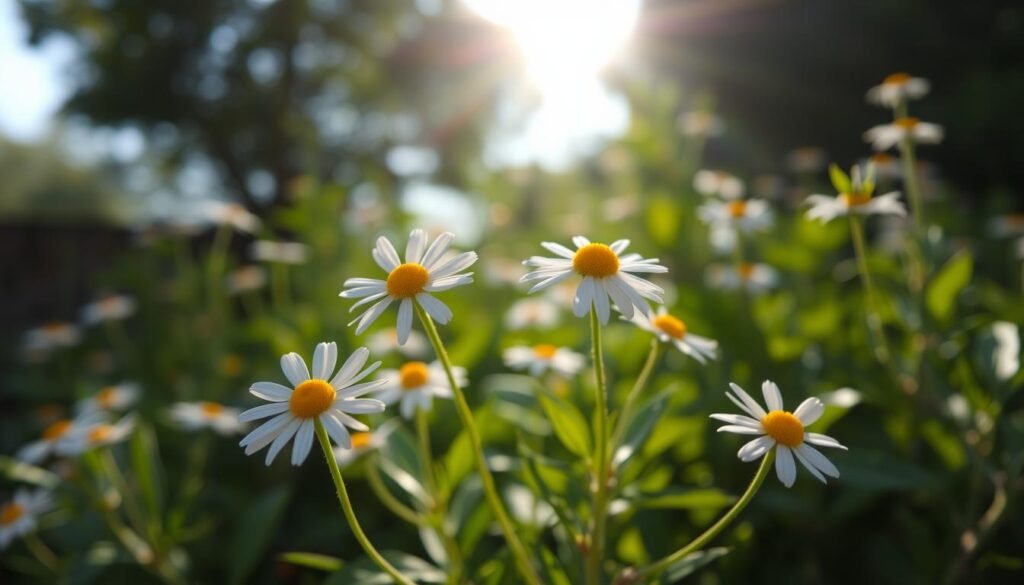
Chamomile is known to help with anxiety and stress. Studies show it might reduce stress symptoms. This could also help people with depression. More research is needed, but it’s a promising natural stress reliever.
SAM-e: A Synthetic Supplement Option
SAM-e, or S-adenosylmethionine, is a man-made supplement that may ease depression. Research says it could work as well as standard antidepressants. If you’re thinking about trying SAM-e for depression, talk to a doctor first. It could interact with other medicines.
5-HTP: Potential Benefits and Precautions
5-HTP could increase serotonin in the brain, improving mood. It’s a good choice for battling depression. But, it can be risky with other antidepressants due to serotonin syndrome. Always consider the pros and cons of 5-HTP.
| Herbal Option | Primary Benefits | Considerations |
|---|---|---|
| Chamomile | Calm anxiety and manage stress | Requires further research for definitive claims |
| SAM-e | Potential antidepressant effects | Risk of interaction with other medications |
| 5-HTP | Enhances serotonin levels | Possible risk of serotonin syndrome |
Consulting with Healthcare Professionals
Getting advice from healthcare experts is key when looking at herbal supplements for depression. A Healthcare Consultation helps you know what you need for your health. It also makes sure you pick safe and good options. By talking about your own treatment plans, you get to find Professional Mental Health Support made just for you.
The Importance of Professional Guidance
Talking to a healthcare pro before trying any herbal supplement is wise. They can tell you about the risks and benefits for you. This advice takes your health history into account. People are starting to trust Safety of Herbal Remedies more, especially about how well they work and their mix with other drugs.
Interactions Between Herbal Supplements and Medications
Herbal supplements might change how regular medicines work. For instance, St. John’s wort can mess with antidepressants. It’s very important to have a pro help when adding supplements to your treatment. This avoids bad effects and ensures your care covers everything. Healthcare providers who know the latest research can help keep you safe when using herbs. Learn more in this detailed article.
Choosing Quality Supplements
Selecting the right supplements is vital for good mental health. When picking herbal supplements, it’s important to look for quality. Factors like third-party testing, where ingredients come from, and how clear the labels are matter.
How to Select Safe and Effective Products
Knowing how to pick the right supplements is crucial. Here are some tips:
- Look for products with third-party testing. This confirms the ingredients are correct and the product is good quality.
- Check for clear dosage info. This ensures you use them correctly, based on research.
- Find out where the ingredients come from. The best herbs usually come from specific regions known for their natural products.
- Look for certifications like NSF Certified for Sport. This shows the product meets strict safety standards.
Recognizing Reputable Brands
Picking trusted brands is key in this market. Some manufacturers are known for their quality commitment:
| Brand | Product | Quality Assurance |
|---|---|---|
| Carlson | Elite EPA Gems | Third-party tested through ConsumerLab.com |
| Nature Made | Vitamin D | Available in dosages of 1,000 to 5,000 IU |
| Nature’s Way | Perika (St. John’s Wort) | Contains 3% hyperforin |
| Thorne | B-Complex #6 | NSF Certified for Sport |
| Thorne | 5-MTHF 15mg | Contains active form of folate; supports depression |
| SAMe | ConsumerLab recommended | Budget-friendly option with scientific backing |
Choosing these brands means you’re getting supplements that help your mental health. Making informed decisions helps improve health while reducing risks.
Real-Life Success Stories
Many people have shared their experiences with herbal remedies against depression. Their stories show how determination and the right methods can improve mental health greatly.
Personal Accounts of Improvement
Take Shaynee’s story for instance. She had been on drugs like Zoloft and Prozac for nearly ten years. Before turning 40, she looked for new ways to manage her depression. This led her to an outpatient program.
It was there she found out about her MTHFR gene mutation. This mutation is linked to several health problems, including depression.
Shaynee’s path included tackling her vitamin B12 and D shortages. She also made lifestyle changes, such as eating better and exercising more. She showed how a mix of solutions can lead to success with herbal remedies.
Factors Contributing to Positive Outcomes
The success of herbal remedies depends on many things. For Shaynee, these were:
- The way she responded to supplements and changes in lifestyle
- The choice of herbal treatment
- Following the advised doses
- Adding healthy activities like meditation and drinking less alcohol
Research shows that omega-3 supplements plus regular antidepressants lead to much better health. Those hoping for good results with herbs should understand these factors. A combined approach of nutrition and herbal aids can offer a way to real mental health progress.
Conclusion
Herbal supplements offer another path alongside traditional depression treatments. Over 300 million people worldwide battle with depression. Finding natural ways to manage this issue brings hope. St. John’s Wort, kava-kava, and lavender are some herbs that have shown promise in studies. However, it’s key to be careful with these supplements. They have benefits but also risks.
Using herbal remedies with standard treatments might give better results. Some studies show that combining them with antidepressants can lessen side effects. It’s important to choose treatments based on personal needs for best mental health. Always talk to a doctor to make a safe and effective plan.
Herbal supplements can add to how we fight depression. As science gets better, those suffering have more hope for effective care. It’s about having many options to tackle mental health challenges.