Did you know that the average American spends over 10 hours a day staring at screens? This fact highlights a serious health issue. Studies now show how nature benefits our mental health. Engaging with the outdoors improves our mood, lowers stress, and sharpens our mind. People who spend time in green spaces feel happier and more fulfilled. It’s clear that making time for nature in our daily lives is vital.
Outdoor activities are a break from the busy world. They connect us to nature, boosting our mental health and creativity. They even help lower the chance of mental health issues. With more people recognizing these benefits, there’s a bigger push for nature-based healing. Nature is a quick stress-reliever, improves focus, and helps us connect deeper with ourselves and the world.
Key Takeaways
- Spending time in nature significantly improves attention and reduces stress.
- Nature therapy can lead to better mood and reduced psychiatric disorders.
- Engaging in outdoor activities enhances cognitive abilities and promotes happiness.
- Green exercise encourages physical activity, benefiting both mental and physical health.
- Outdoor mindfulness practices support mental clarity and relaxation.
The Connection Between Nature and Mental Health
The link between nature and mental health is getting more attention lately. As cities grow, this connection is more important to understand. Over half the world’s population lives in cities. This number is expected to grow. Urban living often means more stress due to issues like housing and pollution.
Studies show that being in nature can make you feel better mentally. Spending just 15 minutes a day outside can help. If you stay outside longer, up to 90 minutes, the benefits are even greater. Those who spend at least two hours outside weekly feel healthier than those who don’t.
How Nature Affects Mental Well-being
Nature has been found to improve our brains. It helps with memory, attention, and creativity. In busy cities, natural places offer a break. They can help people deal with mental health issues better.
Time in nature can make your heart rate go down. It reduces stress and lowers cortisol, which is related to stress. While some studies differ, most agree that nature is good for your mental health.
| Time Spent in Nature | Effects on Mental Health |
|---|---|
| 15 minutes daily | Positive mental health effects |
| 20-90 minutes sessions | Enhanced mental well-being |
| 2 hours weekly | Better overall health perceptions |
The bond between nature and mental health shows we need green spaces in cities. Even small amounts of nature time can boost mental health and strength.
Understanding Nature Therapy
Nature therapy uses therapeutic activities in nature to boost mental health. Being in nature changes how we feel, think, and relate to others. This part talks about what nature therapy is and its core principles. It shows how it can help improve mental health.
Definition and Principles of Nature Therapy
Nature therapy is a way to heal emotionally and mentally using nature. It includes activities like guided walks and outdoor mindfulness. These activities have been shown to reduce depression and help focus.
Here are some main ideas behind nature therapy:
- Connection with Nature: It encourages us to connect with our environment. This brings a sense of peace and belonging.
- Mindfulness: Being mindful outdoors helps control emotions and reduces anxiety. It’s a natural way to fight stress.
- Physical Activity: Physical activities in nature can be both longer and more intense. This helps mental health a lot.
- Social Interaction: Doing things together in nature makes relationships stronger. It creates a supportive community feeling.
Studies show even 10 minutes in nature has big benefits. It lowers stress chemicals in our body and eases muscle tension. Being outside clears our mind and makes us emotionally strong. Nature therapy is powerful for healing and growing as a person.
| Benefit | Description |
|---|---|
| Lower Depression Risk | Regular time in green spaces can make depression less likely. |
| Improved Concentration | Being in nature boosts memory and focus. |
| Stress Reduction | Nature helps us relax and feel less stressed. |
| Enhanced Social Bonds | Nature activities build empathy, compassion, and strong connections. |
Exploring the Benefits of Nature and Outdoor Activities for Mental Health
Outdoor activities offer many advantages for our mental and physical health. They improve our mood, lower our anxiety, and help us feel better all-around. Studies have shown that being outside regularly makes us more resilient to mental health struggles.
Psychological and Physical Benefits
Outdoor activities are proven to fight mental health issues effectively. For example, research covering 50 different trials shows that nature helps. It significantly improves our mood and reduces anxiety. This shows how valuable outdoor time is for our mental health.
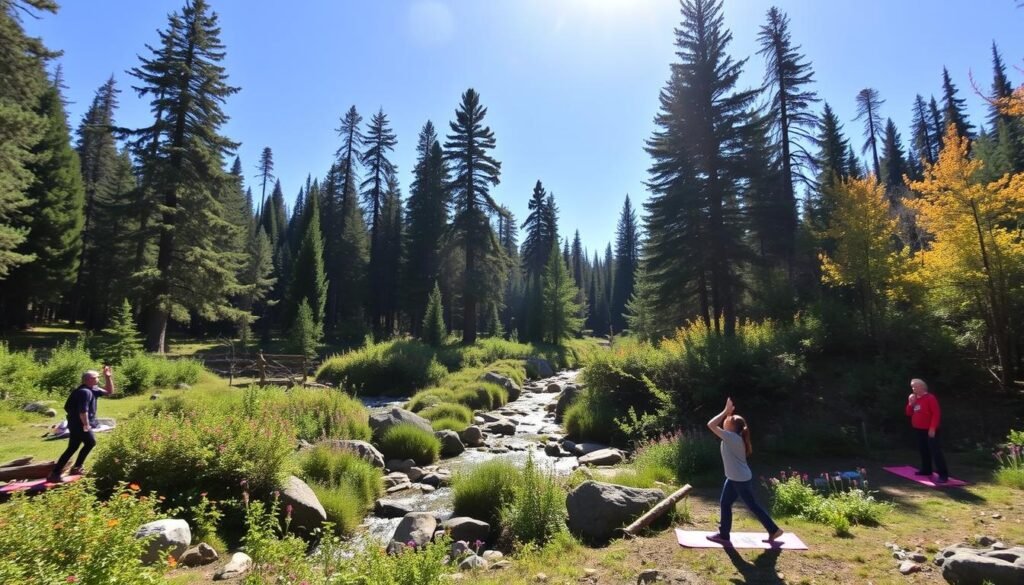
Outdoor activities also boost our physical health. Activities like gardening, outdoor exercise, and being on the water make us happier and have health benefits. For instance, walking or hiking in nature improves our mood. Cycling in beautiful areas lowers our stress levels.
- Gardening: A therapeutic activity that mitigates stress and cultivates well-being.
- Walking or Hiking: Enhances mood and mental health through exposure to nature.
- Cycling: Provides significant reductions in stress while promoting enjoyment of the outdoors.
- Water-Based Activities: Offers calming effects, enhancing relaxation and mental clarity.
- Nature Photography: Encourages connection with surroundings, fostering joy in the moment.
How often and how long we spend outdoors is important. Spending 20 to 90 minutes outside for 8 to 12 weeks is best. Just taking short walks daily can make a big difference. It helps improve our mental well-being and deal with mental health issues.
The more we explore outdoors, the more benefits we find for our mind and body. Getting outside is a great way to support our overall health.
Ecotherapy: Healing Through Nature
Ecotherapy, often called green therapy, supports mental health well. It embraces the healing power of nature. Immersing in natural settings helps individuals heal. This not only boosts mood but also fights mental health issues.
Principles of Ecotherapy
The main ideas of ecotherapy suggest nature is crucial for mental well-being. It urges people to interact with nature directly. Activities like nature walks and gardening show ecotherapy’s benefits clearly.
- Nature Immersion: Spending time outside, like hiking or walking, can reduce anxiety and depression by over 36% versus city environments.
- Therapeutic Gardening: Gardening can improve well-being and lessen mental health disorder symptoms.
- Mindfulness in Nature: Forest bathing can lower stress hormones, promoting a calm state.
A short 90-minute nature walk can calm the brain area linked with overthinking. Many who try ecotherapy see long-term decreases in anxiety and stress, with 55% to 65% feeling better for a long time.
Yet, only 20% to 35% of folks get major benefits from nature-related methods. But, home gardening can cut stress by up to 60%. Mixing indoor and outdoor activities can also uplift mood. This shows ecotherapy’s broad healing power.
| Benefits of Ecotherapy | Potential Improvement |
|---|---|
| Reduction in anxiety and depression | 36% or more compared to urban environments |
| Long-term improvement in mental health | 55% to 65% of participants |
| Decrease in ADHD symptoms | Up to 30% of the population |
| Improvement in PTSD symptoms (veterans) | 60% to 80% reported reduction |
| Maintenance of physical health improvements | 50% to 70% over time |
Ecotherapy offers many mental health benefits. Diving into nature and doing activities like gardening can deeply heal. Knowing ecotherapy’s principles paves the way to better health and happiness.
Green Exercise: Combining Nature and Physical Activity
Green exercise combines the power of nature and fitness. It shows how outdoor activities can greatly improve our well-being. Activities like hiking, biking, and gardening boost physical and mental health.
Exercising outdoors offers better results than indoor workouts. Research supports the unique benefits of being in nature while staying active.
Health Benefits of Green Exercise
Many studies highlight green exercise’s positive effects on mental health and fitness. A review of these studies found psychological improvements in those exercising in natural settings. Benefits include:
- Reduced anxiety
- Decreased fatigue
- Increased positive affect
- Enhanced vigor
Though effects on depression were smaller, the overall impact is positive. Meanwhile, 70% of people with mental health issues get no professional help. This underscores green exercise’s potential as an alternate solution.
Lack of physical activity is a worldwide issue, linked to 9% of premature deaths. Outdoor workouts can reduce this risk. They encourage more intense and longer exercise sessions. Athletes note that outdoor activities make them feel less tired, allowing for more vigorous exercise.
Green exercise can be more enjoyable than gym workouts. It boosts motivation by improving mood and energy levels. Nature helps lower negative feelings like anxiety, anger, and sadness. Green exercise isn’t just beneficial; it’s a key to better mental and physical health.
Forest Bathing: Immersing in the Natural World
Forest bathing comes from Japan and is called Shinrin-Yoku. It is a special way to improve mental health by being in nature. It encourages people to connect with the environment around them. This connection offers big benefits for mental health. With most Americans inside over 93% of the time, getting outdoors is key to feeling better.
The Practice of Shinrin-Yoku
Shinrin-Yoku is about being mindful in forests. It invites you to take in the beauty and sounds of nature. This experience helps people relax and lowers stress hormones. Studies show it can make you feel more upbeat, energetic, and less stressed or sad.
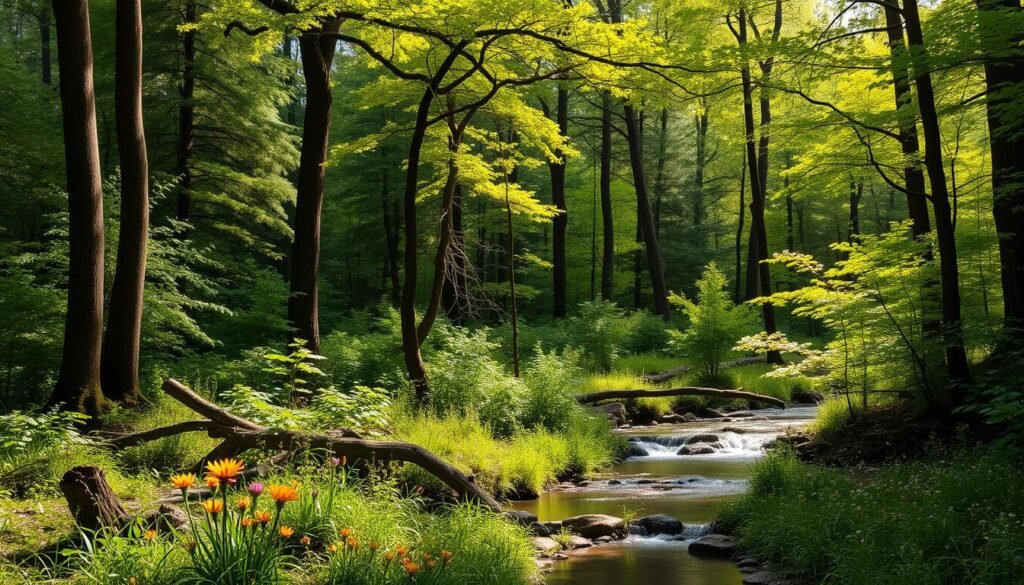
A two-hour forest walk can help you sleep 15% longer and improve sleep quality. Doing this for 2-3 hours a week can make you happier. It also strengthens your immune system, helping fight stress and sickness.
Being in the calm of the forest can lessen feelings of anxiety, sadness, anger, and confusion. This deep connection with nature helps you become more present. Thanks to available parks and trails, more people are learning how forest bathing can help mental health.
The Role of Wilderness Therapy
Wilderness therapy is a special kind of mental health care. It mixes outdoor experiences with regular therapy. This method uses structured activities in nature to help with emotional healing and growth. Being in the wild can greatly help those with mental health issues. It helps them become resilient and connect deeply with the environment.
Therapeutic Use of Outdoor Experiences
Wilderness therapy involves outdoor activities like trips, hiking, and rock climbing for emotional support. A study in 2017 showed it has positive effects for those with low self-esteem, defiance, and impulsivity. This therapy can last months and might cost over $500 a day. This shows how intense these programs are.
Even though wilderness therapy can help manage emotions and boost confidence, it’s important to be cautious. Some programs might feel more like ‘boot camps’ than helpful places. Also, many teens are sent there without wanting to go, which raises ethical concerns.
Still, wilderness therapy offers great chances for finding oneself and personal growth. It improves coping skills and overall health. As these outdoor therapies grow, they’re seen as more effective for mental health.
Outdoor Mindfulness: Finding Peace in Nature
Outdoor mindfulness combines traditional techniques with nature. This can greatly boost mental health. Engaging in activities like mindful walking and nature meditation lowers anxiety and improves focus.
Mindfulness Practices in Natural Settings
Nature-based mindfulness means being fully present in your surroundings. Techniques include:
- Mindful Walking: Walking outside helps you become more aware of your surroundings.
- Breathing Exercises: Breathing fresh air in nature increases oxygen. This helps focus and calms the mind.
- Nature Meditation: Quietly observing nature brings peace and lessens emotional distress.
Such practices improve stress management and cognitive flexibility. Mindfulness is now used in schools and workplaces, helping enhance well-being.
Outdoor mindfulness not only helps you relax but also sharpens the mind. Spending time in nature reduces stress hormones and increases happiness. Experiencing natural beauty also fosters empathy and kindness toward others.
Just being outside can clear the mind, improving focus and resilience against distractions. Consistent practice helps combat negative thoughts. Studies show that nature exposure can boost memory and problem-solving skills.
Using waterproof gear and safety equipment ensures a smooth experience. Drinking enough water lets you enjoy nature without any interruption.
Building strong relationships and seeking support can enhance outdoor mindfulness benefits. Sharing experiences with others can be comforting. For tips on getting help from loved ones, click here.
| Mindfulness Technique | Key Benefits |
|---|---|
| Mindful Walking | Increases awareness, reduces anxiety |
| Breathing Exercises | Enhances focus, calms the mind |
| Nature Meditation | Promotes peace, mitigates distress |
Outdoor mindfulness brings joy and presence to daily life. It plays a big part in improving mental health. It helps people find peace in a busy world.
Biophilic Design: Incorporating Nature into Urban Settings
In today’s fast-paced world, biophilic design has become crucial for mental health. It blends natural elements with the urban landscape. This approach offers residents a chance to enjoy nature in the city. Parks, green roofs, and urban gardens are not just for fun. They also help refresh our minds. Studies confirm that nature in cities lowers stress and helps us relax. This is key to boosting mental health for everyone living in cities.
The Impact on Mental Health
Research tells us that green spaces in cities can make the air cleaner. They also cut down on noise and give wildlife a home. All this leads to healthier lives. In areas with lots of trees, people breathe easier and feel less stressed. Parks and gardens offer a break from the hustle of city life. They’re places where people can meet and enjoy being outdoors.
Adding plants inside buildings helps our mental state too. They clean the air around us. Being in spaces filled with natural light can make us do better in school. It also lowers anxiety. This is vital since so many students are dealing with stress and anxiety nowadays. So, biophilic design isn’t just about looking nice. It’s essential for supporting healthy city living. To learn more about how nature helps us feel better, check out these natural solutions.