Did you know almost half of Olympic athletes face post Olympic depression? This shows how common it is. It highlights the emotional cost of competing at such levels. Stars like Michael Phelps and Keely Hodgkinson have shared their mental health battles after big events. They deal with feelings of emptiness, lost identity, and the pressure to win again.
It’s key to spot depression signs after the Olympics. Not just for athletes but for their supporters too. After the peak of training and competing, they must address the mental strains. This article gives tips and ways to help with athlete mental health. It aims to make the tough times a bit easier.
Key Takeaways
- Post Olympic depression affects nearly 50% of athletes after competition.
- Emotional challenges often lead to feelings of emptiness and identity loss.
- Recovery strategies are essential for managing mental health after the Olympics.
- Support from friends and family plays a crucial role in the healing process.
- Understanding the signs of depression is key to seeking help.
Understanding Post Olympic Depression
Post Olympic depression deeply impacts many athletes after the Games. Moving from competing to normal life brings feelings of loss and sadness. This comes from performance stress, lifestyle changes, and media attention.
Talking about athlete mental health is key. Stars like Michael Phelps and Simone Biles have shared their mental health battles. The strong focus on sports can make athletes feel lost afterwards. They often struggle to find their worth outside the sports world.
The end of the Olympics can be tough without enough support. In 2020, sports psychologist Kristoffer Henriksen noted many athletes face disappointment. It’s vital to have mental health support ready for these athletes as they adjust back to daily life.
We need to open up more about mental health in sports. This will help us support athletes dealing with post Olympic depression. Our aim is to help them stay emotionally strong even after they stop competing.
For more insights on this topic, read about post Olympic blues and the psychological impacts of the Games on athletes.
The Psychology Behind Post Olympic Depression
Post Olympic depression comes from emotional and psychological factors. Athletes spend years training for the Olympics, making the aftermath hard. This can leave them feeling empty and confused as their purpose fades away.
About 33.6% of elite athletes face anxiety and depression. This shows the need to focus on athlete mental health. The end of a career can make this worse. Famous cases like Tori Bowie and Jesús Rollán show why it’s important to talk about the psychology of depression.
After competitions, athletes may feel worse, have mood swings, and face identity crises. Losing goals and media attention can worsen these feelings. It’s key to see how sports psychology can help during these times. Mental resilience strategies are helpful for a smoother transition.
Seeing retirement as a chance for growth is important. Athletes can focus on health, relationships, and new interests. This helps in understanding athlete mental health and in recovery.
| Challenge | Percentage Affected |
|---|---|
| Anxiety and Depression | 33.6% |
| Severe Mental Health Problems Post-Career | 26.4% |
Talking about mental health issues can reduce stigma. This lets athletes get the help they need. It’s crucial to discuss mental well-being as part of their journey.
Research in sports psychology can help athletes after the Olympics. It aids in understanding their experiences, which builds resilience and well-being.
Realizing the importance of emotional recovery is key to mental stability. Athletes should reflect and find resources to help them. This opens the door to rewarding new chapters in their lives.
Signs of Post Olympic Depression
It’s crucial to spot post Olympic depression early on. Athletes face emotional and physical hurdles after their events end. Knowing these signs helps athletes and their supporters during tough times.
Emotional Symptoms
Athletes may go through deep emotional struggles. They might feel:
- Persistent sadness
- Anxiety
- Feelings of worthlessness
- Irritability or anger
- A marked decline in motivation
Studies show 33.6% of elite athletes face anxiety and depression post-competition.
Physical Symptoms
Physical issues also affect athletes’ wellness. Common signs include:
- Fatigue
- Changes in sleep patterns
- Deterioration in overall physical health
About 27% of Olympic and Paralympic athletes felt depressed after Tokyo Games. Immediate attention to these symptoms is vital for recovery.
| Type of Symptoms | Examples | Prevalence |
|---|---|---|
| Emotional Symptoms | Sadness, Anxiety, Worthlessness | 33.6% of elite athletes experience anxiety and depression |
| Physical Symptoms | Fatigue, Sleep Changes, Health Decline | 27% of athletes reported depression post-Tokyo Games |
Identifying these symptoms is the first step toward recovery. It ensures athletes get the support they need to heal.
The Impact of Performance Pressure on Athletes
High-stakes events like the Olympics put huge pressure on athletes. This can really affect their mental health. Athletes often deal with anxiety and stress during and after these events. They might feel not good enough, especially if they don’t live up to everyone’s expectations.
Anxiety and Stress Levels
Many athletes feel a heavy weight of expectations during competitions. Trying to match their goals with their country’s hopes can be hard. A lot of athletes end up facing mental health issues after competing. This shows how big an impact performance pressure has.
Identity Crisis After Competition
After competitions, athletes often don’t know who they are outside their sport. They’ve spent years focusing on their sport. When it’s over, they may feel lost and alone. It’s important to understand this to help with their mental health challenges.
| Challenges | Impact |
|---|---|
| Performance Pressure | Increased anxiety and stress levels. |
| Post-Competition Transition | Identity crisis and feelings of disorientation. |
| Lack of Structure | Feelings of loss and isolation. |
| Seeking Help | Benefits from mental health resources and support systems. |
Why Do Athletes Experience Post-Competition Blues?
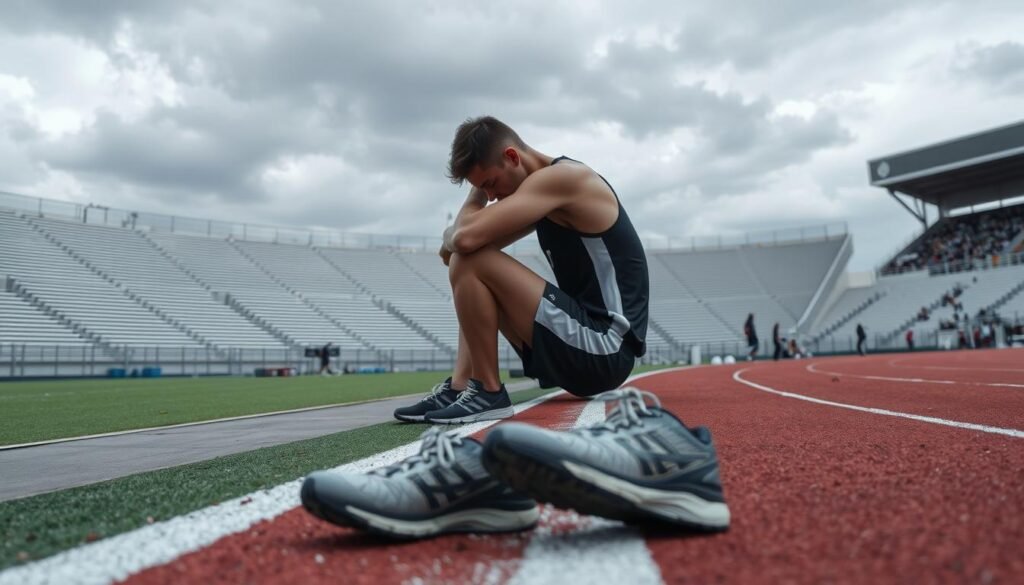
Athletes often face hard times after their sports careers end. This leads to post-competition blues. This issue isn’t just for top athletes; many feel it as they move on from sports.
The sudden stop from competing to doing little plays a big part. Athletes put tons of time and effort into their sport. They feel a strong emotional bond. When the competition stops, they can feel empty and lost.
Reasons for post-competition blues include:
- The effect of performance expectations and pressure from society.
- Problems with identity, as athletes often see themselves mainly as sportspeople.
- Feeling isolated, as interest from fans and communities can drop after retirement.
- Questioning one’s purpose and future can lead to existential crises.
Research links post-race mood changes to the gap between expected and real performance times. This gap can bring disappointment. Also, ex-athletes have shared their mental health struggles, especially during big events like the 2024 Summer Olympics.
Often, coaches and parents push athletes to focus only on their sport. This can make moving on to a new chapter in life hard. It can be tough to find new identities or goals. Addressing these mental health issues in athletes is critical. It helps them handle the emotional challenges after sports careers end.
Coping Strategies for Post Olympic Depression
After the Olympics, athletes often find it hard to deal with their emotions. Finding good coping strategies is key. Getting help is a big step forward. It enables them to face their feelings and move back into regular life.
Seeking Professional Help
Getting professional support is crucial for athletes feeling down after the Olympics. They should talk to counselors and sports psychologists. These experts offer support and tools to deal with stress and anxiety. About one-third of elite athletes feel depressed or anxious. This makes it critical to get help early.
Asking for help shows strength and care for oneself.
Importance of Therapy and Counseling
Therapy and counseling are very helpful for athletes ending their sports careers. These practices help them understand their experiences. They also learn practical ways to cope. The US Olympic Paralympic Committee and the Australian Institute of Sport offer great mental health support. So, getting therapy for depression helps athletes heal and get back to daily life.
Support Resources Available for Athletes
Athletes have various support resources after competitions. Athlete mental health programs are vital for their healing. These programs are part of sports groups and cater to athletes’ needs.
Community support is key, including peer networks. These connections reduce loneliness and build a strong support system.
For private support, there are hotlines and online counseling. The mental health lifeline at 988 is always available. The Team USA line at (719) 866-2255 offers help from mental health experts.
Stars like Michael Phelps and Kevin Love stress the value of seeking help. Their stories inspire others to begin their journey to wellness.
| Resource | Type | Contact Information |
|---|---|---|
| Team USA Mental Health Registry | Local Mental Health Providers | N/A |
| National Suicide Prevention Lifeline | Emergency Support | 800-273-TALK (8255) |
| Athletes Against Anxiety and Depression Foundation | Community Resources | N/A |
| NCAA Sport Science Institute | Educational Resources | N/A |
| MLB Mental Wellness Resources | Professional Help | 24/7 Helpline |
Life After Olympics: Navigating the Transition
Transitioning after the Olympics brings unique challenges for athletes. Moving from a structured world full of training to a freer life is tough. It’s important for athletes to build a new identity that shows their strengths beyond sports. This time can be freeing yet challenging.
Building a New Identity
For many athletes, building identity means rethinking who they are. After years dedicated to their sport, finding other roles can be hard. Discovering new interests, hobbies, or going back to school helps build a broader identity. Family, friends, and old teammates are key during this change. Research shows athletes with strong support do better in this phase.
Engaging in New Goals and Activities
New goals for athletes provide direction after their Olympic careers. Many look into coaching, mentoring, or speaking. While top coaching jobs are rare, motivational speaking can be rewarding. Getting involved in community or sports projects helps build their new identity and gives purpose. The skills athletes have, like teamwork, are still helpful in new roles.
| Aspect | Insight |
|---|---|
| Athletes Competing in 2016 | 10,500 participants, with only a few hundred winning medals. |
| Average Retirement Age for Gymnasts | 23 years old, indicating early transition into post-athletic life. |
| Financial Challenges | 80% face difficulties within two years of retirement. |
| Retirement Rate | 45% retire within two years after competing. |
| Post-Olympic Depression | 60-70% experience emotional letdown after the games. |
| Seeking Professional Help | Only 10-15% of retired athletes seek mental health support. |
By focusing on a new identity and new goals, athletes can lead fulfilling lives post-Olympics. These efforts help them become resilient and find rewarding paths beyond sports.
Preventative Measures for Athlete Mental Health
Keeping athletes mentally healthy requires effective prevention. It’s important to have a supportive space. This kind of space helps athletes talk openly about their feelings and challenges. It makes them stronger mentally.
It’s crucial to have regular mental health check-ups and educational workshops. These can teach athletes how to handle stress and avoid depression. They learn to spot problems early on. Learning about both mental and physical health is key, giving them tools for tough times.
Using mindfulness can protect athletes from getting too stressed. Knowing how mental stress affects performance helps them care for their mental health. Having friends and support fights off loneliness, making it easier to cope.
By using these methods, we can help athletes stay healthy in mind for the long run. When famous athletes talk about mental health, it helps everyone. It shows that mental health is just as important as winning games.
| Preventative Measures | Description |
|---|---|
| Supportive Environment | Encourages open discussions about mental health and emotions. |
| Mental Health Check-Ins | Regular sessions to assess mental well-being and coping strategies. |
| Mindfulness Practices | Techniques that help manage stress and promote emotional regulation. |
| Education and Training | Focuses on balancing mental and physical health needs. |
| Social Support Systems | Strengthens emotional resilience and reduces isolation. |
Long-Term Strategies for Maintaining Emotional Well-Being
Athletes need to keep working on their mental health for the long run. It starts with solid mental health support and doing self-care activities. Meditation, working out, and writing in a journal can build strength and improve happiness.
Having people to support you is very important. Good relationships with friends, family, and others give a feeling of belonging. This sense of team can greatly improve mental health and offer help when things get tough.
Learning about mental health matters too. It helps athletes handle their mental health better, by knowing what causes problems and when to get help. This knowledge gives them the power to face their struggles with more confidence.

| Strategy | Description | Benefits |
|---|---|---|
| Meditation | A practice focusing on mindfulness and awareness | Enhances emotional regulation and reduces stress |
| Physical Exercise | Regular participation in sports or fitness activities | Improves mood and reduces symptoms of anxiety |
| Journaling | Writing thoughts and feelings to process emotions | Provides clarity and promotes mental organization |
| Strong Support Networks | Building relationships with family, friends, and coaches | Creates a sense of belonging and emotional safety |
| Education on Mental Health | Learning about mental health issues and resources | Empowers proactive management of mental well-being |
By sticking to these mental health strategies, athletes can better deal with their emotions. This makes their sports and personal life more rewarding and healthy.
Conclusion
In summary, athletes face a unique challenge after the Olympics. This period can deeply affect their mental health. A study from 2023 found that 27% of Danish Olympians and Paralympians felt really low or faced depression.
This shows how vital it is to have good coping strategies and support. It helps them deal with the tough times after such a major event.
It’s important to notice and deal with post Olympic depression early. Stars like Simone Biles and Kevin Love have talked about their own struggles. This openness is changing the sports world for the better.
Now, there’s more focus on getting support early. This change is helping athletes bounce back by talking about their feelings and getting the help they need.
The conversation on mental health in sports is getting more attention. It’s crucial to talk openly and get professional support. This way, athletes can handle the challenges after the Olympics better.
For more details on this topic, check out this article.